GreatLight CNC Machining Factory logo
CNC Machining
Rapid Prototyping
Materials
Industries
News
About GL

Get Instant Quote

Supply Chain Innovations

CIO Review Supply Chain Innovations for Manufacturers

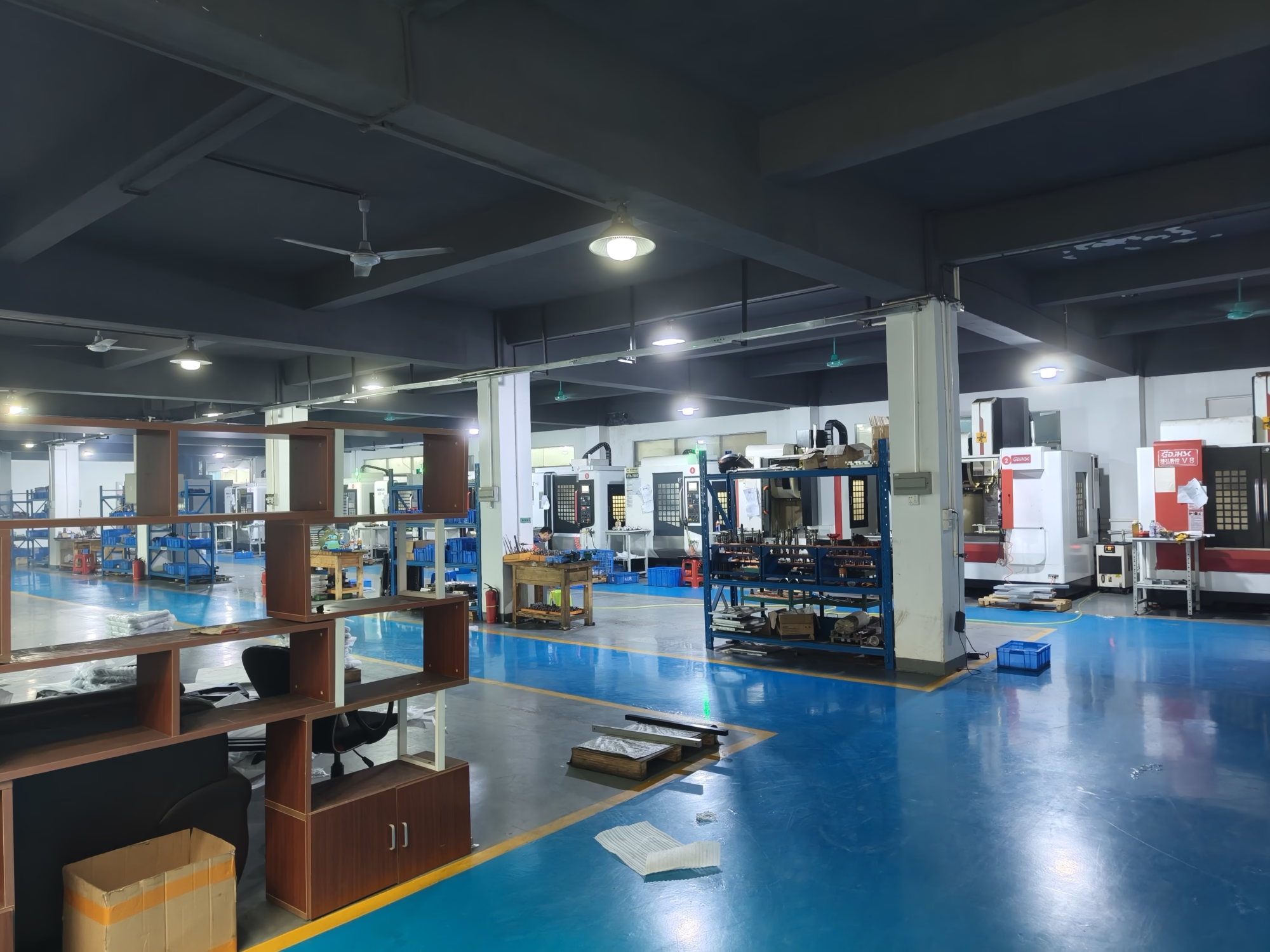
We build machined parts the way a purchasing team needs them: one supplier, one quality record, one shipment date. 127 CNC machines, 3 wholly-owned plants, and incoming inspection that starts before metal is cut.

ISO 9001:2015IATF 16949:2016ISO 13485:2016ISO 27001:2022No MOQ
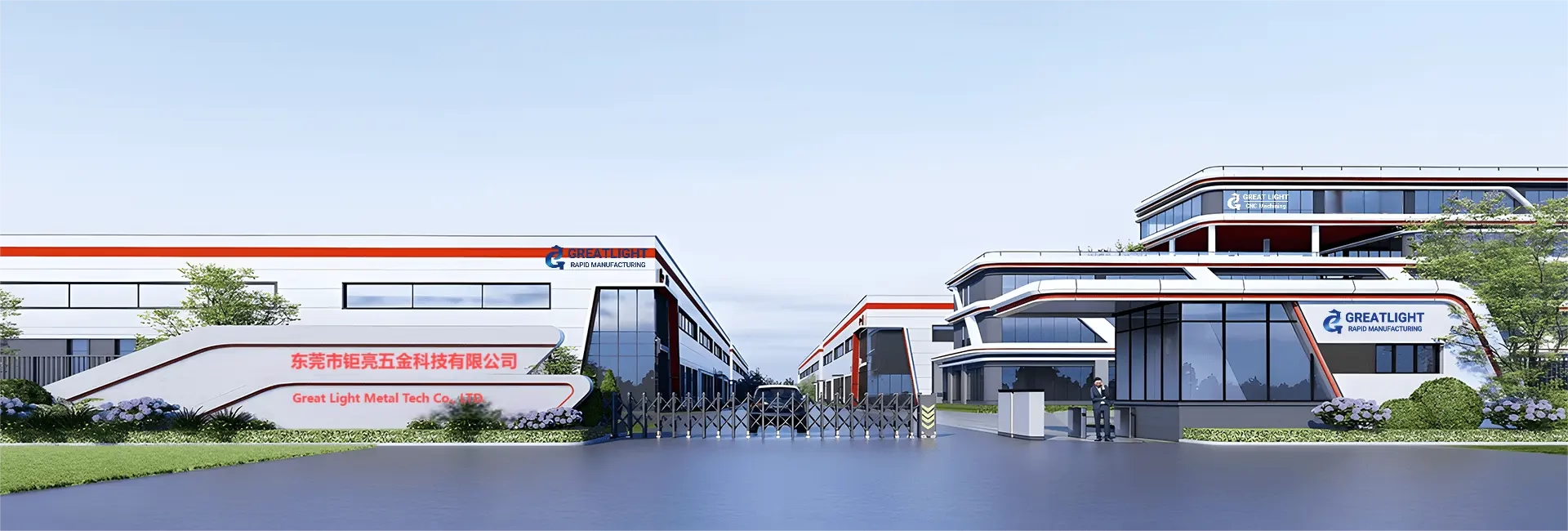
GreatLight Metal new factory building
15 yearsMachining since 2011
127High-precision CNC machines
±0.005 mmTolerance we hold in production
3–5 daysTypical parts ship time
Where It Breaks

Four supply chain failures you have probably paid for

Custom parts are not hard to machine. They are hard to source on a schedule that survives a revision change.

01

A supplier passes the sample, then drifts

First article measures clean. By the third lot the bore is 0.03 mm over and nobody adjusted the offset. You scrap a run, rework the mating parts, and push the assembly line back a week. The cost is not the parts. It is the idle station and the expedited freight.
02

Quality data arrives only when you ask

Purchase orders move through three brokers and a trading company. When a rejection lands, nobody can name the machine, the operator, or the material heat number. Root cause becomes a phone call with no record. You end up paying for a problem you cannot prove.

03

Every new version resets the whole chain

A cosmetic change to a housing pulls in a new mold, a new finish spec, and a new incoming inspection sheet. If the supplier has no DFM loop, the change costs three weeks. Engineers need a partner who reads the drawing before the tooling is cut.

04

Confidential geometry leaves the building

Early-stage parts carry the whole product architecture. Sending them to an unknown shop means an unprotected file on an unprotected drive. One leak and your launch date belongs to someone else. Ask for an NDA before the first upload.

The Method

One supply chain, run from the shop floor

Supplier selection, process control, and shipment all sit inside the same quality system. That is the whole idea.

CNC Lathe Technical Specifications Terminology
Quality Gates

Incoming material and in-process checks are not optional steps

Every job starts with a raw material check. We record the grade, the heat number, and the mill certificate before the first cut. Aluminum 6061-T6 does not behave like 7075, and steel 4140 does not machine like 1018. If the certificate and the drawing do not match, the bar goes back.

During the run we monitor critical dimensions against the drawing. Final inspection covers 100% of parts before shipment, and inspection reports are available on request. For a bracket with a true position callout, that means the CMM report travels with the box.

  • 1
    Raw material checkGrade, heat number, and mill certificate logged per lot.
  • 2
    In-process monitoringCritical dimensions measured while the spindle is still running.
  • 3
    Final inspection100% of parts checked before shipment, reports on request.
CNC Machining Services Online
Capacity

Machine capacity that matches the order size

A prototype and a 10,000-part run should not sit on the same schedule. We hold 16 simultaneous 5-axis machining centers, 12 four-axis mills, 27 three-axis machines, and 16 mill-turn centers. Small fixtures go to the compact travels. Long housings go to the 4,000 mm bed.

There is no minimum order quantity. One part is fine. So is a 10,000+ run. The quote and free DFM analysis come back within 12 hours, and production can start within 24 hours after that.

  • 1
    5-axis for complex geometry16 simultaneous centers handle undercuts and angled faces in one setup.
  • 2
    Mill-turn for round parts16 mill-turn centers cut turning and milling without a second fixture.
  • 3
    Large envelopeUp to 4,000 mm processing size for long frames and rails.

Get Instant Quote

Sourcing Decision

When to use which process route

Pick the route by geometry, volume, and surface requirement, not by habit.

Part situationRouteWhy
Tight tolerance, complex faces5-axis CNCOne setup, fewer datum shifts
Round part with cross holesMill-turnNo second fixture, better concentricity
Long frame or rail3-axis, 4,000 mm bedFits the travel without repositioning
Thin wall, low volumeCNC + stress reliefHolds form after machining
Die-cast housingDie casting + CNC finishNear-net shape, then critical faces
Cosmetic panelSheet metal + powder coatLower cost per part at volume
Services

What we build and finish

Machining, casting, forming, and finishing under one quality record.

01

5 Axis CNC Machining

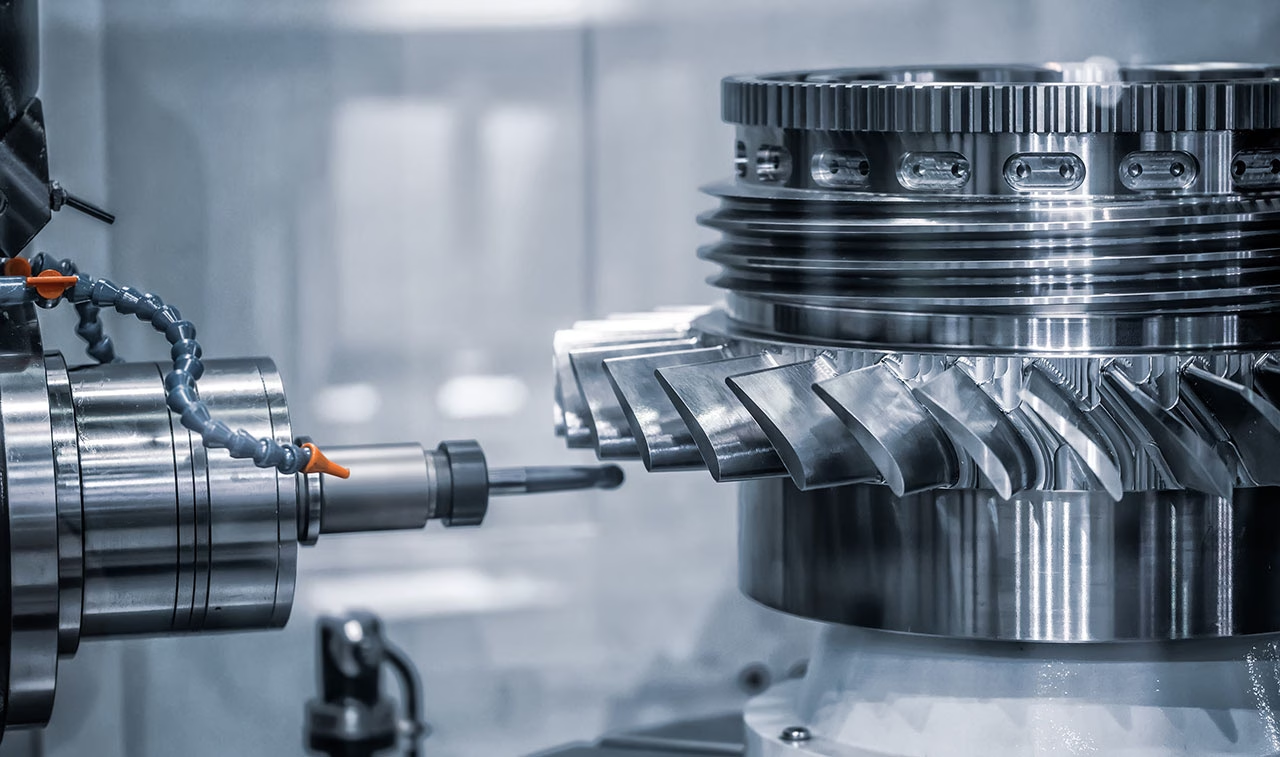
Complex housings, impellers, and angled faces cut in one setup. 16 simultaneous centers hold ±0.005 mm on production parts.

02

CNC Milling & Turning

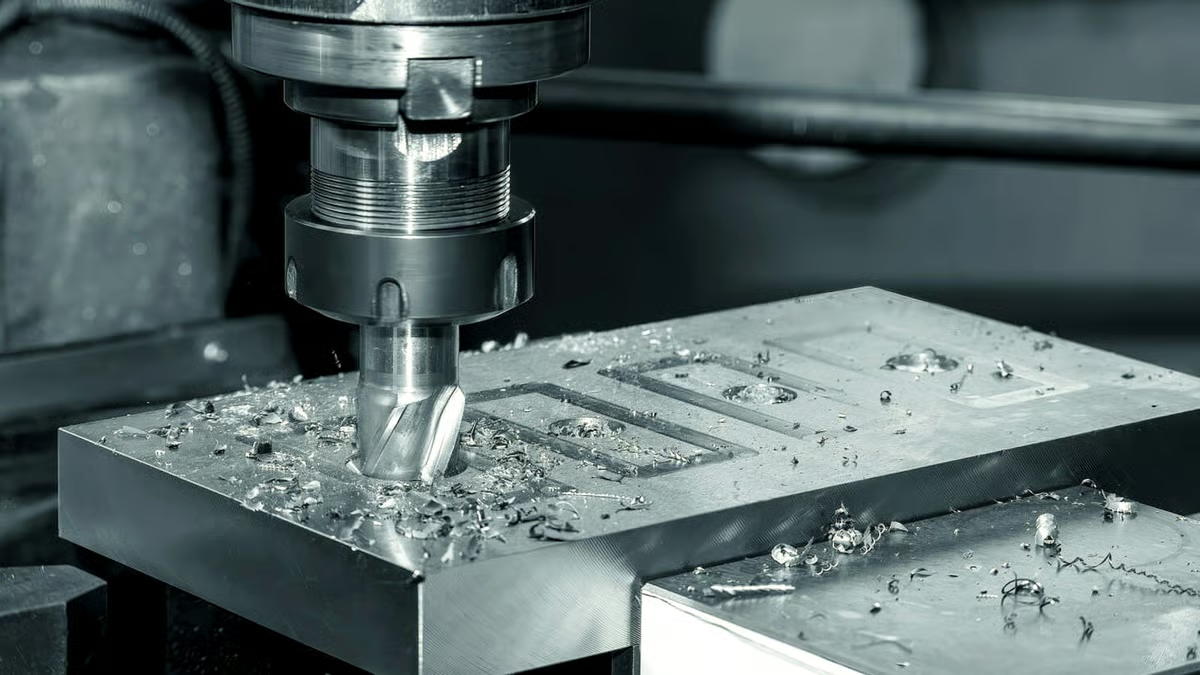
Shafts, bushings, and manifolds from Ø2 mm to 4,000 mm. Mill-turn centers keep concentricity without a second fixture.

03

Rapid Prototyping

One part or twenty, no minimum order. DFM feedback comes back with the quote so the next revision is cheaper.

04

Sheet Metal Fabrication

Brackets, chassis, and panels with laser cutting and forming. Good fit for enclosures and mounting plates.

05

Metal Die Casting

Aluminum and zinc housings near net shape, then CNC on the critical faces. Pays off above a few thousand parts.

06

Part Surface Finishing

Anodizing, plating, powder coat, bead blasting, and laser marking. Minimum character height 1.5 mm for traceability marks.

Scope

Process scope and limits

The numbers below are what we can commit to in a quote.

ItemRangeNote
Tolerance±0.005 mm±0.0002 in in production
Fine finishRa 0.2–0.8 μmOn request, adds cycle time
Standard finishRa 0.8–1.6 μmDefault machined surface
Max processing size4,000 mmLong rails and frames
Aluminum grades6061, 7075, 2024, 6082Plus ADC12 for casting
Stainless grades303, 304, 316L, 17-4PH17-4PH for high strength
PlasticsPOM, PEEK, PC, ABSPEEK for high temperature
Qualification rate99.99%Across inspected production
Why GreatLight

Six reasons a purchasing team keeps the account open

Each one is a number you can check, not a claim you have to trust.

15Y

Operating since 2011

Fifteen years of machining and sourcing. The process documentation and the supplier list have been built over that time, not assembled for one bid.

127

CNC machines in house

Sixteen simultaneous 5-axis centers sit alongside four-axis, three-axis, and mill-turn capacity. Routing decisions stay inside our walls.

±0.005 mm

Production tolerance

Held on real runs, not only on a first article. 100% inspection before shipment, with reports on request.

12 h

Quote turnaround

Quotation and free DFM analysis within 12 hours. Production can start within 24 hours after approval.

4,000 mm

Maximum processing size

Long frames, rails, and base plates fit the travel. No splicing, no bolted extensions.

0

Minimum order quantity

From one prototype to 10,000+ part runs on the same process sheet. The setup does not change because the volume did.

7,600 m²Manufacturing space
150Technicians on staff
3Wholly-owned plants
<2%Historical late-delivery rate
What Industries Require

Sector requirements and what we deliver

6011

Aerospace brackets

Thin ribs and pocketed faces where a datum shift ruins the assembly. 5-axis setups hold position across the run.

  • ±0.005 mm
  • 100% inspection
  • 5-axis
oplus_262178

Automotive and EV housings

IATF 16949:2016 process control, PPAP-style documentation, and lot traceability back to the heat number.

  • IATF 16949
  • Lot traceability
  • Aluminum 6061
cnc machining

Medical instrument parts

ISO 13485:2016 workflow, clean handling, and surface finishes down to Ra 0.2–0.8 μm when the part touches tissue.

  • ISO 13485
  • Ra 0.2–0.8 μm
  • 316L
cnc machining

Robotics and automation frames

Long extrusions and machined joints that must line up on a rail. 4,000 mm travel keeps the geometry in one setup.

  • 4,000 mm
  • ±0.0002 in
  • 3–5 days
FAQs

Questions engineers and buyers ask before the first order

How do you keep tolerance stable across a production run?

We set the process from the drawing and the material, then monitor critical dimensions while the machine is running. First article confirms the setup. In-process checks catch drift before a lot is finished.

Final inspection covers 100% of parts before shipment. Reports are available on request, so the buyer gets the measurement record, not just a packing slip.

What is the smallest and largest part you can machine?

Compact travels of 500 × 310 × 200 mm handle small housings and fittings. The largest bed reaches 4,000 mm, which covers long rails, frames, and base plates.

For round work, the rotary table is Ø400 mm. If a part falls between two envelopes, we route it to the machine that holds the fewest setups.

Do you require a minimum order quantity?

No. One prototype is a normal order, and so is a 10,000+ part run. The process sheet stays the same, which is what keeps the second order predictable.

Prototypes and production parts come off the same quality system, so what you approve at sample stage is what ships at volume.

How fast can I get a quote and then parts?

Quotation and free DFM analysis come back within 12 hours. Once the order is approved, production can start within 24 hours.

Typical parts ship in 3–5 days. The historical late-delivery probability is below 2%. If a job needs a finish or a casting step, that adds time to the schedule and we say so in the quote.

Which finishes can you apply without sending the part out?

Anodizing in clear, color, hardcoat, and conductive versions. Electroless nickel, zinc, silver, and gold plating. Powder coating and black oxide.

Bead blasting, tumbling, brushing, and polishing are also in scope. Laser marking and engraving need a minimum character height of 1.5 mm to stay readable.

How do you protect my drawings and part geometry?

Uploads are handled as confidential, and we can sign an NDA before the first file moves. ISO 27001:2022 covers our information security process.

Early-stage geometry carries the product architecture. If your legal team wants an agreement in place first, that is a normal step, not a delay.

What materials do you machine most often?

Aluminum 6061-T6, 7075, 2024, 6082; stainless 303, 304, 316L, and 17-4PH; steel 1018, 4140, and 4340. Titanium Ti-6Al-4V and Inconel are available for high-temperature or high-strength parts.

Plastics include POM, PEEK, PC, ABS, and carbon fiber. PEEK is the usual choice when the part sees heat or chemical exposure.

Can you take a part from prototype through to a cast housing?

Yes. A machined prototype often becomes a die-cast housing with CNC finishing on the critical faces. That switch usually pays off above a few thousand parts.

The same team reviews the DFM at both stages, so draft angles, wall thickness, and machining allowance are planned before the tool is cut.

Send the drawing and get a real number back

Upload a STEP file and we return a quotation with free DFM analysis within 12 hours. No minimum order quantity, 100% inspection before shipment, and an NDA on request.

12-hour quote100% inspectionNo MOQNDA on request

Trusted by engineers and manufacturers worldwide

Tesla Ford Motor Company BYD Auto Denso Magna International Boeing Airbus Medtronic KUKA FANUC