GreatLight CNC Machining Factory logo
CNC Machining
Rapid Prototyping
Materials
Industries
News
About GL

Get Instant Quote

Robotics & Automation

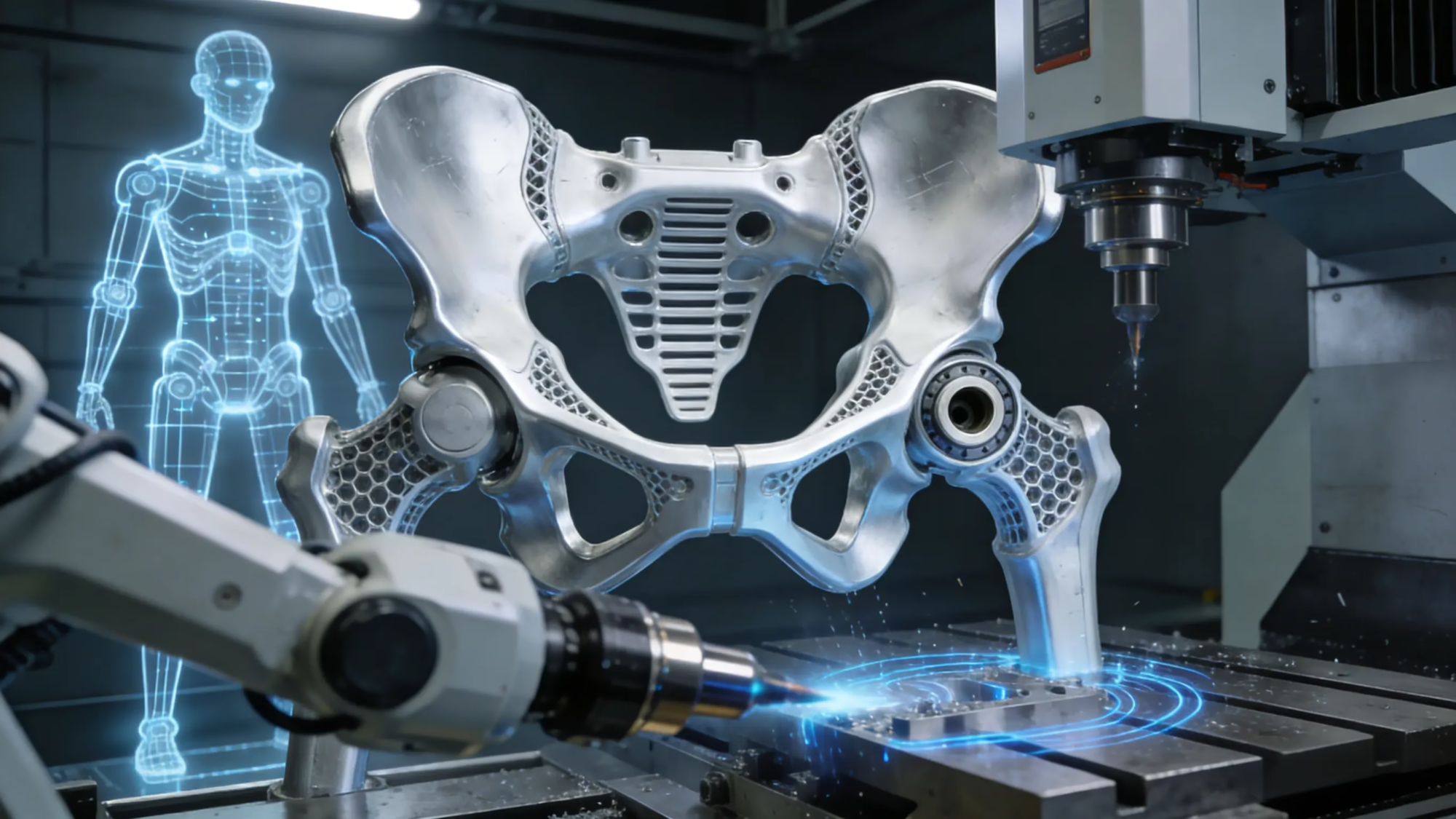
Custom Intelligent Humanoid Robot Parts

We machine joint arms, wrist housings, bases and body frames for humanoid platforms. 5-axis work to ±0.005 mm, in aluminium, titanium or engineering plastics. Your CAD files turned into parts, not promises.

±0.005 mm16 × 5-axisNo MOQ3–5 day shippingISO 9001:2015NDA on request
humanoid-robot
127High-precision CNC machines
±0.005 mmAchievable tolerance
3–5 daysParts shipping time
99.99%Qualification rate
Pain Points

Where humanoid parts go wrong

We see the same four problems in robot programmes. Each one costs schedule time.

01

Bearing bores don't hold tolerance

A joint housing machined with 3-axis tooling can drift 0.03 mm or more on one side. The bearing presses in with slack, or won't press in at all. By the time you find it, the actuator is already assembled and the subframe is scrapped.

02

Wall thickness varies on the frame

Thin ribs machined from both sides can come out 0.4 mm different across a single leg segment. Mass properties shift, the balance controller needs retuning, and every unit in the run behaves a little differently.

03

Supplier won't sign an NDA

Your actuator geometry and joint placement are the most valuable thing you own. If a shop won't sign before seeing the model, the model doesn't get shared, and the project stalls on paperwork.

04

Prototype turns into a dead end

A shop that only handles one-off prototypes can't scale to a 10,000-part run later. You re-qualify a new supplier, redo first article inspection, and lose the process knowledge from the prototype.


How we work

Machining robot parts from your CAD file

One process, from the first prototype joint to a production run.

How Five-Axis Linkage Forges the Skeleton of Humanoid Robots
5-axis positioning

Joint bores and mounting faces in one setup

Humanoid joints are not simple parts. A wrist housing usually carries a bearing bore, a motor mount pattern and a cable passage on three different faces. If each face is machined in a separate setup, the errors stack.

We hold these parts on simultaneous 5-axis machines so the bearing bore and its mating face come off the same datum. Positional error between features stays inside ±0.005 mm instead of accumulating across setups.

  • 1
    Ø400 mm rotary tableFor parts that need angular indexing around a single axis.
  • 2
    16 simultaneous 5-axis centersComplex geometry without repositioning the part.
  • 3
    In-process probingCatch a drift before the whole batch is cut.
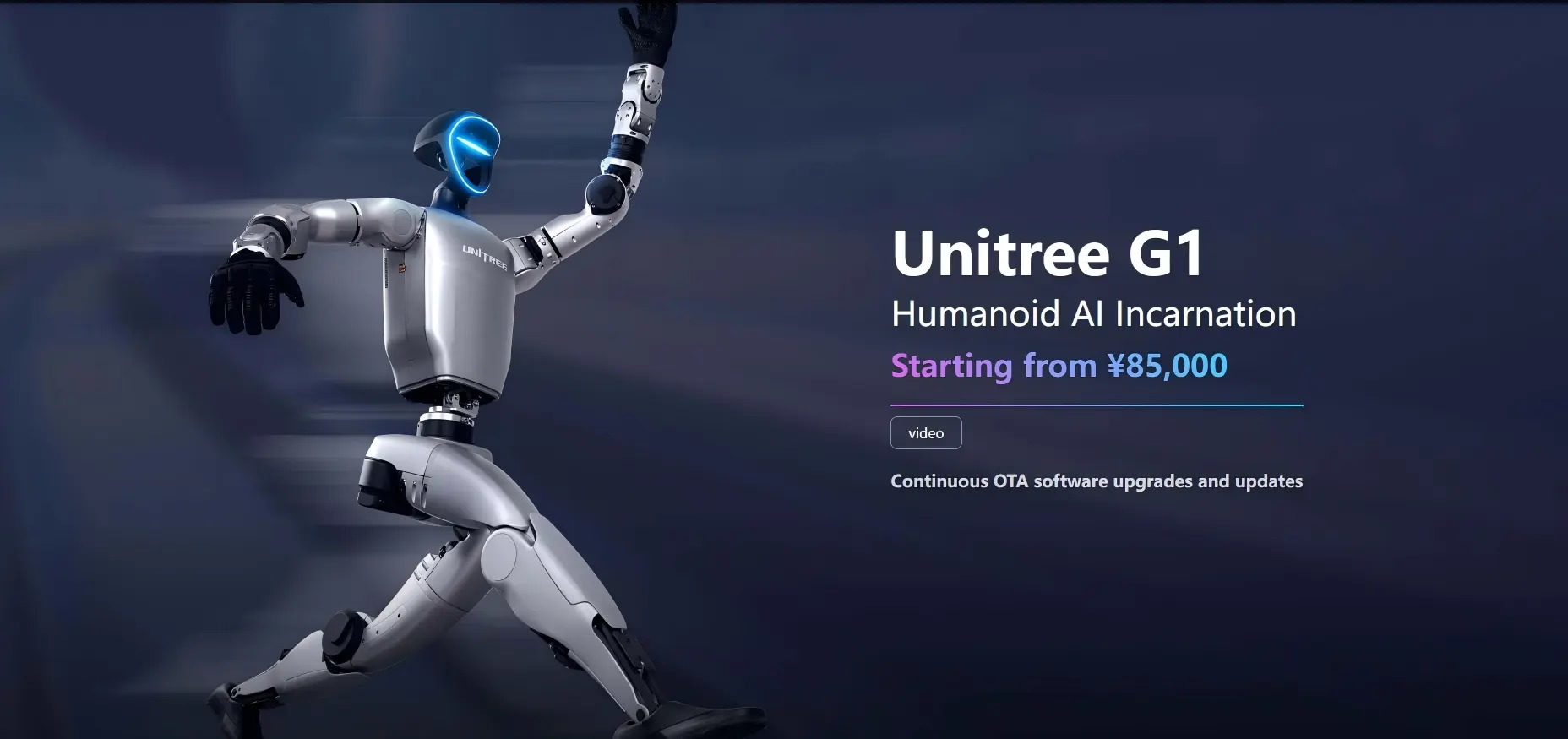
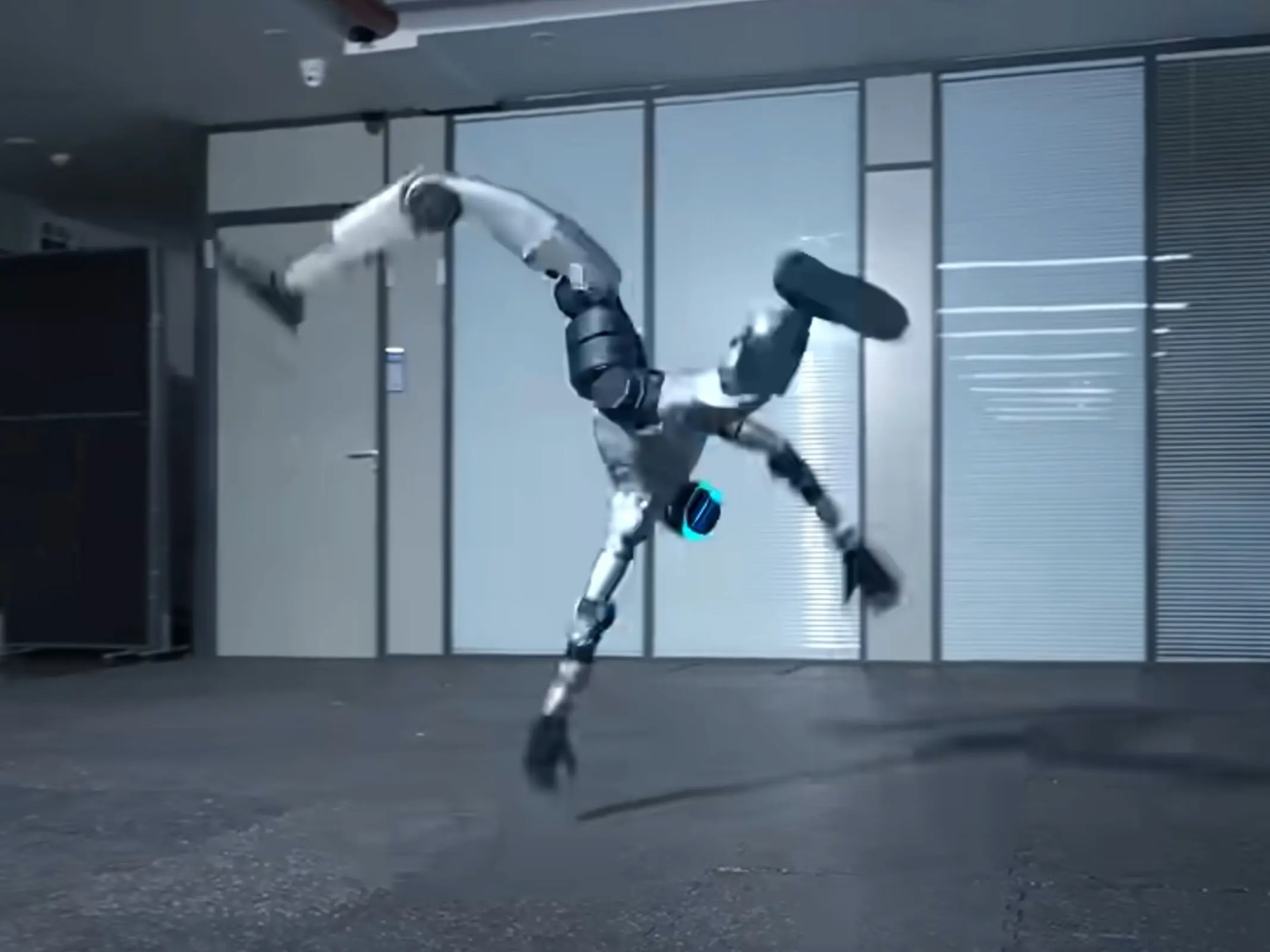
Unitree G1 Humanoid Robot
Weight and stiffness

Cut metal where it does nothing

Every gram in the upper body costs torque at the hip or shoulder. We machine pockets, ribs and lightening slots into 7075 or Ti-6Al-4V frames while keeping the load path between the joint and the actuator mount solid.

That balance is a machining decision, not a CAD decision. Rib thickness, corner radii and floor thickness all have to be reachable by the cutter. We flag the ones that are not during DFM, before the program is posted.

  • 1
    Aluminium 6061-T6, 7075, 2024Good stiffness-to-weight for arms and frames.
  • 2
    Titanium TC4, 17-4PH stainlessFor high-load joints and wear surfaces.
  • 3
    PEEK, POM, carbon fibreFor insulating covers and low-mass links.

Request a Sample Part

Part families

What we machine, and how

Typical robot part families, the usual material, and the process that fits.

Part familyTypical materialProcess
Joint arm links7075-T6, 6061-T65-axis, thin-wall milling
Wrist and elbow housings6061-T6, 17-4PH5-axis, bore + face in one setup
Base and torso frames6061-T6, 4130 steel4-axis, large envelope
Transposition pillars7075-T6, TC4Mill-turn, Ø400 mm table
Cable covers and shellsABS, PC, PEEK3-axis, vacuum fixture
Gearbox and actuator plates4140, 17-4PH5-axis, ±0.005 mm bores
Sensor and camera brackets6061-T6, 50523-axis, bead blasted
Hand and finger linkagesTC4, 316L5-axis, Ra 0.8–1.6 μm
Services

What we can take off your desk

One shop for the metal and plastic parts around the actuator.

5-axis

5 Axis CNC Machining

Complex joint geometry machined in one setup. 16 simultaneous 5-axis centers, up to 4,000 mm envelope.

4-axis

4 Axis CNC Machining

Good fit for long frame rails and housings with features on four sides. 12 four-axis mills.

3-axis

3 Axis CNC Machining

Brackets, plates and covers where the budget matters more than the geometry. 27 machines.

Mill-turn

CNC Milling & Turning

Pillars and shafts with turned diameters plus milled flats. 16 mill-turn centers.

Rapid

Rapid Prototyping

Get a joint housing in your hand before you commit to a production tool. No minimum order.

Finish

Part Surface Finishing

Anodizing, hardcoat, electroless nickel, bead blasting and laser marking.

Capability

Machine range and envelope

Pick the class that matches your part, not the other way round.

ClassTravel / sizeBest for
Large4,000 × 400 × 150 mmTorso and leg frames
Medium750 × 1,150 × 550 mmArm segments and bases
Medium600 × 600 × 600 mmHousings with 5-side access
Compact500 × 500 × 450 mmWrist and elbow parts
Compact500 × 310 × 200 mmHand and finger links
RotaryØ400 mm tablePillars and rotary joints
Why GreatLight

Numbers, not adjectives

15Y

Making parts since 2011

Three wholly-owned plants and 150 technicians. The same team runs your prototype and your production run.

12h

Quote and DFM in 12 hours

Send a STEP file. You get a price, a lead time and a list of features that will be hard to machine.

24h

Production starts in 24 hours

Once the drawing and material are confirmed, the job is scheduled the next working day.

100%

Inspection before shipment

Raw material check, in-process monitoring and final inspection. Reports on request.

ISO

ISO 9001:2015, IATF 16949

Also ISO 13485:2016 and ISO 27001:2022. Audited annually by third-party certifiers.

1–10k

No minimum order quantity

One prototype or a 10,000-part run. Same process, same inspection standard.

7,600 m²Manufacturing space
150Technicians on staff
±0.005 mmTightest tolerance
<2%Historical late-delivery rate
Delivered work

What the industry asks for, and what we hand over

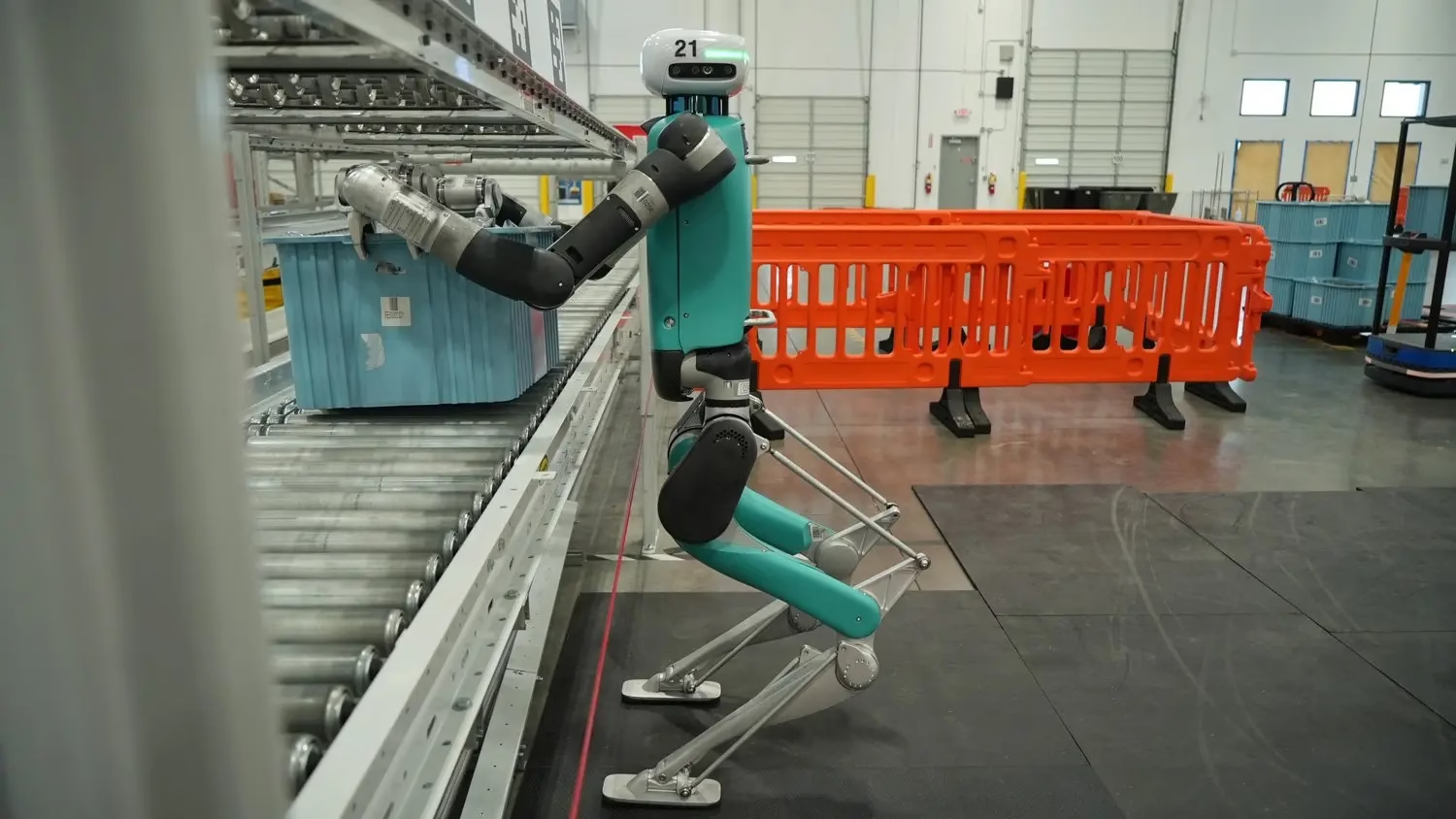
Agility Robotics Humanoid Robot

Leg and hip frames

Large aluminium frames machined on 4-axis with weight pockets and actuator mounts on the same datum.

  • 6061-T6
  • 4,000 mm envelope
  • ±0.005 mm
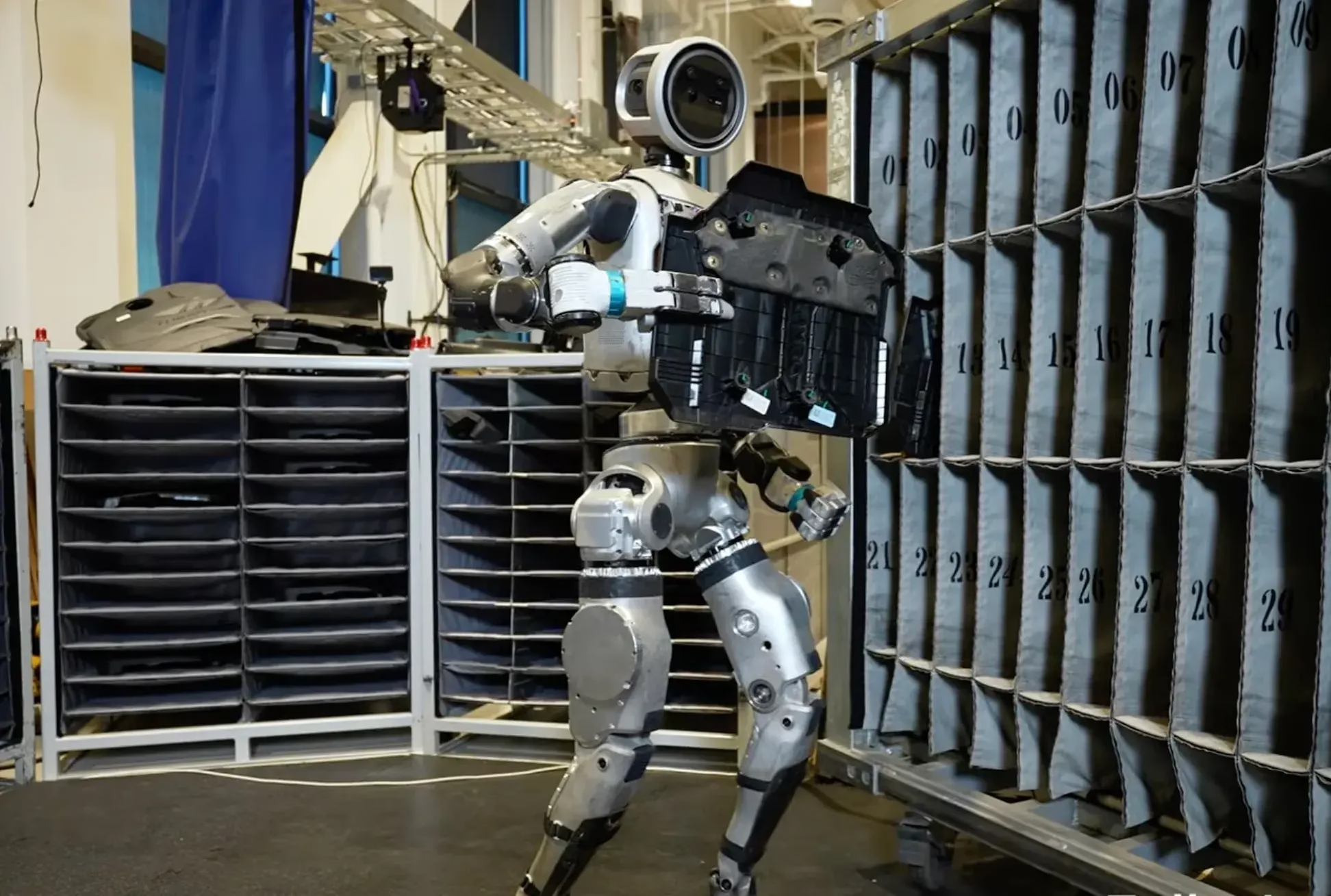
Boston Dynamics Humanoid Robot

Joint and bearing housings

Bore and mating face cut in one 5-axis setup so bearing fit stays consistent across the batch.

  • 5-axis
  • Ra 0.8–1.6 μm
  • 100% inspection
Kung Fu Robot

Wrist and hand linkages

Small titanium links with tight corner radii, machined from TC4 and finished with bead blasting.

  • Ti-6Al-4V
  • Compact envelope
  • No MOQ
Comprehensive Guide to Buy Humanoid Robot

Covers and sensor brackets

Plastic and aluminium covers machined on 3-axis, anodized or painted to match the platform.

  • ABS, PEEK
  • Anodizing
  • 3–5 days
FAQs

Questions engineers ask before sending files

What tolerance can you actually hold on a joint housing?

±0.005 mm is our standard achievable tolerance on bores and mating faces when the feature is machined in one 5-axis setup. That is the number to design around.

If your drawing calls for something tighter on a specific bore, tell us which one and we will say whether it is realistic before quoting.

Which material should I pick for an arm link?

6061-T6 covers most arm links. It machines fast, takes anodizing well and has good stiffness for the weight.

Move to 7075-T6 when you need more strength in the same envelope. Move to Ti-6Al-4V only when the load or wear demands it, because titanium costs more and cuts slower.

Can you machine a part from a mesh file or only from CAD?

We need a solid model. STEP or Parasolid is ideal. A mesh file can work for simple geometry but makes it hard to hold a tolerance on a bore.

If you only have a scan, we can sometimes rebuild the critical features as solids.

How do you handle my design files?

Uploads are secure and confidential. We will sign your NDA before files are shared, or use ours.

Design files are not passed to third parties. If a finishing step is subcontracted, only the parts travel, not the CAD.

What is the smallest quantity you will run?

One piece. There is no minimum order quantity, so a single prototype joint housing is fine.

The same process runs up to 10,000+ parts, which means you do not re-qualify a supplier when the design moves to production.

Which features usually fail DFM?

Internal corners with a radius smaller than the cutter, pockets deeper than four times the cutter diameter, and floor thickness under 0.5 mm on aluminium.

We list these in the DFM report that comes back with the quote, usually within 12 hours.

How fast can I get parts?

Quotation and DFM within 12 hours. Production can start within 24 hours of confirmation, and parts ship in 3–5 days.

That schedule assumes the drawing is frozen and the material is in stock. We will tell you if either is not.

Do you inspect every part or sample the batch?

Every part. Raw material is checked on arrival, dimensions are monitored during cutting, and a final inspection runs before shipment.

Inspection reports are available on request.

Send a STEP file, get a real answer

Upload your CAD and we will return a price, a lead time and a DFM list. No minimum order quantity, no obligation.

12-hour quote100% inspectionNo MOQNDA on request

Trusted by engineers and manufacturers worldwide

Tesla Ford Motor Company BYD Auto Denso Magna International Boeing Airbus Medtronic KUKA FANUC