GreatLight CNC Machining Factory logo
CNC Machining
Rapid Prototyping
Materials
Industries
News
About GL

Get Instant Quote

Custom shaft manufacturing

Shaft Material Choice for Custom Shafts

Pick the grade before you pick the tolerance. We turn carbon steel, stainless, aluminum, and alloy steel shafts from one prototype to 10,000+ parts, with the turning and inspection data to match.

±0.005 mmØ400 mm rotary tableRa 0.2–0.8 μm3–5 day shippingNo MOQNDA on request
CNC Lathe Technical Specifications Terminology
15 yearsTurning and milling since 2011
127High-precision CNC machines
±0.005 mmAchievable shaft tolerance
99.99%Qualification rate
Where the grade callout goes wrong

Four failures that trace back to the material

Most shaft problems are decided at the callout, not at the machine.

01

The journal wears a groove in three months

A 1018 or 1045 shaft running in a dry bushing can lose 0.02 mm of diameter before the first service interval. No finish fixes a grade that is too soft. Hardening or a switch to 4140 changes the wear picture more than any tolerance callout.

02

Rust appears on the shelf, not in the field

Carbon steel shafts shipped without protection can show surface oxidation within weeks in humid storage. A 303 or 316L alternative removes the plating step. Sometimes the cheaper grade plus plating still wins on cost, and that trade-off needs to be made deliberately.

03

The part moves during turning

Thin, long shafts in soft aluminum deflect under cutting load. Holding ±0.005 mm on a Ø12 mm × 400 mm aluminum shaft takes steady rests and light passes. On a short Ø40 mm shaft the same grade cuts without drama. Geometry decides as much as material.

04

Cost doubles after heat treatment

Choosing 4140 for strength but ignoring the post-hardening grind adds a second setup, a second vendor, and a straightness risk. Some designs reach the same result with 17-4PH in the H1150 condition and skip the grind entirely.

How we narrow the grade

Four questions before a grade is locked in

Load, environment, geometry, and finishing path, in that order.

CNC Machining Services Online
Load and wear

Match hardness to the contact point, not the whole shaft

A shaft rarely needs one uniform grade. The bearing seat carries the wear, the middle section carries the torque, and the end carries the thread. Specifying 4140 through-hardened to 28–32 HRC is common, but a case-hardened 1018 or a nitrided 1045 often costs less where the wear band is short.

We look at surface pressure and sliding speed first. Slow rotation in a bronze bushing tolerates 1045 at 20 HRC. Fast rotation on a hardened needle bearing wants 60 HRC at the race. Those are different processes, not just different numbers on a cert.

  • 1
    Low load, low speed1018 or 1045 as-machined, no heat treatment
  • 2
    Wear band, moderate load4140 or 4340, hardened to 28–35 HRC
  • 3
    Rolling contact440C, 17-4PH, or case-hardened alloy steel

Get Instant Quote

oplus_262178
Environment and geometry

Corrosion resistance and slenderness pull in opposite directions

303 stainless turns easily and resists rust, but it is not for marine or medical use. 316L handles chlorides and washdown, at a higher cost and a gummier chip that slows cycle time. Aluminum 6061-T6 is light and quick to cut, yet it galls against steel and needs anodizing or a sleeve at the bearing seat.

Length-to-diameter ratio drives the setup more than the alloy. Above 10:1 we plan for a tailstock, a steady rest, or a travelling support. Above 20:1 the part goes to a mill-turn center where one chucking holds concentricity instead of two operations stacking runout.

  • 1
    Washdown or humid plant303, 304, or 316L stainless
  • 2
    Weight-sensitive motion6061-T6 or 7075, hardcoat anodized
  • 3
    L/D above 10:1Steady rest or mill-turn, tighter pass planning
Grade comparison

Common shaft grades side by side

Figures are typical for turned shafts; heat treatment and finish change the final result.

GradeTypical useMachinabilityWatch out for
1018 carbon steelLow-load, low-speed shaftsEasy to turn, good finishRusts without plating
1045 carbon steelGeneral shafts, moderate loadEasy, responds to hardeningDistortion after quench
4140 alloy steelHigh-load drive shaftsModerate, tougher chipNeeds grind after hardening
4340 alloy steelShock and torsion loadsHarder to cut at high hardnessHigher cost per kg
303 stainlessCorrosion resistance, free cuttingBest of the stainless familyNot for chlorides or medical
316L stainlessMarine, medical, washdownGummy, slower cycleHigher cost, more tool wear
17-4PH (SUS630)High strength plus corrosionTough in the H900 stateH1150 machines easier
6061-T6 aluminumLightweight, low inertiaVery fast to cutGalls; needs anodizing
7075 aluminumHigh-strength light shaftsGood, less forgivingPoor corrosion without coating
440C stainlessBearing races, wear bandsDifficult before hardeningCracks if ground too hot
What we run

Turning and support processes for shaft work

01

CNC Turning

Live-tool lathes with sub-spindles handle journals, threads, keyways, and cross holes in one setup. Ø400 mm rotary table for larger flanged shafts.

02

5 Axis CNC Machining

16 simultaneous 5-axis centers for splined shafts, angled ports, and features that would need three separate fixtures on a 3-axis mill.

03

Mill-Turn

16 mill-turn centers keep concentricity between the bearing seat and the coupling end. Fewer chuckings means less stacked runout.

04

Rapid Prototyping

One-off shafts for fit checks before the production callout is frozen. Same machines, same inspection, no tooling commitment.

05

Surface Finishing

Anodizing, electroless nickel, black oxide, bead blasting, and polishing. Finish matters at the seal and bearing seat, not on the whole length.

06

Inspection and Reporting

100% inspection before shipment. Raw material check, in-process monitoring, final dimensional report on request.

Scope and limits

What the shop can hold on a turned shaft

ItemCapabilityNotes
Maximum processing size4,000 mmLong shaft work on dedicated lathes
Large travel4,000 × 400 × 150 mmLong, slender shafts
Medium travel750 × 1,150 × 550 mmGeneral shaft and housing work
Compact travel500 × 500 × 450 mmSmall precision shafts
Tolerance±0.005 mmGround or hard-turned surfaces
Fine finishRa 0.2–0.8 μmSeal and bearing seats
Standard finishRa 1.6–3.2 μmAs-machined, non-critical lengths
Order quantity1 to 10,000+No minimum order quantity
Why GreatLight

Numbers behind the material decision

15Y

Turning since 2011

Fifteen years of shaft work across drive, pump, and roller applications. The grade list came from parts that shipped, not from a catalog.

127

CNC machines on site

16 simultaneous 5-axis centers, 16 mill-turn centers, 12 four-axis mills, 27 three-axis machines. One quote covers the full routing.

±0.005

Millimeter tolerance

Equivalent to ±0.0002 in. Applied where the drawing calls for it, not as a blanket promise on every surface.

4

Quality certifications

ISO 9001:2015, IATF 16949:2016, ISO 13485:2016, and ISO 27001:2022 cover the shaft work we quote.

12 h

Quote and DFM turnaround

Send a drawing and a grade question; you get a quotation plus free DFM analysis within 12 hours.

3–5 d

Shipping window

Production can start within 24 hours. Parts ship in 3–5 days on standard shaft work.

7,600 m²Manufacturing space
3Wholly-owned plants
150Technicians on staff
99.99%Qualification rate
Industry requirements

What each sector asks of a shaft

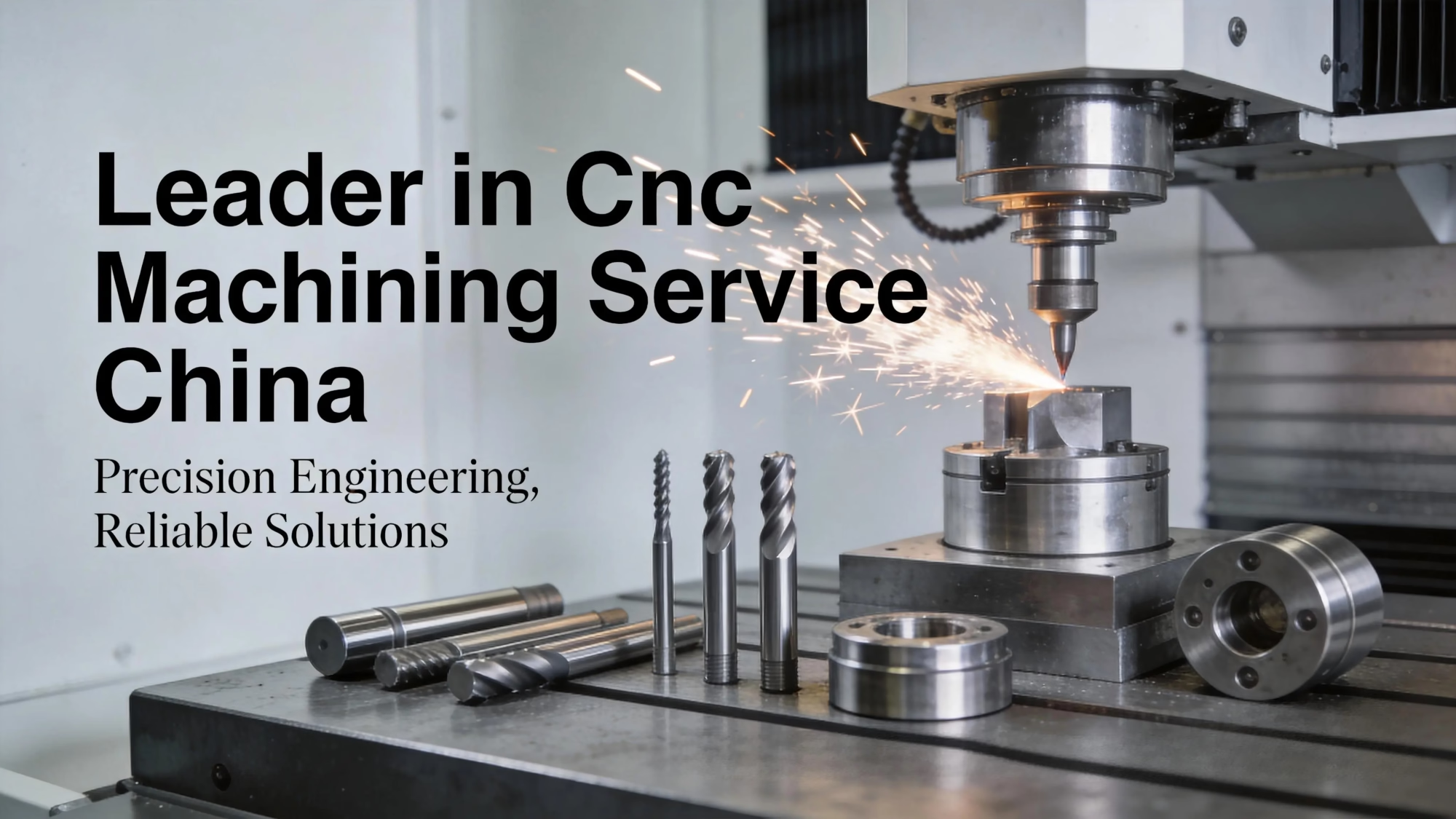
Leader in Cnc Machining Service China

Automotive & EV drive shafts

Fatigue life and consistent hardness across the run.

  • 4140 or 4340
  • 28–35 HRC
  • IATF 16949
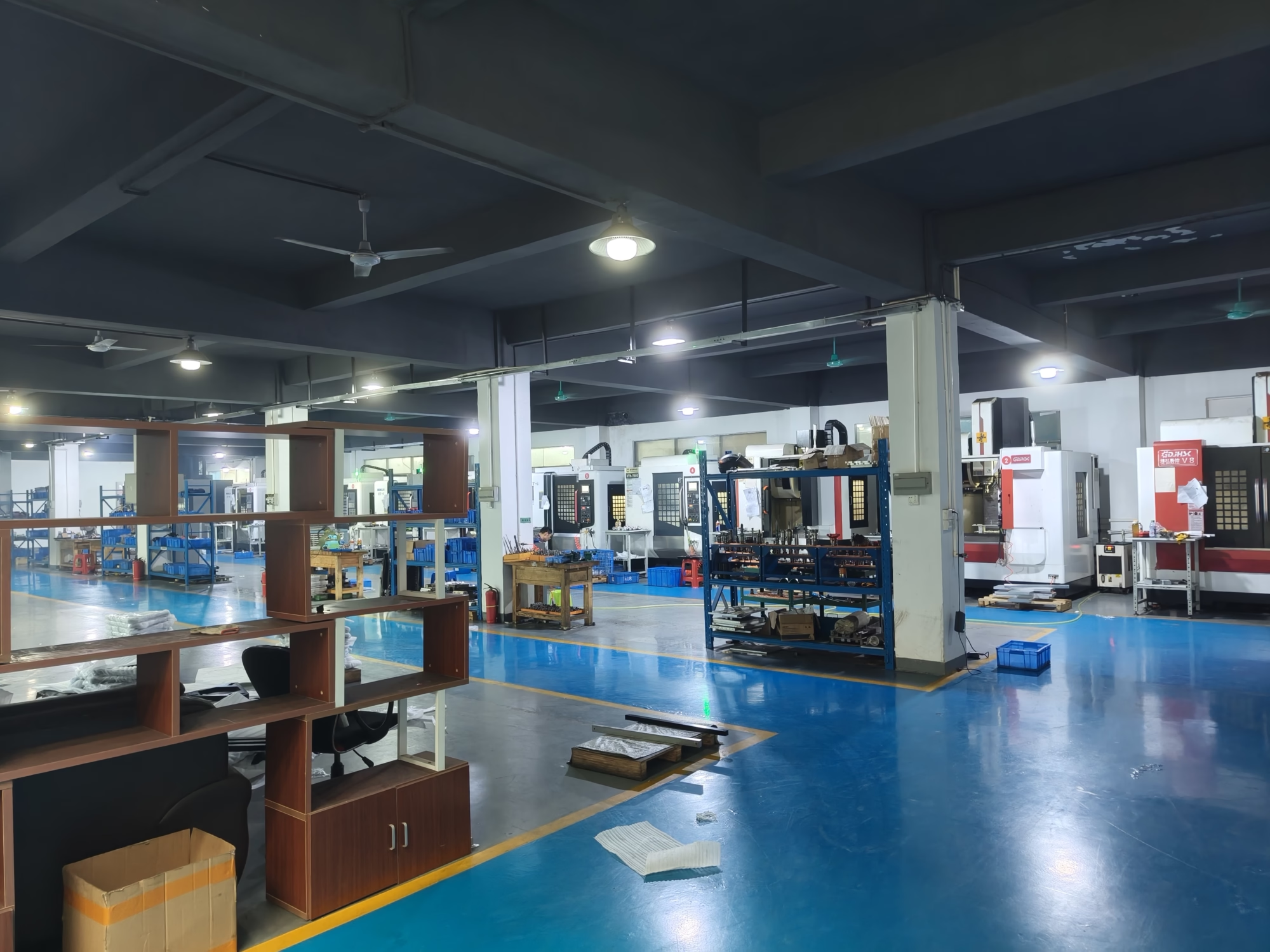
GreatLight Metal new factory building

Medical device shafts

Corrosion resistance plus a clean, inspectable surface.

  • 316L
  • Ra 0.2–0.8 μm
  • ISO 13485
cnc machining

Robotics and automation

Low inertia with tight concentricity at the coupling.

  • 6061-T6
  • ±0.005 mm
  • Mill-turn
cnc machining

Industrial pump shafts

Wear resistance at the seal and bearing seat.

  • 17-4PH H1150
  • Hardcoat
  • 100% inspection
FAQs

Questions we get before a grade is fixed

When should we choose 1045 over 4140?

1045 wins when the wear band is lightly loaded and the section is uniform. It machines faster, takes a decent finish, and hardens to a usable surface without a second vendor.

4140 wins when surface pressure is high or the shaft sees shock. The cost gap is small compared to a warranty return on a galled journal.

Is 303 stainless good enough for outdoor use?

It resists rust in normal plant air but not chlorides. Coastal, marine, or washdown environments push you to 316L, which costs more and cuts slower.

A middle path is 303 with electroless nickel, though the coating can chip at a press fit.

Can aluminum hold ±0.005 mm on a long shaft?

Short aluminum shafts hold it without trouble. Past roughly 10:1 length-to-diameter, thermal expansion and cutting deflection eat the budget.

We plan steady rests and light finishing passes, and sometimes suggest 7075 for stiffness if weight is the driver.

Does heat treatment change the tolerance we can hold?

Yes. Quenching moves the part. Critical diameters are usually left oversize, hardened, then ground back to size.

When the drawing allows it, 17-4PH in the H1150 condition gives high strength with far less movement and no grind step.

What tolerance applies to the whole shaft?

Only the surfaces marked on the drawing. Bearing seats and seal journals typically drive the ±0.005 mm callout; the free length between them is usually looser.

Blanket tolerances on a 4,000 mm shaft drive cost for no benefit.

How does the material grade affect lead time?

Carbon and stainless bar stock is normally on hand. 17-4PH, Inconel, and titanium are ordered per job.

Heat treatment and plating add a routing step outside the machine, so those shafts are quoted with that in mind.

Can you work from a sample instead of a drawing?

Often, yes. We measure the sample, identify the likely grade from hardness and appearance, and flag where the original callout may have been wrong.

That works best when the sample has not been through heat treatment or repair welding.

What do you need to quote a shaft?

A drawing or a 3D file, the grade or a description of the operating condition, quantity, and any finish or heat treatment requirement.

Quotation and free DFM analysis come back within 12 hours. NDAs are available on request.

Send the shaft, get the grade call backed up

Upload a drawing or a sample photo. We come back with a quotation, a DFM note, and a grade recommendation you can defend to your own team.

12-hour quote100% inspectionNo minimum order quantityNDA on request

Trusted by engineers and manufacturers worldwide

Tesla Ford Motor Company BYD Auto Denso Magna International Boeing Airbus Medtronic KUKA FANUC