
01
Shrinkage porosity lands on a machined face
Feeders sized for a thick hub starve a thin flange. The cavity looks fine at the foundry, then a 0.5 mm finishing pass opens a pore on the sealing face and the part is scrapped at the last operation.
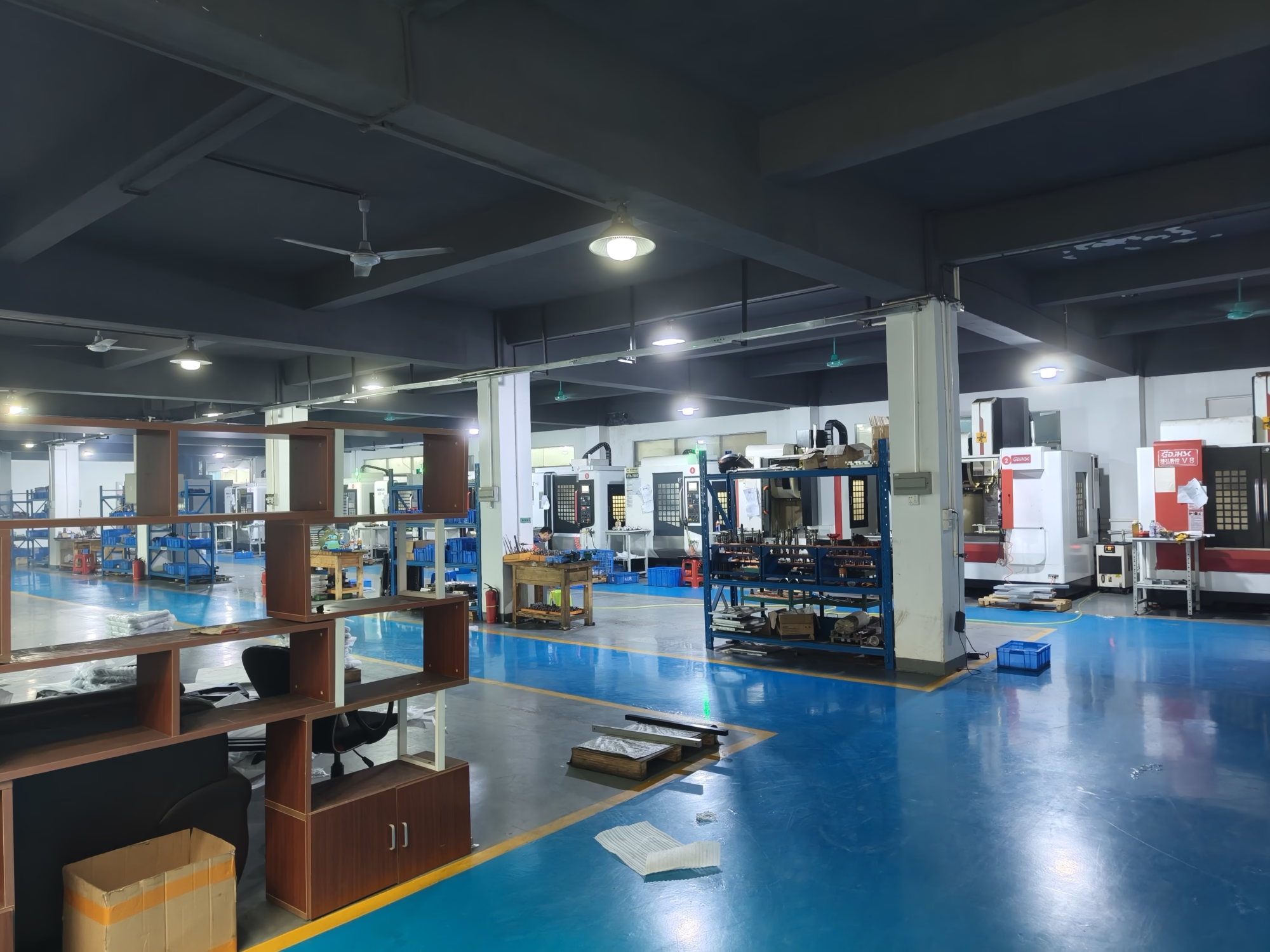
Permanent-mold parts poured in steel dies, then machined in-house on 127 CNC machines. Aluminum, zinc and copper alloys with wall sections down to 3 mm, quoted with DFM feedback within 12 hours.
Most casting failures are decided before the metal is poured. Here is what we see on incoming drawings and returned parts.
Feeders sized for a thick hub starve a thin flange. The cavity looks fine at the foundry, then a 0.5 mm finishing pass opens a pore on the sealing face and the part is scrapped at the last operation.
As-cast draft of 1.5° to 2° is normal. If the drawing calls ±0.1 mm on a face that sits across the parting line, no mold can hold it. That face needs a machining allowance, not a tighter casting spec.
A foundry ships blanks to a machine shop, and both blame the other when the bore runs out. Nobody owns the datum. Rework sits in a queue while the assembly line waits for parts.
A prototype cut from billet proves the design, then a second round of tooling money goes to a different vendor who never saw the first drawings. The two versions do not share a CAD master.
One purchase order covers the mold, the cast blank and every machined feature.
Permanent steel molds work best for parts with a released shape, uniform wall and a production volume that pays back tooling. We place the parting line, draft and gating before cutting steel. Feeders go where the thermal mass is, not where the drawing looks tidy.
We review wall transitions, boss roots and rib thickness in the DFM pass. Sharp internal corners become fillets. Deep pockets get draft that a cutter can still reach. That review comes back with the quote, inside 12 hours.
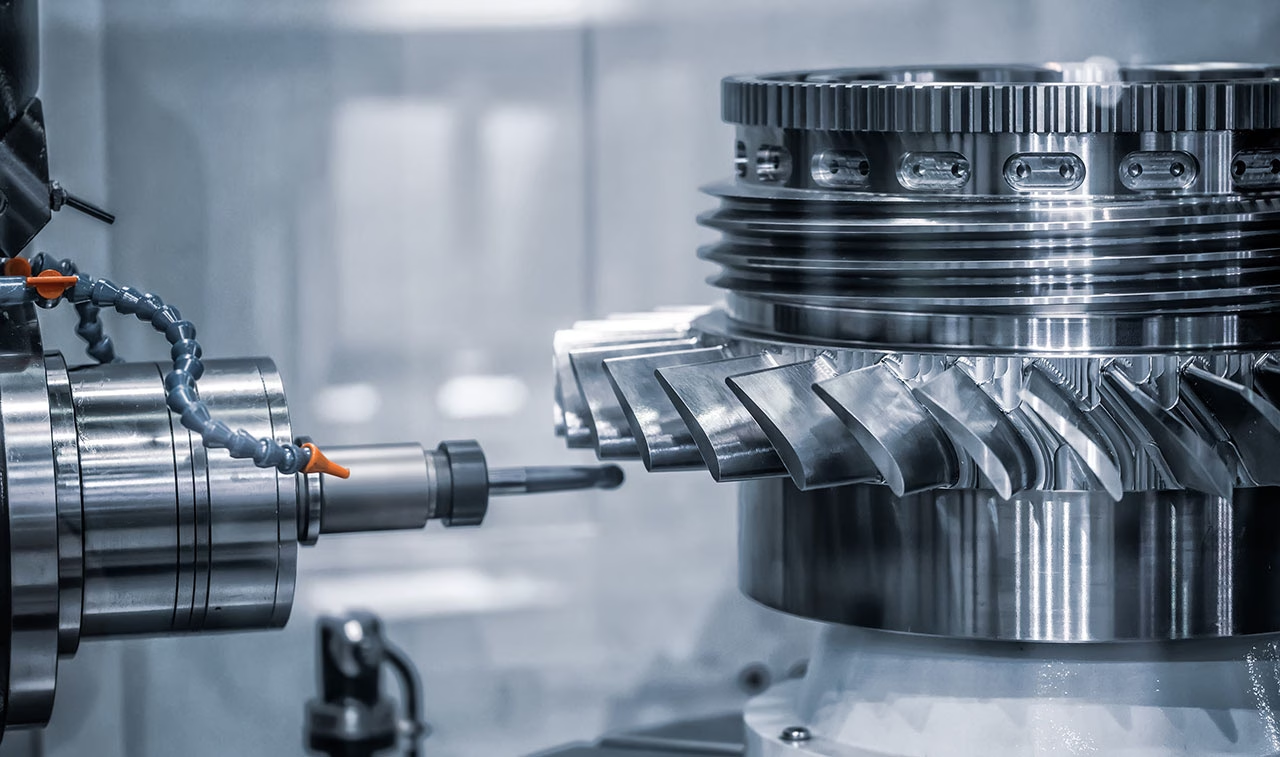
Castings arrive at the machine shop with a known datum. We face, bore, tap and mill on 16 simultaneous 5-axis centers, 12 four-axis mills and 16 mill-turn centers. Maximum processing size is 4,000 mm, so large housings stay in one setup where possible.
Because the foundry and the machine shop share a schedule, a porosity find at first cut does not become a three-week email thread. The blank is re-poured or the feature is re-engineered, and the lot moves.
Use this to sort a part before you send it. The answer changes with volume, wall thickness and how tight the critical faces are.
| Route | Best for | Watch out for |
|---|---|---|
| Permanent-mold gravity | Medium to high volume, uniform walls | Tooling cost, slow cooling in thick sections |
| Sand casting | Large parts, low volume, complex cores | Rough surface, more machining stock |
| Die casting | Thin walls, high volume, zinc or aluminum | High tooling, porosity in thick bosses |
| Investment casting | Fine detail, tight as-cast tolerance | Cost per part at low volume |
| CNC from billet | Prototypes and low volume | Material waste, no cast surface texture |
A casting is rarely the finished part. These are the operations we keep in-house so the sequence stays in one schedule.
Complex cast faces finished in fewer setups. 16 simultaneous 5-axis centers handle contoured surfaces and angled holes.
Bores, threads, sealing faces and bearing seats cut to ±0.005 mm on cast and billet parts.
When wall thickness drops below what gravity pouring can fill, we move the part to die casting and say why.
Fit and form checks before tooling is cut. No minimum order quantity, from one piece upward.
Anodizing, plating, powder coating, bead blasting and laser marking, applied after machining.
Small bridge runs in polyurethane when a steel mold is not justified yet.
Every line below is quoted together, so there is no gap between the foundry and the machine shop.
| Item | Range | Notes |
|---|---|---|
| Alloys | ADC12, 6061, 7075, C36000, zinc alloys | Other grades on request |
| Wall section | From 3 mm | Below that we quote die casting |
| Machined tolerance | ±0.005 mm | On features we control in process |
| Surface finish | Ra 0.8–1.6 μm | Fine finish to Ra 0.2–0.8 μm |
| Maximum size | 4,000 mm | Larger parts split or moved to sand |
| Order quantity | 1 piece to 10,000+ | No minimum order quantity |
We have run casting and machining together since 2011, across 3 wholly-owned plants and 7,600 m² of floor.
Mold design, pouring and CNC finishing sit inside the same company, so a change on one side reaches the other the same day.
Critical features are measured during the run, not only at the end. Reports are available on request with the shipment.
Send a STEP file and we return price, lead time and a written list of features that need a change before tooling.
Four certifications cover the process, from incoming alloy to packed carton. Records follow the lot number.
A casting program that jumps in volume does not wait for a subcontractor. The spindles are already on our floor.
One prototype or a 10,000-piece run, quoted the same way. NDA available on request before you upload anything.
Cast and machined enclosures where bore alignment and flatness decide whether the assembly seals.
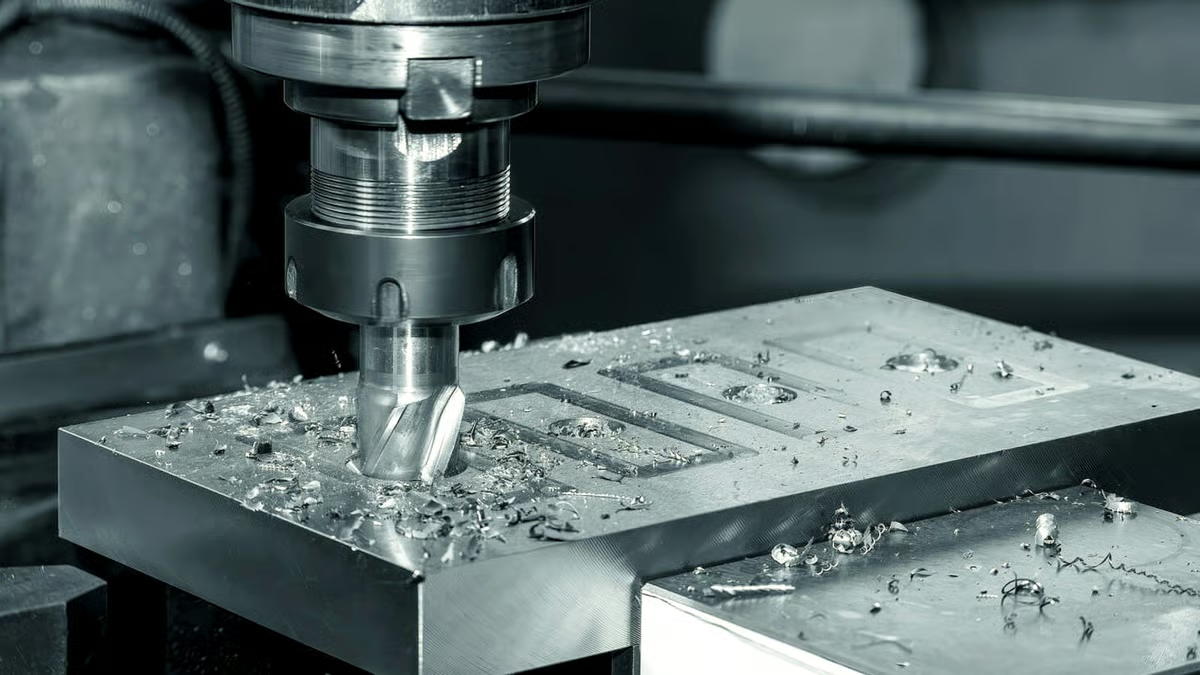
Joint housings and gearbox bodies that need a stiff cast section and a precise bearing seat.

Larger castings held in one setup up to 4,000 mm so bolt patterns stay true to the datum.
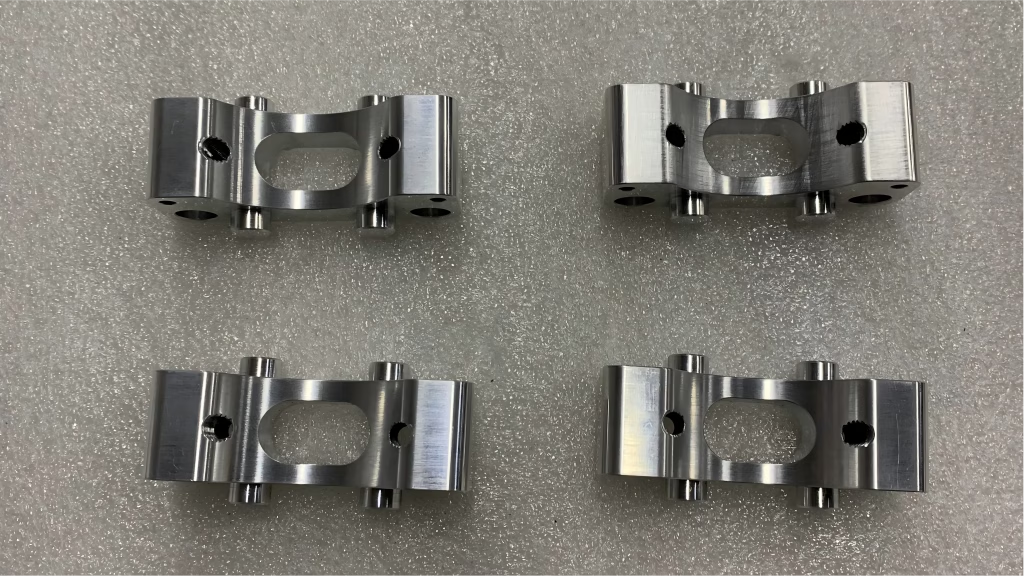
Cast housings with machined sealing faces and finished surfaces that meet a cosmetic spec.
Below roughly 3 mm wall thickness, or when as-cast tolerances tighter than ±0.5 mm are needed across a large face. Gravity pouring fills slowly under its own weight, so thin sections can freeze before the cavity is full.
For those parts we quote die casting or a machined billet instead. Saying so at the quote stage is cheaper than finding out at first article.
Plan on 1.5° to 2° on surfaces pulled straight out of the die, and more on deep pockets or textured walls. Draft is not a suggestion; without it the part tears on ejection.
If a feature must stay vertical for function, we machine it after casting instead of molding it.
Aluminum grades including ADC12, 6061, 7075 and 6063; zinc alloys; and copper-based grades such as C36000. The alloy choice usually follows thermal conductivity, weight and how the part will be finished.
Alloy and heat lot are recorded against the order number.
As a rule, leave 0.5 mm to 1.0 mm on faces that will be machined flat, and more on faces across a parting line. More stock means more passes and a longer cycle.
We mark on the DFM sheet which faces get stock and which stay as-cast, so the tooling and the CNC program agree.
Yes, if the blank arrives with a usable datum and the stock is enough for the required finish. We inspect the incoming part first and tell you if the allowance is short before cutting.
If the blank is out of spec, we report it rather than machine it and hope.
The first article is checked early in the run. If a pore opens on a critical face, we stop, locate the cause in the gating or the wall transition, and correct the mold or the casting layout.
The lot does not ship with a patch. Non-critical cosmetic pores are dispositioned with you in writing.
Anodizing in clear, color, hardcoat or conductive form; electroless nickel, zinc, silver and gold plating; powder coating and black oxide; bead blasting, tumbling, brushing and polishing.
Laser marking is available with a minimum character height of 1.5 mm.
Uploads are held confidentially and covered by ISO 27001:2022 practices. An NDA is available on request before you send files.
We do not show a customer's part, logo or program to another customer.
Upload a STEP file with your alloy and volume. An engineer returns price, lead time and the list of features to change before tooling, within 12 hours.
12-hour quoteFree DFM analysisNo minimum order quantity100% inspection before shipmentNDA on request
Trusted by engineers and manufacturers worldwide










Upload your 3D model or 2D drawing and get a quotation with a free DFM analysis. Maximum processing size 4,000 mm.
CNC Metals 13 grades
CNC Plastics 10 grades
Machines & processes 12 options
Surface & post-processing 10 options
Material: not selected Machine: not selected Post-process: not selected
Fill in this short form and we'll open WhatsApp with your message ready to send. We only use these details to reply to you.
Nothing is sent until you press send inside WhatsApp.