
High Speed CNC Processing Service: 7 Checks Before You Order
What separates a real high speed CNC processing service from a shop running standard spindles at standard feeds. Written for engineers and sourcing teams comparing quotes. After reading, you can judge a supplier's spindle class, tolerance hold, lead time and MOQ without visiting the floor.
In this article
- 1
- 2
- 3
- 4
- 5
- 6
- 7
- 8
Key takeaways
Standard CNC vs high speed CNC processing service
Use this to sort quotes before you send drawings.
| Factor | Standard CNC shop | High speed CNC processing service | What to ask |
|---|---|---|---|
| Spindle speed | 6,000-10,000 rpm | 15,000-24,000 rpm | Max rpm and taper type |
| Tool holder | CAT40 / BT40 | HSK-A63, shrink fit | Runout at the tool tip |
| Cutting strategy | Deep passes, low feed | Shallow passes, high feed | Axial and radial engagement |
| Typical tolerance | ±0.02 mm | ±0.005 mm | Which machine holds it |
| Thin-wall parts | Deflects, needs fixtures | Holds 0.5 mm walls | Minimum wall thickness |
| Surface finish | Ra 1.6-3.2 μm | Ra 0.2-0.8 μm | Measured on which surface |
| Setup count | 3-5 per complex part | 1-2 with 5-axis | Fixtures per operation |
| Best for | Simple prismatic parts | Contoured, thin, hard parts | Part family fit |
What makes a high speed CNC processing service different
High speed CNC processing is not a marketing label for a fast shop. It describes a machine and tooling combination that spins small-diameter cutters at 15,000-24,000 rpm and moves them through the part at feed rates a standard spindle cannot survive. The cutter leaves less material per pass, so cutting force drops and heat leaves with the chip.
The practical consequence is geometry. A Ø6 mm end mill at 20,000 rpm can follow a 3D contoured surface that a Ø20 mm cutter would only approximate with a series of stepped passes. For an impeller, a medical implant shell or a thin heat-sink fin, that difference decides whether the part works.
It also changes fixturing. Lower cutting force means less clamp pressure, which matters on parts with 0.5 mm walls. Fewer setups mean less cumulative tolerance. A 5-axis cell that reaches five faces in one setup removes the re-datum errors that build up across three or four separate fixtures.
The trade-off is real. High speed cutting is sensitive to tool runout, spindle balance and CAM strategy. A shop that buys fast spindles but keeps its old tool paths will break tools and blame the material. Ask how they program the transitions, not just what spindle they own.
- 1Chip load matters more than rpm
- 2Thermal control is the point
- 3Small tools need small runout
Which parts belong on high speed machines and which do not
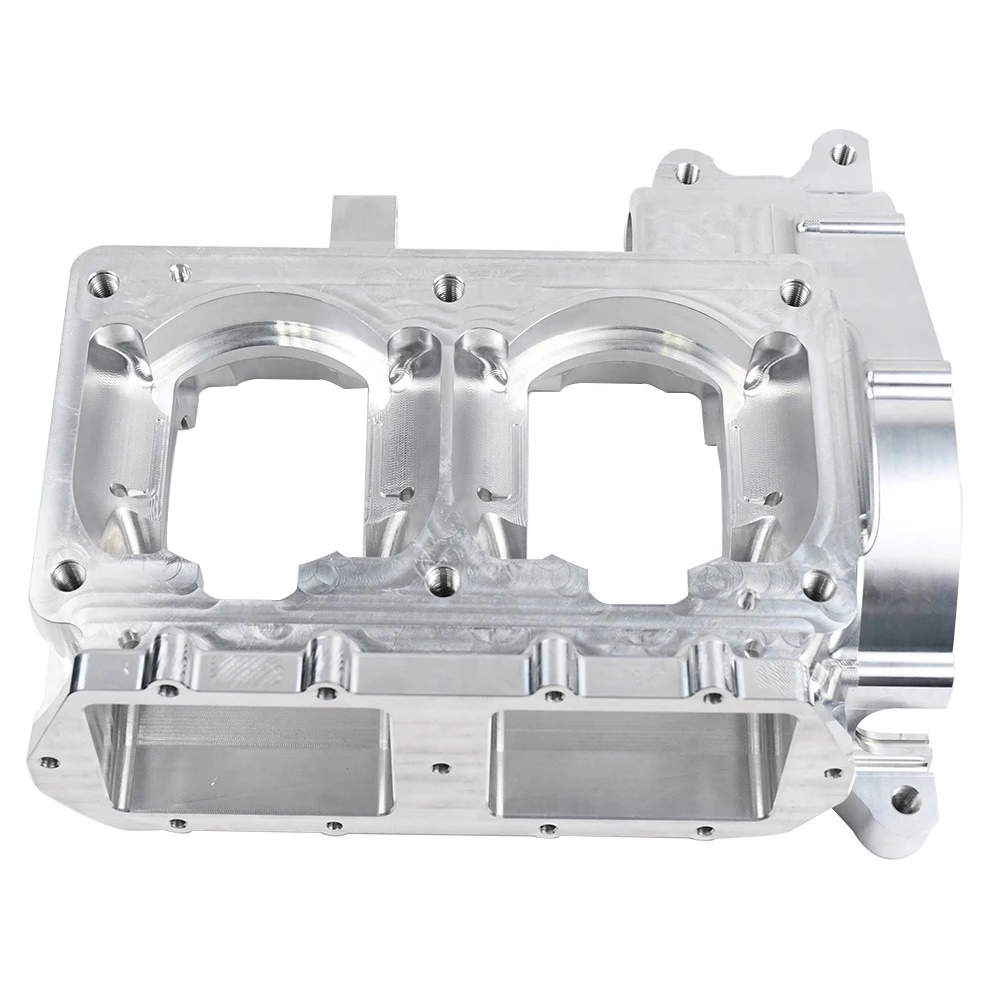
High speed machining earns its cost on contoured surfaces, thin walls and hard alloys. Aerospace brackets with sculpted pockets, impellers, medical bone plates and titanium housings are the usual fits. Tool paths are long and continuous, so the machine spends its time cutting rather than repositioning.
Simple prismatic parts are a poor fit. A flat plate with drilled holes and a few milled steps is faster and cheaper on a 3-axis machine at standard speeds. Sending that work to a high speed cell raises the hourly rate without improving the part.
Material also decides. Aluminium 6061, 7075 and 6082 cut well at high spindle speed and clear chips easily. Titanium TC4 (Ti-6Al-4V) and Inconel need lower surface speed and more coolant attention, so the speed advantage shrinks. Stainless 17-4PH sits in the middle.
Part size sets the limit. High speed spindles are usually on smaller travels. Our five-axis cells cover 500 × 500 × 450 mm and 600 × 600 × 600 mm envelopes, while large-frame work up to 4,000 mm runs on other machines. If your part is 2 m long, high speed is not the answer.
- 1Good fit
- 2Poor fit
- 3Ask for a DFM read
Seven checks that separate real capability from a brochure
Spindle class first. Ask for maximum rpm, taper type and tool-holder system. HSK-A63 or shrink-fit holders with documented runout indicate a machine built for high speed. A CAT40 spindle rated at 8,000 rpm cannot run a Ø3 mm cutter at the feeds this process needs.
Then tolerance evidence. ±0.005 mm is a claim about a process, not a machine spec sheet. Ask which machine holds it, on what feature, and whether in-process probing is used. We run 100% inspection before shipment with raw material checks, in-process monitoring and final reports on request.
Certification follows. ISO 9001:2015 covers general quality, IATF 16949:2016 covers automotive, ISO 13485:2016 covers medical devices and ISO 27001:2022 covers information security. If your part is a surgical instrument, the medical certificate is not optional.
Lead time definition matters more than the number. Ask when the clock starts and what stops it. Our quotation and free DFM analysis come back within 12 hours, production can start within 24 hours, and parts ship in 3-5 days. Historical late-delivery probability is below 2%.
MOQ and confidentiality close the list. A shop with no minimum order quantity can support a single prototype and a 10,000+ part run. Confidential uploads and an NDA on request protect your drawings.
Finally, ask who programs the job. The CAM engineer decides whether the spindle's capability reaches the part. A supplier who cannot name the person reviewing your tool paths is selling machine hours, not process control.
- 1Spindle and holder
- 2Tolerance evidence
- 3Certificates
- 4Lead-time clock
How to compare quotes without getting fooled by the hourly rate
High speed machining usually carries a higher hourly rate than standard milling. That is expected. The comparison only works when you count total cost per good part: setups, fixtures, inspection and scrap. A part that needs four setups on a standard machine may need one on a 5-axis cell.
Setup count is the biggest hidden line item. Each extra fixture adds load and unload time, a datum transfer and a chance for tolerance stack-up. On a complex housing, cutting two setups can remove more cost than the spindle rate adds.
Tool life cuts the other way. High speed cutting spreads load across many small teeth, so a coated carbide cutter can run longer before it is replaced. On titanium and Inconel, a shop using the wrong feed per tooth burns through tools and passes that cost to you.
Ask for the quote broken into material, machining, finishing and inspection. A single lump sum hides whether the shop is applying the right process. Surface finishing, anodizing, plating and laser marking are separate operations and should be visible.
Be wary of a quote that arrives without questions. A supplier who never asks about wall thickness, tolerances on specific features or material condition is likely quoting from a price list rather than a process plan.
Five mistakes buyers make when sourcing high speed machining
Specifying high speed for a part that does not need it is the most common one. A flat bracket with six holes will not get better because the spindle turns faster. It gets more expensive. Match the process to the geometry.
The second is judging by rpm alone. Spindle speed without the right holder, tool and CAM strategy produces chatter and short tool life. Ask about runout, chip load and coolant delivery before you ask about rpm.
Third, trusting a tolerance number without a measurement plan. A ±0.005 mm claim means nothing without knowing which machine, which feature and which inspection method. Ask for the report format before the order.
Fourth, ignoring the setup count in the quote. Three setups on a contoured part can add more cost than the hourly difference between standard and high speed machining. Ask how many fixtures the job needs.
Fifth, treating lead time as a single number. A 3-5 day shipping window depends on material being in stock and the DFM being approved. Clarify what happens if the drawing changes mid-run, and who pays for the second setup.
- 1Do not buy speed you cannot use
- 2Do not accept rpm without runout
- 3Do not skip the measurement plan
How to place a high speed CNC order, step by step
Follow this sequence to keep the quote and the part aligned.
- 1Send drawings with a tolerance mapInclude a STEP or IGES model plus a 2D drawing that marks which features carry ±0.005 mm and which are general. Unmarked tolerances default to the shop's standard.
- 2State material and conditionGive the alloy and temper, for example 7075-T6 or 17-4PH, not just 'aluminium' or 'stainless'. Condition changes cutting speed and finish.
- 3Flag thin walls and deep pocketsAnything under 1 mm wall or deeper than 4 × tool diameter needs a different strategy. Say so before the quote, not after the first article.
- 4Ask for the DFM readA useful supplier returns a DFM note within 12 hours: suggested tolerances, features that need a second setup, and where high speed is unnecessary.
- 5Confirm the inspection planAgree which features are measured, with what instrument, and whether a report ships with the parts. We inspect 100% before shipment.
- 6Approve the first articleFor a new geometry, check the first part against the drawing before the run continues. Fix tool-path issues here, not at 500 pieces.
- 7Lock finishing and markingAnodizing, plating, bead blasting and laser marking are separate steps. Laser marking has a minimum character height of 1.5 mm, so check your label fits.
- 8Confirm packaging and documentationDecide how parts are protected, how they are counted, and which certificates travel with the shipment.
Questions engineers ask before ordering
What spindle speed counts as high speed CNC processing?
In practice, 15,000 rpm and above with an HSK or shrink-fit holder. Below that, small-diameter cutters cannot reach the surface speed the process needs.
The number matters less than the combination. A 20,000 rpm spindle with a worn holder and 0.02 mm runout will chatter, while a well-maintained 15,000 rpm cell with 0.005 mm runout cuts cleanly.
Can high speed machining hold ±0.005 mm on every feature?
No. Tolerance applies to specific features that the process and the machine can control. We quote ±0.005 mm where the geometry, material and fixturing support it.
Features far from the datum, thin unsupported walls and deep bores usually carry a looser tolerance. A good quote states which is which instead of applying one number to the whole drawing.
Which materials are worth running at high speed?
Aluminium alloys such as 6061, 7075 and 6082 benefit most because they machine fast and clear chips well. Stainless 17-4PH and 304 also work when feed per tooth is set correctly.
Titanium TC4 and Inconel run at lower surface speeds, so the speed advantage is smaller. They still benefit from the 5-axis single-setup side of the process.
Do I need a minimum order quantity?
No minimum order quantity applies here. A single prototype and a run of 10,000+ parts go through the same quoting process.
For one-off parts, expect the setup and programming time to dominate the price. That is normal and not a sign of an inflated quote.
How fast can parts ship?
Quotation and free DFM analysis come back within 12 hours. Production can start within 24 hours of approval, and parts ship in 3-5 days.
Those windows assume material is available and the drawing is frozen. Changes after the first article reset part of the schedule.
What about confidentiality on new product drawings?
Uploads are secure and confidential, and an NDA is available on request before you send files. We hold ISO 27001:2022 for information security.
If your program needs a signed agreement before drawings leave your network, ask for it first. It adds no cost.
Send your drawing and get a process answer, not a price list
Quotation and free DFM analysis within 12 hours. From one prototype to 10,000+ parts, no minimum order quantity.
12-hour quote3-5 day shipping100% inspectionNDA on request
More machining notes from the floor
We publish setup notes, tooling trials and inspection data from the factory floor.











