GreatLight CNC Machining Factory logo
CNC Machining
Rapid Prototyping
Materials
Industries
News
About GL

Get Instant Quote

Wear Parts

Iron Casting Terex Canica Model 2000

Feed tube impellers for the Canica 2000 rotor. Chromium held inside 2%, hardness at 53 HRC in the as-cast condition, hole pattern on the 22 in PCD machined to print. We quote a casting plus machining route from your drawing.

Cr within 2%53 HRC as-cast22 in PCDPPAP availableNo MOQDongguan + Singapore
die-casting-technology
2011Casting and machining since
127High-precision CNC machines
4,000 mmMaximum processing size
±0.005 mmAchievable machining tolerance
What goes wrong

Four ways a Canica 2000 feed tube fails before it wears out

Most of these show up at first article or at the first teardown, not at the drawing stage.

01

Chromium drifts past 2%

Heat-to-heat variation in chromium content changes abrasion resistance across a batch. When one impeller wears faster than the next, the rotor balance shifts and the feed tube starts rubbing. The spec only works if every heat is verified before pouring.

02

Hardness comes with cracks

Pushing as-cast hardness to 53 HRC without a controlled cooling cycle leaves internal stress. Parts pass hardness checks and fail in service, usually at a section change or a bolt boss. Cooling curves must be written per section thickness, not per alloy.

03

Hole pattern on the 22 in PCD is undersized

Shrinkage allowance is often set from a table instead of measured. The 22 in pitch circle then comes in small, bolts will not drop through, and the whole casting is scrap. Pattern correction has to happen before the first production run, not after.

04

Coating does not match the prototype

Prototype paint gets imported and production paint gets substituted. Color and film thickness drift, and the customer rejects the lot at incoming inspection. The coating callout needs a qualified equivalent locked in before pilot parts ship.

How we build it

One route from pattern to finished feed tube

Casting, heat treatment, machining and coating handled under one quality system.

vacuum-casting-services1
Melt control

Chromium held inside 2% by spectrometer, heat by heat

Every heat is sampled and read on a spectrometer before the pour. Chromium, carbon and manganese are corrected in the ladle, not after the fact. The 2% window is treated as a process limit, so the reading has to land near the middle of it rather than at the edge.

We keep the chemistry record tied to the casting serial, so a wear complaint can be traced back to the heat that produced it.

  • 1
    Spectrometer per heatChemistry recorded before pouring, not from a sample casting.
  • 2
    Corrected in the ladleAdditions made while the iron is still liquid.
  • 3
    Traceable to serialHeat number follows the part through machining and coating.

Get Instant Quote

oplus_262178
Heat treatment

53 HRC as-cast without a crack at the section change

Hardness at 53 HRC in the as-cast condition is where most suppliers lose parts. The cooling cycle has to follow the section thickness of the impeller, and thick bosses need a slower path than the thin vanes around them. We write the curve per part, run thermocouples on the first pieces, and check hardness at three locations.

If a casting comes out soft, it is reworked to the same curve rather than shipped with a note.

  • 1
    Curve per sectionCooling matched to boss and vane thickness, not one recipe for all.
  • 2
    Thermocouple on first piecesActual part temperature logged, not furnace air temperature.
  • 3
    Three hardness spotsBoss, vane and hub checked on each first article.

Talk to an Engineer

Route comparison

Which route fits your Canica 2000 program

Pick the route by quantity and how much of the pattern work is already done.

RouteBest forWhat we controlTooling
Prototype casting1 to 5 pieces, design checkChemistry, hardness, machined fitsSoft tooling
Pilot lotPPAP submission, 20 to 50 piecesChemistry, hardness, 22 in PCDProduction pattern
Production run100 pieces and up, repeat ordersChemistry, hardness, coatingProduction pattern
Recast from your patternExisting tooling, worn out partChemistry, hardness, machiningCustomer supplied
What we do

Casting and finishing services behind the feed tube

The impeller is the entry point. Most programs need two or three of these.

01

Metal Die Casting

Iron and alloy castings with controlled chemistry, from prototype tooling to production patterns.

02

5 Axis CNC Machining

Hole patterns, bores and faces cut in one setup on 16 simultaneous 5-axis centers.

03

CNC Milling & Turning

Hub bores and mounting faces turned and milled to ±0.005 mm where the print calls for it.

04

Part Surface Finishing

Coating, black oxide and blasting matched to the coating callout on your drawing.

05

Rapid Prototyping

Pattern and fixture work for the first article before production tooling is cut.

06

Vacuum Casting

Low-volume duplicates for fit checks when a full pattern is not justified yet.

Specifications

Casting and machining scope

ItemCapabilityNotes
Chromium controlWithin 2%Spectrometer reading per heat
As-cast hardness53 HRC targetVerified at three locations
Hole pattern22 in PCDMachined after shrinkage check
Machining tolerance±0.005 mmOn critical bores and faces
Surface finishRa 0.8–1.6 μmOn machined sealing faces
Maximum part size4,000 mmLarger parts quoted case by case
CoatingQualified equivalentLocked before pilot shipment
DocumentationPPAP on requestChemistry and hardness reports
Why GreatLight

What makes this program runnable

Numbers we can stand behind, not claims.

15Y

Casting and machining since 2011

Fifteen years of wear-part work, with chemistry and heat treat handled in house.

2%

Chromium window held

Spectrometer reading per heat, corrected in the ladle before the pour.

53 HRC

As-cast hardness target

Cooling curve written per section thickness to avoid cracks at the bosses.

22 in

PCD hole pattern

Shrinkage measured on the first pieces, then the pattern is corrected.

12 h

Quote and DFM turnaround

Drawing review and quotation returned within 12 hours.

3–5 d

Machining after casting

Parts ship in 3 to 5 days once the castings are released.

7,600 m²Manufacturing space
150Technicians
3Wholly-owned plants
99.99%Qualification rate
Where this runs

Wear parts in aggregate and mining duty

6011

Crushing and screening

Impact rotors and feed tubes. The industry requires chromium control and hardness that survives rock and concrete feed.

  • Cr within 2%
  • 53 HRC as-cast
  • 22 in PCD
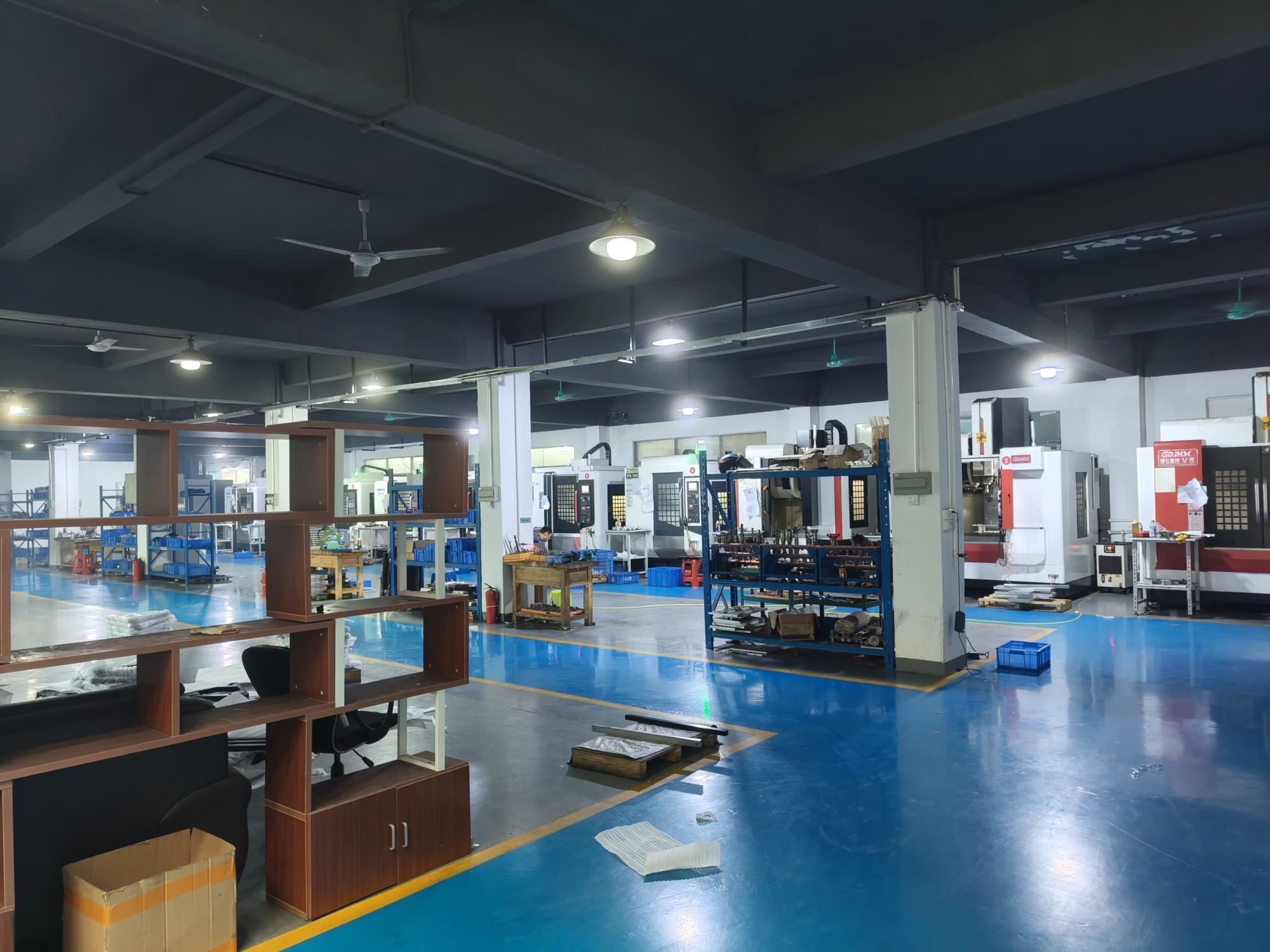
GreatLight Metal new factory building

Industrial machinery parts

Cast then machined housings and wear plates. The requirement is a repeatable pattern and a documented heat record.

  • ±0.005 mm
  • 4,000 mm
  • PPAP on request
Leader in Cnc Machining Service China

Low-volume rebuilds

Single replacement impellers and small rebuild lots. No minimum order quantity, so one worn part can be recast.

  • No MOQ
  • 1 to 10,000+
  • NDA on request
FAQs

Questions engineers ask about the Canica 2000 part

Can you hold chromium within 2% on every heat?

Yes, and we treat 2% as a window rather than a ceiling. Each heat is sampled and read on a spectrometer before the pour, and additions are made in the ladle while the iron is still liquid.

The reading is recorded against the casting serial. If you need the chemistry report with the shipment, ask for it on the purchase order.

Why is 53 HRC as-cast harder to deliver than it sounds?

Hardness and cracking pull in opposite directions on a part with thick bosses and thin vanes. A single cooling recipe that hits 53 HRC on the vane will usually crack the boss.

We write the cooling curve per section thickness and run thermocouples on the first pieces, then check hardness at three locations.

The hole pattern on the 22 in PCD came in small last time. How do you prevent that?

Shrinkage is measured on the first castings instead of taken from a table, and the pattern is corrected before the production run starts.

The 22 in PCD is then machined after casting, so the finished pattern lands on the print rather than near it.

Can you recast from our existing pattern?

Yes. If your pattern is still serviceable, we pour from it and handle heat treatment and machining in house.

Send the pattern drawing and a worn sample if you have one. We check the wear areas before quoting so the recast addresses the failure, not just the shape.

How do you handle the coating when the prototype paint is imported?

We qualify an equivalent coating before pilot parts ship, and the same coating goes on production. Color and film thickness are checked against the approved sample.

If your drawing names a specific product, tell us at quoting stage so the equivalent is approved before the first lot, not after.

Do you supply PPAP documentation?

PPAP is available on request. For pilot lots we submit chemistry, hardness and dimensional reports together with the parts.

Tell us which elements of the PPAP you need at quoting stage. Building the submission after the parts ship usually costs a week.

What is the smallest quantity you will run?

There is no minimum order quantity. We run from one prototype to 10,000+ part runs, with the same route either way.

A single replacement impeller is usually cheaper than a shutdown, so that is a normal order for us.

How fast can we see a quote and a first part?

Quotation and DFM analysis come back within 12 hours of receiving a drawing. Production can start within 24 hours once the route is agreed.

Machined parts ship in 3 to 5 days after the castings are released. The casting lead time itself depends on pattern status, so send the drawing first.

Send the drawing, get a casting route back

Upload the feed tube drawing or a worn sample photo. We review the chemistry, hardness and 22 in PCD callouts and quote a casting plus machining route within 12 hours.

12-hour quote100% inspectionNo minimum order quantityNDA on request

Trusted by engineers and manufacturers worldwide

Tesla Ford Motor Company BYD Auto Denso Magna International Boeing Airbus Medtronic KUKA FANUC