GreatLight CNC Machining Factory logo
CNC Machining
Rapid Prototyping
Materials
Industries
News
About GL

Get Instant Quote

New application

New Application Impeller Blade Casting

Axial fan impeller blades that start as a C355.0 casting and finish on a 5-axis machine. One job covers vacuum melting, X-ray levels, T-6 temper, reshaping and shank tolerances.

C355.0ASTM E155 X-rayT-6 temper±0.005 mmNo MOQ
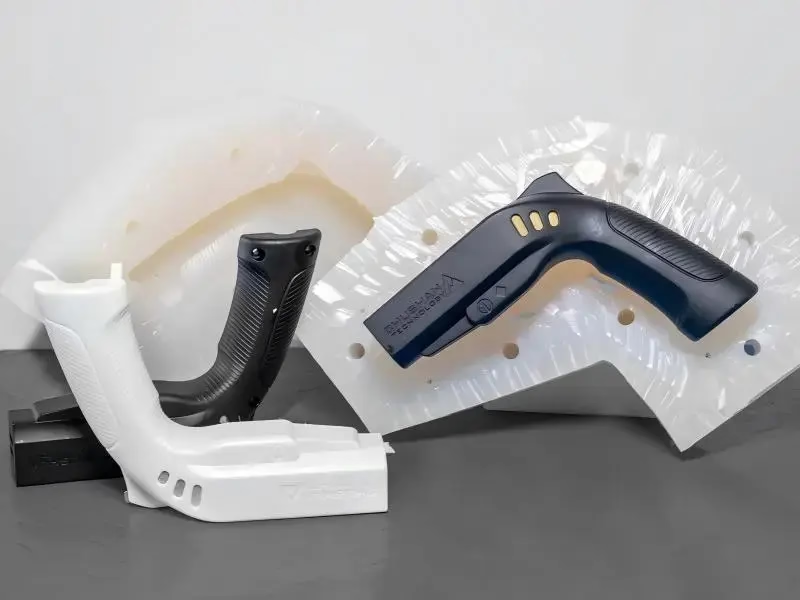
vacuum-casting-services1
15 yearsIn business since 2011
127High-precision CNC machines
±0.005 mmAchievable machining tolerance
3–5 daysTypical shipping window
Where it goes wrong

Four Failures We See on Cast Impeller Blades

Most blade problems are decided before the first cut.

01

Blade twist closes up after heat treat

A blade cast straight, quenched, then tempered often comes back with twist outside the drawing. The airfoil angle is wrong, the fan runs out of balance, and the whole set has to be reworked or scrapped. Reshaping has to be planned into the route, not added after the fact.

02

Porosity sits where the load is

Shrinkage and gas porosity tend to collect near the shank, exactly where bending stress is highest. If the casting is only checked in easy areas, the defect ships and shows up as a crack in service. Film and X-ray levels have to be written per zone.

03

Casting skin removed by machining

Machining past the as-cast skin exposes subsurface porosity that looked acceptable on the outside. The part is now out of print on wall thickness and cannot be welded back to drawing without re-heat-treat.

04

Shank face will not seat

If the shank datum is cut before reshaping, the bend moves the seating face and the blade no longer sits flat in the hub. Shank machining and reshaping have to be sequenced, not run as two independent operations.

How we build it

Cast, Test, Reshape, Machine

One route from melt to finished blade, held on the same drawing.

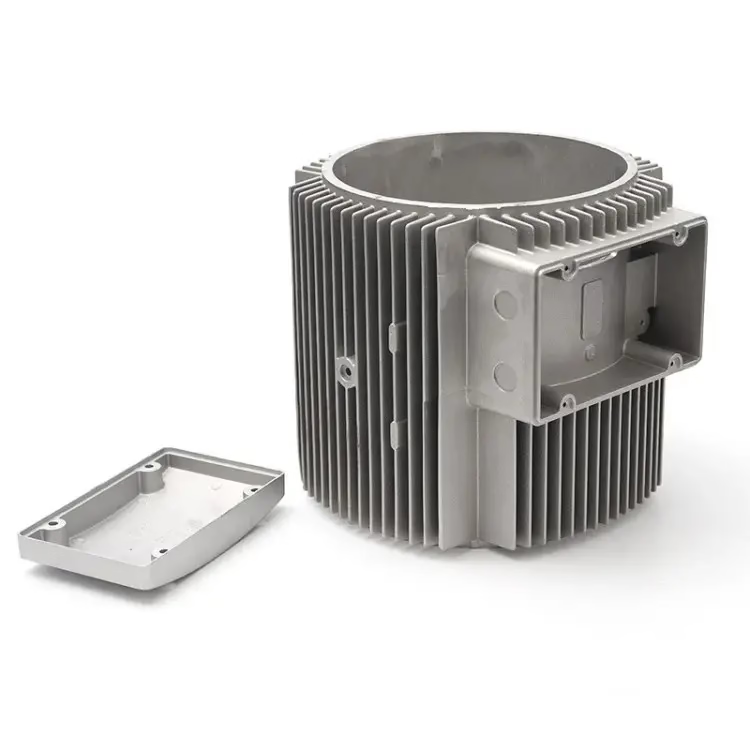
die-casting-technology
Casting

Material and Melt Control

For this new application impeller, the customer selected C355.0 for its strength at elevated temperatures. It is an Al-Si-Cu alloy with a fine structure after T-6, and it can be sand cast or permanent mold cast. Sand casting suits larger, lower-volume blades; permanent mold suits smaller sections and higher strength demand.

Melting runs in a high vacuum melting casting furnace with high tilt automatic equipment, which limits gas pickup before the pour. We agree the X-ray acceptance zones with you before the first heat. Typically Level 2 near the shank and Level 4 elsewhere, tested to ASTM E155.

  • 1
    C355.0 selected for hot strengthChosen by the customer for elevated-temperature service.
  • 2
    Vacuum melting and high tilt pourLess gas pickup in the melt before it enters the mold.
  • 3
    Zone-based X-ray acceptanceLevel 2 near the shank, Level 4 in the rest of the blade.

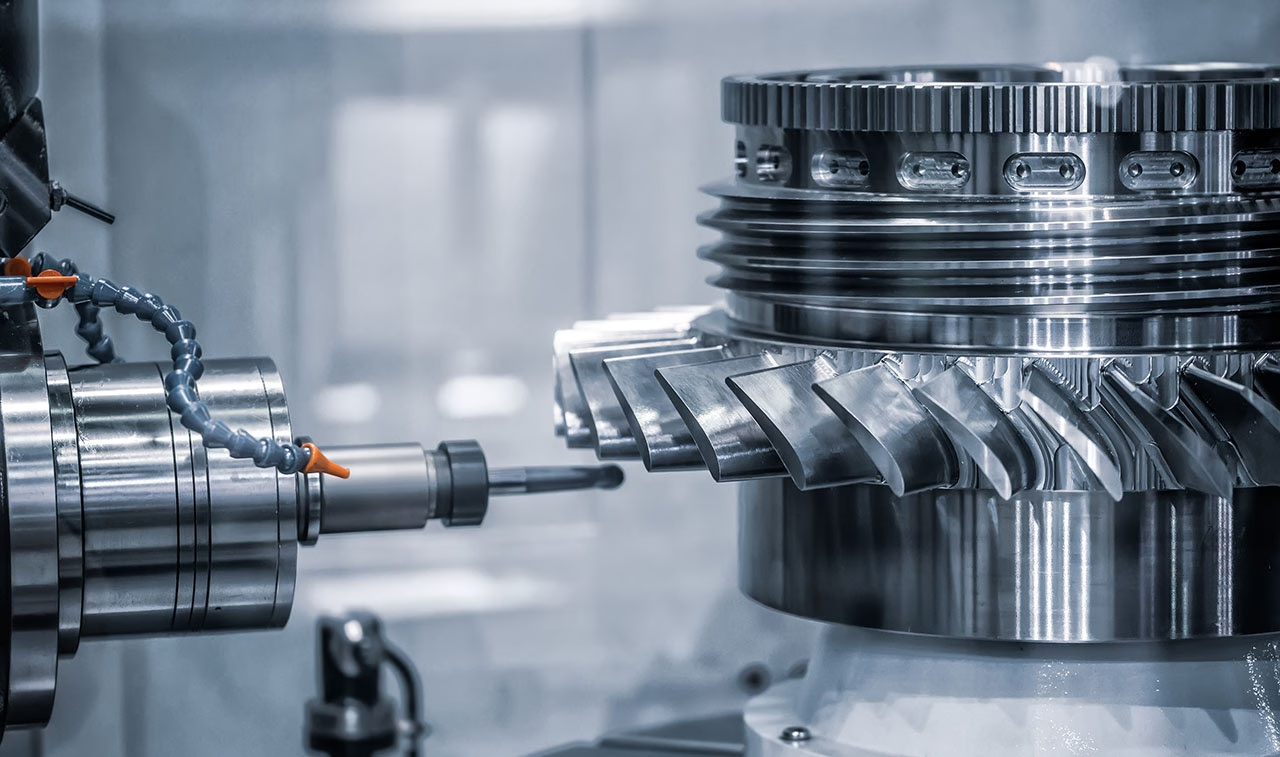
CNC Lathe Technical Specifications Terminology
Heat treat and reshaping

Hold the Twist Through T-6

Blades are heat treated to T-6, which means solution treatment, quench, then artificial aging. Quenching is where twist moves. We measure the part after quench, then add a reshaping operation in a dedicated fixture that bends the blade back to the airfoil tolerance before tempering.

Base machining runs early enough that the twist characteristics stay intact, and final shank work comes after reshaping so the seating face is true. That order matters more than any single tolerance on the drawing.

  • 1
    Quench, measure, reshape, temperReshaping sits between quench and tempering, not after.
  • 2
    Dedicated bend fixtureBuilt for this blade, so the airfoil angle repeats.
  • 3
    Shank cut after reshapingThe seating face stays flat against the hub.

Get Instant Quote

Selection

When Cast-and-Machine Is the Right Route

Use this to decide before you spend on tooling.

ConditionCast and machineMachined from solid
Blade sizeMedium to large axial fan bladesSmall blades and thin sections under 3 mm
QuantityLow to medium, one-off to a few hundredOne prototype up to 10,000+ parts
Airfoil shapeComplex twist that is hard to mill in one setupSimple or moderate airfoil
MaterialC355.0 or similar castable alloy6061, 7075, 17-4PH, Ti-6Al-4V
Inspection needX-ray and film per ASTM E155Dimensional and surface only
Cost driverPattern and heat treatBar stock and cycle time
What we run

Services on This Route

Different blades need different steps. Pick what your drawing calls for.

01

Vacuum Casting

Investment and vacuum casting for impeller blades and similar airfoil parts where gas content has to stay low. C355.0 and other castable alloys.

02

5 Axis CNC Machining

16 simultaneous 5-axis centers handle the twisted surfaces and the shank in fewer setups, which keeps the airfoil and the mounting face in one coordinate system.

03

CNC Milling & Turning

Shank diameters, hub bores and mounting faces turned and milled to ±0.005 mm where the drawing needs it.

04

Heat Treatment Coordination

T-6 temper with reshaping in a dedicated fixture between quench and tempering, so twist stays inside tolerance.

05

Part Surface Finishing

Polished finishes for engineered components, plus bead blasting, brushing and anodizing when the blade runs in a wet or abrasive environment.

06

Rapid Prototyping

A machined or printed blade first, so you can check fit in the hub and airflow before committing to a pattern.

Scope

Process and Inspection Scope

Numbers we can commit to on a cast blade route.

ItemCapabilityNotes
Casting alloyC355.0Sand or permanent mold, customer selected
X-rayASTM E155Level 2 near shank, Level 4 elsewhere
Heat treatT-6Reshaping before tempering
Machining tolerance±0.005 mm±0.0002 in where specified
Surface finishRa 0.8–1.6 μmPolished on request
Max part size4,000 mmLargest machine travel
Inspection100% before shipmentReports on request
Lead timeQuote in 12 hoursParts ship in 3–5 days
Why GreatLight

What Makes This Route Work

2011

15 years in metal

Founded in 2011. Three wholly-owned plants and 150 technicians across Dongguan and Singapore.

127

CNC machines

16 simultaneous 5-axis centers, 12 four-axis mills, 27 three-axis machines and 16 mill-turn centers.

12 h

Quote and DFM

Quotation and free DFM analysis within 12 hours of receiving your drawing and 3D file.

24 h

Production start

Production can start within 24 hours once the route and fixture are approved.

99.99%

Qualification rate

Raw material check, in-process monitoring and final inspection before every shipment.

1 pc

No minimum order

From one prototype blade to 10,000+ part runs, on the same drawing and process.

7,600 m²Manufacturing space
4,000 mmMaximum processing size
Ø400 mmRotary table capacity
ISO 9001Plus IATF 16949, ISO 13485, ISO 27001
Where it ships

Industry Requirements and What We Deliver

6011

Underground and above-ground mining

Blades for axial fans run in dust and abrasive air, so the airfoil surface and the shank fit both have to hold.

  • ASTM E155 X-ray
  • T-6 temper
oplus_262178

Power plant cooling

Elevated-temperature service is why C355.0 was chosen. Hot strength has to survive the full duty cycle.

  • C355.0
  • Hot strength
Leader in Cnc Machining Service China

Industrial fans and blowers

Blade sets have to match each other. Twist tolerance repeats across the set, not just on one part.

  • ±0.005 mm
  • Set consistency
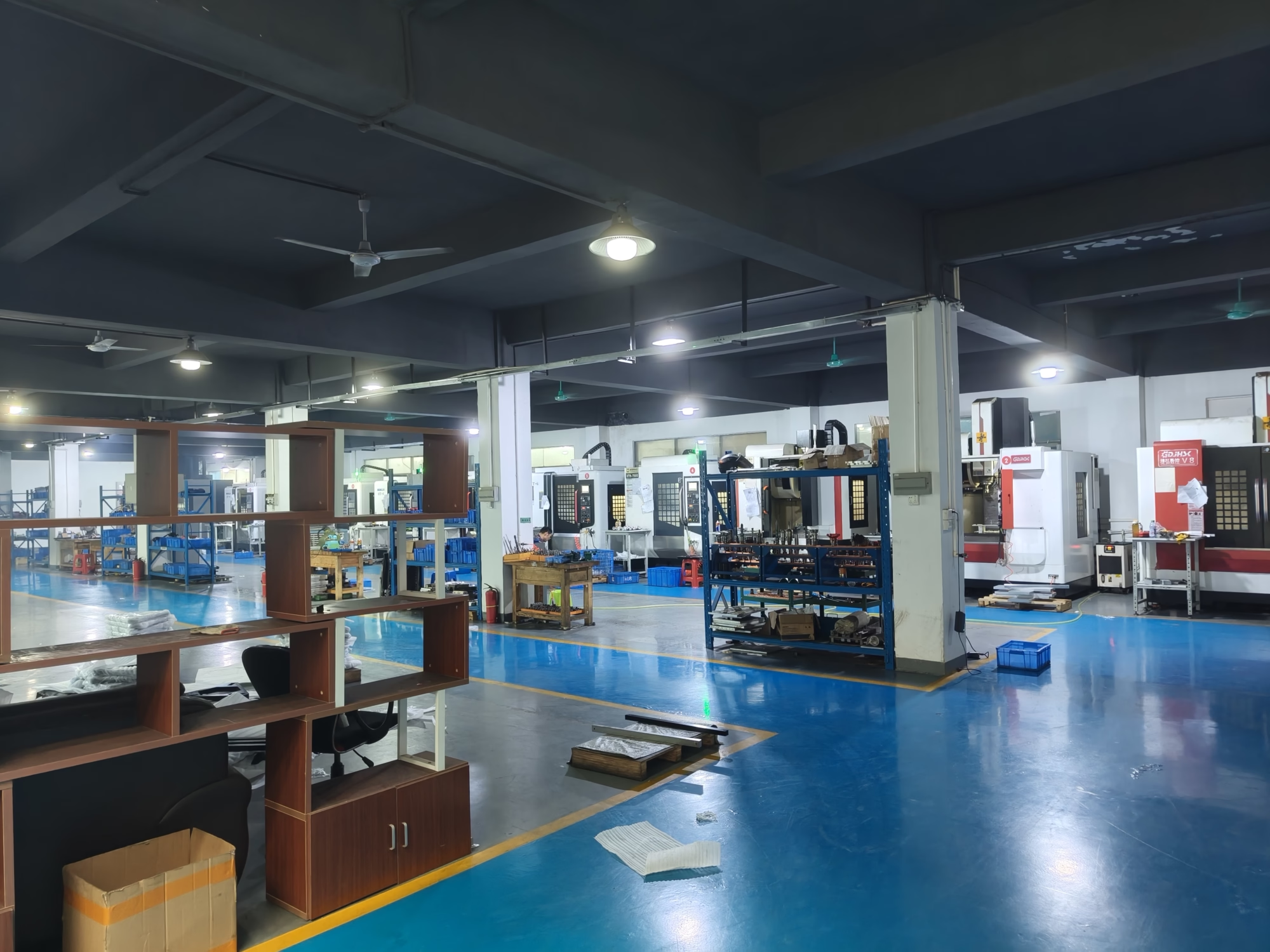
GreatLight Metal new factory building

Prototype to production

One machined blade for fit check, then the cast route once the airfoil is signed off.

  • No MOQ
  • 12-hour quote
FAQs

Questions Engineers Ask

Why cast an impeller blade instead of machining it from solid?

Cast-and-machine makes sense when the airfoil is complex, the blade is large, and the quantity is low to medium. Milling a deep twisted airfoil from bar stock removes a lot of material and cost.

Machining from solid is still the better call for small blades, thin sections under about 3 mm, or when you need 10,000+ identical parts with no casting variation.

What does the X-ray level actually mean for a blade?

ASTM E155 sets acceptance levels by severity. Level 2 near the shank allows less porosity in the high-stress zone, and Level 4 in the rest of the blade allows more.

We agree those zones with you before the first heat, because the shank carries the bending load and the blade body mostly carries airflow.

How is twist held after quenching?

Quenching is where twist moves the most. After quench, we measure the blade, then bend it in a dedicated fixture to bring the airfoil back to tolerance. Tempering runs after reshaping.

Base machining is sequenced so the twist characteristics stay intact, and final shank machining follows reshaping so the seating face stays flat.

What tolerance can you hold on the shank?

±0.005 mm (±0.0002 in) where the drawing specifies it. The shank is the locating feature, so it gets the tightest control and the most inspection attention.

The airfoil surface is held to the profile tolerance on your drawing, which is usually looser than the shank by design.

Can you run one blade before I commit to a pattern?

Yes. There is no minimum order quantity, and we can machine or print a single blade first so you can check fit in the hub and check airflow before pattern work starts.

Once the airfoil is signed off, the same drawing moves to the cast route with reshaping and T-6 temper added.

Which finish suits a fan blade in service?

Polished finishes are common on engineered blades because surface roughness affects airflow and fouling. We work in the Ra 0.8–1.6 μm band on machined surfaces.

For wet or abrasive environments, anodizing or a coating may be specified on top. Tell us the service environment and we will say which finish fits.

What do you need to quote a cast blade?

A 2D drawing with the X-ray zones marked, a 3D model, the alloy, the quantity and the service temperature. If you have an existing pattern, say so.

Quotation and free DFM analysis come back within 12 hours. Uploads are secure and confidential, and an NDA is available on request.

How do you handle confidentiality on a new blade design?

Uploads stay secure and confidential. We can sign your NDA or provide ours before you send the model.

Access to the files is limited to the engineers and machinists who run the job.

Send the Blade Drawing

Tell us the alloy, the X-ray zones and the service temperature. You get a quote and a DFM read within 12 hours.

12-hour quote100% inspectionNo minimum order

Trusted by engineers and manufacturers worldwide

Tesla Ford Motor Company BYD Auto Denso Magna International Boeing Airbus Medtronic KUKA FANUC