GreatLight CNC Machining Factory logo
CNC Machining
Rapid Prototyping
Materials
Industries
News
About GL

Get Instant Quote

Sheet metal & stamping

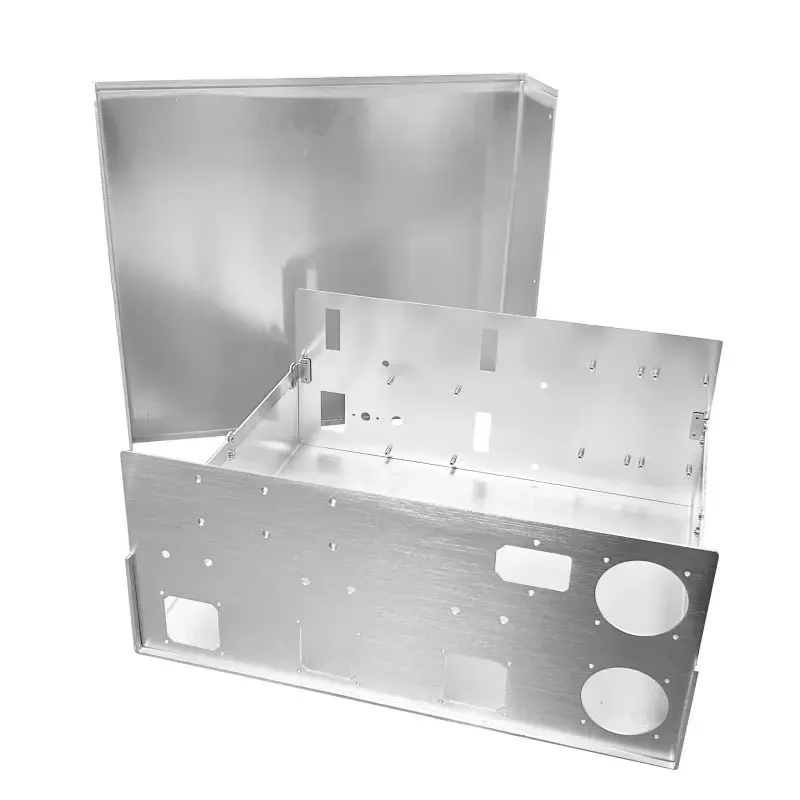
Stamping Industry Metal Enclosure

Custom enclosures built from stamped and laser-cut sheet, with the critical fits machined afterward. Aluminum 6061, 5052 and stainless 304 or 316. One prototype or a 10,000-part run.

From 1 piece±0.005 mm6061 / 304 / 316ISO 9001:201512-hour DFMNDA on request
aluminum-alloy-industrial-control-chassis-sheet-metal-processing
127High-precision CNC machines
7,600 m²Manufacturing floor space
15 yearsSheet metal and machining
99.99%Qualification rate
Where enclosures go wrong

Four failures we see on incoming enclosure drawings

Most of these are caught before cutting, not after. Here is what they cost when they are not.

01

Bend radius tighter than the material allows

A 1.5 mm inside radius on 3 mm 304 stainless will crack on the outside of the bend. If the print asks for it anyway, the shop either forces it and scraps the part, or quietly opens the radius and the lid no longer sits flush. Both outcomes reach you as a schedule slip.

02

Hole-to-bend distances under 2× material thickness

Punching or laser-cutting a hole 1 mm from a bend line distorts it during forming. The hole comes out oval, and a connector or standoff will not seat. Moving the hole 3 mm costs nothing at the drawing stage. Fixing it after forming means a new flat pattern and a new setup.

03

No tolerance stack on the lid and gasket

Each flange carries its own ±0.2 mm. Stack four of them and the sealing gap opens past what the gasket can close. We see this on IP-rated boxes where the leak only shows up in the field test, not on the bench.

04

Hardware called out before the finish

Pressed-in nuts and studs installed before anodizing lose their grip when the coating builds on the knurl. The fix is a masked area or post-finish insertion. Neither is expensive if it is planned, and both are expensive when the panel is already coated.

How we build them

Cut, form, machine, finish — under one roof

Stamping handles the volume. Machining handles the fits that stamping cannot hold.

custom-sheet-metal-fabrication-services1
Forming

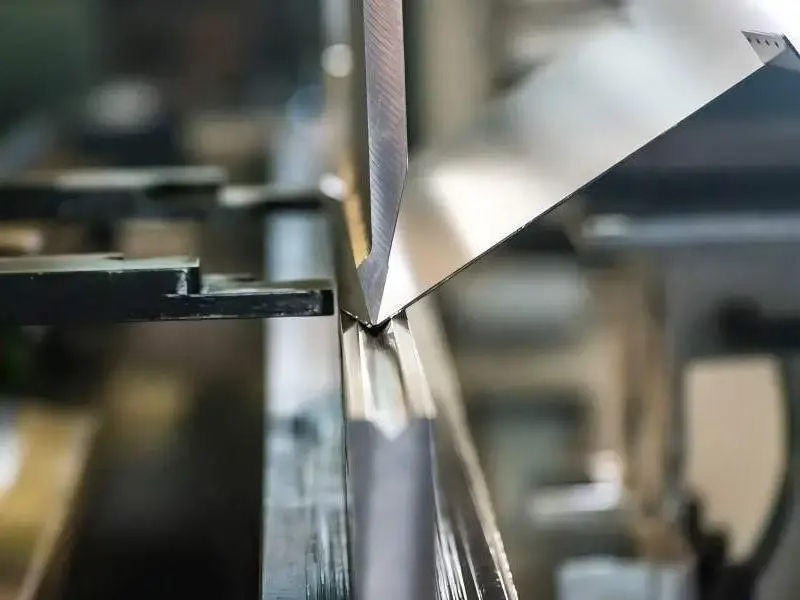
Stamping and laser cutting for the panel work

Flat blanks are laser cut or stamped, depending on quantity. Below roughly 500 pieces, laser cutting avoids tooling cost and still holds ±0.1 mm on hole position. Above that, a progressive or compound die starts to pay for itself.

We keep 6061, 5052, 6063 and 6082 aluminum, plus 303, 304, 316 and 316L stainless in stock. 5052 is the usual choice for enclosure panels because it forms without cracking and takes a powder coat well. 304 is for outdoor and washdown duty.

  • 1
    Material 0.5–6 mmThicker stock goes to machining or casting instead.
  • 2
    Bend radius ≥ 1× thicknessBelow that, we flag it in the DFM report.
  • 3
    Flat patterns on requestSent with the quote so you can check hole positions.

cnc-machining-metal
Machining

CNC work on the features forming cannot hold

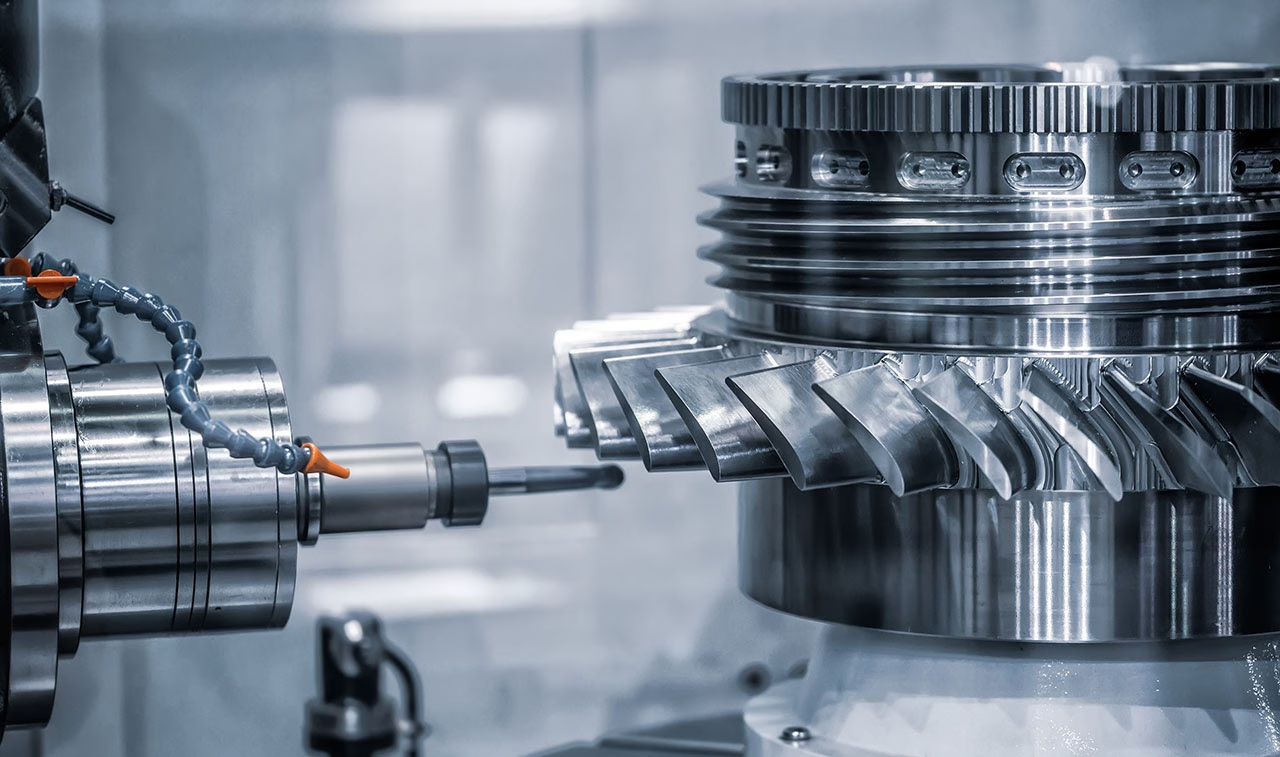
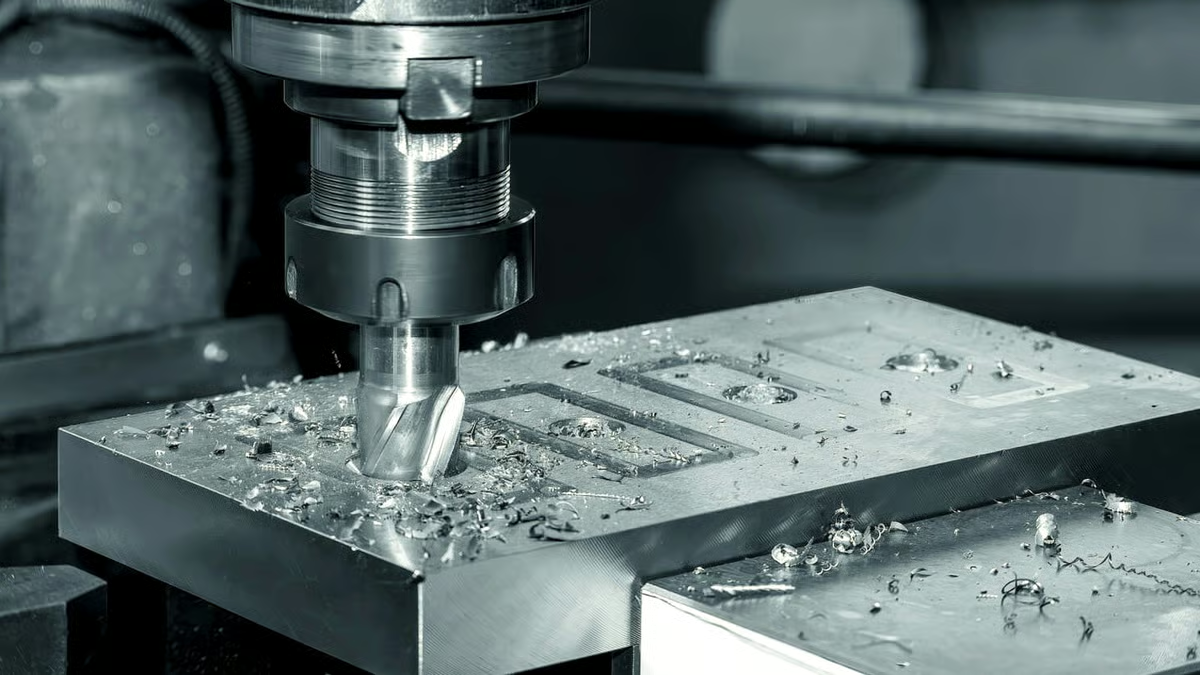
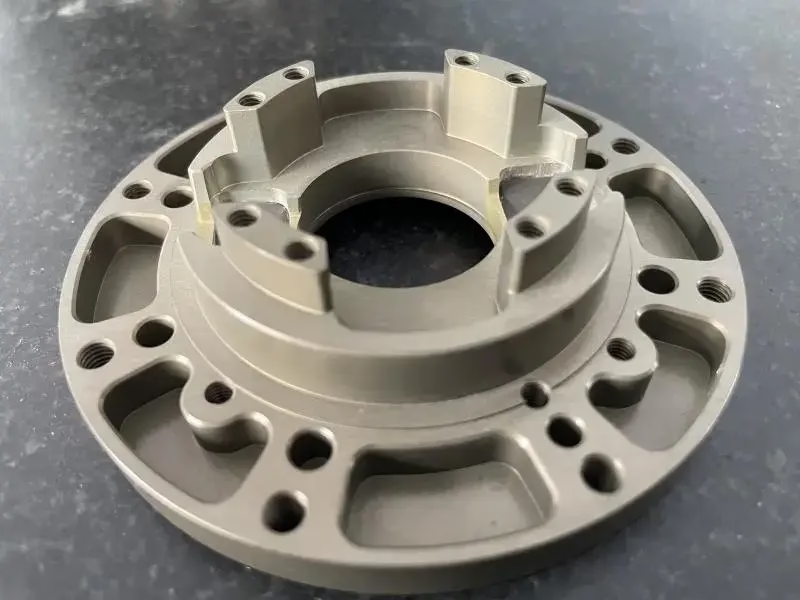
Once the box is formed, the faces are no longer flat enough for tight bores. We fixture the welded or riveted assembly on a 3-axis or 4-axis mill and machine connector cutouts, bearing seats and sealing grooves in place. That removes the stack-up instead of adding to it.

For enclosure bodies that need bores on several faces, a 5-axis center reaches them in one setup. Position tolerance across faces holds at ±0.005 mm on critical features. The result is a panel that fits the mating part without hand rework on your line.

  • 1
    In-place machiningBores and grooves cut after forming, not before.
  • 2
    Ø400 mm rotary tableFor parts that need indexed features around a bore.
  • 3
    Up to 4,000 mmMaximum processing size for large cabinet sections.

Get Instant Quote

Process choice

Which process fits your enclosure

Pick by quantity and by the tightest feature on the print.

QuantityProcessBest for
1–50Laser cut + brake formPrototypes and pilot builds
50–500Laser cut + form + CNCSmall production, mixed variants
500–5,000Compound die stampingRepeat panels, stable design
5,000+Progressive die stampingHigh volume, long tool life
AnyCNC from solidTight bores, thick walls, low count
AnyDie casting + CNCComplex ribs, high volume bodies
What we run

Services behind a stamped enclosure

One supplier from blank to packed box.

01

Sheet Metal Fabrication

Laser cutting, punching, bending and welding for panels, brackets and chassis.

02

CNC Milling & Turning

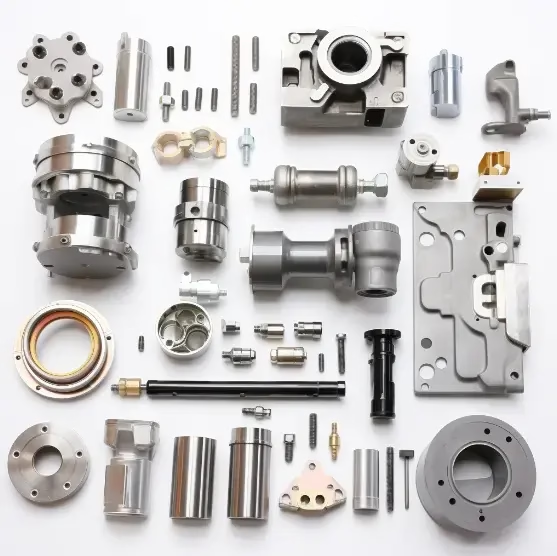
Bores, grooves and mating faces cut after forming to remove tolerance stack.

03

5 Axis CNC Machining

Multi-face enclosure bodies finished in one setup, 16 centers available.

04

Metal Die Casting

Aluminum bodies with ribs and bosses when sheet cannot carry the shape.

05

Part Surface Finishing

Anodizing, powder coat, plating, bead blasting and laser marking.

06

Rapid Prototyping

First articles in days so the fit is proven before tooling is cut.

Scope

Materials, finishes and inspection

All values below come from our standard process sheets.

ItemRangeNotes
Aluminum6061, 5052, 6063, 6082, 2024, 70755052 for formed panels
Stainless303, 304, 316, 316L, 17-4PH304 / 316 for washdown
Steel1018, 1045, 4130, 4140, A36Brackets and mounting plates
Tolerance±0.005 mmOn machined critical features
FinishRa 0.8–1.6 μmStandard machined surface
AnodizingClear, color, hardcoat, conductiveMasking available
Inspection100% before shipmentReports on request
Why GreatLight

Numbers behind the build

No adjectives. These are the figures we are held to.

15Y

Machining since 2011

Fifteen years of enclosure work across three wholly-owned plants in Dongguan and Singapore.

±0.005

Millimeter position tolerance

Held on machined bores, sealing grooves and mating faces after forming.

12h

Quote and DFM turnaround

Drawings get a manufacturability review with the price, not after the order.

24h

Production start

Released jobs can begin within a day of material and drawing sign-off.

1 pc

No minimum order quantity

One prototype and a 10,000-part run go through the same inspection.

4

Quality systems in place

ISO 9001:2015, IATF 16949:2016, ISO 13485:2016 and ISO 27001:2022.

3–5 daysTypical part shipping
150Technicians on staff
<2%Historical late-delivery rate
16Simultaneous 5-axis centers
Sector requirements

What different industries ask of an enclosure

CNC Lathe Technical Specifications Terminology

Industrial control cabinets

Flat door panels, tight hinge alignment, powder coat that hides weld marks.

  • ±0.005 mm
  • Ra 0.8–1.6 μm
  • 100% inspection
CNC Machining Services Online

Electronics and instrumentation

Connector cutouts on four faces, masked anodizing, clean edges around the bezel.

  • 16 five-axis centers
  • Laser marking 1.5 mm
  • NDA on request
large-die-cast-metal-part-back-5

Automotive and EV

Repeat panel geometry with traceable material and in-process checks.

  • IATF 16949
  • 3–5 day shipping
  • 99.99% qualification
6011

Robotics and automation

Stiff bases and covers with bearing bores machined after welding.

  • Ø400 mm rotary table
  • 4,000 mm max
  • 12-hour DFM
FAQs

Questions from engineers and buyers

When should an enclosure be stamped instead of machined from solid?

Stamping wins when the part is a panel or a box with roughly uniform wall thickness and the quantity is above a few hundred pieces. The tooling cost is spread over the run and each part gets cheap.

Machining from solid wins when you need thick bosses, tight bores on several faces, or quantities under about 200. There is no tooling to amortize, and the drawing can still change between builds.

What is the smallest bend radius you can form?

A practical floor is one times the material thickness for aluminum, and slightly more for 304 stainless. Below that the outer fiber stretches past its elongation limit and you get micro-cracks.

If the design needs a tighter corner, we will say so in the DFM report and suggest either a relief notch, a thicker gauge with a larger radius, or a machined corner instead.

Can you machine features after the box is welded?

Yes, and for tight tolerances you usually should. Welding pulls the assembly, so any bore cut before welding moves with it. Cutting after welding puts the feature where it needs to be relative to the finished part.

We fixture the assembly on a 4-axis or 5-axis mill and machine connector openings, sealing grooves and bearing seats in one setup where possible.

Which aluminum should I pick for an outdoor enclosure?

5052 or 5083 for formed panels. Both resist salt spray better than 6061 and form without cracking. 6061 gives higher strength if the panel also carries load.

For anything in a washdown or coastal environment, 304 or 316 stainless is the safer call, and the finish has to be chosen with the alloy. Anodizing is not the right answer on stainless.

How do you handle the tolerance stack across a lid and gasket?

We ask for the sealing gap and the gasket compression range, not just the individual flange tolerances. That lets us decide which faces to machine and which to leave as formed.

Usually one mating face is machined flat and the other is left as formed, which keeps the cost down while closing the gap.

What finishes can you apply without ruining pressed-in hardware?

Masking is the straightforward route. We mask the hardware area before anodizing or powder coating so the knurl keeps its bite.

The alternative is installing hardware after finishing. That works well for rivet nuts and studs that can be set cold, and it avoids masking cost on high-count panels.

Do you support low volume runs and one-off prototypes?

Yes. There is no minimum order quantity. A single prototype and a 10,000-piece run go through the same raw material check, in-process monitoring and final inspection.

Low volume enclosures are usually laser cut and brake formed rather than stamped, because the tooling would not pay back at that quantity.

How do you protect our drawings?

Uploads go to a controlled server and stay with the project team. We sign an NDA on request before drawings are shared.

Our information security management is certified to ISO 27001:2022.

Send the drawing, get a manufacturability answer

Upload your enclosure files and we will return a price with a DFM review inside 12 hours. No minimum order quantity, no tooling commitment to get started.

12-hour quote100% inspectionNo minimum orderNDA on request

Trusted by engineers and manufacturers worldwide

Tesla Ford Motor Company BYD Auto Denso Magna International Boeing Airbus Medtronic KUKA FANUC