GreatLight CNC Machining Factory logo
CNC Machining
Rapid Prototyping
Materials
Industries
News
About GL

Get Instant Quote

Alloy Selection

Selecting Investment Casting Materials

Alloy choice decides your casting yield, your machining hours and your scrap rate. We review the drawing, then tell you which grade will cast cleanly and which one will fight you.

Stainless and low alloyTool steelCopper alloys±0.005 mm after machiningISO 9001 / IATF 1694912-hour DFM feedback
vacuum-casting-services1
2011Casting and machining since
127High-precision CNC machines
±0.005 mmAchievable machining tolerance
3–5 daysTypical shipment window
Where It Goes Wrong

Four alloy decisions that cost real money

Most casting problems trace back to a grade chosen for the wrong reason, or a wall thickness nobody checked.

01

The grade casts fine, then cracks in heat treat

A high-carbon martensitic grade is picked for hardness, then quenched without a preheat step matched to section size. Parts crack at a corner radius. You lose the whole lot and the tooling lead time with it.

02

Wall sections too thin for the alloy

A 1.5 mm wall in a low-fluidity alloy fills short on the far end of the shell. Wax injection looked perfect. The defect only shows after knockout, so you pay for the pour and the cut-off anyway.

03

Machining time eats the casting saving

The alloy is cheap per kilogram but abrasive. Tool life drops, cycle time climbs, and the per-part cost lands above the higher-grade option you rejected at the quoting stage.

04

Corrosion spec written from a datasheet

A grade with adequate chromium is chosen, but the service environment has chlorides and the part is welded. Stress corrosion cracking shows up in the field, not on the bench.

How We Select

Match the alloy to the geometry, not the other way around

We read the drawing for wall thickness, radii, cores and post-cast operations before naming a grade.

CNC Lathe Technical Specifications Terminology
Step One

Screen the alloy against casting behavior

Fluidity and shrinkage set the floor for wall thickness. Austenitic stainless grades pour well and hold thin sections, but they shrink more than carbon steel and need feed paths sized for that. Martensitic grades fill less readily and want thicker walls and generous fillets around internal corners.

If the drawing has a 2 mm wall in a long, narrow passage, we say so before quoting. The fix is often a small geometry change, or a switch to an austenitic grade that will fill it. Either way, you hear it at the DFM stage, not after the pour.

  • 1
    Wall thicknessMinimum section depends on alloy fluidity, not on the drawing's intent.
  • 2
    Shrinkage allowancePattern tooling is cut to a rate matched to the specific grade.
  • 3
    Core and knockoutInternal passages need a ceramic core path that can be leached cleanly.

Get Instant Quote

oplus_262178
Step Two

Plan the machining before the pour

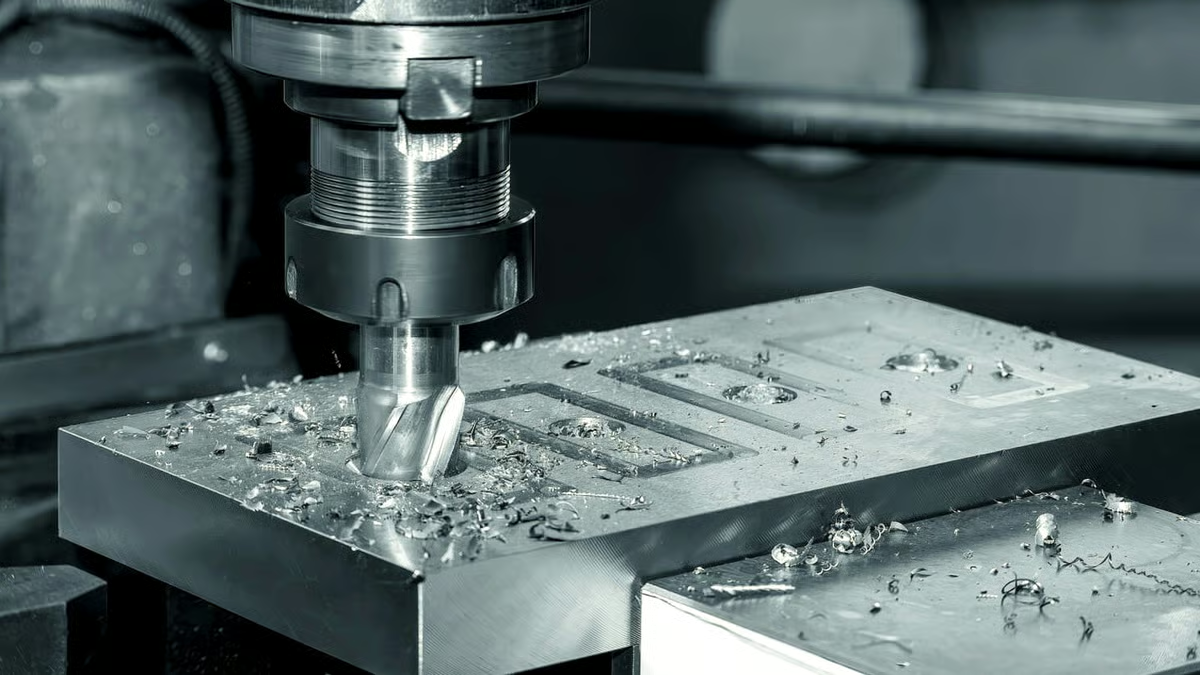
Investment castings rarely ship as-cast. Datum faces, bores and sealing surfaces get machined, so the alloy has to survive the cut, not just the pour. 17-4PH in the H900 condition cuts cleanly and holds a bore, which is why it shows up on valve bodies and pump housings. Soft austenitic grades work-harden and need sharp tooling and steady feeds.

We hold ±0.005 mm on machined features and Ra 0.8–1.6 μm on sealing faces when the casting is sound. Porosity under a machined surface is the failure mode that matters here. We check it before the part reaches the machine.

  • 1
    MachinabilityHardness and work-hardening rate drive cycle time and tool cost.
  • 2
    Cleanup stockWe leave enough stock for the features that must be cut true.
  • 3
    Porosity controlSubsurface defects are found before machining, not after.

Get Instant Quote

Grade Comparison

Common investment casting alloys at a glance

Starting points for the first conversation. Section size and heat treat always override the table.

Alloy familyStrengthsWatch out for
Low alloy steelStrong, hardenable, low costNeeds heat treat control; limited corrosion resistance
Martensitic stainlessHard and wear resistant, magneticCracks without matched preheat; poor weldability
Austenitic stainlessCorrosion resistant, weldable, non-magneticWork-hardens; lower hardness than martensitic
Ferritic stainlessMagnetic, moderate corrosion resistanceLower strength; limited hardenability
Duplex stainlessHigh strength, resists stress corrosion crackingNarrow heat treat window; needs controlled cooling
Copper-based alloysThermal and electrical conductivity, easy to machineLower strength at temperature; heavier than aluminium
Tool steelWear and shock resistance, hot strengthHigh carbon; needs careful preheat and tempering
What We Do

From pattern to finished part under one roof

Casting, machining, finishing and inspection in the same supply chain, so tolerance stacks stay short.

01

Vacuum Casting

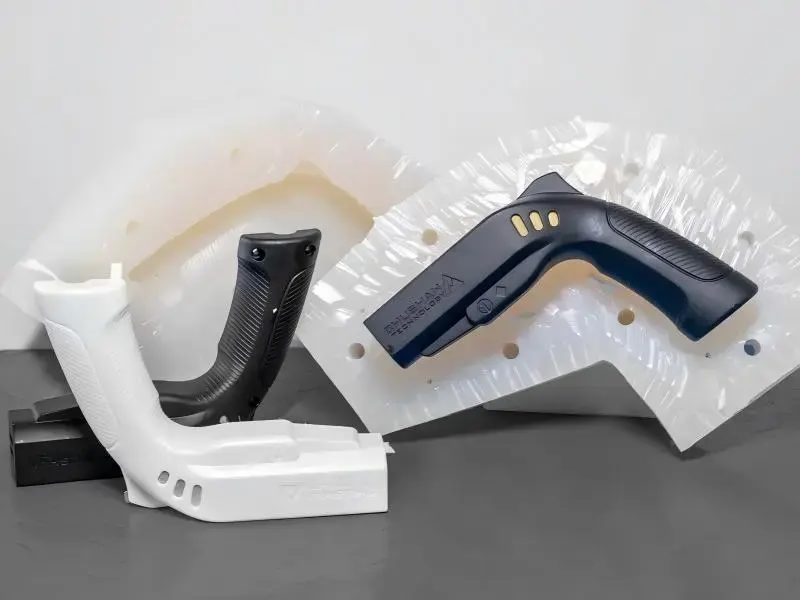
Silicone tooling for bridge parts and low-volume runs. Useful when a casting is needed before hard tooling is cut, or when the design is still moving.

02

Metal Die Casting

Aluminium and zinc alloys in steel dies for higher volumes. We compare it against investment casting when the geometry allows.

03

5 Axis CNC Machining

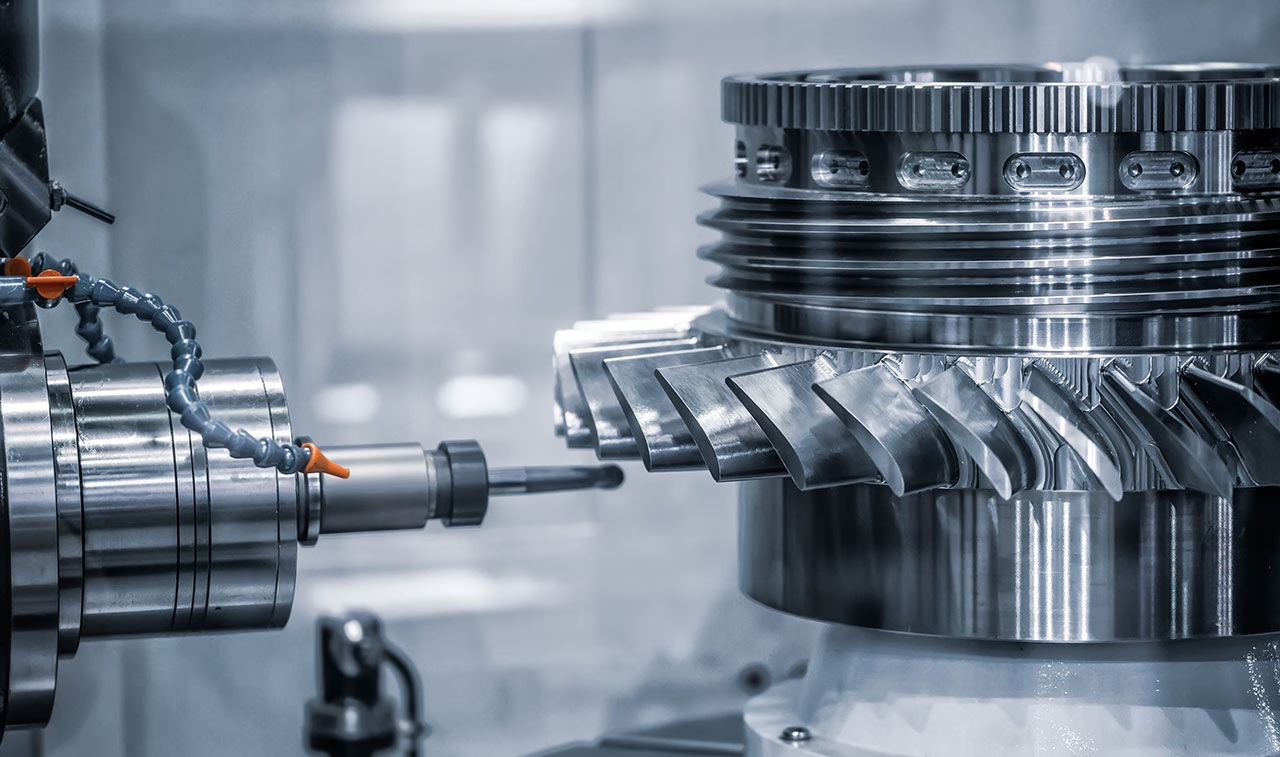
16 simultaneous 5-axis centers handle contoured faces, angled bores and features that would otherwise need several setups.

04

CNC Milling & Turning

27 three-axis machines and 16 mill-turn centers for the turning and milling work on castings and bar stock.

05

Rapid Prototyping

Printed patterns and prototypes to test fit before committing to production tooling.

06

Part Surface Finishing

Anodizing, plating, powder coating, bead blasting and laser marking, applied after machining.

Scope

What the casting and machining package covers

Capabilities we can commit to from our own equipment list.

ItemCapabilityNotes
Maximum processing size4,000 mmLarger travels on specific machines
Machining tolerance±0.005 mmOn machined features, not as-cast surfaces
Surface finishRa 0.2–0.8 μmFine finish on request; standard is Ra 0.8–1.6 μm
Order quantity1 to 10,000+No minimum order quantity
Inspection100% before shipmentMaterial, in-process and final checks; reports on request
ConfidentialityNDA on requestUploads are handled as confidential
Why GreatLight

Fifteen years of casting and cutting the same parts

15Y

Manufacturing since 2011

Casting, machining and finishing experience across aerospace, automotive, medical and industrial work.

±0.005

Tolerance we hold

Machined features held to ±0.005 mm (0.0002 in) on parts we produce end to end.

99.99%

Qualification rate

Measured across production runs, supported by 100% inspection before shipment.

12h

Quote turnaround

Quotation and free DFM analysis within 12 hours of receiving a drawing.

24h

Production start

Material and tooling released so cutting can begin within 24 hours of approval.

3

Wholly-owned plants

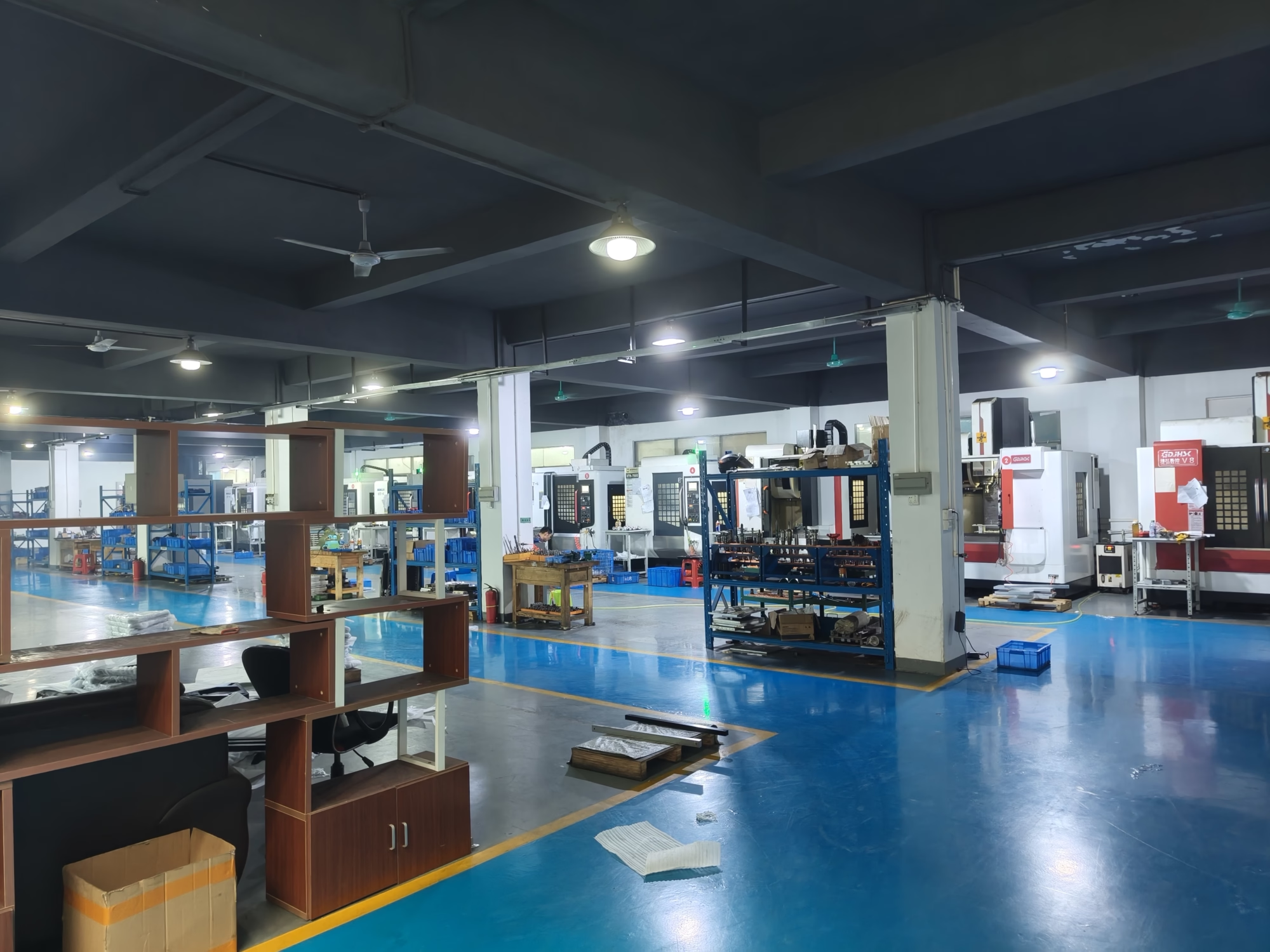
7,600 m² in Dongguan plus a Singapore factory at No.3 Joo Koon Circle.

7,600 m²Manufacturing space
150Technicians on staff
16Simultaneous 5-axis centers
<2%Historical late-delivery rate
Industry Fit

What each industry demands, and what we deliver

CNC Machining Services Online

Aerospace

Thin-wall structures and pressure-tight housings. Traceability and dimensional reports are expected on every lot.

  • ±0.005 mm
  • 100% inspection
  • Material certificates
6011

Automotive & EV

Cast housings and brackets where cycle time and weight both count. IATF 16949:2016 processes govern the run.

  • IATF 16949
  • 1 to 10,000+ parts
  • Ra 0.8–1.6 μm
cnc machining

Medical Devices

Stainless instrument parts and housings that need clean surfaces and repeatable geometry across lots.

  • ISO 13485
  • Stainless 316L
  • Fine surface finish
cnc machining

Industrial Machinery

Valve bodies, pump parts and tooling that run hard and get replaced on a schedule.

  • 17-4PH
  • Tool steel
  • Mill-turn parts
FAQs

Questions engineers ask before choosing a grade

Which stainless grade should I start with for a general-purpose part?

304 or 316 covers most corrosion-resistant work where hardness is not the driver. They cast well, weld easily and are non-magnetic, which matters if the part sits near a sensor.

Choose 17-4PH instead when you need strength and hardness after aging. It machines predictably and holds a bore, but it is magnetic.

When is duplex stainless worth the extra cost?

When the service environment has chlorides and the part carries stress, especially if it is welded. Duplex resists stress corrosion cracking better than austenitic grades and gives higher strength at a similar chromium level.

The trade-off is process control. Duplex has a narrow heat treat window and needs controlled cooling, so it suits a shop that already runs tight thermal cycles.

Can I get a 1.5 mm wall in low alloy steel?

Sometimes, but it depends on the length of the section and how it feeds. Low alloy steel is less fluid than austenitic stainless, so thin walls far from the gating tend to fill short.

Send the drawing and we will tell you whether the wall holds or needs to thicken. Changing the geometry before tooling is cheaper than changing it after.

Does the alloy choice affect the machining quote?

Yes, and usually more than the casting price does. Soft austenitic stainless work-hardens, so feeds and tooling change. Abrasive or hard alloys reduce tool life and raise cycle time.

We quote the casting and the machining together so you see the total per-part cost, not just the pour.

How do you handle porosity under a machined surface?

We inspect before machining, since a defect found after the cut costs you the casting and the machine time. Location matters too: porosity in a non-sealing area may be acceptable, but not under an O-ring groove.

Acceptance criteria are agreed at the quoting stage so there is no argument later.

What information do you need to recommend an alloy?

The 3D model or drawing, the service environment, any heat treat or welding steps, and the surfaces that will be machined. Cycle count helps as well.

With that, we return a material recommendation and a DFM analysis within 12 hours, including any geometry changes we would make.

Can you run a small batch before production tooling?

Yes. Vacuum casting with silicone tooling covers bridge quantities and early builds, and it works when the design is still moving. There is no minimum order quantity.

Once the design freezes, we move to production tooling for runs up to 10,000+ parts.

Do you sign an NDA for casting projects?

Yes. Uploads are handled as confidential, and an NDA is available on request before you send drawings.

We can also restrict which engineers see the files if your program requires it.

Send the drawing, get an alloy recommendation

Quotation and free DFM analysis within 12 hours, with a material choice you can defend to your own review board.

12-hour quote100% inspectionNo minimum order quantityNDA on request

Trusted by engineers and manufacturers worldwide

Tesla Ford Motor Company BYD Auto Denso Magna International Boeing Airbus Medtronic KUKA FANUC