GreatLight CNC Machining Factory logo
CNC Machining
Rapid Prototyping
Materials
Industries
News
About GL

Get Instant Quote

Sheet Metal Working

Sheet Metal Working

Laser cutting, press brake bending, stamping and finishing under one roof. We build brackets, chassis, cabinets and enclosures from prototype to 10,000+ part runs.

Laser cuttingPress brake bendingStampingNo MOQ3–5 day shipping
custom-sheet-metal-fabrication-services1
15YFabricating since 2011
127High-precision machines
±0.005 mmAchievable tolerance
3–5 daysTypical shipping window
Common failure points

Where these projects go wrong

Four problems we hear from engineers and buyers before they move a job to us.

01

Bend lines land off target

A few tenths of a degree of springback, and a 90° flange becomes 88°. Holes no longer line up with the mating bracket, and assembly stops on the line. On 3 mm 5052, springback varies with grain direction, so a single bend deduction never covers the whole run.

02

Cut edges need rework

Laser dross, a rough burr or heat tint on stainless means someone has to deburr and polish every part by hand. That adds cost you did not quote, and it delays the first assembly. A clean cut with controlled assist gas removes most of that step.

03

Flat patterns do not match the drawing

If the flat layout is built with the wrong K-factor, the folded part is short or long at the flange. The error shows up only after bending, when the material is already cut. Fixing it means recutting the blank and losing the sheet.

04

Finishing changes the fit

Powder coating adds 60–100 μm per side. Anodizing adds less, but threads and slip fits still tighten. If the coater is not told which surfaces matter, a cover no longer seats and fasteners bind. Masking and pre-finish allowance have to be planned at quoting.

How we run the work

One shop from flat blank to finished part

Cutting, forming, hardware and coating stay in-house, so tolerances survive each step.

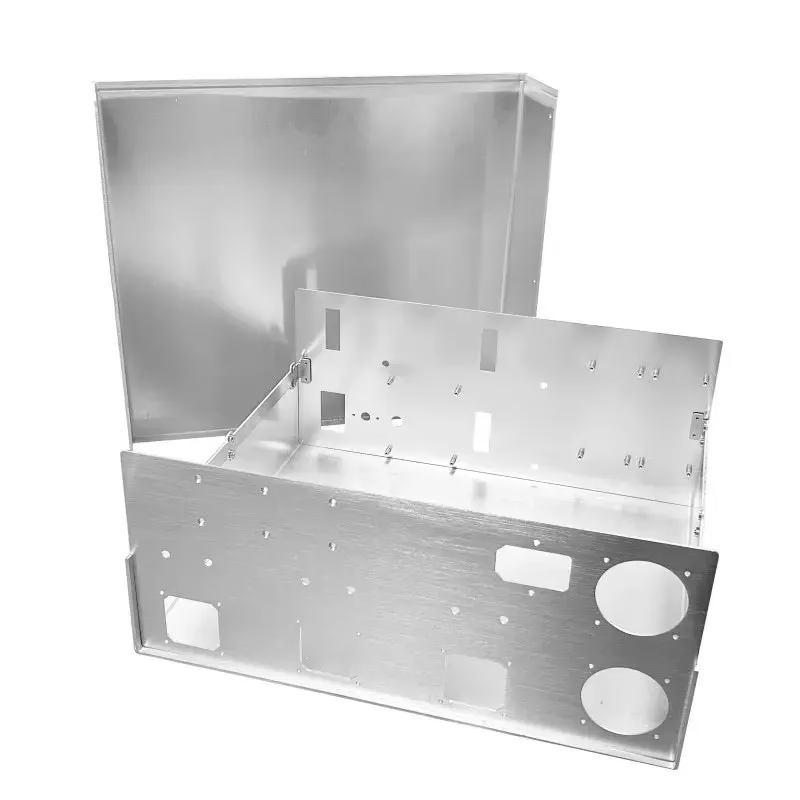
aluminum-alloy-industrial-control-chassis-sheet-metal-processing
Cutting and forming

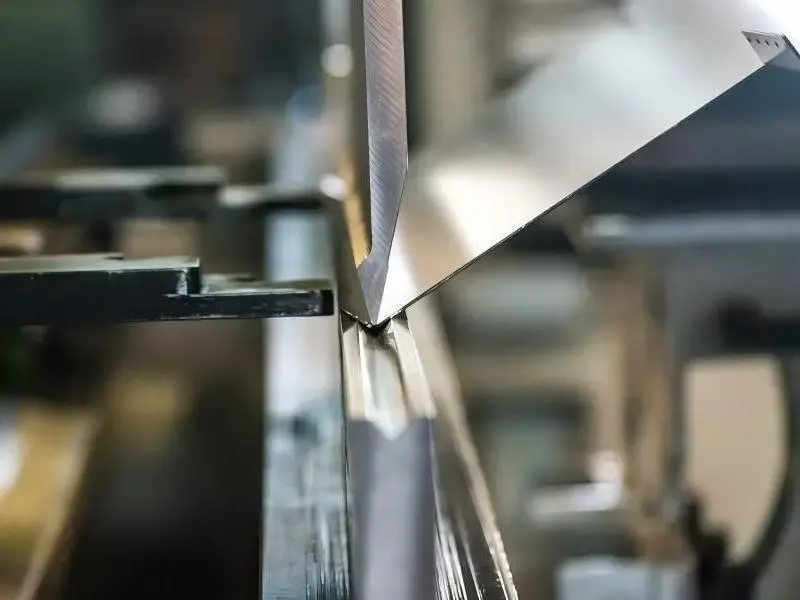
Laser cutting plus press brake bending

Fiber laser cutting handles mild steel, stainless, aluminum, copper and brass from 0.5 mm to 12 mm. We cut the flat pattern from your 3D model, then bend on CNC press brakes with tooling selected for the material and radius. Bend deductions are calculated per material grade and thickness, not pulled from a generic table.

For parts where a stamped edge is not acceptable, laser cutting gives a clean profile without a dedicated die. That keeps low-volume runs economical and lets us change the outline between revisions without new tooling.

  • 1
    Thickness range0.5–12 mm sheet, depending on material and cut quality
  • 2
    Bend accuracyAngle held within ±0.5° on formed flanges
  • 3
    HardwarePEM nuts, studs and standoffs pressed after forming

Get Instant Quote

greatlight-metal-technology-co-ltd-1
Volume forming

Stamping for repeat quantities

Once a design settles, stamping brings the cost per part down. Progressive and compound dies run aluminum, stainless and steel at rates that hand-fed forming cannot match. We review the part for draft, hole-to-edge distance and bend relief before committing to a die, because those details decide whether the tool lasts.

Small runs still make sense on the press brake. We will tell you when a die is worth the spend and when it is not, based on quantity, material and how likely the design is to change.

  • 1
    Die typesProgressive, compound and single-station forming dies
  • 2
    Materials6061, 5052, 304, 316L, 1018 and 4130 sheet
  • 3
    Secondary opsTapping, countersinking, deburring and tumbling

Talk to an Engineer

Process selection

Which forming method fits your part

Use this when you are deciding between laser-cut blanks and a stamped part.

MethodBest forWatch out for
Laser cut + press brakePrototypes and runs under a few thousandHigher cost per part at volume
Progressive die stampingRepeat orders above roughly 5,000 piecesTooling lead time and upfront cost
Compound die stampingFlat parts with tight hole-to-edge limitsLimited forming in the same stroke
Laser cut + hardware pressEnclosures needing PEM nuts and studsHardware must be planned before coating
Services

What we do with sheet and plate

Six capabilities that cover most enclosure, bracket and chassis work.

01

Laser Cutting

Fiber laser cutting of flat blanks in steel, stainless, aluminum and copper. Clean edges on 0.5–12 mm sheet, with the flat pattern generated from your model.

02

Press Brake Bending

CNC forming with per-material bend deductions. Box bends, hems, joggles and radius bends, held within ±0.5° on the flange angle.

03

Metal Stamping

Progressive and compound dies for repeat production. Aluminum, stainless and steel sheet formed to print with secondary tapping and deburring.

04

Welding and Assembly

TIG and spot welding for frames, cabinets and chassis. Hardware installation, riveting and sub-assembly before finishing.

05

Surface Finishing

Anodizing, powder coating, plating, bead blasting and laser marking. Masking planned at quoting so fits and threads stay in tolerance.

06

Inspection and Documentation

First-article checks against the drawing, in-process monitoring and final inspection. Dimensional reports available on request.

Capability range

Tolerance, size and finishing limits

Numbers we work to when quoting a formed or stamped part.

ItemRangeNotes
Sheet thickness0.5–12 mmDepends on material and cut quality
Bend angle±0.5°After springback compensation
Machined tolerance±0.005 mmOn secondary CNC operations
Finish roughnessRa 0.8–1.6 μmTypical machined finish
Powder coating60–100 μm per sideAllowance added before forming
Laser marking1.5 mm minimum heightOn coated or bare surfaces
Why GreatLight

What you get when the job lands here

Six points that decide whether a sheet metal project ships on time and to print.

15Y

Fifteen years in metal

Working from sheet and plate since 2011, with three wholly-owned plants and 150 technicians across cutting, forming, machining and finishing.

±0.005 mm

Tight tolerances

Secondary CNC operations on formed parts hold ±0.005 mm, so holes, bores and mounting faces stay accurate after bending.

12 h

Quote and DFM in 12 hours

Send a model or drawing and we return pricing plus a manufacturability review within 12 hours. Production can start within 24 hours of approval.

0

No minimum order quantity

One prototype or 10,000+ parts. The same inspection process applies to both, so a sample run tells you what production will look like.

100%

Inspection before shipment

Raw material check, in-process monitoring and final inspection on every order. Dimensional reports supplied on request.

4

Certified quality systems

ISO 9001:2015, IATF 16949:2016, ISO 13485:2016 and ISO 27001:2022 cover automotive, medical and information security requirements.

7,600 m²Manufacturing space
3Wholly-owned plants
4,000 mmMaximum processing size
<2%Historical late-delivery rate
Industry fit

What different industries need from formed parts

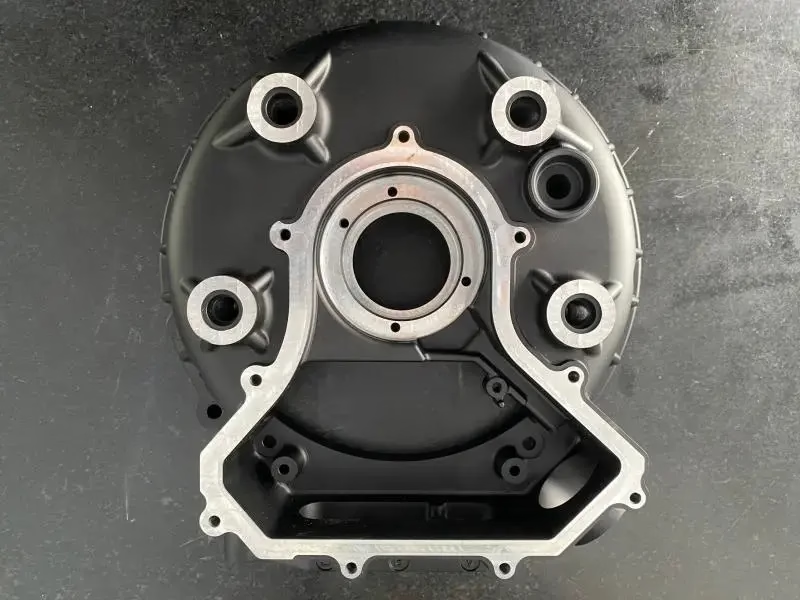
large-die-cast-metal-part-back-19

Automotive and EV

Brackets and mounting plates that must survive vibration and coating without losing hole position.

  • IATF 16949
  • ±0.005 mm
  • 100% inspection
large-die-cast-metal-part-back-5

Electronics enclosures

Chassis and covers where coating thickness and masking decide whether boards and connectors still seat.

  • Powder coat 60–100 μm
  • Masking plan
  • Laser marking
metal-3d-printing-1801

Industrial machinery

Frame panels and guards cut to 4,000 mm, formed and finished without a second supplier in the chain.

  • 4,000 mm max
  • 3–5 day shipping
  • No MOQ
FAQs

Questions we get before a job starts

What file formats do you need for a quote?

STEP and IGES work best for formed parts because we can unfold the model and check bend deductions. DXF is fine for flat parts.

If you only have a PDF drawing, we can still quote, but note that missing bend lines or radius callouts will slow the review. Send both the model and the drawing when you have them.

How do you set the bend deduction?

We calculate the K-factor per material and thickness rather than using one default. Aluminum 5052 and 6061 spring back differently, and grain direction changes the result again.

On a first order we form a test piece and measure the flange before running the batch. That step catches a wrong flat pattern while the sheet is still uncut.

When is stamping cheaper than press brake forming?

It depends on quantity and how stable the design is. Below a few thousand pieces, laser cutting and press brake bending usually cost less overall once tooling is counted.

Above roughly 5,000 repeat pieces, a progressive die often wins on cost per part. We will quote both routes when the volume is close to that line.

How do you handle coating and anodizing without ruining fits?

Powder coating adds 60–100 μm per side, so we add allowance before forming and mask threads, bores and mating faces.

Anodizing adds less but still tightens slip fits. Tell us which surfaces are functional and we will mask them rather than coat everything.

Can you press PEM hardware into a formed part?

Yes. Nuts, studs and standoffs are installed after forming and before finishing so the coating does not sit under the hardware.

If the hardware sits near a bend, we check the distance from the bend line first. Too close, and the material distorts and the fastener will not hold torque.

What is the smallest quantity you will run?

One piece. There is no minimum order quantity, so a prototype and a 10,000-part run go through the same inspection steps.

The setup cost is spread over fewer parts on a single unit, which is normal for a one-off. Ask for both prototype and production pricing if you expect to scale.

How do you protect the drawing and the design?

Uploads are handled as confidential, and we can sign an NDA before you send files. The NDA page on this site covers the standard terms.

Files stay inside the project team. We do not share customer drawings or use them in marketing material.

What holds the schedule if a finish supplier slips?

Cutting, forming, welding and most finishing happen in-house across our three plants, so fewer steps depend on outside vendors.

For processes we do send out, we build the transit time into the schedule at quoting. Our historical late-delivery rate is below 2%, and we tell you early if a date is at risk.

Start your sheet metal working project

Send a model or drawing and get pricing with a manufacturability review within 12 hours.

12-hour quote100% inspectionNo minimum order quantity

Trusted by engineers and manufacturers worldwide

Tesla Ford Motor Company BYD Auto Denso Magna International Boeing Airbus Medtronic KUKA FANUC