GreatLight CNC Machining Factory logo
CNC Machining
Rapid Prototyping
Materials
Industries
News
About GL

Get Instant Quote

Reference Library

Machinist Resources for Alloy Selection

Reference pages for engineers who have to pick a grade before the drawing is released. Compare stainless, aluminum, titanium and plastics on strength, machinability and finish, then send the part out for a DFM check.

±0.005 mm toleranceRa 0.2–0.8 μm finishNo minimum orderISO 9001 / IATF 16949
CNC Lathe Technical Specifications Terminology
127High-precision CNC machines
15 yearsMachining since 2011
±0.005 mmAchievable tolerance
3–5 daysTypical part shipment
Where it goes wrong

Four grade mistakes that reach the shop floor

Most of these are decided at the desk, before any chip is cut.

01

Picked 316 when 303 would do

316 resists chlorides, but it work-hardens fast and galls on the tool. A bracket that needed no corrosion pass gets a higher cycle time, more tool changes and a rougher as-machined surface. If the part never sees salt or acid, 303 machines about three times faster per cut.
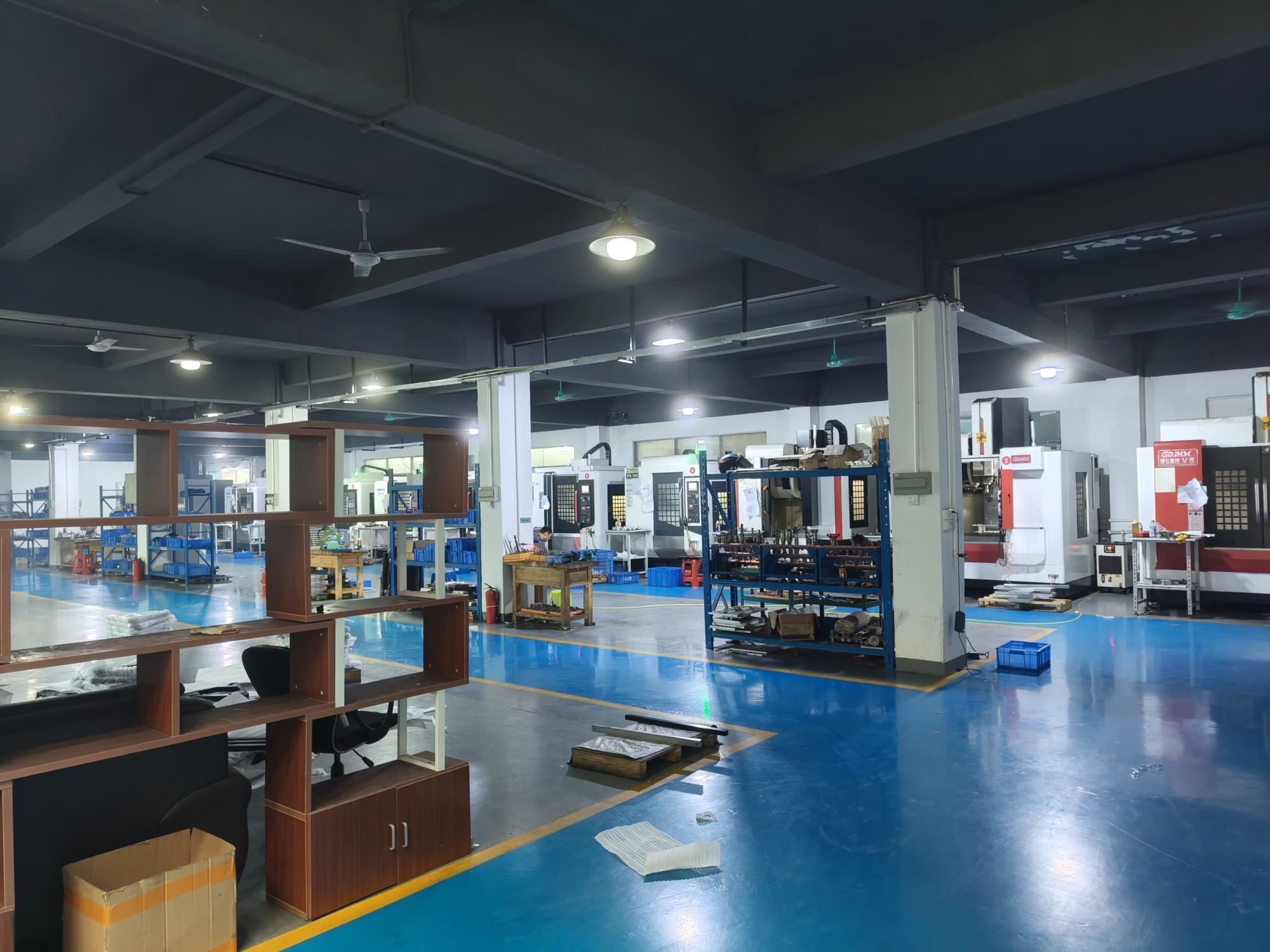
02

Heat treat called out after the drawing froze

17-4PH in the H900 condition machines cleanly, but the same part in the annealed condition can move 0.05 mm during aging. If the tolerance is tight, the sequence matters more than the grade. We cut oversize, age, then finish to size. Skip that order and you scrap the lot.

03

Titanium thin walls without a strategy

Ti-6Al-4V conducts heat poorly, so the cutter keeps the heat and the wall deflects. A 1.5 mm wall run at full radial engagement will chatter and come out tapered. Trochoidal paths, lower radial cut and a rigid setup fix it. The toolpath is the fix, not a slower spindle.

04

Plastic tolerances copied from metal

POM and PA move with moisture and temperature. A ±0.05 mm callout on a 200 mm POM part is not realistic. PEEK holds better but costs many times more than POM. Match the grade to the actual service temperature, then set the tolerance band around that.

How to use this library

Pick the grade, then check the process

Each guide answers the same three questions: what the grade does, how it cuts, and when to avoid it.

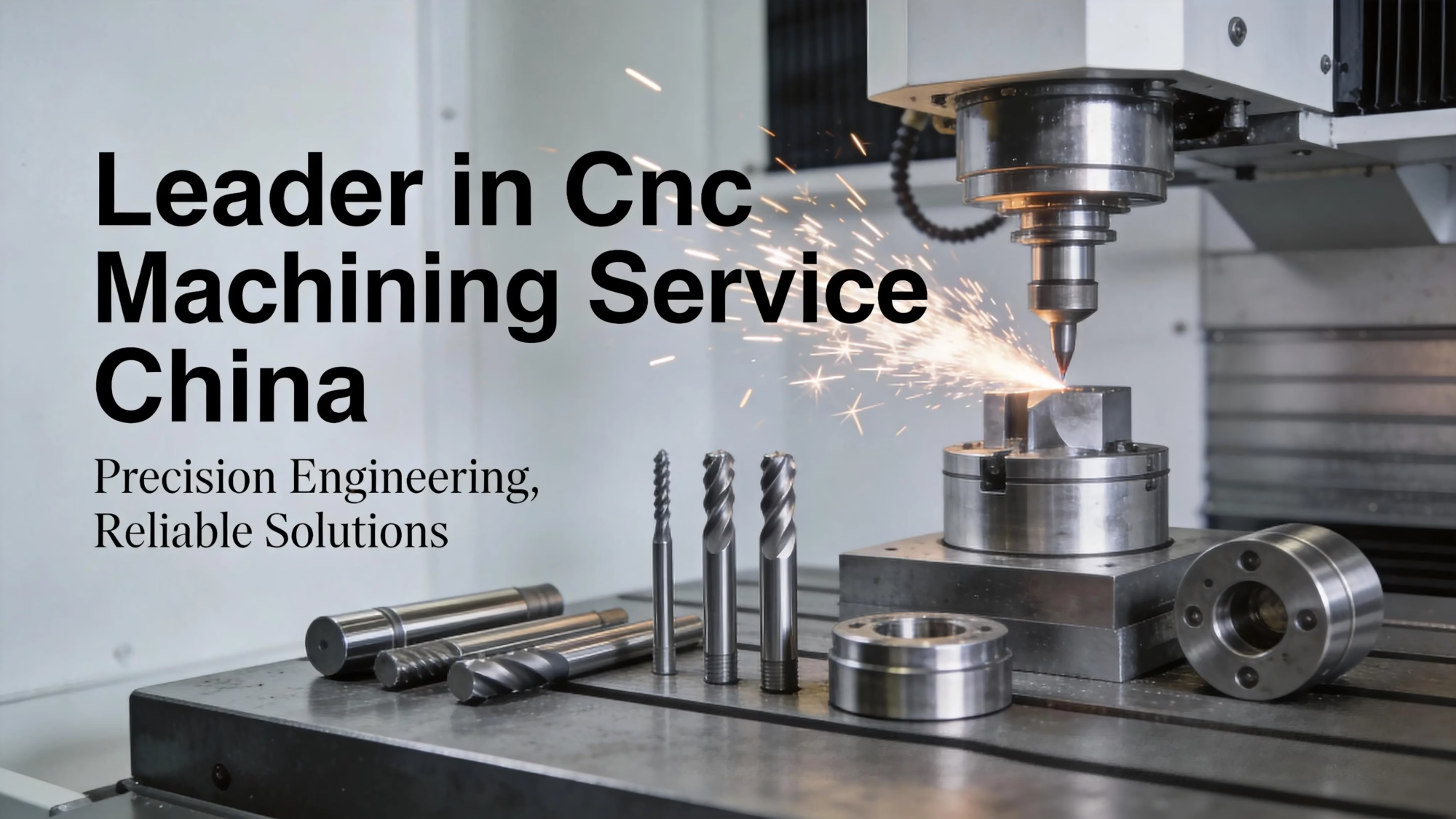
Leader in Cnc Machining Service China
Stainless and steel

Stainless families, side by side

Austenitic grades (303, 304, 316, 316L) do not harden by heat treatment. They harden by cold work, which is why a heavy finishing pass on 304 can raise the surface hardness under the cutter and dull the edge. 303 adds sulfur for chip breaking, so it machines cleanly but welds poorly and is not the grade for a pressure boundary.

Martensitic and precipitation grades behave differently. 420 and 440C reach high hardness after heat treatment and are common for shafts, molds and wear plates. 17-4PH gives high yield strength with better corrosion resistance than 440C. The trade-off is the aging step and the dimensional change that comes with it.

  • 1
    303 / 304 / 316Free-machining versus corrosion resistance. Choose by the environment, not by habit.
  • 2
    420 / 440CHardened wear parts. Machine in the annealed state, then heat treat and finish.
  • 3
    17-4PHHigh strength with moderate corrosion resistance. Plan the aging sequence early.

Get Instant Quote

oplus_262178
Aluminum and titanium

Light alloys and where they stop working

6061-T6 is the default for machined aluminum: good strength, good finish, predictable chips. 7075-T6 is stronger but less corrosion resistant and more prone to stress corrosion cracking in the wrong environment. 5052 and 3003 bend well and are common for sheet parts, though 3003 is soft and dents easily. 201 is strong and machines well but has poor corrosion resistance unless it is anodized.

Titanium is a different problem. Ti-6Al-4V has roughly twice the strength of 6061 at similar density, but the thermal conductivity is low and the material galls. Cutting speeds drop to a fraction of aluminum, and tool life is measured in minutes, not hours. Use titanium only when the strength-to-weight ratio or the corrosion resistance is the actual requirement.

  • 1
    6061-T6General machined parts, brackets, housings. Best balance of cost and finish.
  • 2
    7075-T6High-stress aerospace and mold parts. Anodize if corrosion matters.
  • 3
    Ti-6Al-4VHigh strength-to-weight. Expect slower cuts and higher cost per part.

Get Instant Quote

Quick comparison

Grade selection at a glance

Use this as a first filter, then read the full guide for the grade you pick.

GradeBest forWatch out for
303 stainlessShafts, bushings, fastenersPoor weldability, low corrosion resistance
304 / 316 stainlessFood, medical, marine hardwareWork hardening, gummy chips, tool wear
17-4PHHigh-strength valve and pump partsDimensional change during aging
420 / 440CWear plates, molds, knife edgesMust be machined before hardening
6061-T6General machined housingsLower strength than 7075
7075-T6Aerospace, molds, high loadStress corrosion if not anodized
Ti-6Al-4VAerospace, medical implantsLow speed, short tool life, high cost
POM / PEEKInsulators, seals, wear padsThermal growth, moisture absorption
What we machine

Processes this library feeds into

The grade only matters if the process can hold the tolerance. These are the routes we run in-house.

01

5 Axis CNC Machining

16 simultaneous 5-axis centers for contoured surfaces, impellers and single-setup complex parts. Fewer setups means less accumulated error on tight features.

02

CNC Milling & Turning

27 three-axis machines, 12 four-axis mills and 16 mill-turn centers. Turned parts up to Ø400 mm on the rotary table, milled parts to 4,000 mm.

03

Rapid Prototyping

One-off parts for fit checks and test rigs. No minimum order, so a single prototype goes through the same inspection as a production run.

04

Sheet Metal Fabrication

Bent and formed parts in 5052, 3003 and 304. Good for enclosures and brackets where a machined block would waste material.

05

Part Surface Finishing

Anodizing, plating, bead blasting, brushing and laser marking. Finish callouts change the final dimension, so they belong in the drawing review.

06

Custom 3D Printing

For geometry that cannot be machined or for early ergonomic checks. Use it before committing to a machined alloy.

Capability limits

What the shop can hold

Numbers below are the working envelope, not the marketing ceiling.

ParameterRangeNotes
Tolerance±0.005 mm (±0.0002 in)On critical features with a stable setup
Surface finishRa 0.2–0.8 μm fineRa 0.8–1.6 μm standard, Ra 1.6–3.2 μm as machined
Maximum part size4,000 mmTravel 4,000 × 400 × 150 mm on large machines
MaterialsAluminum, stainless, steel, copper, titanium, plasticsInconel and magnesium on request
Inspection100% before shipmentRaw material, in-process and final checks; reports on request
Order size1 to 10,000+ partsNo minimum order quantity
Why engineers send us the hard grades

What backs the reference data

Every guide on this page is written against the machines and inspection we actually run.

15Y

Machining since 2011

Fifteen years of production work across aerospace, automotive, medical and robotics parts. The grade advice comes from jobs that shipped, not from a handbook.

±0.005 mm

Tolerance we quote

Held on critical features with verified setups. If a feature cannot hold that, we say so in the DFM analysis instead of quoting it anyway.

127

CNC machines in-house

16 simultaneous 5-axis centers, 16 mill-turn centers, 12 four-axis mills and 27 three-axis machines. Hard materials get the rigid machine they need.

12 h

Quote and DFM turnaround

Quotation and free DFM analysis within 12 hours. Production can start within 24 hours once the drawing and material are confirmed.

99.99%

Qualification rate

Measured across production runs. Raw material check, in-process monitoring and final inspection before anything ships.

3–5 d

Typical shipment

Parts ship in 3–5 days for standard work. Historical late-delivery probability is below 2%.

7,600 m²Manufacturing space
150Technicians
3Wholly-owned plants
ISO 13485Medical device quality system
Grade in service

What each industry demands from the material

GreatLight Metal new factory building

Aerospace brackets

7075-T6 and Ti-6Al-4V parts where strength-to-weight decides the grade. Thin walls, tight profiles, anodized where corrosion matters.

  • ±0.005 mm
  • 5-axis
  • Ra 0.8 μm
CNC Machining Services Online

Medical instrument parts

316L and titanium components with no cross-contamination between grades. Clean deburring, documented inspection, ISO 13485 process control.

  • 316L
  • 100% inspection
  • ISO 13485
cnc machining

Automotive and EV hardware

17-4PH and 4140 parts machined oversize, heat treated, then finished to the final tolerance. IATF 16949 process discipline.

  • 17-4PH
  • IATF 16949
  • 3–5 days
cnc machining

Robotics and automation

6061-T6 and 7075 frames, 303 stainless shafts and POM insulators in the same assembly. Mixed-material runs without mixing tolerances.

  • 6061-T6
  • 303 stainless
  • POM
FAQs

Questions we get about grade selection

Is 304 or 316 the better choice for a machined part?

Choose by the environment. 316 adds molybdenum, which holds up better in chlorides, salt spray and some process chemicals. 304 is fine indoors and costs less.

On the machine, both work-harden and produce stringy chips. For a part with no corrosion exposure, 303 cuts faster and leaves a better as-machined finish than either.

Why does 17-4PH change size after heat treatment?

Aging precipitates a copper-rich phase in the matrix, and the part shrinks slightly as the structure rearranges. The amount depends on the aging temperature and the part geometry.

The practical answer is sequence. Machine oversize, age, then finish to the final tolerance. We plan that in the DFM analysis so the finished part lands inside the band.

Can titanium be machined to the same tolerance as aluminum?

Yes on rigid setups with the right cutter and coolant strategy, but the cost is different. Cutting speeds for Ti-6Al-4V are a small fraction of 6061, and tool life is much shorter.

For thin walls below about 2 mm, chatter becomes the limiting factor. Trochoidal toolpaths and lighter radial engagement control it. If the feature is very thin, we will say so before quoting.

How does hardness change the machining process?

Above roughly 45 HRC, carbide starts to struggle and the setup has to be more rigid. 440C in the hardened state is usually ground, not milled.

So the sequence is set by the hardness target. Machine 420 or 440C in the annealed state, heat treat to the required hardness, then finish by grinding or hard milling where the geometry allows.

What tolerance is realistic for POM and PEEK parts?

POM absorbs moisture and moves with temperature. A ±0.05 mm band on a long POM part is optimistic. PEEK holds dimensions better and takes higher temperatures, but the material cost is far higher.

Tell us the service temperature and the mating part, and we will set a realistic band instead of copying a metal tolerance onto a plastic drawing.

Does surface finish change the final dimension?

It can. Anodizing builds a thin oxide layer, and plating adds thickness on every surface. Both move the part toward the upper limit of the tolerance band.

So the finish callout belongs in the drawing review, not in a separate purchase order line. We adjust the pre-finish dimension so the coated part lands inside tolerance.

Is there a minimum order quantity for a trial part?

No minimum order quantity. One prototype and a 10,000-part run go through the same inspection process.

For a first trial, send the drawing with the material and the critical dimensions marked. You get a quotation and free DFM analysis within 12 hours.

Which documents come with the shipment?

Inspection reports are available on request, covering raw material certification and final dimensional checks. Every part is inspected before shipment.

If you need an NDA before sharing drawings, one is available on request. Uploads are kept secure and confidential.

Send the drawing, get a material review

Upload the part with the grade you have in mind. We check machinability, tolerance and finish, then quote the process that holds it.

12-hour quote and DFM100% inspectionNo minimum order

Trusted by engineers and manufacturers worldwide

Tesla Ford Motor Company BYD Auto Denso Magna International Boeing Airbus Medtronic KUKA FANUC