
01
Does a single supplier stop your line?
One shop, one machine group, one country. A fire, a power cut or a customs hold lands on your schedule with no second source qualified. Rework and expedite fees follow.
Disruptions do not have to stop a build. We help engineering teams split risk across 127 CNC machines, three plants and a 4,000 mm work envelope, so a single shock never stops the line.
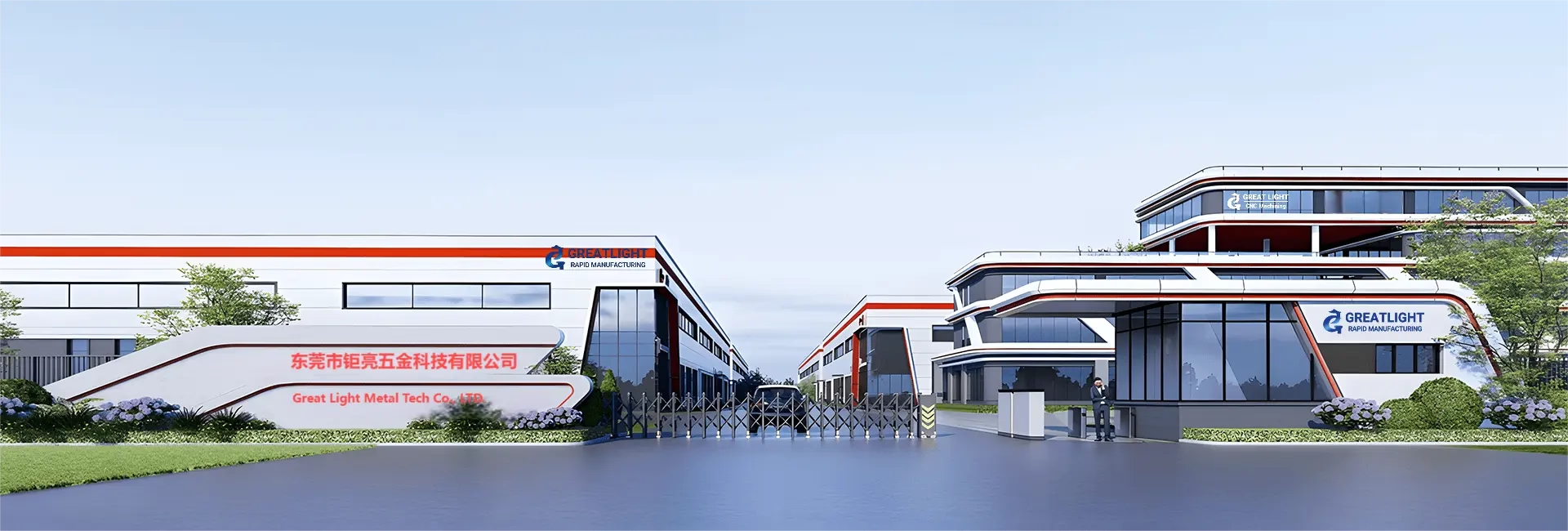
Most programs do not fail because of one bad part. They fail because one node stops moving.
One shop, one machine group, one country. A fire, a power cut or a customs hold lands on your schedule with no second source qualified. Rework and expedite fees follow.
First article passes at ±0.01 mm. Batch six arrives at ±0.03 mm and the assembly needs shimming. Scrap, rework and incoming inspection hours are the real cost.
You need 5 pieces to keep a test cell running. Vendors with high minimums push the order back weeks, so the whole validation queue slips.
Models, drawings and BOMs go out to several shops. Without a signed NDA and controlled file handling, confidential geometry spreads wider than intended.
Antifragile sourcing is a set of concrete choices about machines, capacity and documentation.
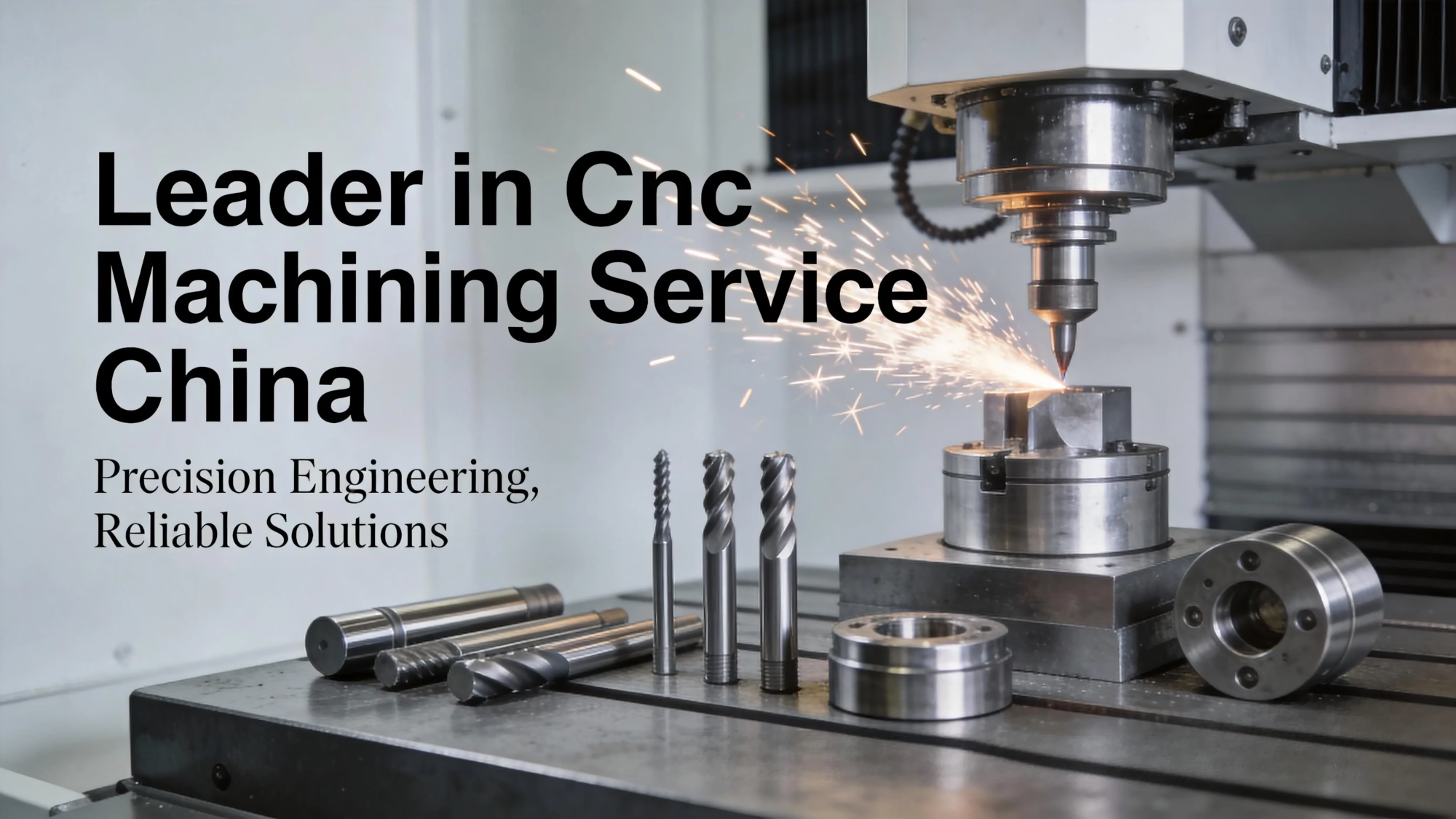
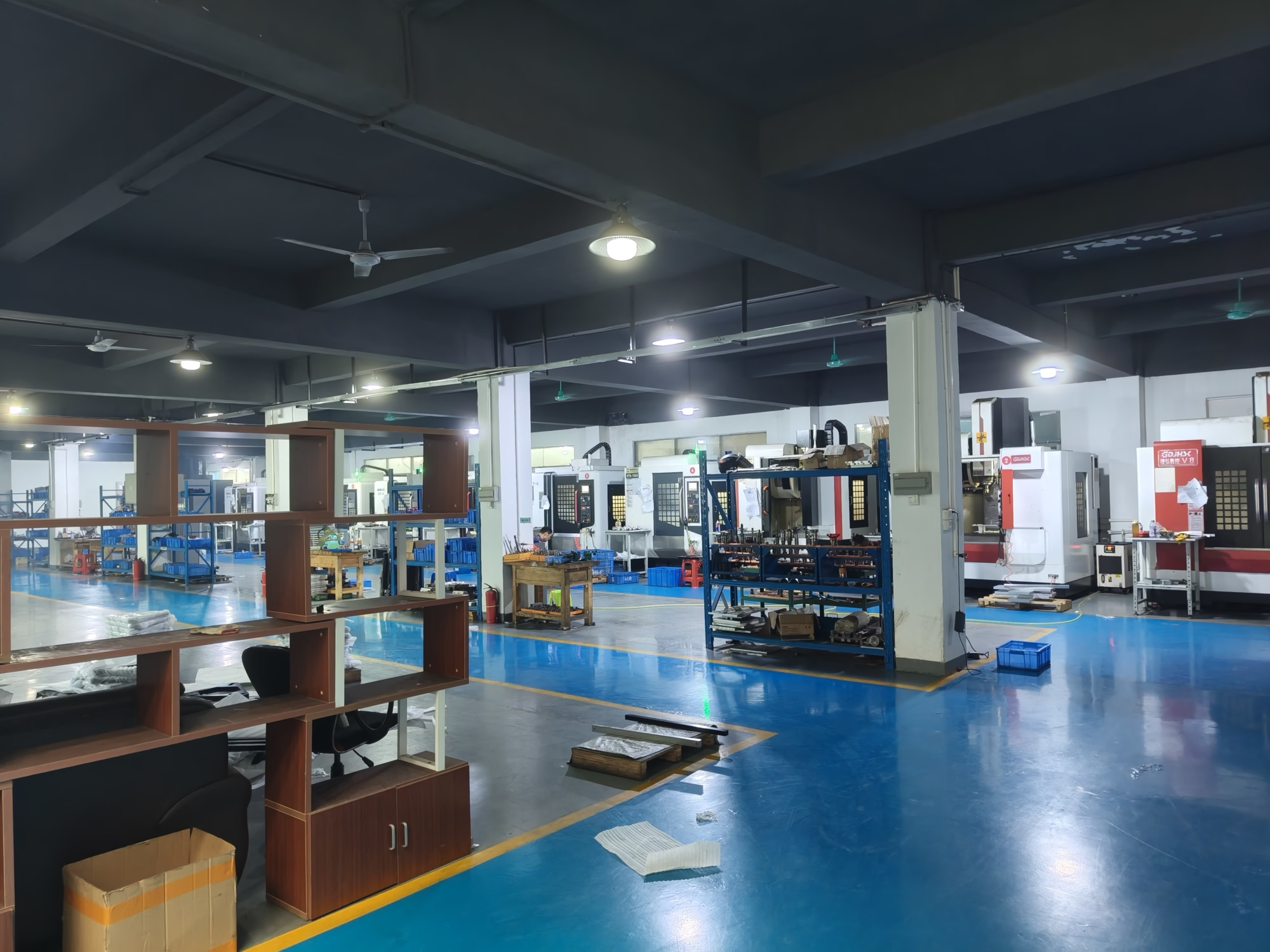
A single plant is a single point of failure. We run three wholly-owned plants with 127 high-precision CNC machines, including 16 simultaneous 5-axis machining centers, 12 four-axis mills, 27 three-axis machines and 16 mill-turn centers across 7,600 m². When one machine group is loaded, the work moves inside our own network instead of to an outside shop.
That redundancy matters most for parts that cannot wait: brackets, housings, manifolds, fixtures and test hardware. Maximum processing size reaches 4,000 mm, with travels of 4,000 × 400 × 150 mm and 750 × 1,150 × 550 mm, so large frames and small precision inserts can run in the same program.
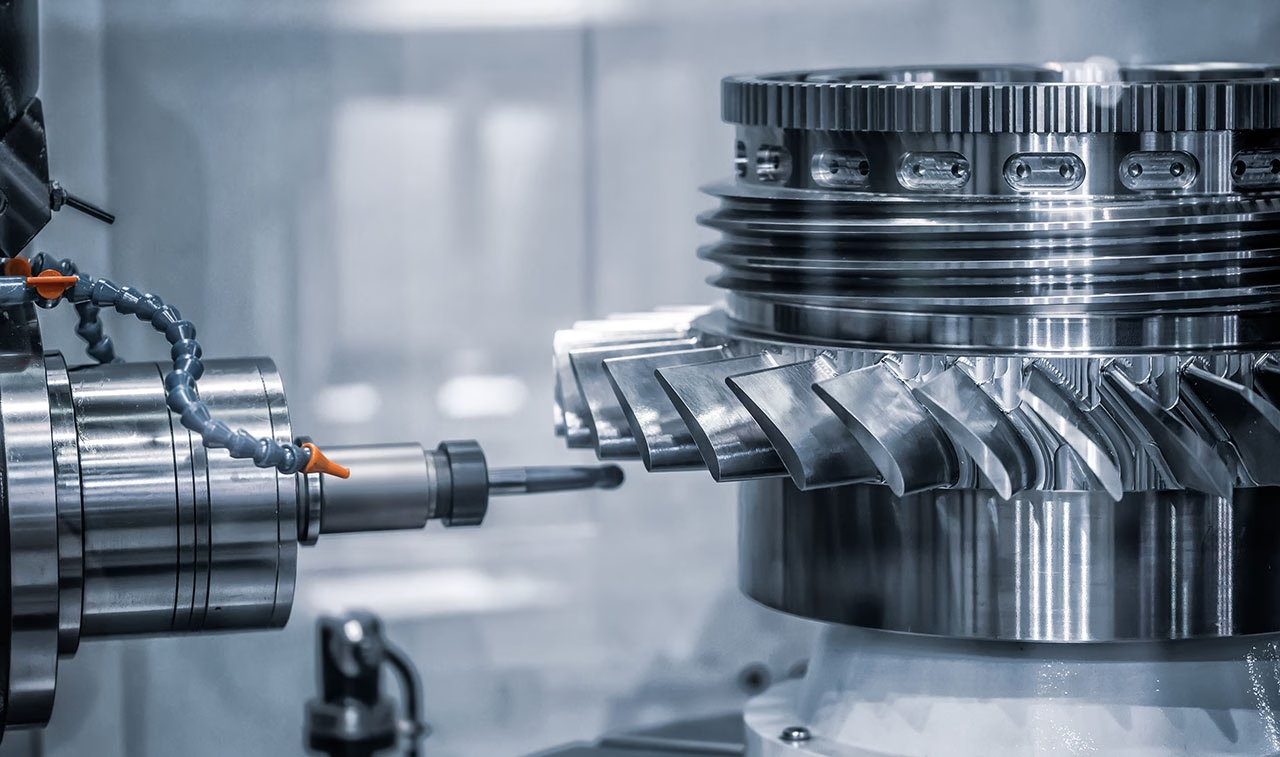
Tolerance is where a supply chain quietly adds cost. If a batch arrives at ±0.03 mm when the drawing says ±0.005 mm, the extra cost shows up as shimming, sorting and rework hours, not on the invoice. We machine to ±0.005 mm (±0.0002 in) and control surface finish from Ra 0.2–0.8 μm for sealing faces up to Ra 1.6–3.2 μm for as-machined surfaces.
Inspection is not a final gate only. Raw material is checked on arrival, dimensions are monitored in process, and every part is inspected before shipment. Reports are available on request. For regulated programs we work under ISO 9001:2015, IATF 16949:2016, ISO 13485:2016 and ISO 27001:2022, so the paper trail matches the part.
Use this to decide what to dual-source and what to keep single-source.
| Part situation | Better setup | Why |
|---|---|---|
| Prototype, 1–20 pieces | Single shop, no MOQ | Speed matters more than redundancy |
| Qualification build, 50–500 | Two shops, one material | Catches process drift early |
| Production, 1,000+ per year | Two plants, two machine groups | Absorbs a single machine outage |
| Large frame over 1,500 mm | Shop with 4,000 mm travel | Few suppliers can hold the envelope |
| Tight sealing face | Shop with Ra 0.2–0.8 μm | Finish drives leak risk |
| Regulated medical or auto | Certified supplier network | Inspection records are required |
One supplier for the metal side of the build, from prototype to production.
16 simultaneous 5-axis centers cut complex geometry in one setup, which removes stacked fixture error on angled faces and ports.
12 four-axis mills and 27 three-axis machines handle prismatic parts, plates and brackets at lower cost per piece.
16 mill-turn centers combine turning and milling for shafts, bodies and fittings that would otherwise need two fixtures.
From one prototype upward with no minimum order quantity, so test hardware arrives before the tooling decision.
Enclosures, brackets and panels paired with machined inserts, so one supplier owns the fit between them.
Anodizing, plating, powder coating, black oxide, bead blasting and laser marking, applied under the same quality system.
What we quote most often. Other grades are available on request.
| Category | What we run | Typical use |
|---|---|---|
| Aluminium | 6061-T6, 7075, 2024, 6082, ADC12 | Housings, brackets, heat sinks |
| Stainless | 303, 304, 316L, 17-4PH | Fittings, medical, marine parts |
| Steel | 1018, 1045, 4140, 4340 | Shafts, fixtures, structural parts |
| Titanium | TA2, TC4 (Ti-6Al-4V) | Lightweight structural parts |
| Plastics | POM, PEEK, PC, ABS, PA | Insulators, covers, wear parts |
| Finishes | Anodizing, plating, black oxide | Corrosion and appearance |
| Run sizes | 1 piece to 10,000+ | Prototype through production |
Six facts that decide whether a supplier can actually absorb a disruption.
Fifteen years of production work, three wholly-owned plants and 150 technicians on the floor.
Capacity to move a job between machine groups instead of sending it outside.
Equal to ±0.0002 in, held across production batches, not only on first articles.
Drawings reviewed and returned with a quotation and free DFM notes within 12 hours.
Production can start within 24 hours of a released order, with historical late-delivery probability below 2%.
No MOQ. From one prototype to 10,000+ part runs under one quality system.
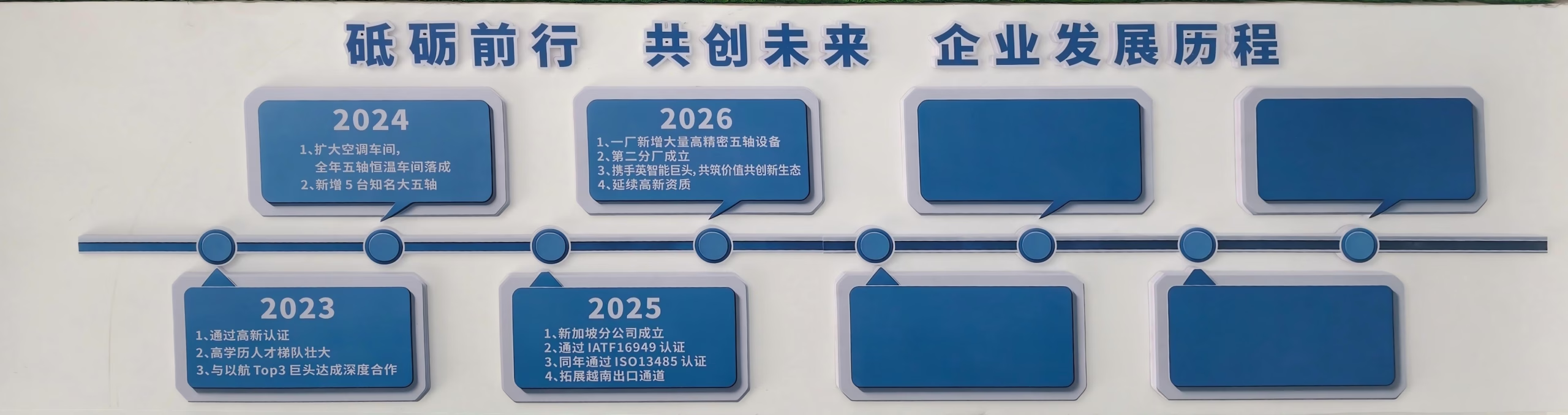
Thin walls, tight position tolerance, traceable material lots.
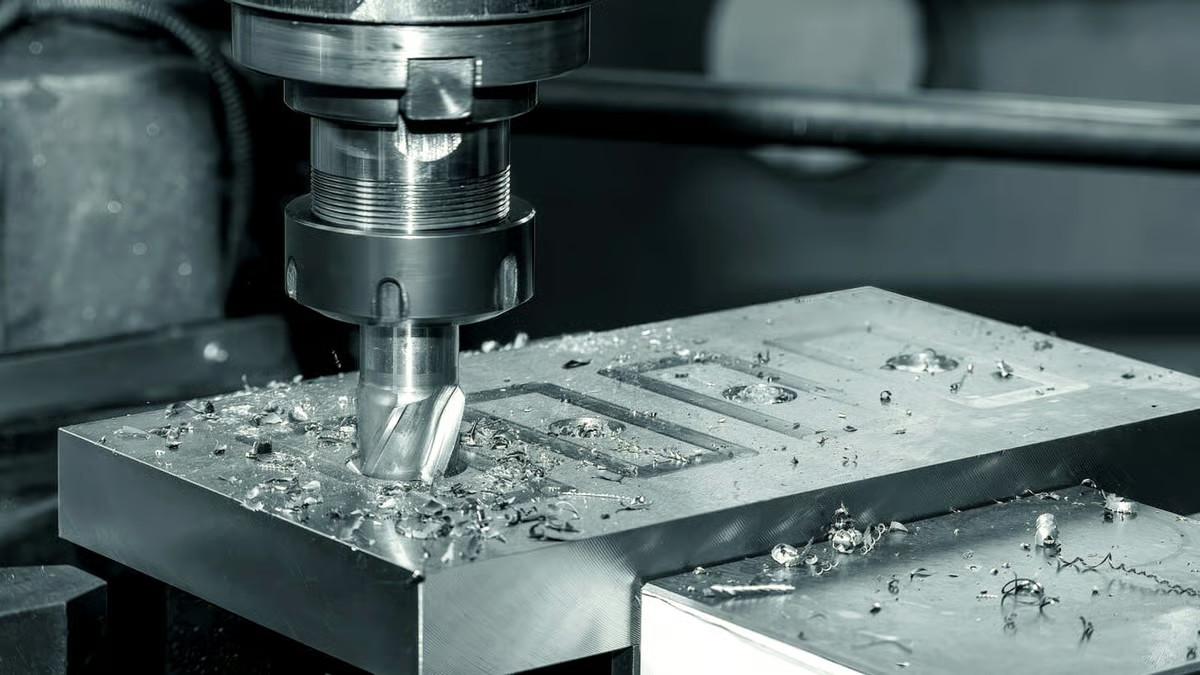
Sealing faces that must not leak and process control that holds across batches.

Clean surfaces, documented inspection and controlled file handling.
Repeated geometry across arms, joints and end effectors.
Resilience means recovering to where you were. Antifragile means the same shock leaves you with more options than before. In practice that means two qualified processes for critical parts, a supplier network with spare capacity, and inspection data you keep after the run.
A concrete example: a machine goes down, and instead of waiting you move the job to a second machine group and learn which fixture caused the delay. The next run is faster.
Two qualified sources for anything on the critical path, and one source for parts where setup cost dominates the price. Every extra source adds qualification work: first article, inspection plan, packaging checks.
A housing with a sealing face earns a second source. A one-off fixture plate usually does not.
Yes, with limits. We can start on the geometry that will not move, such as mounting holes and overall envelope, while leaving cosmetic or interface features open. Production can start within 24 hours of a released order.
Anything that changes a datum or a sealing face should be frozen first, because those changes force a new setup and a new first article.
We inspect raw material on arrival, monitor dimensions in process and inspect every part before shipment. If a dimension drifts, the batch is held and re-measured before it ships.
Reports are available on request so your incoming inspection can verify against the same numbers.
Yes. There is no minimum order quantity, and the same machines and inspection steps apply from one prototype upward. A single part still gets a final inspection.
The difference between prototype and production is usually fixture design and cycle time, not the tolerance class.
Uploads are secure and confidential, and a non-disclosure agreement is available on request. Access to files is limited to the people quoting and machining the part.
If your program needs controlled data handling, tell us at the quotation stage so the process is set before files move.
Parts with a single critical datum that depends on one specific machine, and parts where the finish is hand-worked, are hard to duplicate across sites. Splitting them adds risk instead of removing it.
For those, keep one qualified source and hold buffer stock instead of qualifying a second process.
A 3D model or a dimensioned drawing, material and finish, quantity, and any inspection or documentation requirements. Tolerance callouts on sealing faces and mating features matter most.
We return a quotation and free DFM analysis within 12 hours.
Upload a model or drawing. You get a quotation and DFM analysis within 12 hours, 100% inspection before shipment, and no minimum order quantity.
12-hour quote100% inspectionNo MOQNDA on request
Trusted by engineers and manufacturers worldwide










Upload your 3D model or 2D drawing and get a quotation with a free DFM analysis. Maximum processing size 4,000 mm.
CNC Metals 13 grades
CNC Plastics 10 grades
Machines & processes 12 options
Surface & post-processing 10 options
Material: not selected Machine: not selected Post-process: not selected
Fill in this short form and we'll open WhatsApp with your message ready to send. We only use these details to reply to you.
Nothing is sent until you press send inside WhatsApp.