
01
Container transit gains 10 to 14 days
Routing around the Red Sea adds roughly 3,500 nautical miles on Asia–Europe lanes. A part booked for week 12 arrives around week 14 or later, and every downstream assembly slot moves with it.
Longer ocean routes and canal draft limits stretch transit times and freight budgets. We explain the three impacts engineers and buyers feel, and how local CNC machining keeps a build on schedule.
Each one shows up as a missed build date or an unplanned cost line.
Routing around the Red Sea adds roughly 3,500 nautical miles on Asia–Europe lanes. A part booked for week 12 arrives around week 14 or later, and every downstream assembly slot moves with it.
Drought and low Gatun Lake levels cut the number of daily transits allowed through the neopanamax locks. Carriers hold cargo or reroute around Cape Horn, and arrival windows stop being predictable.
Spot rates on diverted lanes move faster than annual contracts can absorb. Buyers who locked a budget in January find the same container priced higher by spring, with the gap landing on the program.
Extra safety stock ties up cash and floor space. Machined parts that sit for months can pick up surface marks or corrosion, so the insurance against delay creates its own scrap risk.
Three practical moves that keep machined parts out of the disruption window.
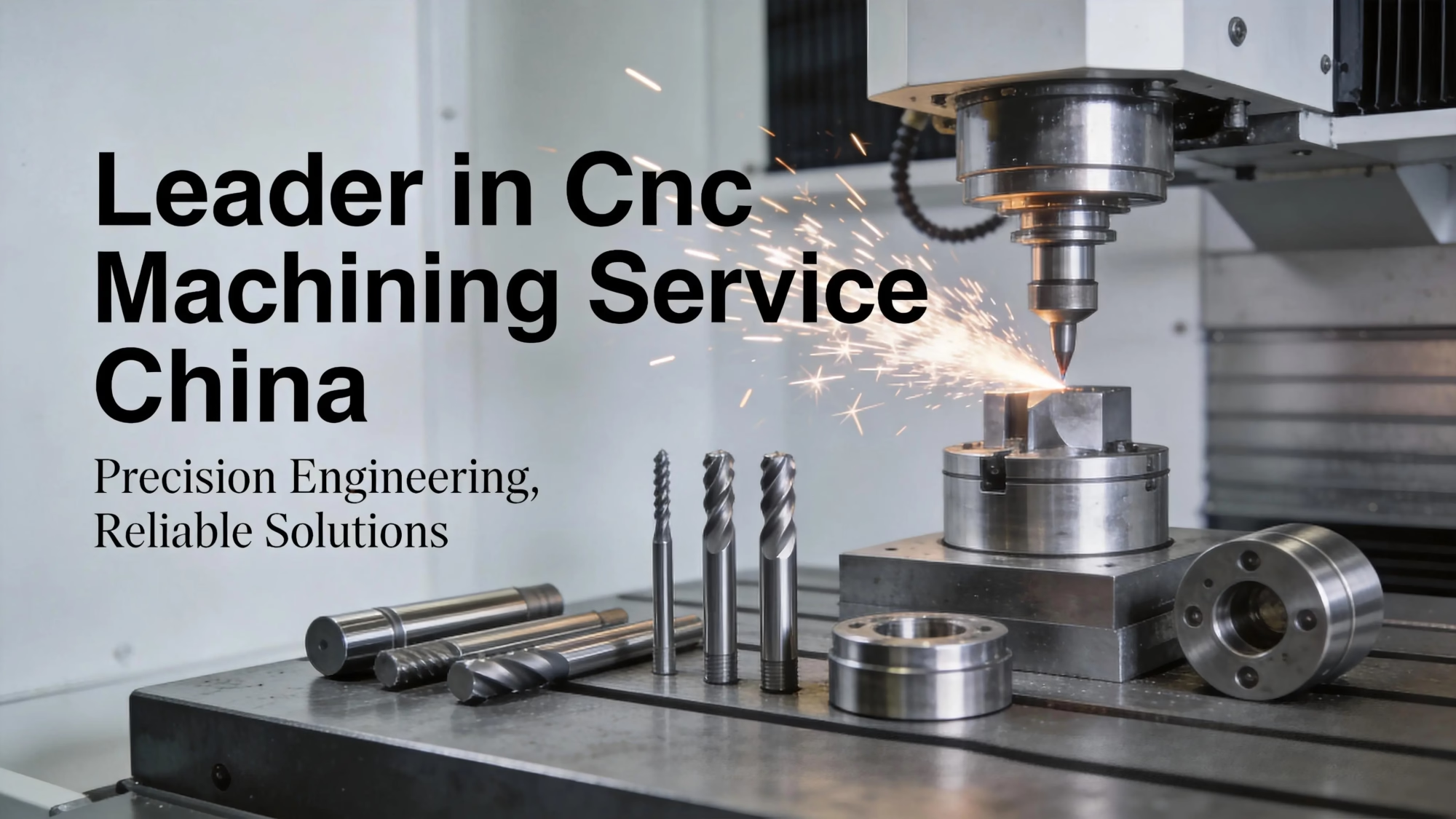
The fastest way to cut exposure is to stop shipping finished machined parts across an ocean. A bracket, housing or manifold produced in Dongguan or Singapore ships in 3–5 days by air or regional freight, so a 10-day canal delay never touches the build.
We run 127 high-precision CNC machines across three wholly-owned plants, which means a transferred part does not wait in a queue behind another customer's program.
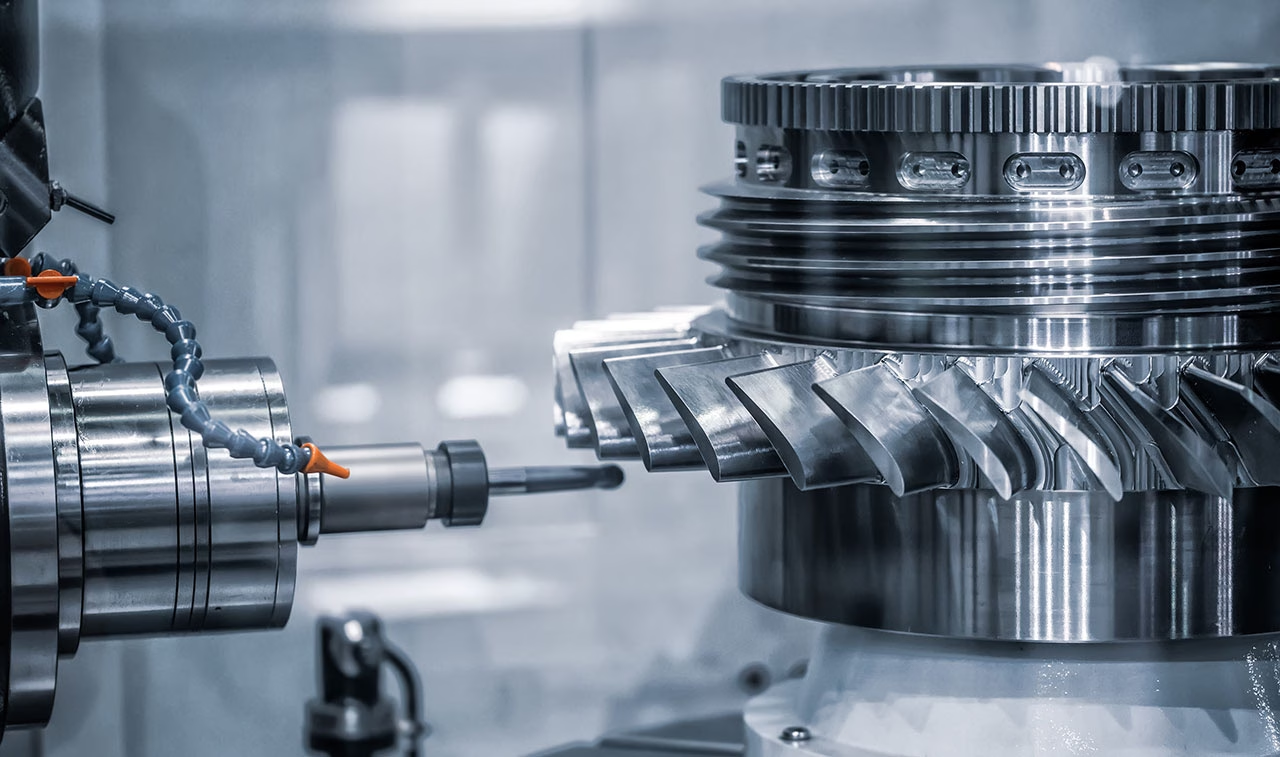
Rerouting a shipment is simple. Re-qualifying a supplier is not. Before a part moves to a new source, the drawing, datum scheme and inspection method have to travel with it, or the first article will not match the assembly.
We review the model and give a free DFM analysis within 12 hours. That review flags thin walls, deep pockets and tolerances tighter than the process can hold, so a re-sourced part is not discovered to be un-machinable after the tooling is cut.
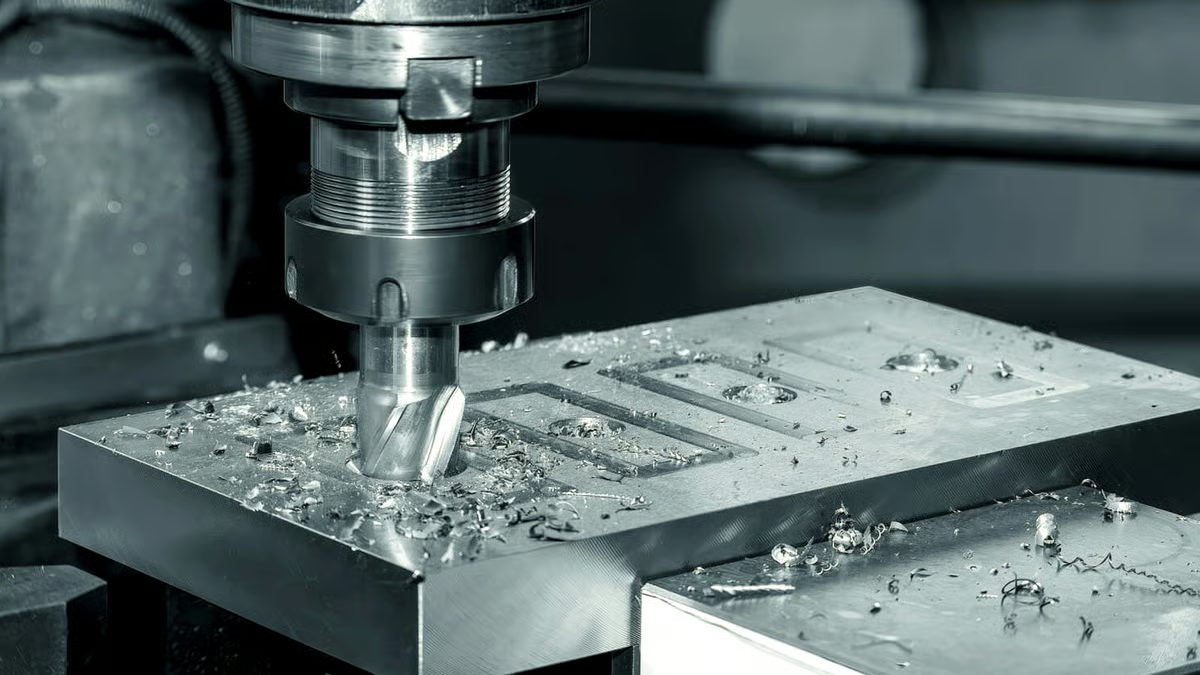
Finished inventory is expensive to store and slow to change. Raw bar and plate can become whichever revision the next build needs. We machine aluminium, stainless, steel, copper alloys, titanium and engineering plastics from stock, so a design change does not strand a pallet of obsolete parts.
For programs that repeat, we keep the process and fixtures on file. The second run skips the setup learning curve and holds the same ±0.005 mm tolerance as the first.
Use this to decide what travels by ocean and what does not.
| Part situation | Ocean shipment | Local CNC machining |
|---|---|---|
| Prototype or first article | Risks 10–14 day delay | Ships in 3–5 days |
| Revision still moving | Obsolete stock risk | Material stays convertible |
| Tolerance at ±0.005 mm | Handling damage risk | 100% inspection before shipment |
| High annual volume, stable design | Cost per unit favors ocean | Competitive at 10,000+ runs |
| Spare parts and service kits | Slow response | Production starts in 24 hours |
Six services that cover a part from model to packed box.
16 simultaneous 5-axis centers cut complex geometry and angled features in one setup, which removes re-fixturing error on housings and impellers.
12 four-axis mills and 27 three-axis machines handle prismatic parts, plates and brackets where multi-face access is not required.
16 mill-turn centers combine turning and milling for shafts, fittings and connectors, holding concentricity without a second operation.
Machined and printed prototypes for fit checks before tooling spend. Useful when a design is still moving and ocean freight is not an option.
Enclosures, chassis and cast housings for programs that need more than a machined part, quoted alongside the CNC work.
Anodizing, electroless nickel, zinc, silver and gold plating, powder coating, bead blasting and laser marking down to 1.5 mm character height.
Pick the machine group that matches your largest feature.
| Machine group | Quantity | Typical part size |
|---|---|---|
| Simultaneous 5-axis | 16 centers | Complex housings, impellers |
| 4-axis mills | 12 machines | Multi-face prismatic parts |
| 3-axis machines | 27 machines | Plates, brackets, covers |
| Mill-turn centers | 16 centers | Shafts, fittings, connectors |
| Large travel | Up to 4,000 mm | Long beams and rails |
| Rotary table | Ø400 mm | Round and indexed parts |
Six facts that decide whether a re-sourced part lands on time.
Fifteen years of production experience across aerospace, automotive, medical, robotics and industrial machinery work.
Equivalent to ±0.0002 in on critical features, verified with in-process monitoring and final inspection.
Parts that pass inspection before they leave the plant, checked against the agreed drawing.
A record we track on every order rather than a promise written into a brochure.
Programmers, machinists and inspectors working across three wholly-owned plants covering 7,600 m².
ISO 9001:2015, IATF 16949:2016, ISO 13485:2016 and ISO 27001:2022 cover quality, automotive, medical and data handling.
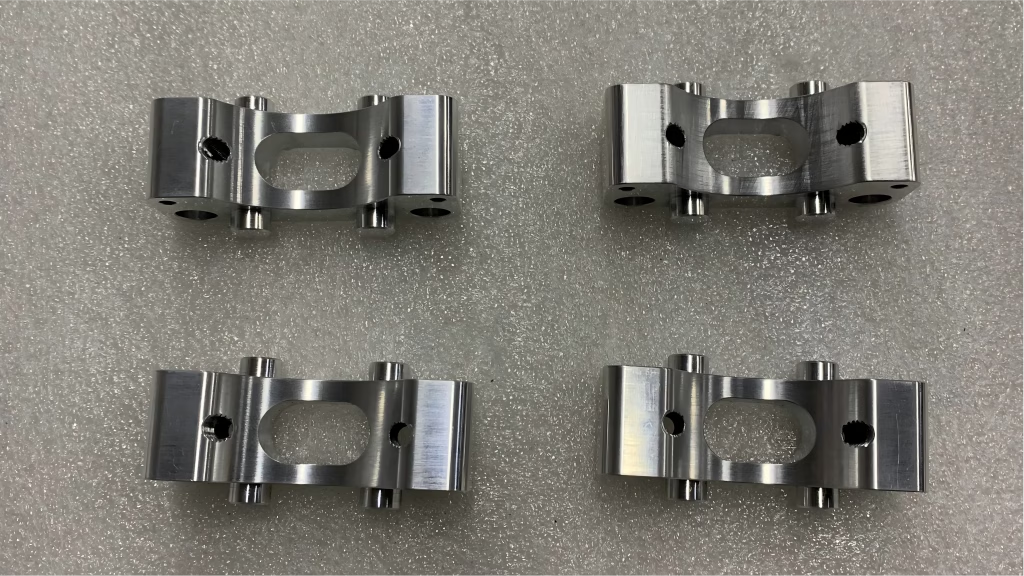
Traceable material and documented inspection for structural fittings.
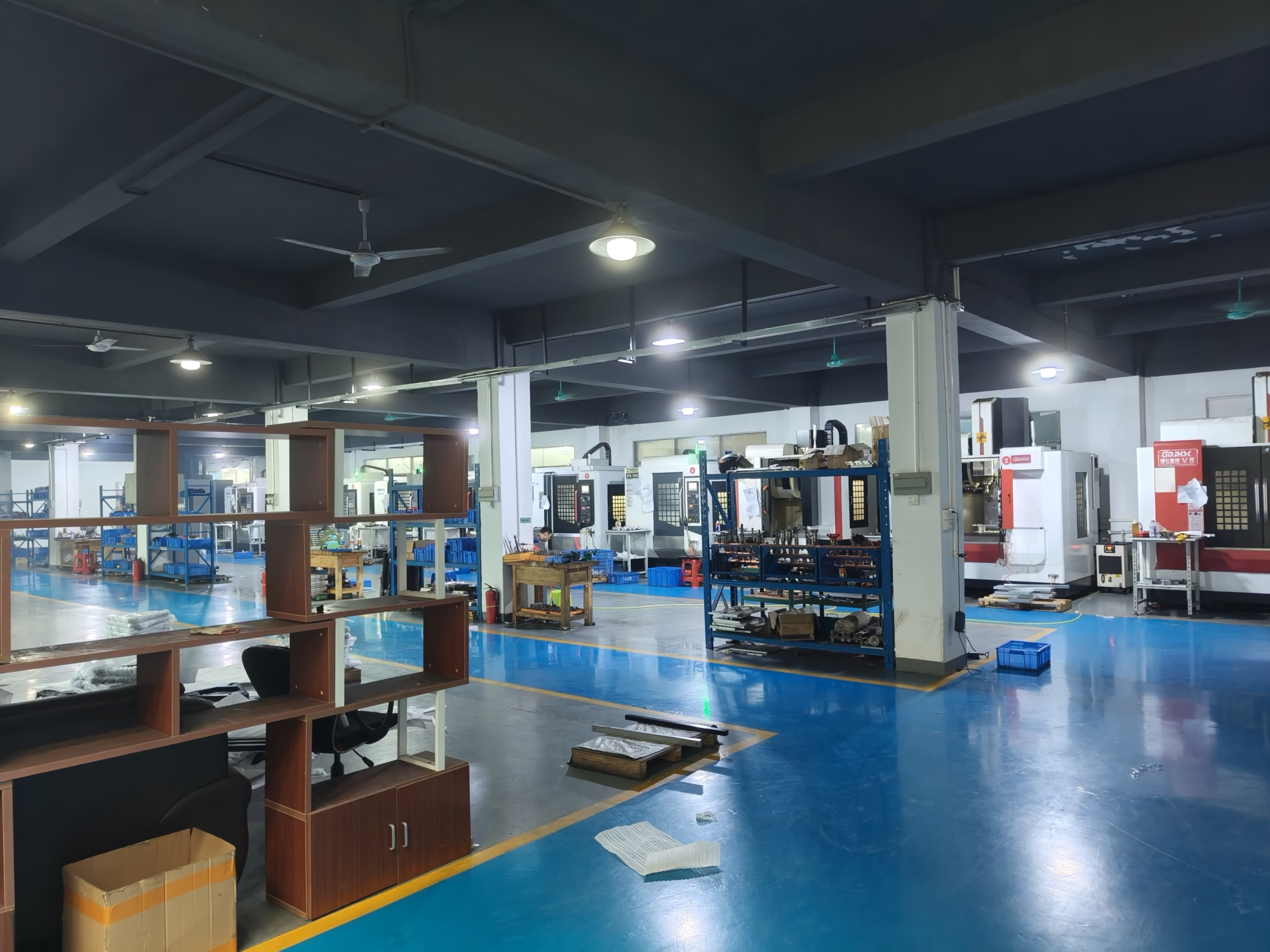
IATF 16949 process control for housings, jigs and battery pack components.
ISO 13485 workflow with clean handling and serialized inspection records.

Mill-turn and 5-axis work for joints, end effectors and gearbox plates.
Routing around southern Africa adds roughly 3,500 nautical miles on Asia–Europe lanes. In practice that shows up as 10 to 14 extra days of transit, and it also absorbs vessel capacity, so the next sailing is harder to book.
The delay matters most for parts that gate an assembly. If a bracket is missing, the whole build stalls regardless of how the other components travel.
The canal carries a large share of Asia–US East Coast and some Asia–Europe traffic. When Gatun Lake levels fall, the authority caps daily transits, so some carriers hold cargo and others reroute around Cape Horn.
Either outcome breaks the arrival window. A production plan built on a fixed canal transit time needs a fallback date, not a single estimate.
Start with low-volume, high-mix parts, anything still in revision, and parts with tight tolerances or cosmetic surfaces. Those are the items where a delay or a rough ocean passage costs the most.
High-volume, stable designs with simple geometry are usually fine on the water. The cost per unit still favors ocean freight there.
Yes. Send the 3D model, the 2D drawing and any inspection report you have. We return a quotation and a free DFM analysis within 12 hours, listing anything that needs clarification before cutting.
If the previous process used a fixture or a special setup, tell us. Matching the datum scheme is the part that keeps the first article interchangeable.
We hold ±0.005 mm on critical features, with surface finishes from Ra 0.2–0.8 μm up to Ra 1.6–3.2 μm as machined. Finishes include anodizing, electroless nickel, zinc, silver and gold plating, powder coating, black oxide, blasting and laser marking.
Laser marking minimum character height is 1.5 mm. If your print calls for something outside these ranges, say so in the RFQ and we will tell you whether it is feasible.
Uploads are secure and treated as confidential. An NDA is available on request before you send drawings, and we hold ISO 27001:2022 for information security management.
We do not publish customer names or part details. If your program needs restricted access inside the shop, raise it during quoting.
There is no minimum order quantity. We run from a single prototype up to 10,000+ part runs on the same process.
That matters during a disruption. You can validate a re-sourced part with a small batch before committing to a full production order.
We return a quotation and a free DFM analysis within 12 hours. Production can start within 24 hours of a cleared order, and parts ship in 3–5 days.
Every shipment is inspected 100% before it leaves, with raw material checks, in-process monitoring and a final inspection. Reports are available on request.
Send your model and drawing. We return a quote and DFM analysis within 12 hours, produce from one piece with no minimum order quantity, and inspect 100% before shipment.
12-hour quote100% inspectionNo minimum order quantityNDA on request
Trusted by engineers and manufacturers worldwide










Upload your 3D model or 2D drawing and get a quotation with a free DFM analysis. Maximum processing size 4,000 mm.
CNC Metals 13 grades
CNC Plastics 10 grades
Machines & processes 12 options
Surface & post-processing 10 options
Material: not selected Machine: not selected Post-process: not selected
Fill in this short form and we'll open WhatsApp with your message ready to send. We only use these details to reply to you.
Nothing is sent until you press send inside WhatsApp.