GreatLight CNC Machining Factory logo
CNC Machining
Rapid Prototyping
Materials
Industries
News
About GL

Get Instant Quote

Plastic CNC Machining

CNC Machining Plastics

GreatLight machines nylon, POM, PC, PEEK, PTFE and other engineering plastics to ±0.005 mm. Send a 3D file and get a quote with free DFM analysis within 12 hours, from one prototype to 10,000+ parts.

±0.005 mm toleranceNo minimum order12-hour quote100% inspection
CNC Machining Services Online
±0.005 mmMachining tolerance
127High-precision CNC machines
15 yearsPlastic and metal machining
6Engineering plastics in stock
Common problems

What goes wrong when plastics are machined like metal

Plastic cutting behaves differently. Most rejected parts trace back to one of these four mistakes.

01

Do your plastic parts come back with melted edges?

High spindle speed and slow feed push heat into the chip instead of out of it. Acrylic, PC and nylon smear, then chip at the edge. The fix is sharp tooling, a high positive rake and air blast, not coolant that thermal-shocks the part.

02

Does the part measure fine on the bench and fail after a week?

Machining releases internal stress that was locked in during extrusion. A wall thins, a flat face bows, a bore closes. Stress-relieving the stock before the finish pass costs one extra setup and prevents a returned batch.

03

Are you drilling a hole that keeps cracking at the exit?

Standard twist drills grab at breakthrough on brittle filled plastics such as Garolite G-10. Step drilling, a slow peck cycle and a backing plate keep the exit clean. The wrong call here scraps a nearly finished part.

04

Is your tolerance callout driving the price up for no reason?

Plastics move with humidity and temperature. Holding ±0.02 mm on a nylon part that lives in a wet environment buys nothing. We flag callouts that the material cannot hold in service and propose a workable band.

How we work

Match the toolpath to the polymer, not to the metal recipe

Plastic has a low modulus and a high thermal expansion. Every cutting decision follows from that.

CNC Lathe Technical Specifications Terminology
Cutting strategy

Feeds, speeds and tool geometry chosen per polymer

PEEK and POM cut cleanly with sharp carbide at moderate speed. PMMA and PC need higher rake angles and air blast to keep the chip clear. We set the parameters from the material lot, not from a generic table, because unfilled and 30% glass-filled grades behave nothing alike.

For thin walls we take light radial cuts and leave an even allowance, then finish in one continuous pass. That keeps cutting pressure low and the wall straight.

  • 1
    Sharp, polished carbideReduces built-up edge on soft, gummy grades.
  • 2
    Air blast over flood coolantAvoids thermal shock and moisture uptake on hygroscopic plastics.
  • 3
    Climb milling on finishingLeaves a cleaner edge and less burr on PC and PMMA.

Get Instant Quote

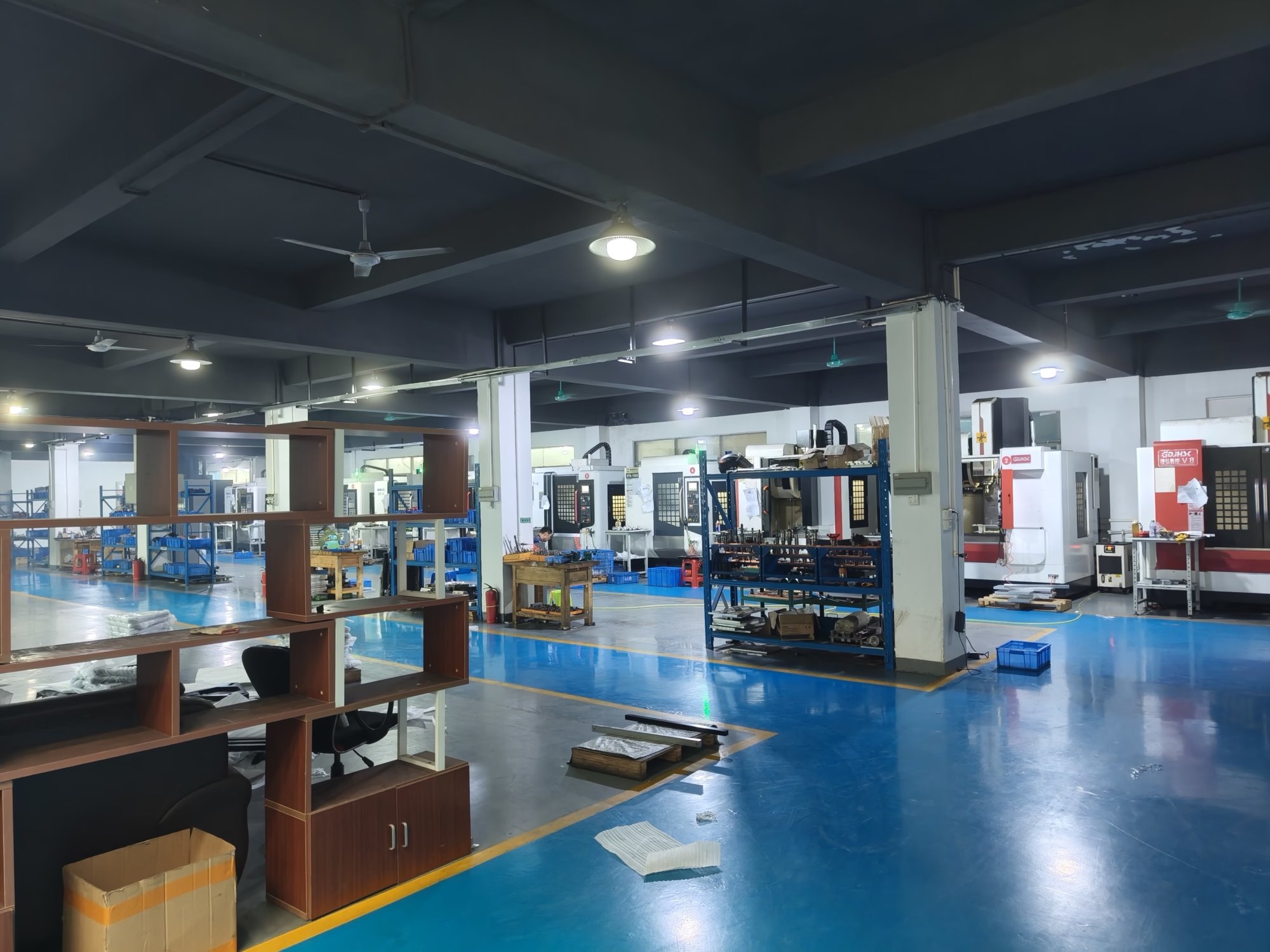
GreatLight Metal new factory building
Material behavior

Stress relief, drying and fixturing before the first cut

Nylon and PC absorb moisture from the air. A soaked blank machines oversized and then shrinks as it dries, so a bore that gauged on the machine no longer fits a week later. We dry hygroscopic stock to a set moisture level and keep it dry through the run.

Fixturing matters as much as the cutter. Soft jaws, vacuum plates and low-clamp-force vises hold the part without crushing it. On a 4,000 mm bed we can machine long plastic profiles in one setup, which removes the joint alignment error of two shorter operations.

  • 1
    Pre-drying to a set moisture levelStops post-machining shrinkage on PA and PC.
  • 2
    Soft jaws and vacuum workholdingHolds thin walls without marking or distortion.
  • 3
    4,000 mm maximum part lengthLong profiles machined in a single setup.

Talk to an Engineer

Material selection

Which plastic suits which job

Use this as a starting point. Send the application and we will confirm the grade.

MaterialBest forWatch out for
POM (Delrin)Gears, bushings, sliding partsPoor bond for adhesives
PA / NylonWear strips, rollers, snap fitsAbsorbs moisture, swells
PCImpact guards, clear coversStress cracks near sharp corners
PEEKHigh-temp seals, medical partsHigher material cost
PTFEChemical seals, low-friction facesCold flow under load
PMMADisplays, light guidesBrittle, chips easily
HDPETanks, liners, low-cost guidesLow stiffness, creep
ABSHousings, brackets, enclosuresLow solvent resistance
Capabilities

What we machine for plastic parts

Turning, milling, drilling, tapping and sawing under one roof.

01

CNC Turning

Bushings, spacers, rollers and threaded inserts turned to ±0.005 mm. Live tooling allows cross-holes and flats in the same cycle, so the part keeps its concentricity.

02

CNC Milling

Housings, manifolds, brackets and covers. 3-axis for flat work, 4-axis and 5-axis for contoured faces and angled features that would otherwise need two fixtures.

03

Drilling and Reaming

Step drilling, peck cycles and reaming for bores that must hold size in filled plastics. Backing plates control exit burrs on brittle grades.

04

Tapping and Threading

Form taps for plastics where possible, since they cold-form the thread and avoid chip nesting. Threaded inserts fitted when the joint will be opened more than a few times.

05

Sawing and Profiling

Sheet and bar cut to length, plus routing of flat profiles from Garolite G-10, PC and acrylic sheet with clean edges and no delamination.

06

Finishing and Assembly

Vapor polishing, bead blasting, laser marking with a 1.5 mm minimum character height, plus insert pressing and light assembly before shipment.

Scope

Plastic machining scope at a glance

ItemRangeNotes
Tolerance±0.005 mm (±0.0002 in)Confirmed against the material
Surface finishRa 1.6–3.2 μm as machinedRa 0.8–1.6 μm on request
Maximum part size4,000 mmSingle setup on long profiles
Lot sizeOne prototype to 10,000+No minimum order quantity
Lead timeParts ship in 3–5 daysProduction can start in 24 hours
Inspection100% before shipmentReports on request
Why GreatLight

What you get from this shop

±0.005

Tolerance held in plastic

Tight machining tolerance is easy to promise on metal and hard to hold on a hygroscopic polymer. We control drying, temperature and fixturing so the number survives the week after machining.

12H

Quote with DFM feedback

Send a STEP or STL file and you get a price plus a written note on wall thickness, callouts the material cannot hold, and features that would be cheaper as two parts.

24H

Production start

Once the file and material are confirmed, machining can begin within 24 hours. Stock grades such as POM, PC, PA, PEEK and PTFE are kept on site.

1

Prototype lot size

One part is a normal order here. The same program and fixture move straight into a 10,000-part run, so the prototype and the production part are made the same way.

4,000 mm

Maximum part length

Long plastic profiles, rails and liners machined in one setup on a 4,000 × 400 × 150 mm travel machine, avoiding the alignment error of joining two short cuts.

100%

Inspection before shipment

Raw material checked on arrival, in-process monitoring during the run, final inspection on every part. Dimensional reports and material certificates available on request.

7,600 m²Manufacturing space
3Wholly-owned plants
150Technicians on staff
99.99%Qualification rate
Industry results

What these industries require, and what we deliver

CNC Machining Services Comparison 2026 Fictiv vs Xometry vs GreatLight

Medical Devices

PEEK and PC components where the bore must stay round after sterilization. We dry the stock, control the finish pass and inspect every part.

  • PEEK and PC
  • ±0.005 mm
  • 100% inspection
Leader in Cnc Machining Service China

Automotive and EV

Nylon and POM brackets, clips and insulator parts in low and mid volume. Tighter bands held where the joint actually needs them.

  • PA and POM
  • IATF 16949:2016
  • 3–5 day ship
oplus_262178

Electronics

Insulating spacers, jigs and fixture plates from Garolite G-10 and PTFE. Flat profiles routed from sheet with clean, non-delaminated edges.

  • G-10 and PTFE
  • Sheet profiling
  • Ra 1.6–3.2 μm
cnc machining

Robotics and Automation

Wear pads, end-effector jaws and low-friction guides. POM and PTFE chosen where sliding contact would otherwise wear a metal face.

  • POM and PTFE
  • 15 years
  • 4,000 mm bed
FAQs

Questions engineers ask before sending a file

Which plastics can you machine?

We machine ABS, PC, PMMA, POM, PA (nylon), PEEK, PP, HDPE and carbon fibre composite, plus Garolite G-10 and PTFE on request.

If your grade is not on that list, send the data sheet and we will tell you whether we can hold your tolerance in it.

What tolerance can you actually hold on plastic?

Our general machining tolerance is ±0.005 mm, and we confirm the achievable band per material before quoting.

Unfilled nylon and HDPE move with moisture and temperature, so a ±0.02 mm band may be the honest call for a part that lives in a wet environment. We say so up front instead of quoting a number the material cannot keep.

How should I call out surface finish on a plastic part?

As-machined plastic usually lands at Ra 1.6–3.2 μm. A finer Ra 0.8–1.6 μm is available with additional finishing passes.

On transparent grades such as PMMA and PC, the tool marks matter more than the Ra number. Vapor polishing or a dedicated finishing pass gives the clarity you want.

Can you machine a single prototype?

Yes. There is no minimum order quantity, so one part is a normal order. We machine from your STEP or STL file and can start production within 24 hours of confirmation.

The same program and fixture carry into larger runs, so the prototype and the production parts match.

How do you stop thin plastic walls from bowing?

Three things: stress-relieved stock, light radial cuts, and an even allowance removed in one continuous finishing pass.

Soft jaws or a vacuum plate hold the part with low clamp force. That combination keeps clamping and cutting pressure low enough that the wall stays straight after it leaves the machine.

Do you dry the material before machining?

Hygroscopic grades such as PA and PC are dried to a set moisture level before the first cut, and kept dry through the run.

Machining soaked stock produces a part that gauges correctly and then shrinks as it dries. Drying first removes that failure mode.

What is the lead time and lot size?

Quotation and DFM analysis come back within 12 hours. Parts typically ship in 3–5 days, and runs go from one prototype to 10,000+ parts.

We do not promise a fixed delivery date before the drawing is reviewed, because the setup depends on the features.

How do you handle my drawings and design files?

Uploads are treated as confidential and kept secure. A non-disclosure agreement is available on request before you send anything.

If your project needs it, we can also restrict the file to the engineers who program the job.

Send your plastic part for a quote

Upload a STEP or STL file. You get a price and a written DFM note within 12 hours.

12-hour quote100% inspectionNo minimum order

Trusted by engineers and manufacturers worldwide

Tesla Ford Motor Company BYD Auto Denso Magna International Boeing Airbus Medtronic KUKA FANUC