GreatLight CNC Machining Factory logo
CNC Machining
Rapid Prototyping
Materials
Industries
News
About GL

Get Instant Quote

Plastic CNC Machining

Machining Plastics

Yes, we machine plastics. POM, PEEK, ABS, PC, PMMA, PA, PP, HDPE and carbon fiber, cut on the same 127 CNC machines that run our metal work, with tolerances held to ±0.005 mm.

No minimum order quantity12-hour quote and DFM±0.005 mm100% inspection
CNC Machining Services Online
15 yearsMachining plastics and metals
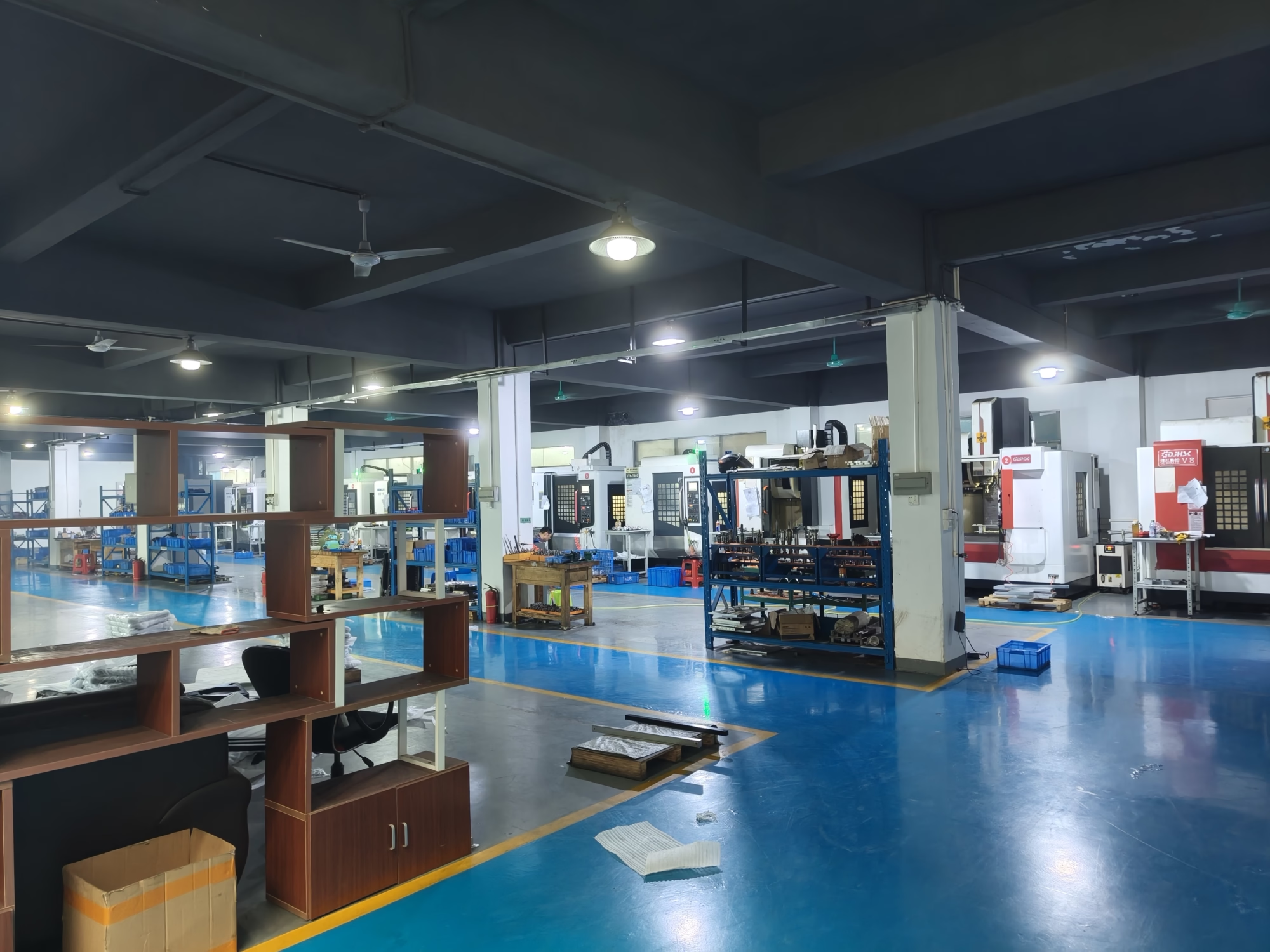
127High-precision CNC machines
±0.005 mmAchievable tolerance
3–5 daysParts ship
Plastic parts that go wrong

Why plastic jobs fail on the shop floor

Most plastic machining problems are predictable. Here is what we see when parts arrive from other shops.

01

Melted edges and stringy chips

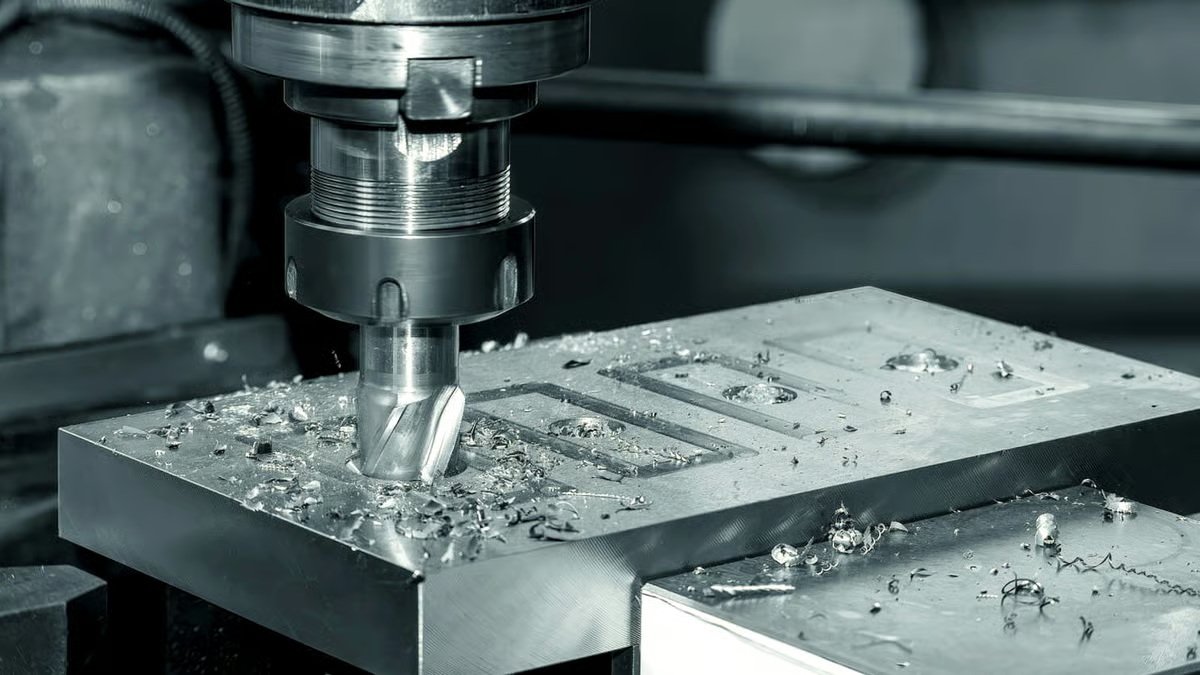
Too much spindle speed and no air blast. The cutter rubs instead of cutting, the chip welds back onto the wall, and the finish looks torn. On POM and HDPE this happens fast because the material does not pull heat away from the edge.
02

Parts that move after machining

Plastic absorbs moisture and releases internal stress when you cut it. A flat plate machined dry in the morning can bow overnight. Bore diameters drift. If the shop ships on the day of cutting, the geometry at your incoming inspection is not the geometry that was measured.

03

Chatter on thin walls

Plastic is not stiff. A 1.5 mm wall on a PEEK housing will sing if the shop uses the same toolpath it uses for aluminum. Light radial passes, sharp tooling and a fixture that supports the wall matter more than spindle power.

04

Quotes that ignore the material

A quote built from a generic plastic rate hides the real cost. PEEK and carbon fiber need slower feeds, dedicated tooling and more inspection time. The number looks low until the first article fails, and then the schedule and the price both change.

Our approach

How we machine plastics

Same machines, different parameters, and a plan for heat and movement.

CNC Lathe Technical Specifications Terminology
Cutting parameters

Feeds and speeds set per resin, not per drawing

Plastic cuts with a sharp edge and a clear chip. We pick tool geometry, helix and coating by resin, then set spindle speed and feed to keep the chip thick enough to carry heat away. Compressed air replaces flood coolant on most jobs so the part does not sit in fluid and swell.

PEEK and carbon fiber run slower with more tool changes. ABS and PC cut closer to aluminum rates. Free-cutting POM sits in the middle and holds tight numbers well.

  • 1
    Air blast and vacuumKeeps chips clear and the part dry
  • 2
    Sharp, polished flutesLess rubbing, less built-up edge
  • 3
    Rough then restLeave stock, let stress release, finish later

Get Instant Quote

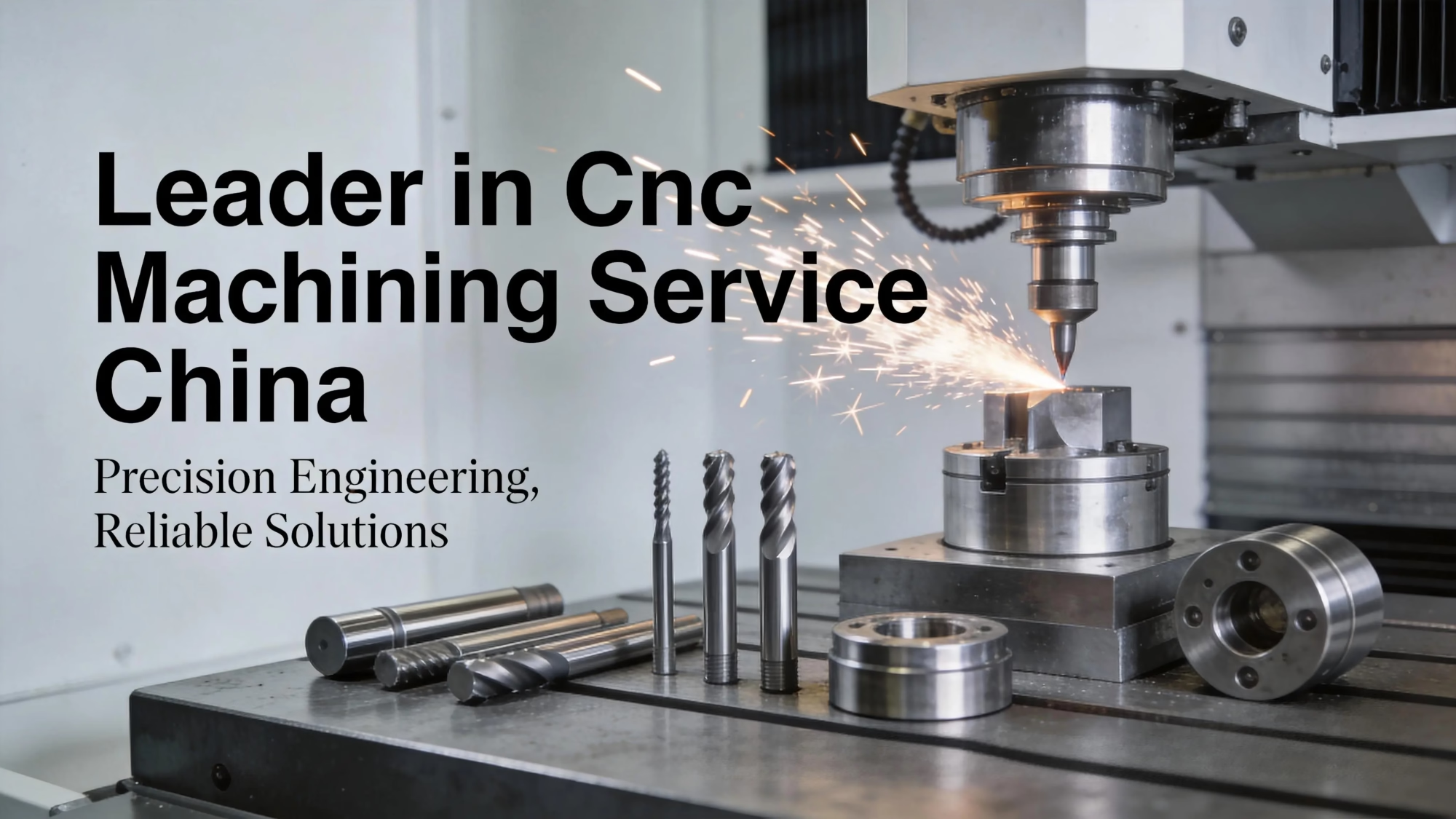
Leader in Cnc Machining Service China
Stability

Fixtures and sequencing that stop the part moving

Plastic gives under clamping pressure, so we build soft jaws, vacuum plates and support rings that hold the part without crushing it. Thin-wall housings get a support collar for the finishing passes. For long parts, we machine in two or three setups and re-datum from a machined surface, not from the saw cut.

When a part is moisture-sensitive, we ask what the service environment looks like. A PA or POM component that runs in a dry enclosure after a wet shipping route will move. Knowing that up front decides the order of operations.

  • 1
    Soft jaws and vacuumHold without distorting the wall
  • 2
    Machined datumsPosition comes from a cut face
  • 3
    Stress relief passesRough, wait, then finish to size

Get Instant Quote

Material selection

Which plastic for which job

A starting point for common parts. Your service temperature and chemical exposure decide the final call.

ResinGood forWatch out for
POM (Delrin)Bushings, gears, wear stripsPoor bond for adhesives
PEEKHigh temperature, chemical serviceSlow to cut, higher cost
ABSEnclosures, brackets, coversLow stiffness, low heat limit
PCImpact covers, guards, lensesStress cracks near sharp corners
PMMA (acrylic)Windows, light guidesBrittle, chips easily
PA (nylon)Wear parts, clips, rollersAbsorbs moisture, moves
PP / HDPETanks, seals, chemical partsFlexes under light cuts
Carbon fiberStiff lightweight panelsAbrasive, needs special tooling
What we run

Plastic machining services

One shop for the plastic part, the metal bracket that holds it and the finish on both.

01

3-axis CNC milling

Plates, covers, manifolds and housings up to 4,000 mm. Good for flat parts with pockets and drilled holes.

02

4-axis and 5-axis machining

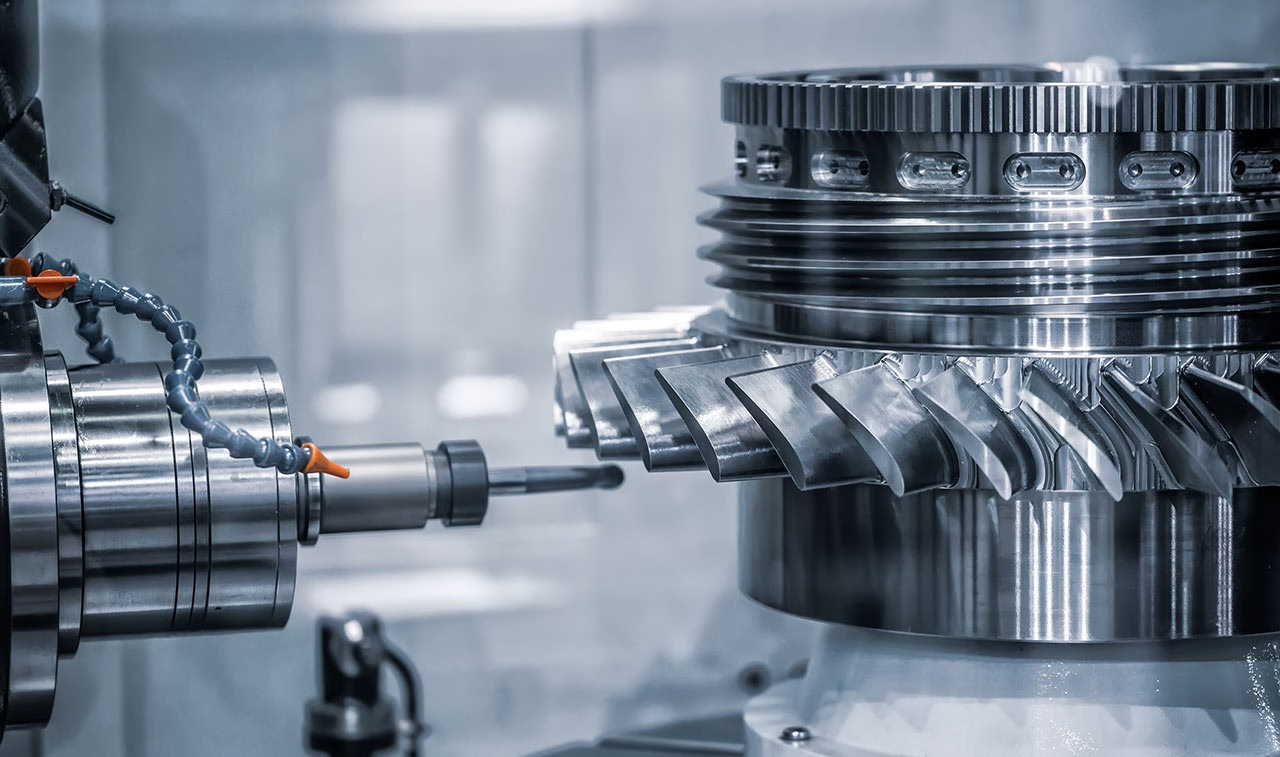
Multi-face parts in one setup. Ports, angled faces and contoured housings that would need three fixtures on a 3-axis machine.

03

CNC turning

Bushings, rollers, spacers and threaded plastic parts. Mill-turn centers cover cross holes and slots without a second operation.

04

Rapid prototyping

One-off plastic prototypes to check fit before tooling. Same inspection standard as production parts.

05

Surface finishing

Bead blasting, tumbling, brushing and polishing. Laser marking with a minimum character height of 1.5 mm.

06

Inspection and reporting

Raw material check, in-process monitoring and final inspection on 100% of parts. Reports on request.

Capability

Plastic machining scope

What the machines and the quality system cover.

ItemRange
Maximum part size4,000 mm
Tolerance±0.005 mm (±0.0002 in)
As-machined finishRa 1.6–3.2 μm
Fine finishRa 0.2–0.8 μm
Order quantityOne prototype to 10,000+ parts
Lead timeQuote in 12 hours, parts ship in 3–5 days
CertificationsISO 9001, IATF 16949, ISO 13485, ISO 27001
Why GreatLight

Numbers behind the plastic work

15Y

Since 2011

Fifteen years cutting plastics and metals in Dongguan and Singapore.

127

CNC machines

16 simultaneous 5-axis centers, 12 four-axis mills, 27 three-axis machines and 16 mill-turn centers.

±0.005

Tolerance

Held on plastic parts with the right tooling, fixtures and finishing sequence.

24 h

Production start

Production can begin within 24 hours of a released order.

99.99%

Qualification rate

Across parts we inspect before shipment.

<2%

Late-delivery risk

Historical late-delivery probability on shipped orders.

7,600 m²Manufacturing space
3Wholly-owned plants
150Technicians
12 hQuote and DFM analysis
Applications

Plastic parts by industry

6011

Medical device housings

Cleanable PEEK and PC housings with tight bore alignment.

  • ±0.005 mm
  • ISO 13485
  • 100% inspection
GreatLight Metal new factory building

Automotive and EV fixtures

POM and PA jigs, insulators and test fixtures for line use.

  • IATF 16949
  • 3–5 day ship
  • 10,000+ runs
oplus_262178

Electronics spacers and insulators

Thin-wall PP and PC parts that must stay flat after machining.

  • Ra 0.8–1.6 μm
  • Air blast cutting
  • No minimum order
cnc machining

Industrial wear parts

Carbon fiber and PEEK components for abrasive or hot service.

  • Special tooling
  • 4,000 mm max
  • Reports on request
FAQs

Questions about machining plastics

Which plastics do you machine?

We machine ABS, PC, PMMA, POM, PA, PEEK, PP, HDPE and carbon fiber composites, plus other resins on request.

The material list on your drawing is the starting point. If a resin is not in our standard list, we will say so before quoting rather than after the first article.

Can you hold ±0.005 mm on plastic parts?

Yes, on the right part. Tolerance depends on wall thickness, resin and how much material you remove.

Thin unsupported walls and moisture-sensitive nylon are harder to hold. A PEEK or POM part with a solid cross section reaches ±0.005 mm without special measures. Send the drawing and we will tell you which dimensions are realistic.

How do you control heat when cutting plastic?

Compressed air and vacuum clear the chip and keep the part cool. Flood coolant is avoided on most jobs because plastic absorbs fluid.

We set spindle speed and feed so the chip is thick enough to carry heat away. Rubbing is what melts the edge, not cutting speed by itself.

Will the part warp after machining?

It can, if the shop finishes in one pass and ships the same day. We rough, let the part rest, then take the finishing cuts.

For moisture-sensitive resins we ask about the service environment. That decides the order of operations and how much stock to leave.

What is the tolerance and finish on carbon fiber?

Carbon fiber machines well but it is abrasive. It needs dedicated tooling and a fresh setup per new part to set feeds and speeds.

Edge quality and delamination are the two things to watch. We run test cuts on a new geometry before committing to the full run.

What is your minimum order quantity for plastic parts?

None. We run from one prototype to 10,000+ part runs.

For batch production we supply a sample for your check before the mass run. Single samples are charged.

How fast can I get a quote and parts?

Quotation and free DFM analysis come back within 12 hours. Production can start within 24 hours of a released order, and parts ship in 3–5 days.

Uploads are secure and confidential. An NDA is available on request.

Can you finish plastic parts after machining?

Yes. Bead blasting, tumbling, brushing and polishing are done in house. Laser marking has a minimum character height of 1.5 mm.

Anodizing and plating are metal processes and do not apply to plastic parts.

Send us your plastic part

Upload the drawing and we will return a quote and a free DFM analysis within 12 hours.

12-hour quoteNo minimum order quantity100% inspection

Trusted by engineers and manufacturers worldwide

Tesla Ford Motor Company BYD Auto Denso Magna International Boeing Airbus Medtronic KUKA FANUC