GreatLight CNC Machining Factory logo
CNC Machining
Rapid Prototyping
Materials
Industries
News
About GL

Get Instant Quote

Forged Shaft Manufacturing

Forged Shafts

We machine forged shafts from carbon steel, alloy steel and stainless, holding ±0.005 mm on journals, shoulders and splines. One-off prototypes through 10,000-piece runs.

Ø up to 400 mm4,000 mm max length±0.005 mmISO 9001 / IATF 16949No MOQ
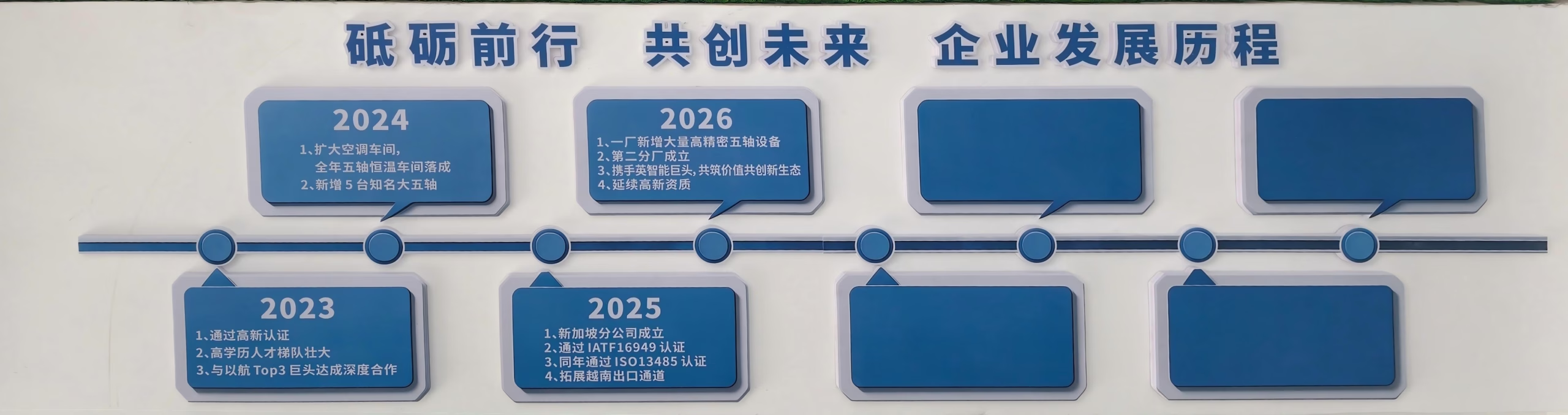
Forge ahead with determination and create the future together.
15 yearsShaft manufacturing
127High-precision CNC machines
±0.005 mmAchievable tolerance
3–5 daysTypical shipping window
Where forged shafts go wrong

Four failures that reach your assembly line

01

Bearing seats that will not hold preload

A forged blank arrives with scale and an off-center parting line. Skim the journal to clean it up and the press fit turns loose. The bearing spins on the shaft, fretting eats the seat, and the whole gearbox comes back.

02

Straightness drift after machining

Forge stock carries residual stress. Cut one side of a 1,200 mm shaft and it bows. You measure it straight on the bench, then it moves 0.15 mm once it sits overnight or sees service heat.

03

Spline wear and flank pitting

Flanks cut from bar stock have no grain flow following the profile. Under reversing torque the flanks pit early, backlash opens up, and the customer hears it before your warranty period ends.

04

Certificates that do not match the heat

A supplier ships forged shafts with a generic mill certificate. Your auditor asks for heat numbers traceable to the raw stock. Now the parts sit in quarantine while you chase paperwork.

How we build them

From forged blank to finished shaft

Two capabilities decide whether a forged shaft performs: how the blank was formed, and how the finished geometry is held.

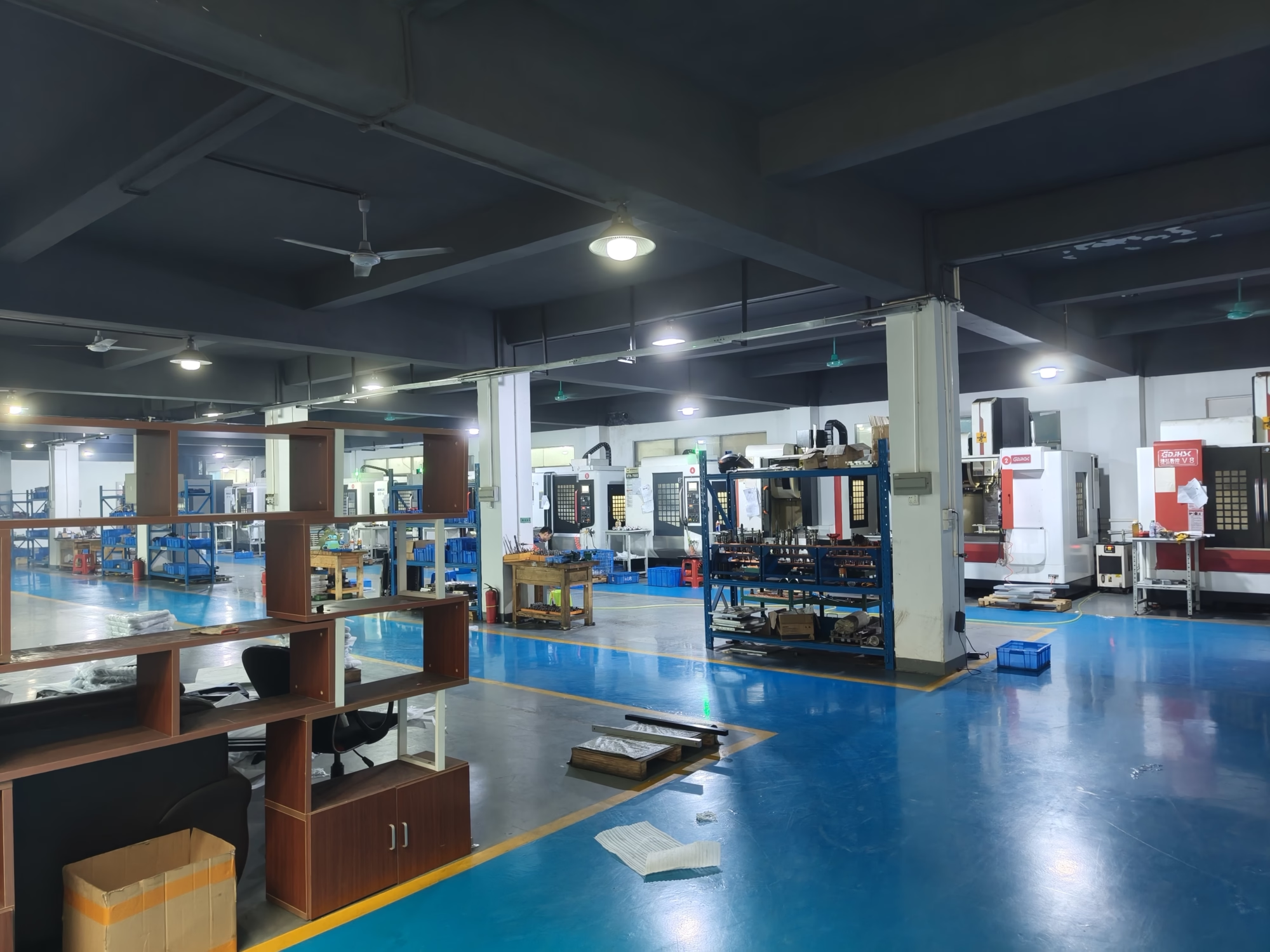
GreatLight Metal new factory building
Capability 01

Forging sets the grain flow in your favor

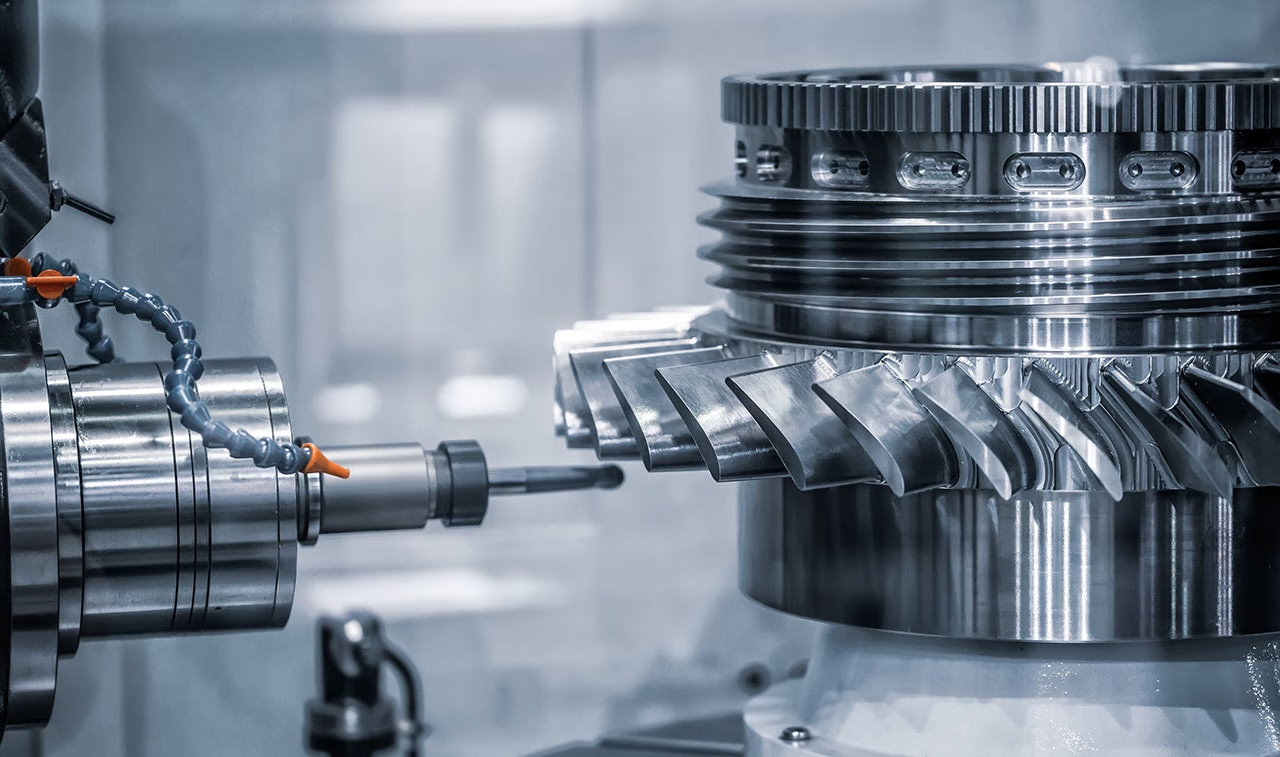
A forged shaft starts as a billet heated and worked into shape. The deformation bends the grain so it runs along the axis and follows the shoulders instead of being cut across them. On a 4140 drive shaft carrying reversing torque, that continuous flow is what resists fatigue crack growth at the fillet.

We work from forged blanks in carbon steel, alloy steel, stainless and titanium, then machine them on 16 simultaneous 5-axis centers and 16 mill-turn centers. Long shafts up to 4,000 mm go onto the large-travel machines. Short, high-volume parts run on the 500 × 500 × 450 mm platforms.

  • 1
    Grain flow along the axisBetter fatigue life at fillets and shoulders than bar stock.
  • 2
    Denser sectionForging closes internal porosity from the original ingot.
  • 3
    Near-net blanksLess stock to remove, shorter cycle time, less wasted material.

Get Instant Quote

CNC Lathe Technical Specifications Terminology
Capability 02

Turning, splining and grinding to ±0.005 mm

A forged shaft usually needs three operations chained together: turn the journals and shoulders, cut the spline or keyway, then grind the bearing seats. We keep them in one setup family so the datums stay consistent. Journal-to-journal runout is checked against the drawing, not against the last operation.

Bearings need more than a diameter. Surface finish on the seat decides whether the inner ring creeps under load. Ground seats land at Ra 0.2–0.8 μm. Turned shoulders and non-critical diameters sit at Ra 1.6–3.2 μm, which keeps cost down where finish does not matter.

  • 1
    Runout held on the drawing datumNot on the previous chucking.
  • 2
    Ground seats at Ra 0.2–0.8 μmFor bearing and seal contact.
  • 3
    Spline and keyway in the same flowFewer re-clamps, less stack-up.

Talk to an Engineer

Selection guide

Forged or machined from bar?

Use this to decide before you send a drawing.

ConditionForged shaftMachined from bar
Reversing or impact loadPreferred, grain flow follows profileFlanks can pit early
Shaft Ø over 200 mmPreferred, less material removedHeavy stock removal, long cycle
Prototype, 1–5 piecesPossible, longer blank lead timeFaster to first part
Tight section changeBetter fatigue at filletsStress riser at the step
Simple straight shaftOverkill for the costUsually the right call
High-volume runsNear-net blank saves materialBar stock per part is higher
Shaft work we run

Shaft types and support services

01

Custom forged shafts

Drawings or samples, any quantity from one piece to 10,000. Material, heat treatment and finish specified per part.

02

Spline and gear shafts

Involute and straight-sided splines, keyways and integral gear teeth cut after the journals are turned.

03

Motor and rotor shafts

Rotor seats, bearing journals and balance features for electric motor and EV drivetrain assemblies.

04

Welded shaft assemblies

Forged sections joined to hubs or flanges, with weld prep turned on the same datums as the journals.

05

Worm and lead shafts

Threaded and worm profiles turned and ground, with pitch diameter checked against the mating worm wheel.

06

Heat treatment and finishing

Through-hardening, case hardening, black oxide, plating, anodizing and laser marking with 1.5 mm minimum character height.

Scope

What a forged shaft order covers

ItemRange or detail
Materials1018, 1045, 4130, 4140, 4340, tool steel; 303/304/316/17-4PH; TA1, TC4
Maximum length4,000 mm on the large-travel machines
DiameterUp to Ø400 mm on the rotary table
Tolerance±0.005 mm on critical diameters
Surface finishRa 0.2–0.8 μm ground, Ra 1.6–3.2 μm as machined
Inspection100% before shipment, reports on request
CertificationsISO 9001:2015, IATF 16949:2016, ISO 13485:2016
Order sizeNo minimum, from one prototype to 10,000+ parts
Why GreatLight

Numbers behind the work

15Y

Shaft focus since 2011

Shafts and rotating parts have been the core of our work for 15 years, across three wholly-owned plants in Dongguan and Singapore.

±0.005

Tolerance we can hold

On bearing journals and spline diameters, verified with in-process checks rather than a final pass at the end.

127

CNC machines on the floor

16 simultaneous 5-axis centers, 16 mill-turn centers, 12 four-axis mills and 27 three-axis machines.

4,000 mm

Maximum processing size

Long drive and line shafts that most shops have to sub out stay in our own building.

99.99%

Qualification rate

Raw material check, in-process monitoring and final inspection before anything is packed.

12 h

Quote and DFM turnaround

Send a drawing and get a quotation plus a free DFM analysis within 12 hours.

7,600 m²Manufacturing space
150Technicians on staff
< 2%Historical late-delivery rate
24 hProduction start after approval
Industry requirements

What these sectors demand from a forged shaft

Leader in Cnc Machining Service China

Automotive and EV

Motor and drivetrain shafts need heat-number traceability and IATF-aligned process control from forging through grinding.

  • IATF 16949
  • 100% inspection
oplus_262178

Industrial machinery

Long line shafts must hold straightness after machining and stay round where the bearings seat.

  • 4,000 mm
  • ±0.005 mm
CNC Machining Services Online

Robotics and automation

Spline and gear shafts need tight backlash control so positioning repeatability holds over millions of cycles.

  • Ra 0.2–0.8 μm
  • Spline backlash
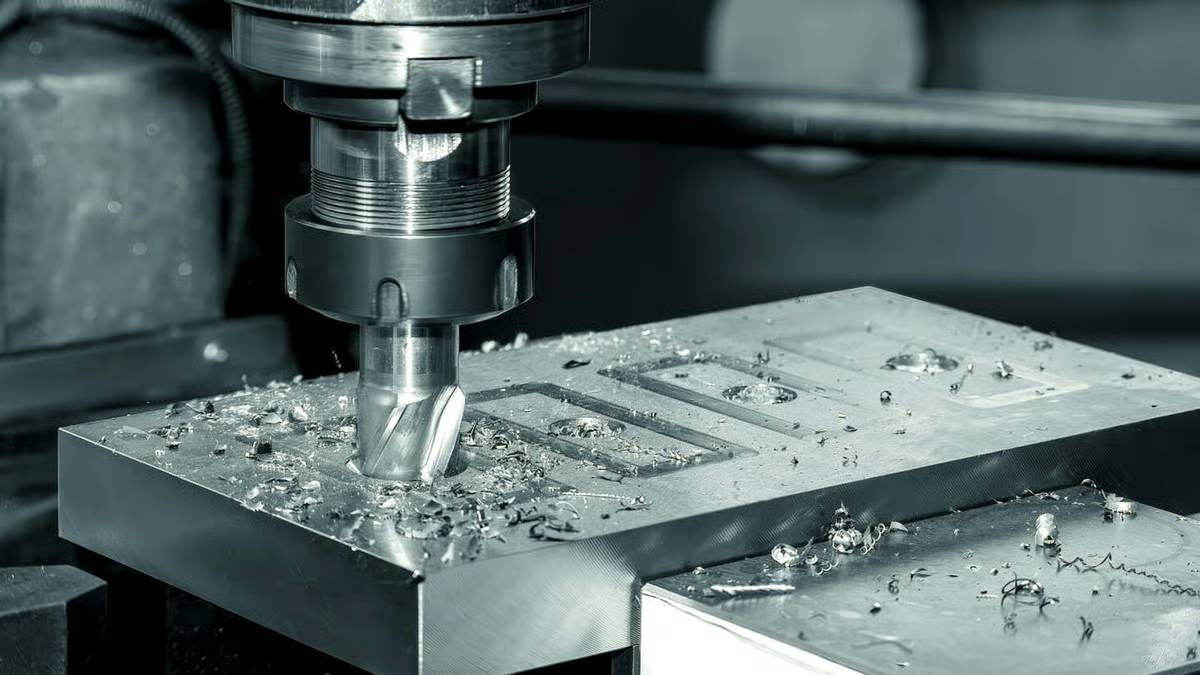
cnc machining

New energy equipment

High-torque shafts run under continuous load, so grain flow direction and fillet finish decide service life.

  • Forged grain flow
  • 99.99% yield
FAQs

Questions engineers ask before ordering

When is a forged shaft better than one machined from bar stock?

Choose forged when the shaft sees reversing load, impact or high torque, and when the grain flow needs to follow the profile rather than be cut across it. Fillets and shoulders benefit most.

Bar stock is the better call for short straight shafts, small diameters and one-off prototypes where the forging lead time would slow the build.

What tolerance can you hold on a bearing journal?

We hold ±0.005 mm on critical diameters, which is ±0.0002 in. Bearing seats are usually ground after turning to reach that band and to control roundness.

Tell us the bearing fit you need (for example k5 or m6) and we will machine to the fit rather than to a nominal diameter.

How do you keep a long shaft from bowing after machining?

We rough turn, let the part rest, then finish. For shafts near the 4,000 mm limit we plan the operation sequence so material is removed evenly from both sides of the axis.

Straightness is checked on the drawing datum after finishing, not straight off the machine while the part is still warm.

Which materials do you machine forged shafts from?

Carbon and alloy steel: 1018, 1045, 4130, 4140, 4340, A36 and tool steel. Stainless: 303, 304, 316, 316L, 420, 440C and 17-4PH. Titanium and nickel alloys: TA1, TA2, TC4 and Inconel.

Material choice drives the heat treatment and finish options, so it helps to name the load case rather than just the grade.

Can you cut splines and keyways on the same shaft?

Yes. Splines, keyways and integral gear teeth are cut after the journals are turned, using the same datums. That keeps runout between the bearing seat and the spline under control.

Involute splines are checked on pitch diameter and flank finish, since backlash and wear both trace back to those two values.

Do you offer forging and machining as one order?

We machine from forged blanks and manage the sequence so the blank arrives with enough stock for cleanup without wasting cycle time. Near-net blanks reduce the material you pay to turn into chips.

Heat treatment and finishing such as black oxide, plating or anodizing are handled in the same order, so the shaft ships ready to assemble.

What is the minimum order quantity?

There is no minimum. We run from a single prototype up to 10,000-piece runs on the same process route.

For first articles we can quote a free DFM analysis within 12 hours of receiving your drawing, and production can start within 24 hours of approval.

How is inspection documented?

Every shaft is inspected 100% before shipment. That covers raw material verification, in-process monitoring and final dimensional checks.

Inspection reports and material certificates are available on request, with heat numbers traceable to the incoming stock. Uploads stay confidential and we sign an NDA when you need one.

Send a drawing, get a forged shaft quote

Upload your shaft drawing or a sample photo. We reply with a quotation and a free DFM analysis within 12 hours, with no minimum order quantity.

12-hour quote100% inspectionNo MOQNDA on request

Trusted by engineers and manufacturers worldwide

Tesla Ford Motor Company BYD Auto Denso Magna International Boeing Airbus Medtronic KUKA FANUC