
01
Runout that stacks up
A gear shaft turned in two operations loses concentricity between the bearing seats and the gear pitch diameter. The assembly runs, but vibration shows up at speed and the gear mesh wears fast.
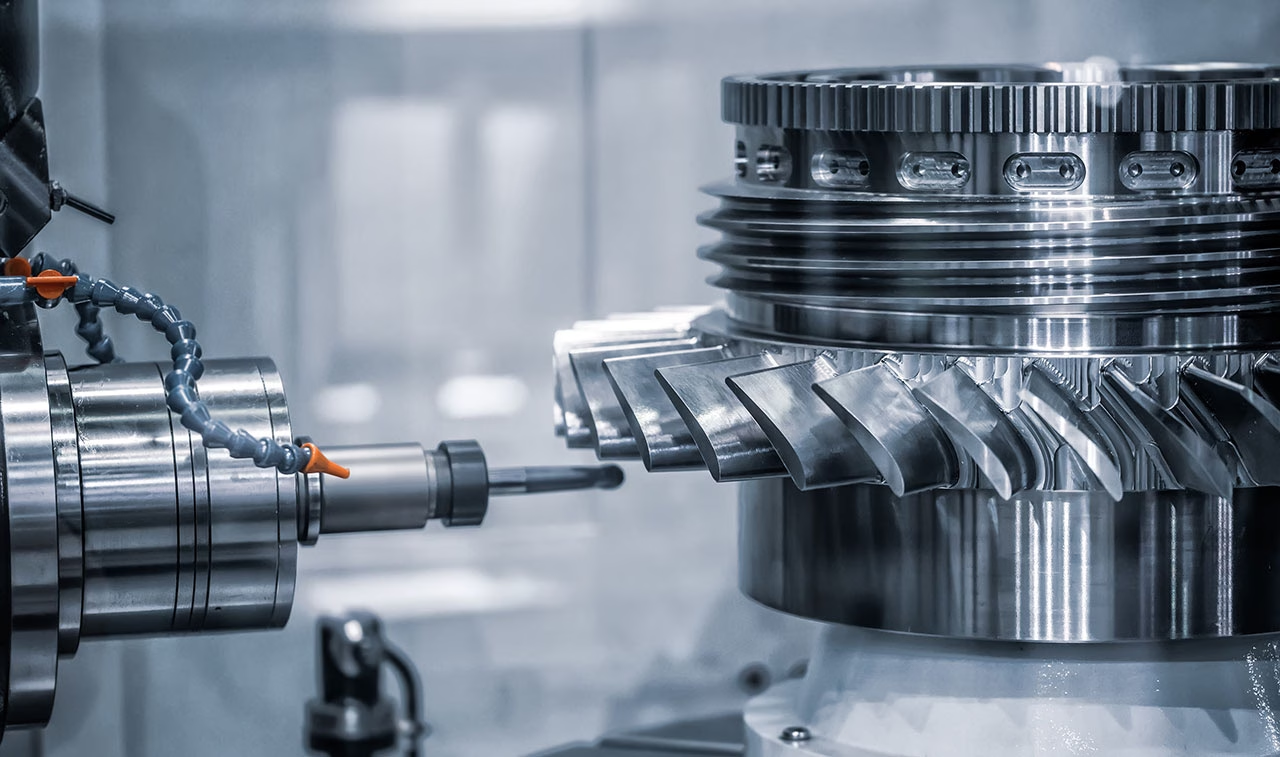
Custom gear shafts machined from bar stock or forgings, with gear teeth, splines, keyways and bearing seats cut in one setup. Tolerances held to ±0.005 mm, verified on every part before it ships.
If any of these look familiar, the fix is usually in the setup plan, not the machine.
A gear shaft turned in two operations loses concentricity between the bearing seats and the gear pitch diameter. The assembly runs, but vibration shows up at speed and the gear mesh wears fast.
Hardened blanks blunt hobs and push the pitch error past the drawing limit. Grinding after hardening costs more per part, so the sequence has to be set before the first chip.
A keyway milled on a separate fixture rarely lands on the true centerline. Couplings then fight the shaft, and the customer finds it during assembly, not at goods-in.
Turning a shaft over 10:1 length-to-diameter without a steady rest lets the tool push the work. The part measures fine at the ends and out of round in the middle.
Turning, gear cutting, spline milling and keyway work held on the same centerline.
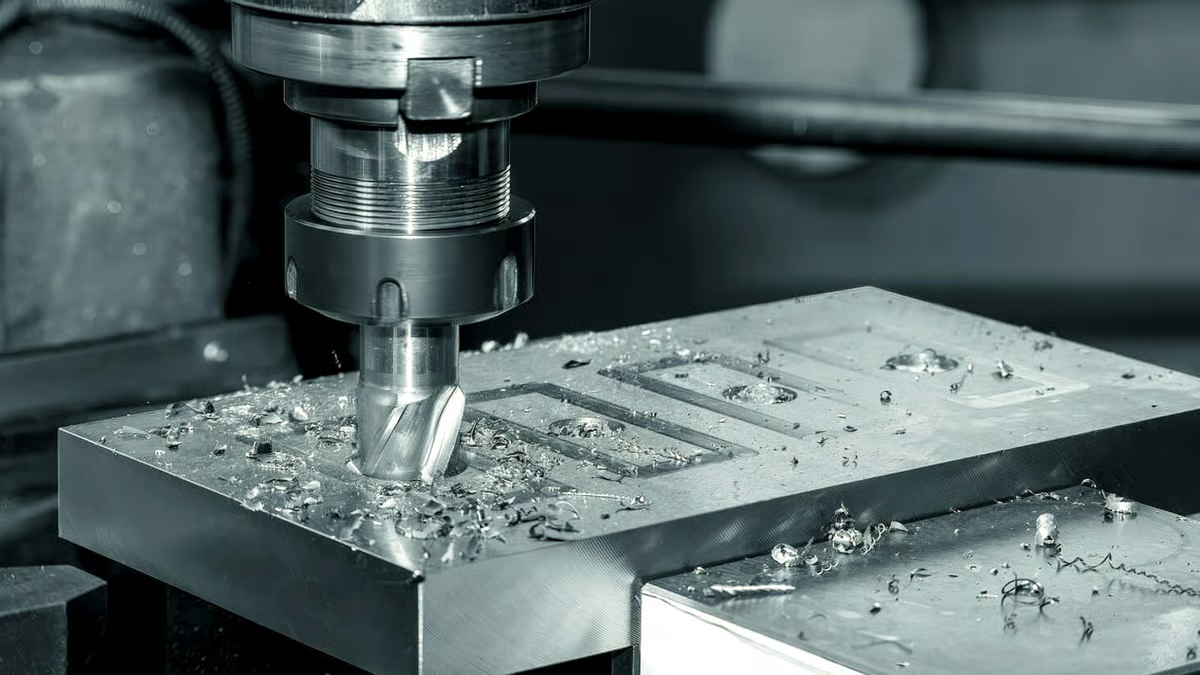
Gear shafts fail on relationships, not on single dimensions. A bearing seat at ±0.005 mm means little if the gear pitch diameter runs 0.03 mm off that same axis. We plan the operation sequence so the features that must stay concentric are cut without releasing the part.
For most shafts that means mill-turn centers with a Ø400 mm rotary table, or a 5-axis center when the spline and keyway sit at an angle. Long shafts get a steady rest and a tailstock, so the middle of the part does not deflect away from the tool.
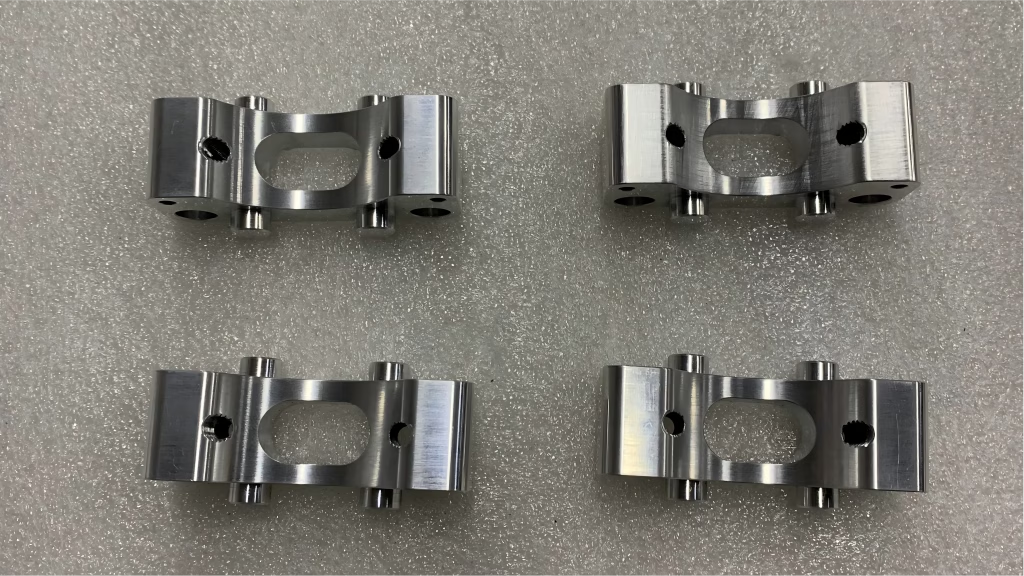
A gear shaft carries torque through a small section, so the material call drives everything downstream. 1045 and 4140 cover most industrial drives. 4340 and 17-4PH come in when the shaft sees shock loads or a corrosive environment. Case-hardening grades like 8620 are not in our stock list, so we machine 4140 or 4340 and specify through-hardening instead.
Heat treatment changes size. A shaft that measures on nominal before hardening will not measure on nominal after. We leave grinding or hard-turning stock where the drawing allows, and we tell you the trade-off in the DFM report rather than after the parts come back warped.
Use this to sanity-check the route before you send drawings.
| Shaft type | Typical route | Holds best when |
|---|---|---|
| Short solid gear shaft, Ø under 80 mm | Turn, cut teeth, mill keyway in one mill-turn setup | Volume is low to mid and no hardening follows |
| Long shaft over 500 mm | Turn between centers with steady rest, then spline | Straightness matters more than cycle time |
| Through-hardened 4140 or 4340 | Rough, heat treat, hard turn or grind journals | You can leave 0.2–0.5 mm stock on the drawing |
| Hollow or gun-drilled shaft | Drill first, then turn on the bore as datum | Wall thickness stays above 15% of diameter |
Six services that cover a gear shaft from blank to finished part.
Journals, shoulders, tapers and threads turned to ±0.005 mm, with in-process diameter checks on long runs.
Spur and helical teeth, straight and involute splines cut on the same axis as the bearing seats.
Parallel and Woodruff keyways, plus cross holes and set-screw flats, milled after turning without re-chucking.
Angled ports, oil grooves and compound features on 16 simultaneous 5-axis centers.
Black oxide, electroless nickel, zinc plating and hardcoat anodizing for wear and corrosion.
100% inspection before shipment, with dimensional reports on request for every lot.
Values below are the ones we quote against.
| Parameter | Capability | Notes |
|---|---|---|
| Maximum part length | 4,000 mm | Longer shafts split into two operations |
| Turning envelope | Ø400 mm rotary table | Mill-turn centers for combined work |
| Dimensional tolerance | ±0.005 mm | ±0.0002 in on critical journals |
| Surface finish | Ra 0.2–0.8 μm | Ground or hard-turned bearing seats |
| Runout on turned features | Held to drawing | Verified with in-process probing |
| Order quantity | 1 to 10,000+ | No minimum order quantity |
We quote the tolerance we can hold after heat treatment, not the one that looks good on the datasheet.
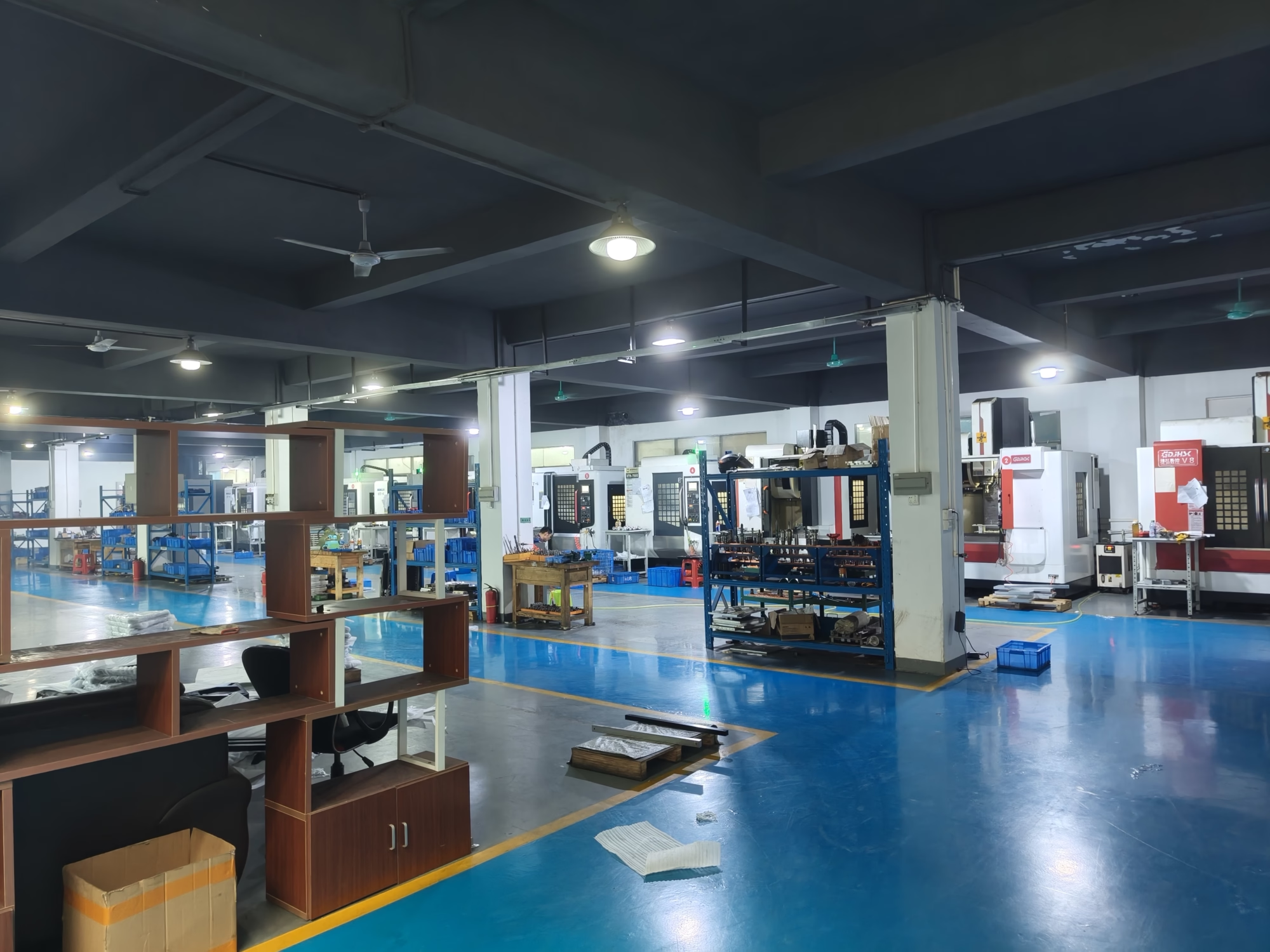
Turning, gear cutting and finishing in the same plant removes the hand-offs that add lead time and error.
Send a drawing and get a price plus manufacturability feedback within 12 hours.
Once the drawing is released, cutting can begin within a day.
Standard shaft runs ship in 3–5 days. Complex gear cutting adds time, quoted up front.
Historical late-delivery probability has stayed below 2%.
Motor and transmission shafts need tight runout at high rpm and full traceability.

Drive shafts for gearboxes and conveyors, often long, often with keyways and splines.
Compact splined shafts for actuators and joint drives, where weight and backlash both matter.
Pump and compressor shafts that run continuously and cannot afford a wear step.
±0.005 mm is our standard quoted tolerance on turned diameters and bearing journals. That is ±0.0002 in.
Features that depend on a second setup, such as a keyway referenced to a turned shoulder, are quoted at a slightly wider band. We tell you which is which in the DFM report.
Both. We cut spur and helical teeth and cut straight or involute splines on the same centerline as the bearing seats.
If you buy gears from another supplier and press them on, we can hold the press-fit bore and the shoulder squareness instead. Send the mating part drawing and we will check the fit.
We rough machine, leave 0.2–0.5 mm stock on the journals that need to stay tight, send the part for through-hardening, then finish by hard turning or grinding.
That sequence costs more than finishing before hardening. It is also the only way to hold runout on a hardened 4140 or 4340 shaft. If your drawing allows a wider tolerance, we will quote the cheaper route and say so.
Our maximum processing size is 4,000 mm, with a travel of 4,000 × 400 × 150 mm on the largest machine.
Very slender shafts, above roughly 10:1 length-to-diameter, need a steady rest and a slower feed. Tell us the ratio when you request a quote so we can plan the support.
Carbon and alloy steels including 1018, 1045, 4130, 4140 and 4340, plus stainless 303, 304, 316, 17-4PH and 440C.
Aluminium 6061, 7075 and 2024 cover lighter shafts, and titanium TC4 is available for weight-critical parts. We do not stock case-hardening grades, so we substitute through-hardening steels and note the change.
Yes. There is no minimum order quantity. We run single prototypes through the same machines and inspection as a 10,000-part order.
Prototype shafts ship in 3–5 days for straightforward turning. Gear cutting and splines add a few days, and the quote states the date before you commit.
Every part is inspected before shipment. That covers raw material verification, in-process checks on diameter and runout, and a final dimensional inspection.
Dimensional reports are available on request. If you need first-article documentation for an automotive or medical program, say so at the quoting stage so we build it into the plan.
Yes. Uploads are handled as confidential, and we sign an NDA on request before any drawing reaches the shop floor.
For programs with controlled geometry, we can also restrict which files are shared with the machining team.
Upload your drawing and we will return a price, a DFM note on the features that matter, and a delivery window. No minimum order quantity.
12-hour quote100% inspectionNo MOQNDA on request
Trusted by engineers and manufacturers worldwide










Upload your 3D model or 2D drawing and get a quotation with a free DFM analysis. Maximum processing size 4,000 mm.
CNC Metals 13 grades
CNC Plastics 10 grades
Machines & processes 12 options
Surface & post-processing 10 options
Material: not selected Machine: not selected Post-process: not selected
Fill in this short form and we'll open WhatsApp with your message ready to send. We only use these details to reply to you.
Nothing is sent until you press send inside WhatsApp.