GreatLight CNC Machining Factory logo
CNC Machining
Rapid Prototyping
Materials
Industries
News
About GL

Get Instant Quote

Titanium Alloy Machining

Grade 015Pd Alloy CNC Machining (UNS R52250)

This grade is commercially pure titanium with 0.12–0.25% palladium. We machine it into chemical, marine and medical parts on 127 CNC machines in Dongguan, holding ±0.005 mm with 100% inspection before shipment.

Pd 0.12–0.25%UNS R52250±0.005 mmFrom 1 to 10,000+ pcs12-hour DFM
cnc-alloy-steel
15 yearsTitanium machining since 2011
127High-precision CNC machines
±0.005 mmAchievable tolerance
99.99%Qualification rate
Where this alloy goes wrong

Four failures we see before a part reaches the field

Ti-0.15Pd behaves like Grade 2 in the cut, but it costs far more per kilogram. Small process errors get expensive quickly.

01

Did galling seize your threads on assembly?

Titanium galls against titanium and against stainless fasteners. A thread that hand-turns in the shop locks up on the line, and the part comes back as scrap. Correct tap selection, cutting fluid and thread-form control prevent it.

02

Was the Pd content ever verified?

The whole point of this grade is the palladium addition. Mill certificates that list only Ti, Fe, O and N tell you nothing about corrosion life. We ask for chemistry with Pd before the first cut.

03

Is one supplier doing both turning and 5-axis work?

Splitting a part across two vendors doubles setup error and lead time. A pump housing that needs a turned bore, a milled flange and cross-drilled ports should leave one shop, one inspection report.

04

Are thin walls moving after you unclamp?

Titanium springs back. A 1.5 mm wall cut in one pass measures fine on the machine and drifts out of tolerance after release. Rough, stress-relieve, then finish with light radial engagement.

How we run it

Machining Ti-0.15Pd without losing the palladium advantage

Two process decisions carry most of the risk: how the material is held, and how the corrosion-critical surfaces are finished.

aluminum-alloy-cnc-processing-2
Cutting strategy

Low cutting speed, high pressure coolant, no compromise on rigidity

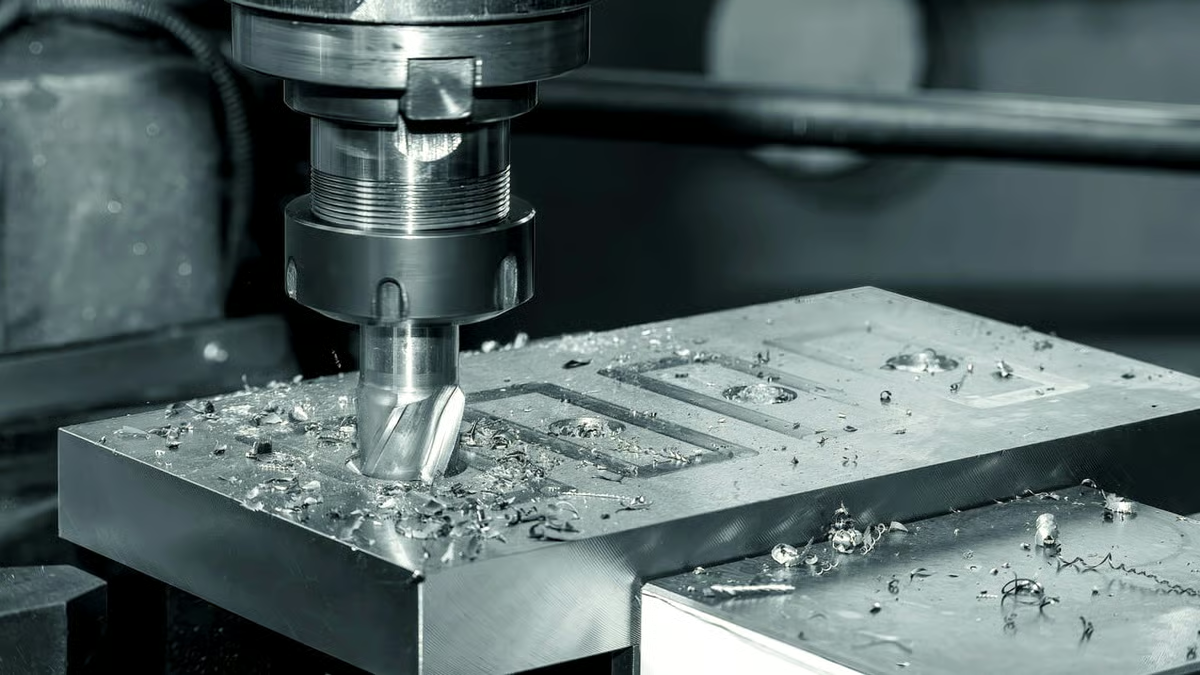
Titanium conducts heat poorly, so the tool edge takes the temperature. We run carbide at conservative surface speeds with through-tool coolant above 70 bar, which keeps the chip from welding to the insert and holds dimension across a batch.

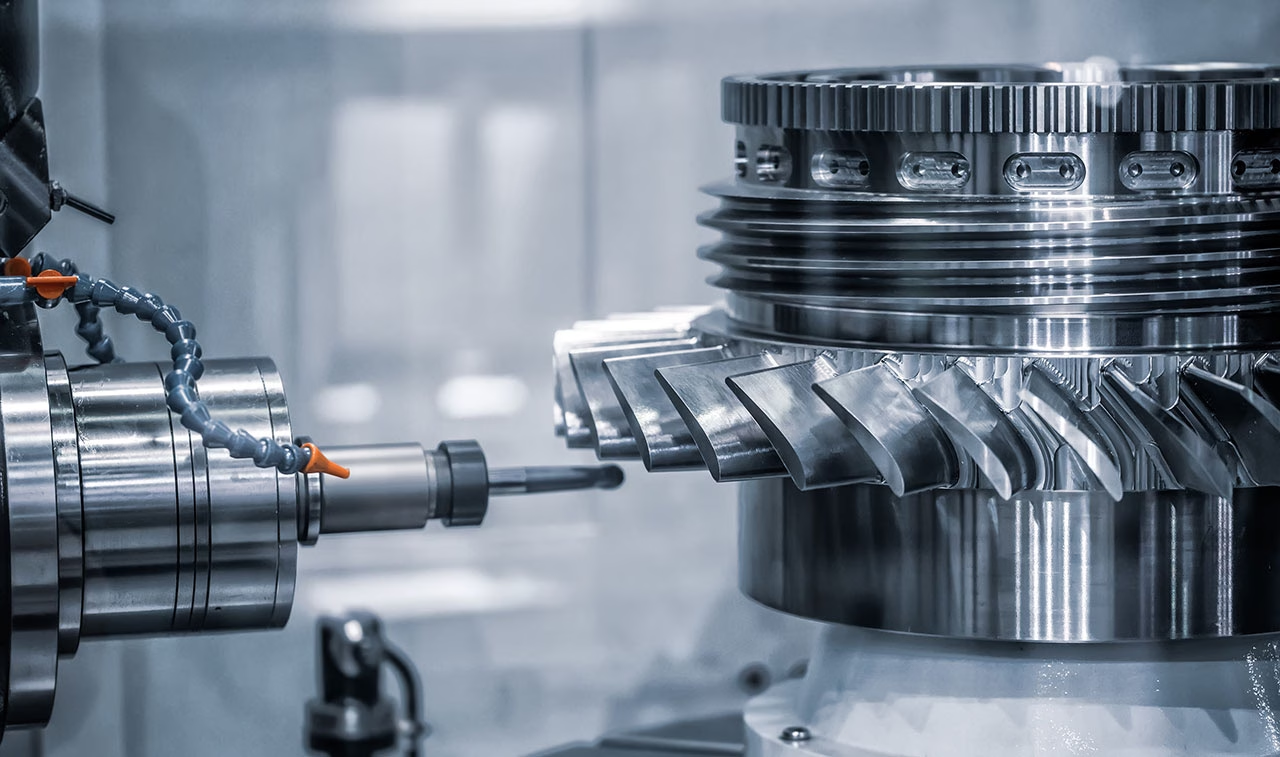
For parts with deep pockets or long slender features, we rough on 3-axis machines and finish on one of 16 simultaneous 5-axis centers. Fewer setups means fewer datums, and datum count is where titanium tolerance stacks go wrong.

  • 1
    Rough and finish separatedStress-relief between passes on thin-wall and close-tolerance work.
  • 2
    Dedicated titanium toolingInserts and drills kept out of the steel and aluminum pools.
  • 3
    Single-setup 5-axis finishingComplex geometry positioned once, not re-fixtured four times.

Get Instant Quote

CNC Lathe Technical Specifications Terminology
Corrosion-critical surfaces

The machined surface is the corrosion surface

On a heat exchanger plate or a chloride pump impeller, the finish you leave is the finish the environment sees. Embedded iron from a contaminated brush or a shared deburring wheel becomes a pitting site. Titanium tooling and finishing media stay segregated for this reason.

We document as-machined finish at Ra 1.6–3.2 μm as standard, and can hold Ra 0.8–1.6 μm or Ra 0.2–0.8 μm where sealing faces or flow paths call for it. Surface roughness is measured and recorded, not estimated.

  • 1
    No iron contaminationSeparate deburring and blasting media for titanium parts.
  • 2
    Finish called out per faceSealing faces, bores and flow paths get their own Ra target.
  • 3
    Passivation on requestNitric acid passivation to restore the oxide layer after machining.

Talk to an Engineer

Material selection

When Ti-0.15Pd is the right call, and when it is not

Palladium raises the cost well above Grade 2. Use it where the environment actually demands it.

Service conditionRecommended gradeReason
Chloride or brine above 60 °CTi-0.15Pd (UNS R52250)Pd stabilizes the passive film
Dilute reducing acidsTi-0.15Pd (UNS R52250)Resists crevice attack
Seawater, ambient temperatureGrade 2 titaniumLower cost, adequate resistance
High-strength structural partTi-6Al-4VPd grade has low yield strength
Wear surface under loadTi-6Al-4V or coated steelCommercially pure titanium galls
Hydrofluoric or hot HClNot titaniumAttacks the oxide layer directly
What we do

Services used on Ti-0.15Pd parts

One shop covers the full routing, so the part does not travel between vendors mid-process.

01

5-Axis CNC Machining

16 simultaneous 5-axis centers for impellers, housings and contoured medical geometry.

02

CNC Milling & Turning

Mill-turn centers handle a turned bore plus milled features in one setup.

03

Rapid Prototyping

First articles cut from the same titanium stock you will run in production.

04

Part Surface Finishing

Bead blasting, polishing and passivation with titanium-dedicated media.

05

Sheet Metal Fabrication

Formed titanium brackets and covers for wet or chloride-exposed assemblies.

06

Custom 3D Printing

Fit-check models so you can validate a design before cutting metal.

Scope

What a Ti-0.15Pd job includes

ItemStandard scope
Maximum part sizeUp to 4,000 mm on large-travel machines
Tolerance±0.005 mm (±0.0002 in) on critical features
Surface finishRa 1.6–3.2 μm as machined; finer on request
Material checkPd content verified against mill certificate
InspectionRaw material, in-process and final; 100% before shipment
Minimum orderNo MOQ, from one prototype to 10,000+ parts
ReportsDimensional and material reports on request
ConfidentialitySecure uploads; NDA available on request
Why GreatLight

Numbers behind the process

15Y

Titanium since 2011

Fifteen years cutting titanium alloys in Dongguan, with three plants and a Singapore facility.

±0.005

Millimeters, not best-effort

Tolerance held on critical features and verified on the inspection report, not by eye.

16

Simultaneous 5-axis centers

Complex contours finished in one setup instead of being re-fixtured across machines.

12h

Quote and DFM analysis

Drawing review, machinability notes and pricing returned within 12 hours.

99.99%

Qualification rate

Parts that pass final inspection the first time, across all material families.

ISO 13485

Medical-grade process control

Also ISO 9001:2015, IATF 16949:2016 and ISO 27001:2022 certified.

7,600 m²Manufacturing space
150Technicians on staff
3–5 daysTypical shipping window
<2%Historical late-delivery rate
Industry fit

Where this alloy earns its cost

CNC Machining Services Online

Chemical process equipment

Pump housings, valve bodies and heat exchanger plates exposed to chloride streams.

  • Pd verified
  • Ra 0.8–1.6 μm
  • Passivated
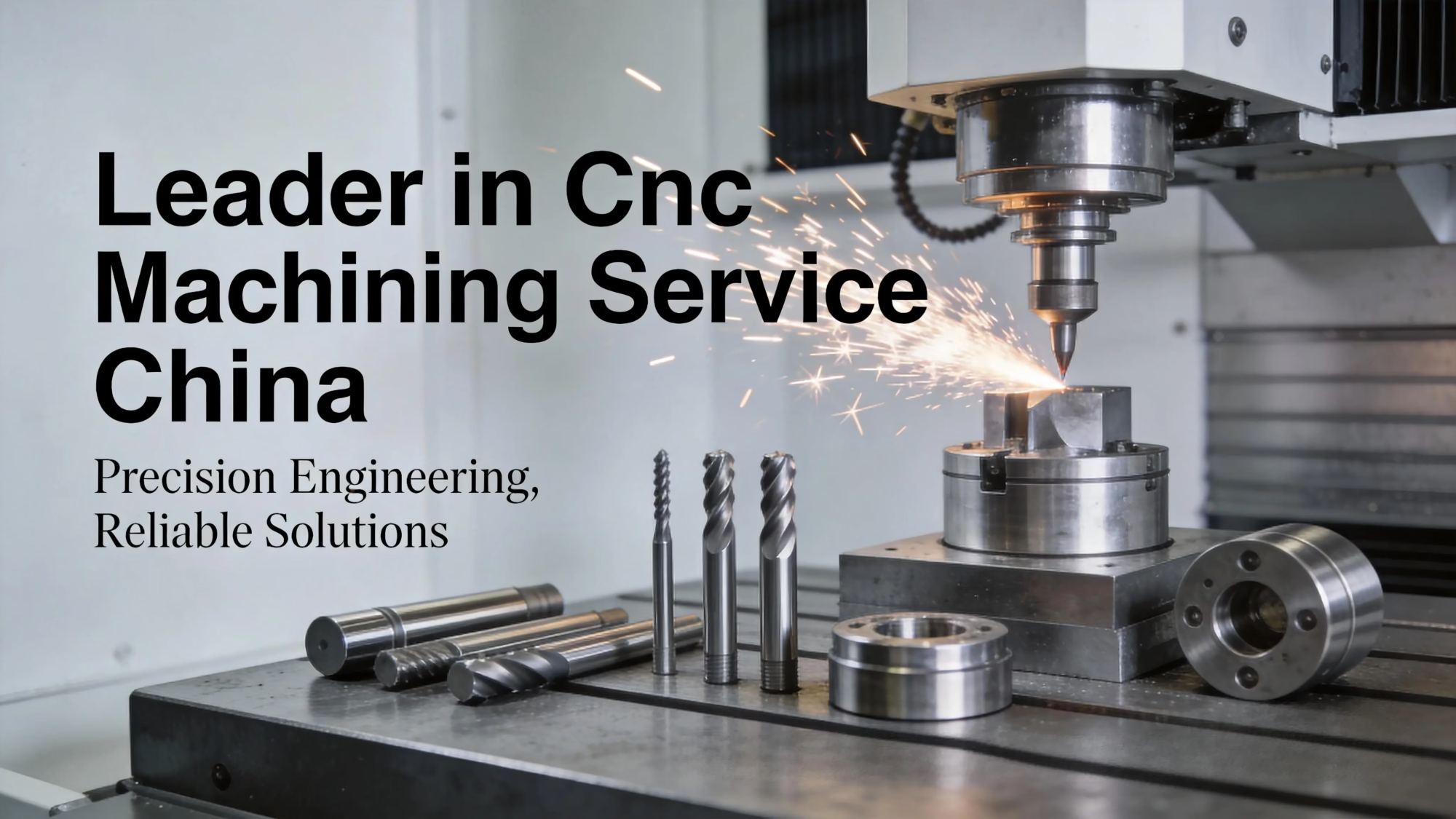
Leader in Cnc Machining Service China

Marine and offshore

Brackets, manifolds and fastening hardware in permanent seawater contact.

  • ±0.005 mm
  • 100% inspected
6011

Medical and surgical

Instruments and implant-adjacent hardware where titanium biocompatibility is required.

  • ISO 13485
  • No iron contamination
FAQs

Questions engineers send us about Ti-0.15Pd

What is the difference between Grade 11 and Grade 2 titanium?

Grade 11 is Grade 2 with 0.12–0.25% palladium added. Mechanical properties are close: both are commercially pure, low-strength, highly formable titanium.

The difference shows up in corrosion service. Palladium stabilizes the passive oxide film, so the alloy tolerates chlorides and dilute reducing acids that would pit Grade 2.

Which UNS number applies, and what are the equivalents?

UNS R52250 is the standard designation for Ti-0.15Pd. It is also written as ASTM Grade 11 and appears under Werkstoff 3.7225 in European references.

When you send a drawing, put the UNS number and the Pd range on the face of the print. That removes any chance of the shop substituting Grade 2.

Can you machine thin walls without distortion?

Yes, but it takes a plan rather than one aggressive pass. We rough leaving stock, let the part stabilize, then finish with light radial engagement and sharp tooling.

Below about 1.5 mm wall thickness, tell us at quoting. It affects fixturing choice and may add a stress-relief step to the routing.

How do you prevent galling on threads and mating surfaces?

Threads are cut with titanium-specific taps and a lubricant that keeps the chip from welding. Where the design allows, we specify a slightly different thread form or a coating on the stainless fastener.

For sliding surfaces, a hardcoat anodize or a dry-film lubricant separates the two titanium faces.

What surface finish can you hold on this alloy?

As-machined we deliver Ra 1.6–3.2 μm. Where a face seals or carries flow, we can hold Ra 0.8–1.6 μm, and Ra 0.2–0.8 μm on smaller sealing features.

Finish is measured, not estimated. If you need a specific Ra on a specific face, put it on the drawing rather than in a note.

Is palladium content verified before machining?

We request a mill certificate listing Pd along with the standard Ti, Fe, O, N and H values. The Pd line is what confirms the grade.

If the certificate omits palladium, we go back to the material supplier before cutting. Machining the wrong grade is unrecoverable.

What is the smallest quantity you will run?

There is no minimum order quantity. One prototype and a 10,000-piece run go through the same process.

For a single prototype, expect a slightly higher unit price because programming and fixturing are not amortized. That is normal across every shop.

How fast can you quote and ship?

Quotation and DFM analysis come back within 12 hours. Production can start within 24 hours of approval.

Typical parts ship in 3–5 days. Complex 5-axis or multi-operation work takes longer, and we say so at quoting rather than after.

Send us your Ti-0.15Pd drawing

Upload the STEP file and print. You get a quote, a machinability review and any DFM flags within 12 hours.

12-hour quote100% inspectionNo minimum orderNDA on request

Trusted by engineers and manufacturers worldwide

Tesla Ford Motor Company BYD Auto Denso Magna International Boeing Airbus Medtronic KUKA FANUC