
01
Specified by habit, not by load
This is the lowest-strength titanium on the shelf. Teams pick it because it machines easily, then find the bracket bends in service. Yield strength, not corrosion resistance, decides the grade.
Commercially pure titanium machined to ±0.005 mm, from one prototype to 10,000+ parts. Send a drawing and we tell you whether Grade 1 fits the load case before we cut metal.
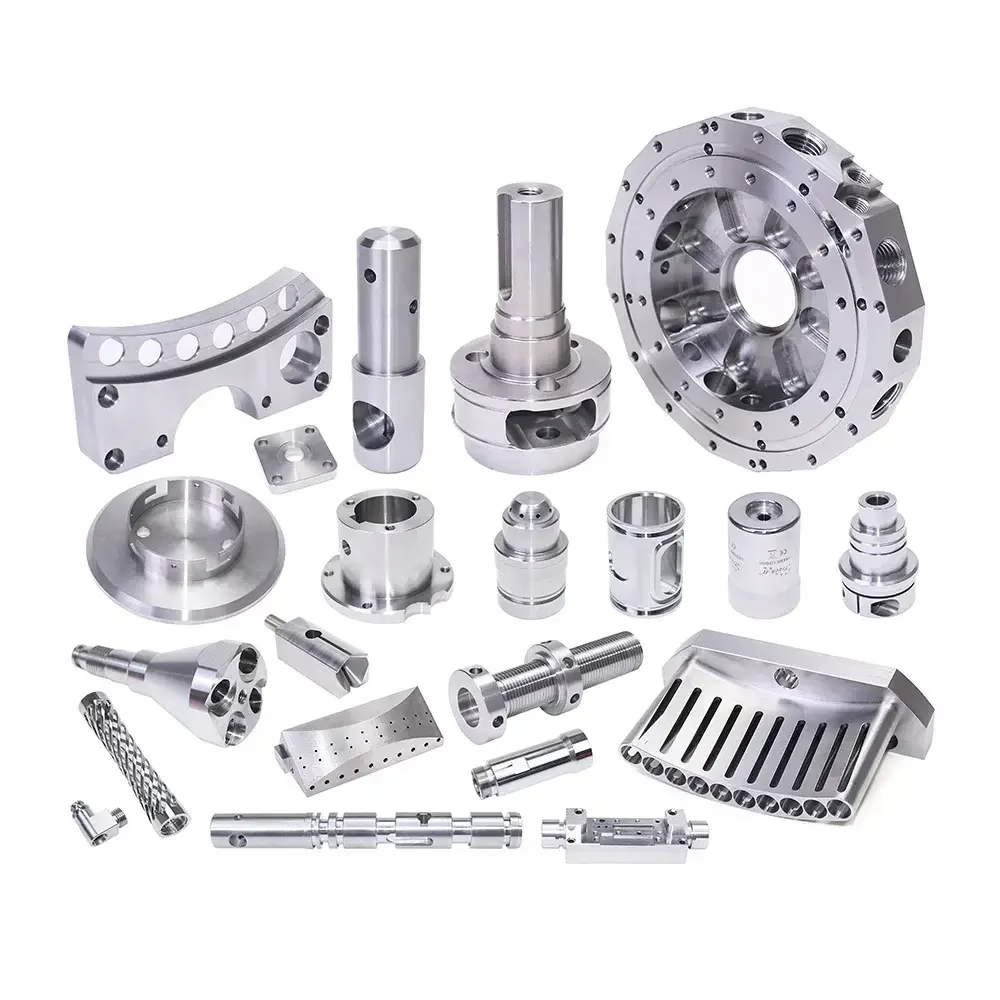
These show up before the first chip. Each one costs a rebuild or a scrapped lot.
This is the lowest-strength titanium on the shelf. Teams pick it because it machines easily, then find the bracket bends in service. Yield strength, not corrosion resistance, decides the grade.
Pure titanium is gummy. A 0.8 mm wall on a 40 mm deep pocket will deflect and rub if the toolpath and fixturing are not planned around the weak section. The result is a tapered wall and a rough finish.
Titanium conducts heat poorly, so the edge takes the temperature. Run dry at the wrong feed and the insert fails in minutes. Small depths of cut with high-pressure coolant hold tool life and surface finish.
Sharp internal corners, deep slots, tapped holes under M3, thread depths beyond 2× diameter. Each one needs a special tool or a design change. We flag them in the DFM review instead of discovering them at inspection.
Material behavior first, toolpath second, inspection third.
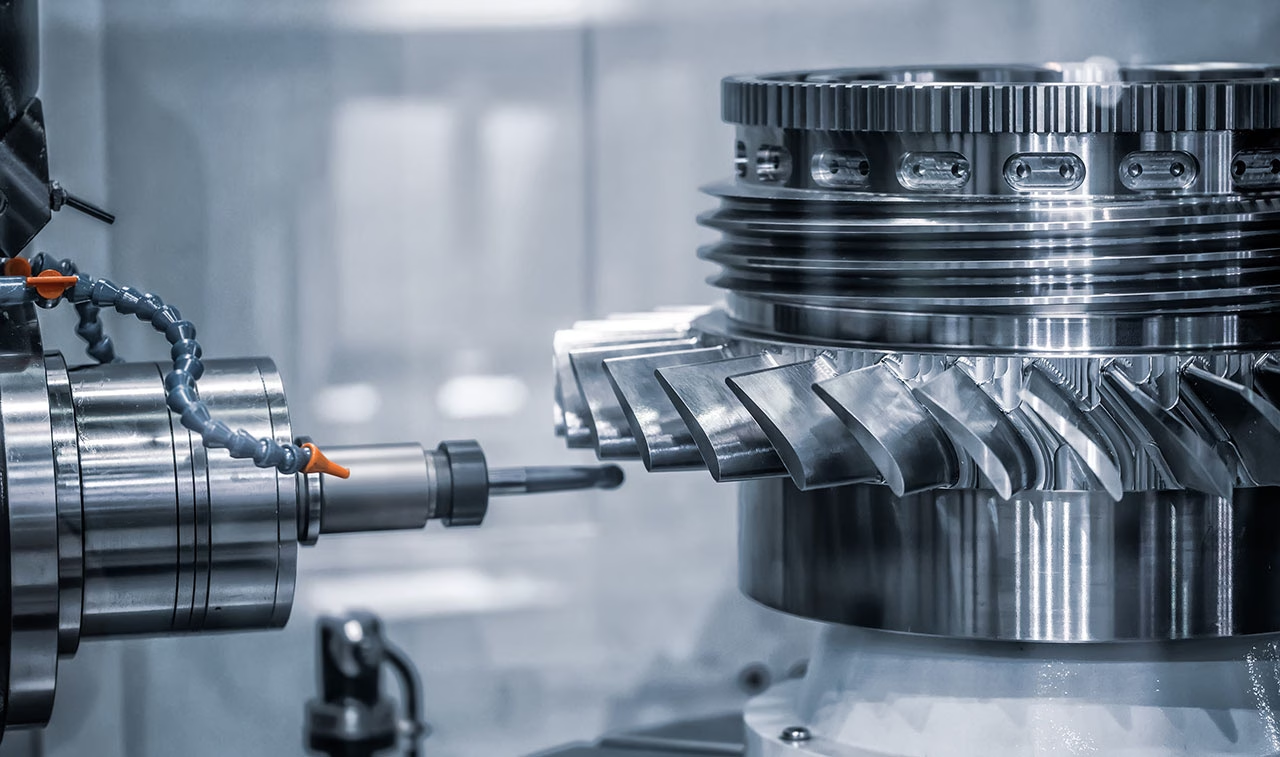
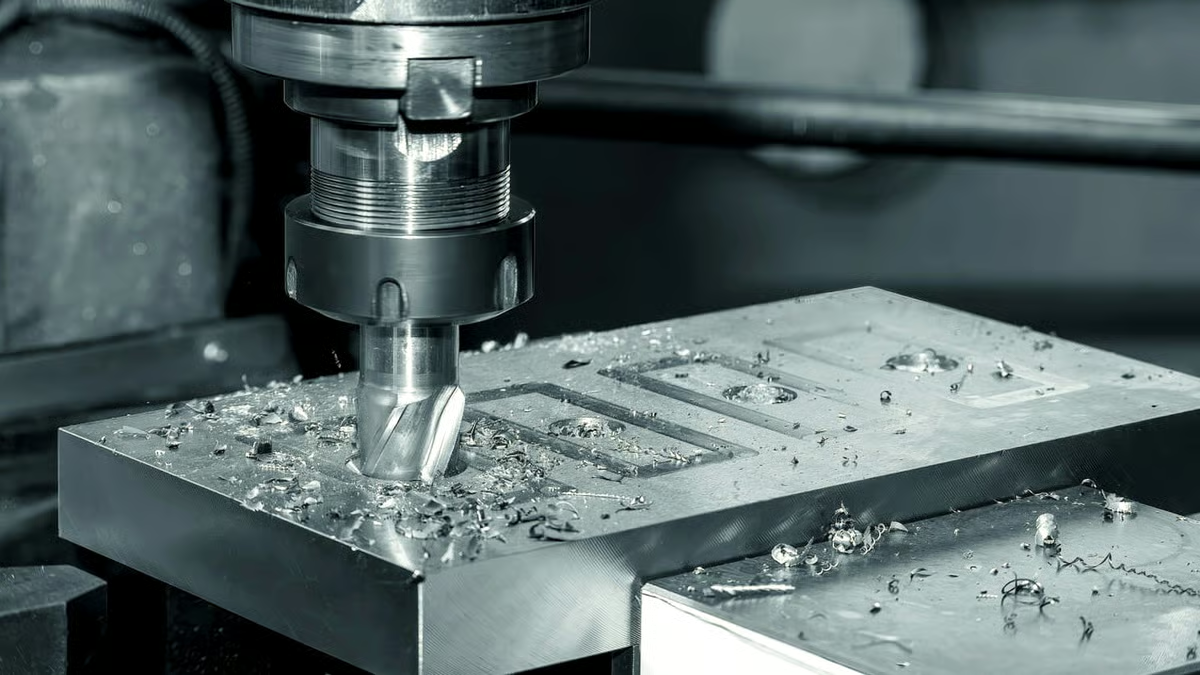
Commercial pure titanium work-hardens at the surface and keeps heat in the cut. We run sharp uncoated carbide or AlTiN grades at moderate surface speed, keep radial engagement low and never let the tool dwell in the cut. Climb milling on every finishing pass limits the work-hardened layer that would otherwise tear the next pass.
For prismatic parts we rough on three-axis machines and finish on five-axis centers so a single setup reaches five faces. That removes the re-fixture error that shows up as position drift between two operations.
Pure titanium scratches easily, so contact measurement has to be planned. We inspect with the part supported the same way it was machined, use light touch-probe force and keep lapping film away from sealing faces. A scratch on a medical component is a reject, not a cosmetic note.
Wall thickness on thin-wall parts is checked in process, not only at the end. If a wall has moved during roughing, we adjust the finishing allowance before the final pass rather than scrapping the part after it.
Every order ships with 100% inspection. Raw material certificates, in-process records and final dimensional reports are available on request, and we work from a signed NDA when the drawings are sensitive.
Strength decides the grade. Corrosion resistance is nearly identical across the commercially pure grades.
| Material | Typical yield strength | Where it fits |
|---|---|---|
| Titanium Grade 1 (UNS R50250) | About 170 MPa | Chemical process hardware, CP equipment |
| Titanium Grade 2 (UNS R50400) | About 275 MPa | General corrosion service, heat exchangers |
| Titanium Grade 5 (Ti-6Al-4V) | About 830 MPa | Load-bearing brackets, fasteners, aerospace |
| Titanium Grade 1, thin-wall housing | Section dependent | Lightweight covers with no structural load |
One supplier for the titanium part and the hardware around it.
Simultaneous five-axis cutting for contoured faces, impeller-like geometry and parts that need five faces in one setup.
Prismatic milling and turned shafts, bushings and fittings. Mill-turn centers handle parts that would otherwise need two fixtures.
One-off titanium prototypes to check fit and function before committing to a production run.
Titanium and stainless enclosures, brackets and panels that pair with machined components.
Bead blasting, tumbling, brushing and polishing. Anodizing, plating and laser marking available, minimum character height 1.5 mm.
Polymer and metal printed parts for fixtures, covers and early-stage form studies.
Tell us the envelope and we route the job to the right machine.
| Machine group | Count | Working envelope |
|---|---|---|
| Simultaneous 5-axis centers | 16 | Up to 750 × 1,150 × 550 mm |
| Four-axis mills | 12 | Ø400 mm rotary table |
| Three-axis machines | 27 | 500 × 500 × 450 mm and smaller |
| Mill-turn centers | 16 | Turned and prismatic features in one setup |
| Large-format machines | Included above | 4,000 × 400 × 150 mm travel |
Founded in 2011. Three wholly-owned plants, 7,600 m² of manufacturing space, 150 technicians.
Fifteen years of production work, with titanium and stainless as everyday materials rather than exceptions.
±0.005 mm, or ±0.0002 in, on critical features. Verified before the part leaves the floor.
A quotation and a free DFM review within 12 hours of receiving a readable drawing and material callout.
Cutting can begin within 24 hours once the drawing, quantity and finish are locked.
Parts ship in 3–5 days on standard work. Historical late-delivery probability is below 2%.
From a single prototype to a 10,000+ part run on the same process and inspection plan.
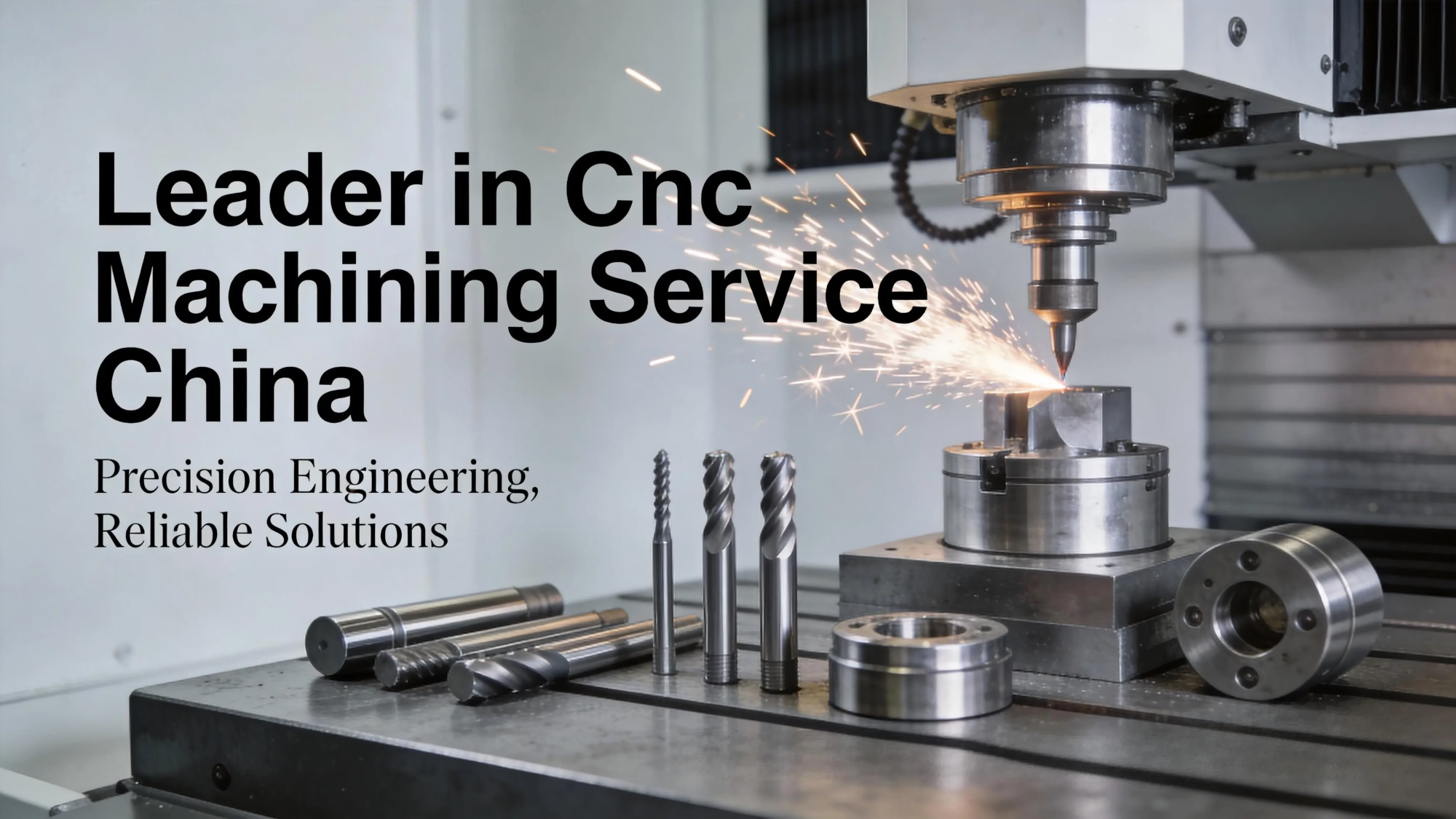
Grade 1 for chloride and acid service where the part carries no structural load.
Biocompatible pure titanium for covers, housings and non-load-bearing instrument parts.
Lightweight brackets and housings machined to drawing, with process control on every lot.

Corrosion-resistant fixtures and connector bodies that must stay dimensionally stable.
Usually not. The commercially pure grades sit at the bottom of the titanium strength range, well below Grade 5. If the part carries a bending or tensile load, we recommend Grade 5 and machine that instead.
Where this titanium grade fits is corrosion service with light mechanical duty: covers, housings, fittings, fixtures and chemical hardware.
Grade 2 is the same commercially pure family with higher strength and similar corrosion resistance. The machining behavior is close enough that the toolpath strategy does not change much.
Pick Grade 1 when you want the softest, most formable option or when the drawing already calls out UNS R50250. Otherwise Grade 2 is the safer default.
±0.005 mm on critical features, with ±0.0002 in as the imperial equivalent. Thin-wall sections and long unsupported bores are the exceptions.
On a 0.8 mm wall we will tell you the realistic band during the DFM review rather than promising a number the material will not hold.
Yes, with the right sequence. We rough with a generous allowance, let the part settle, then finish with light radial cuts and low clamping force.
Wall thickness is measured in process. If a wall has moved, we adjust the finishing pass instead of shipping a part that tapers.
As-machined sits around Ra 1.6–3.2 μm. We can reach Ra 0.8–1.6 μm as standard on finishing passes and Ra 0.2–0.8 μm where sealing faces require it.
Bead blasting, tumbling, brushing and polishing are available. Laser marking needs a minimum character height of 1.5 mm.
Yes. Titanium fines are a fire risk, so chip handling and tooling stay separated from aluminum work. Cross-contamination also matters for medical and food-contact parts.
We keep dedicated tooling and cleaning steps for titanium jobs rather than sharing everything across the floor.
A 3D model or a 2D drawing with tolerances, the material callout including the UNS number, quantity, and any finish or marking requirement.
Send those and you get a quotation plus a free DFM analysis within 12 hours. NDA is available before you upload, and uploads stay confidential.
Yes. There is no minimum order quantity, so a single prototype and a 10,000+ part run go through the same process plan and inspection standard.
Prototype data feeds directly into the production setup, which is why the first article usually matches the later lots.
Upload your model and material callout. You get a quotation and a free DFM analysis within 12 hours, plus a straight answer on whether Grade 1 is the right grade.
12-hour quote100% inspectionNo MOQNDA on request
Trusted by engineers and manufacturers worldwide










Upload your 3D model or 2D drawing and get a quotation with a free DFM analysis. Maximum processing size 4,000 mm.
CNC Metals 13 grades
CNC Plastics 10 grades
Machines & processes 12 options
Surface & post-processing 10 options
Material: not selected Machine: not selected Post-process: not selected
Fill in this short form and we'll open WhatsApp with your message ready to send. We only use these details to reply to you.
Nothing is sent until you press send inside WhatsApp.