
01
Does the part move after the last cut?
Commercially pure titanium relieves stress slowly. A thin wall or a long flange can swing 0.05 mm once the clamps come off, and the part no longer fits the mating assembly.
Commercially pure titanium with more oxygen than Grade 2, so it holds a thread and takes a load. We machine it on 16 simultaneous 5-axis centers to ±0.005 mm and ship within 3–5 days.
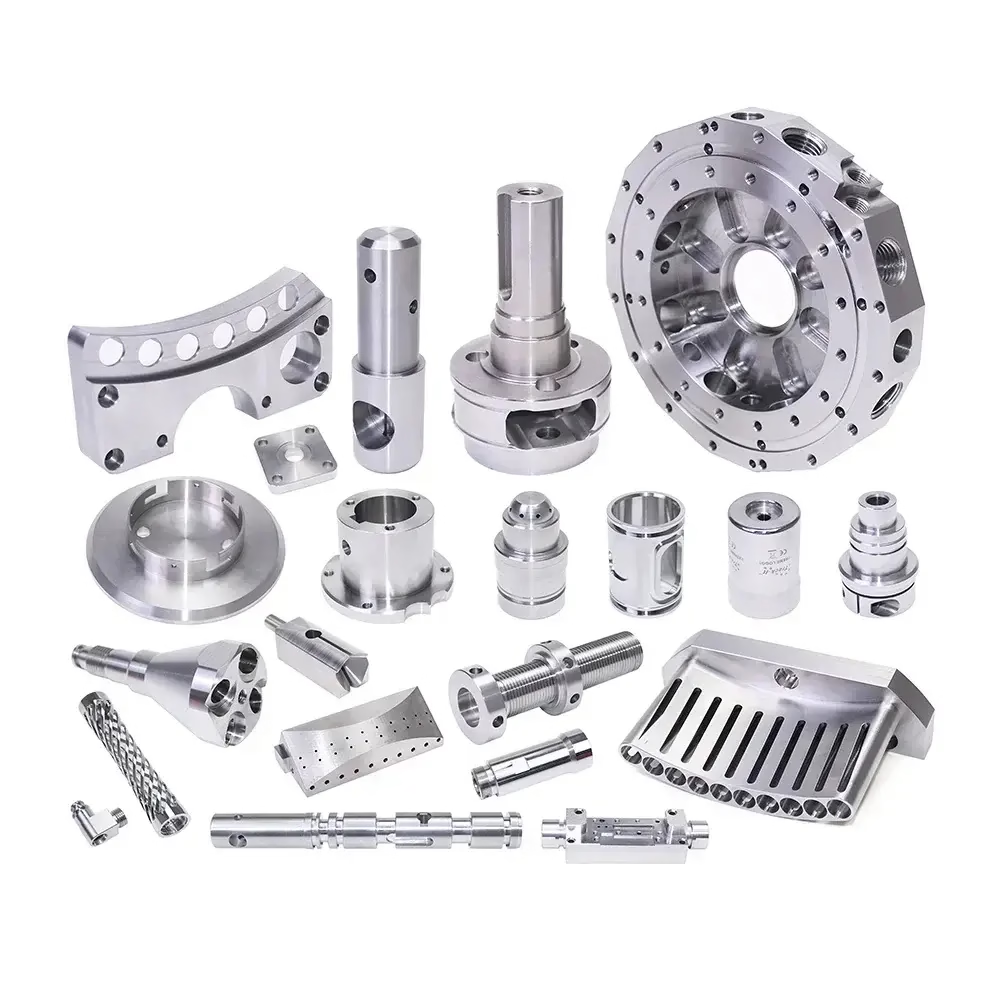
Titanium is not aluminum with a different label. It cuts hot, springs back, and moves after you take it off the table.
Commercially pure titanium relieves stress slowly. A thin wall or a long flange can swing 0.05 mm once the clamps come off, and the part no longer fits the mating assembly.
Low thermal conductivity pushes heat into the cutting edge. Run the wrong surface speed and a face mill that should last a shift is done in twenty minutes, with the tool cost landing on your quote.
Titanium deflects under load. With a long reach tool on a 3-axis setup, a 40 mm deep pocket can come out wider at the top than the bottom, and hand blending hides it until inspection.
Grade 3 galls against cutting tools. Threads tear, pitch diameter drifts, and a fastener that should torque to spec strips on the first assembly. Rework means a new part, not a repair.
Cutting strategy, workholding and inspection planned together before the first chip.
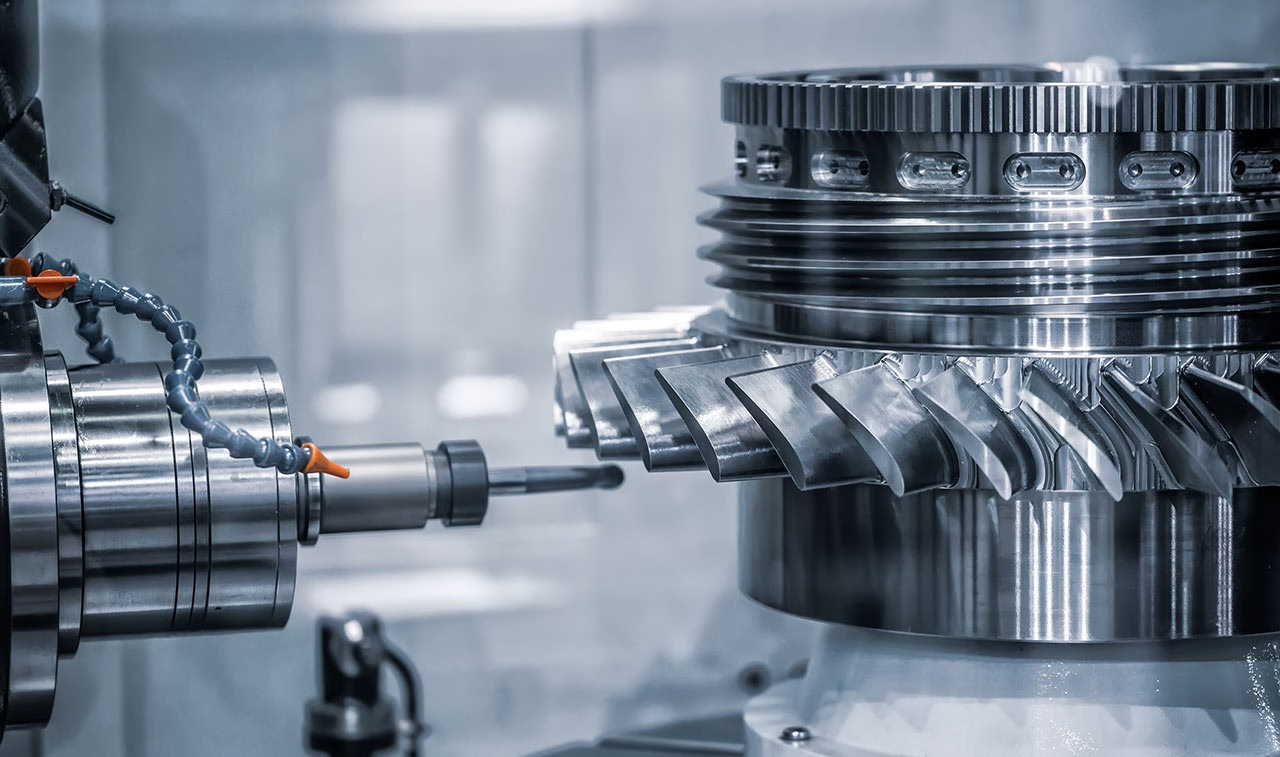
On 16 simultaneous 5-axis centers we reach five faces in one setup. That matters more on titanium than on steel: every reclamp is another chance to load the part unevenly, and commercially pure titanium remembers that load.
For long or thin parts we rough with the part still supported, then take a light finishing pass after a stress-relief pause. The finishing pass removes the distortion instead of chasing it with a hammer and a file.
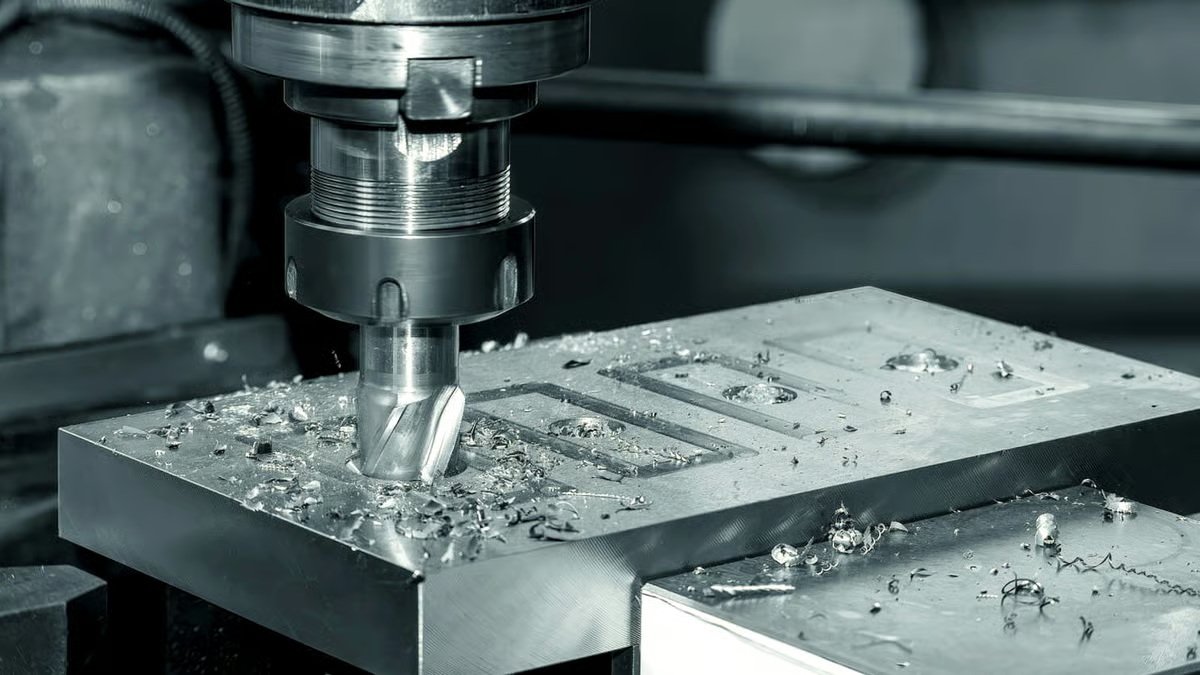
A single speed and feed for the whole part is how titanium jobs go wrong. We set parameters feature by feature: heavier feed for roughing pockets where chip thinning matters, lower radial engagement for thin floors, and high-pressure coolant aimed at the contact zone.
Grade 3 has lower strength than Ti-6Al-4V, so it cuts a little easier, but it work-hardens at the surface if the tool rubs. Sharp edges and a consistent feed rate keep the cut under the hardened layer rather than in it.
Commercially pure titanium grades differ mainly in oxygen and iron content. Oxygen raises strength and lowers ductility.
| Grade | Best for | Watch out for |
|---|---|---|
| Grade 1 | Deep draws, liners, maximum ductility | Low strength, galls easily |
| Grade 2 | General corrosion service, chemical hardware | Lower strength than Grade 3 |
| Grade 3 | Pressure parts, fittings, moderate loads | Needs sharp tooling and steady feed |
| Grade 4 | Highest strength among pure grades | Less formable, tighter on bend radii |
| Ti-6Al-4V | Structural and high-load parts | Harder to machine, different cost base |
One supplier for the machining, the finish and the inspection report.
Complex contours, angled ports and five-face work in a single setup on 16 simultaneous centers.
Cylindrical and prismatic parts with indexed features, run on 12 four-axis mills.
Plates, brackets and flat work where a stable single-face setup is the fastest route.
Mill-turn for parts that need both a turned diameter and milled features on one datum.
One-off and low-volume runs to validate fit before you commit to a production batch.
Bead blasting, tumbling, brushing and polishing to reach the finish your drawing calls out.
Numbers below are the shop standard, not a best-case sample.
| Item | Capability | Notes |
|---|---|---|
| Tolerance | ±0.005 mm (±0.0002 in) | On controlled features |
| Fine finish | Ra 0.2–0.8 μm | Polished or lapped where needed |
| Standard finish | Ra 0.8–1.6 μm | Typical as-machined titanium |
| Maximum size | 4,000 mm | Long parts without repositioning |
| Large travel | 4,000 × 400 × 150 mm | Structural and rail-type parts |
| Medium travel | 750 × 1,150 × 550 mm | Housings and manifolds |
| Compact travel | 500 × 500 × 450 mm | Small precision components |
| Rotary table | Ø400 mm | Continuous 5-axis indexing |
Fifteen years on reactive and high-strength alloys, including TA1, TA2 and TC4 in the same shop.
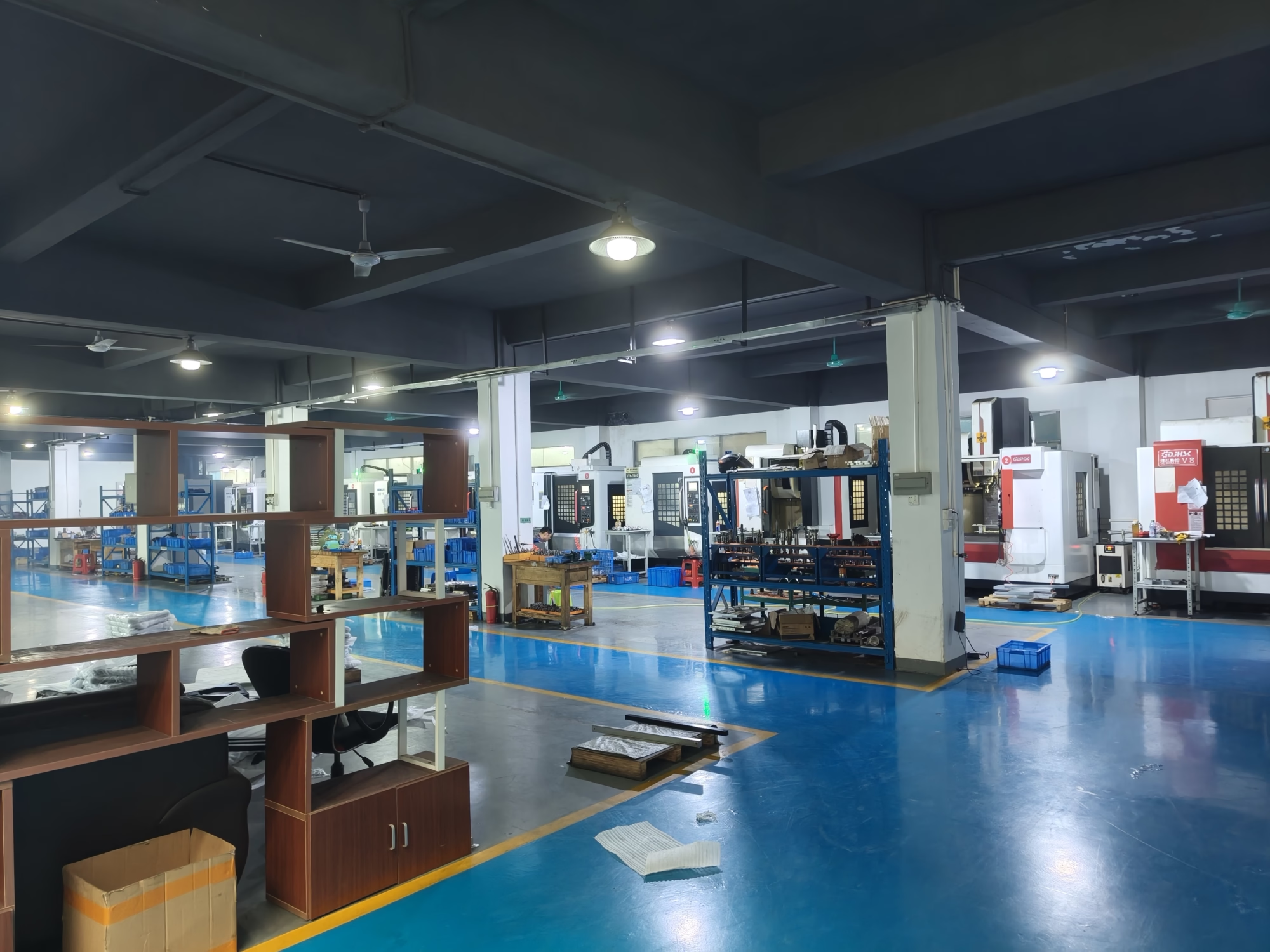
Milling, turning and mill-turn capacity across three wholly-owned plants.
Raw material check, in-process monitoring and final inspection on every order.
We flag thin walls, deep pockets and tight radii before you place the order.
From a single prototype to a 10,000+ part run on the same process.
Production in Dongguan, a second plant in Singapore for regional supply.
Ducting brackets and non-structural fittings where weight and corrosion both matter.

Instrument housings and fluid-path components that must clean up without pitting.
Pump bodies, valve parts and electrode hardware exposed to aggressive media.

Wear plates and precision spacers that see load cycling and cleaning chemicals.
Grade 3 carries more oxygen, which raises yield strength and hardness while cutting ductility. Tools see a slightly higher cutting force and a stronger tendency to work-harden at the surface.
In practice we lower radial engagement a little and keep the feed per tooth steady. Rubbing is the enemy; a tool that skates across the surface hardens it and dulls faster.
Yes, but the geometry has to allow it. Wall thickness, unsupported length and the number of setups all limit what any shop can hold.
We review the drawing first and tell you which features can hold ±0.005 mm and which need a stress-relief step or a fixture change. That answer comes with the quote, not after the first article fails.
Typical as-machined titanium lands at Ra 1.6–3.2 μm. With controlled finishing passes we reach Ra 0.8–1.6 μm as standard for critical faces.
Where the drawing calls for Ra 0.2–0.8 μm, we add a polishing or lapping step. Say so on the RFQ because it changes the process plan.
Commercially pure grades are usually supplied annealed and are not hardened by heat treatment. What they do need is stress relief when a part has a lot of removed material or tight flatness.
We flag those cases during DFM. If stress relief is needed, it is planned between roughing and finishing so the final pass removes the movement.
Yes. Our mill-turn centers and 5-axis machines let us cut turned diameters and milled features from one setup, so cross-feature position does not stack up.
For parts that must be split across machines, we use a common datum and verify it at each stage with in-process checks.
A 3D model or a dimensioned 2D drawing, the quantity, and any finish or inspection requirements. Tell us about the function too, since a sealing face and a cosmetic face are held differently.
We return a quotation and a free DFM analysis within 12 hours. NDAs are available if your drawings are sensitive.
Production can start within 24 hours of a released order, and parts typically ship in 3–5 days depending on feature count and finishing.
Every order goes through 100% inspection before shipment. Reports are available on request.
No. We run from one prototype to 10,000+ parts on the same process, which keeps the prototype and the production part comparable.
Uploads are confidential and we do not share drawings or part geometry with third parties.
Upload the model and we come back with a quote, a DFM note and a process plan within 12 hours.
12-hour quoteFree DFM analysis100% inspectionNo minimum order quantity
Trusted by engineers and manufacturers worldwide










Upload your 3D model or 2D drawing and get a quotation with a free DFM analysis. Maximum processing size 4,000 mm.
CNC Metals 13 grades
CNC Plastics 10 grades
Machines & processes 12 options
Surface & post-processing 10 options
Material: not selected Machine: not selected Post-process: not selected
Fill in this short form and we'll open WhatsApp with your message ready to send. We only use these details to reply to you.
Nothing is sent until you press send inside WhatsApp.