
01
Heat at the cutting edge
This alloy conducts heat poorly, so the temperature stays in the cut. Tools wear fast, edges chip, and the surface tears. By the time the operator notices, the finishing pass is already cutting into a damaged wall.
We machine UNS R56400 titanium parts to ±0.005 mm on 16 simultaneous 5-axis centers. From one prototype to 10,000+ part runs, with 100% inspection before shipment.
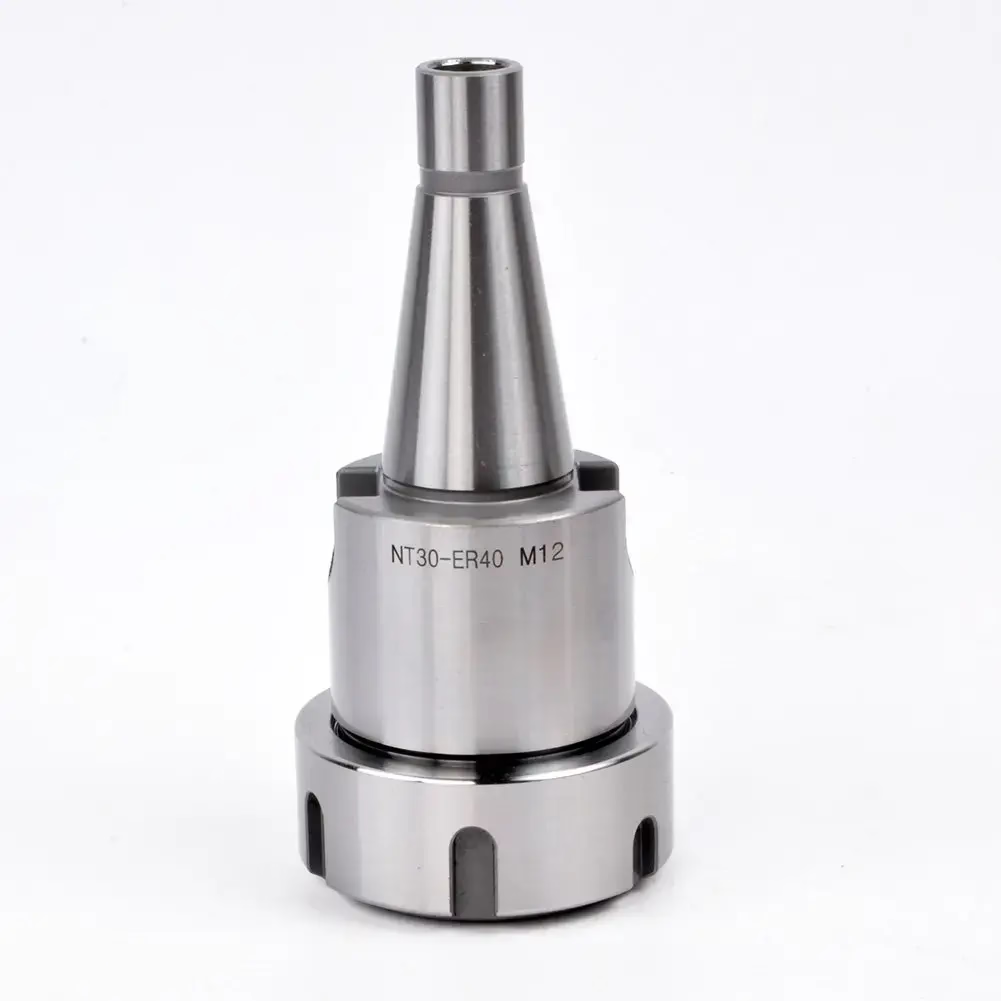
This alloy is expensive and stubborn. Most failures show up after the part is already cut.
This alloy conducts heat poorly, so the temperature stays in the cut. Tools wear fast, edges chip, and the surface tears. By the time the operator notices, the finishing pass is already cutting into a damaged wall.
Aerospace and medical parts often carry 0.8 mm walls. Remove material on one side and the shape springs back. Roughing and finishing in the same setup without stress relief gives you a part that measures correctly on the machine and out of tolerance on the CMM.
Titanium has low stiffness and low thermal conductivity. Long-reach tools chatter, and the chatter marks are hard to polish out. A pocket that should take 40 minutes can take three hours once you slow down to stop the vibration.
Print says Ra 0.4 μm over the whole part, including a face that only ever sees air. That single callout can add days of hand polishing. Talking through which surfaces actually need the finish usually saves both time and cost.
Four things decide whether a titanium job goes smoothly: the tool, the coolant, the setup, and the order of operations.
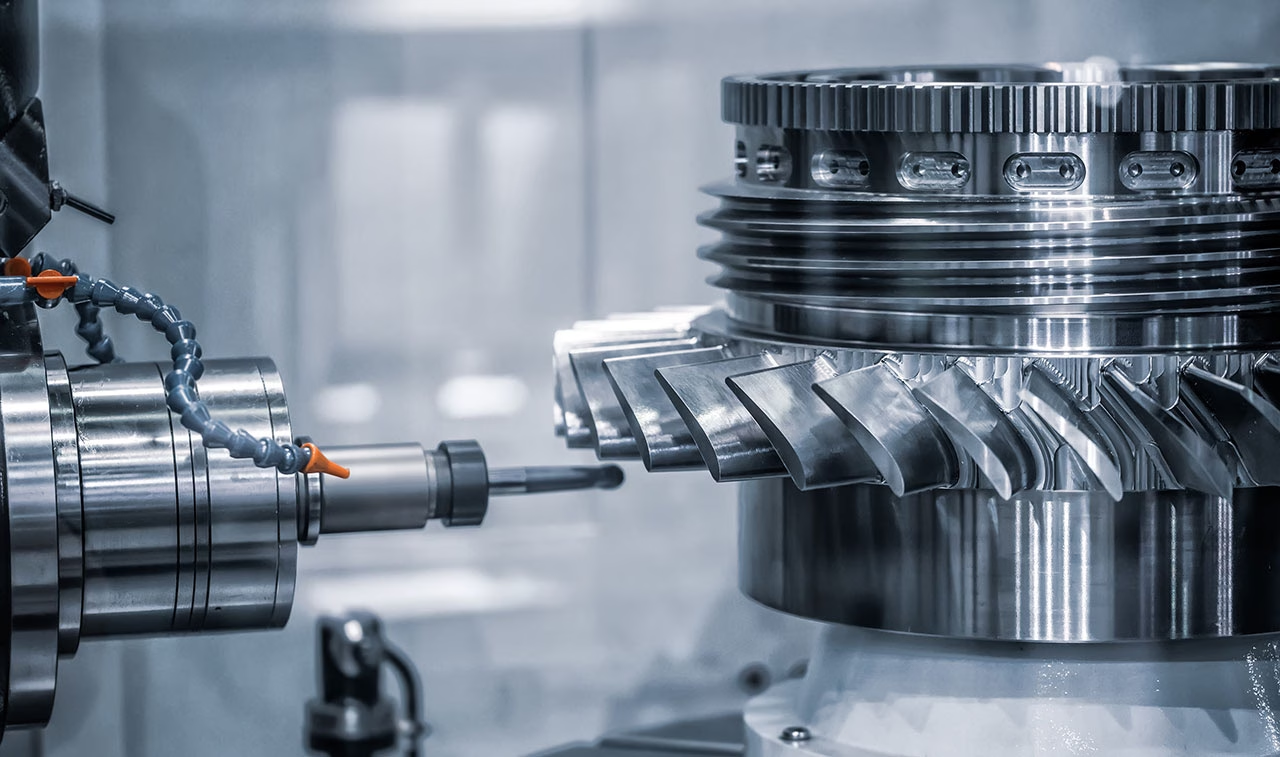
Titanium wants sharp edges and high pressure. We run uncoated or AlTiN carbide at lower surface speed than steel, with through-tool coolant at high pressure. Chips clear the flutes instead of recutting, and the heat leaves with the chip.
Trochoidal paths and constant engagement keep radial load steady. That reduces the shock that chips a corner.
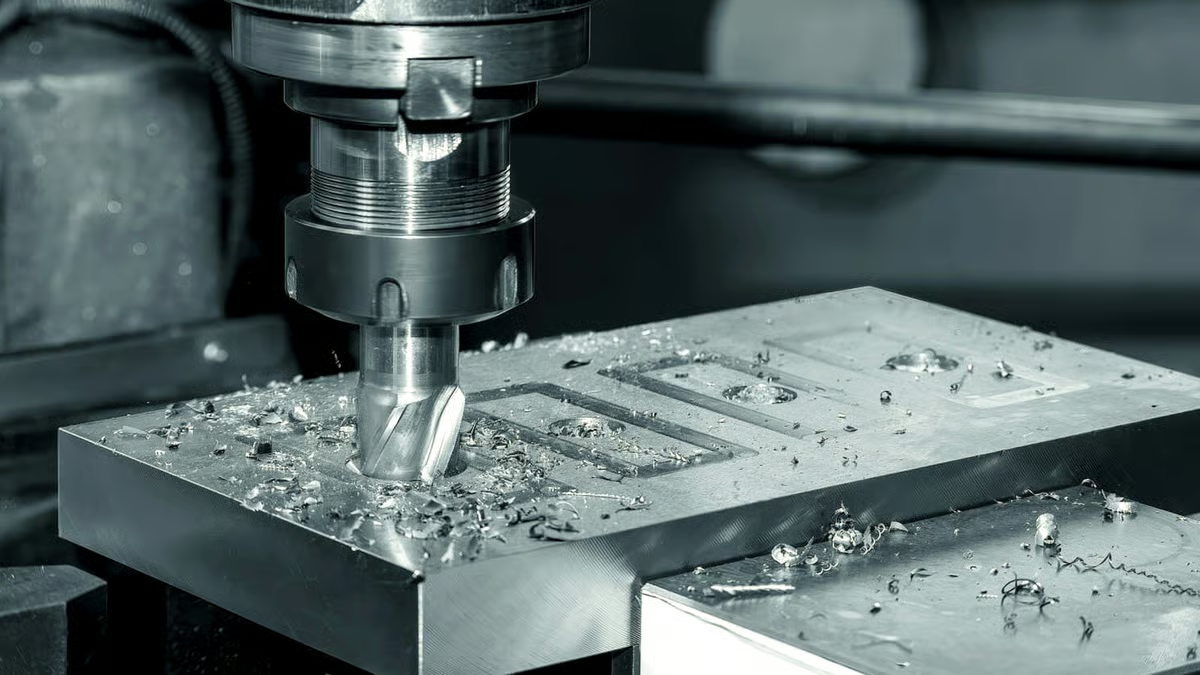
Thin titanium walls move after every cut. On parts with 0.8 mm walls we sequence roughing, an intermediate stress relief where the print allows, then finishing with light passes. A rotary table lets us reach five faces in one setup, so the part is not re-clamped and re-datumed four times.
For long parts up to 4,000 mm, we use machines with 4,000 × 400 × 150 mm travel. Datum stays consistent from the first op to the last.
Pick the process by geometry and quantity, not by habit.
| Part geometry | Recommended route | Why |
|---|---|---|
| Prismatic bracket, 3 faces | 3-axis milling | Few setups, lowest cost per part |
| Impeller or bladed disk | 5-axis simultaneous | Continuous tool engagement, no re-clamp |
| Shaft with cross holes | Mill-turn center | Turning and milling in one setup |
| Thin-wall housing | 5-axis with stress relief | Holds 0.8 mm walls without bowing |
| One-off prototype | 3-axis or 5-axis, no MOQ | No tooling cost, ships in 3–5 days |
| 10,000+ part run | 5-axis with dedicated fixtures | Repeatable datum, stable cycle time |
| Deep pocket, long reach | 5-axis with high-pressure coolant | Controls chatter and tool wear |
| Tight bore, Ra 0.4 μm | Mill-turn plus fine boring | Finish achieved in the cut, less polishing |
Everything from the first prototype to a production run, under one roof in Dongguan and Singapore.
Sixteen simultaneous 5-axis centers cut complex titanium geometry in one setup. Good for impellers, housings, and parts with compound angles.
Three-axis, four-axis, and mill-turn capacity covers prismatic parts and turned shafts. Sixteen mill-turn centers handle parts that need both.
One part, no minimum order. We quote in 12 hours and can start production within 24 hours of approval.
Bead blasting, tumbling, brushing, polishing, and laser marking. Titanium finishes to Ra 0.2–0.8 μm where the print calls for it.
100% inspection before shipment: raw material check, in-process monitoring, final inspection. Reports on request.
We stock and machine TA1, TA2, and TC4 (Ti-6Al-4V). Mill certificates travel with the parts.
Numbers we hold on production titanium work.
| Parameter | Capability | Notes |
|---|---|---|
| Tolerance | ±0.005 mm (±0.0002 in) | On critical features, CMM verified |
| Fine finish | Ra 0.2–0.8 μm | Where the print calls it out |
| Standard finish | Ra 0.8–1.6 μm | Default on machined surfaces |
| As-machined | Ra 1.6–3.2 μm | Non-critical faces |
| Maximum part length | 4,000 mm | 4,000 × 400 × 150 mm travel |
| Medium travel | 750 × 1,150 × 550 mm | And 600 × 600 × 600 mm |
| Compact travel | 500 × 500 × 450 mm | And 500 × 310 × 200 mm |
| Rotary table | Ø400 mm | Indexed and simultaneous |
| Minimum order | No MOQ | One prototype to 10,000+ parts |
| Quotation | Within 12 hours | Includes free DFM analysis |
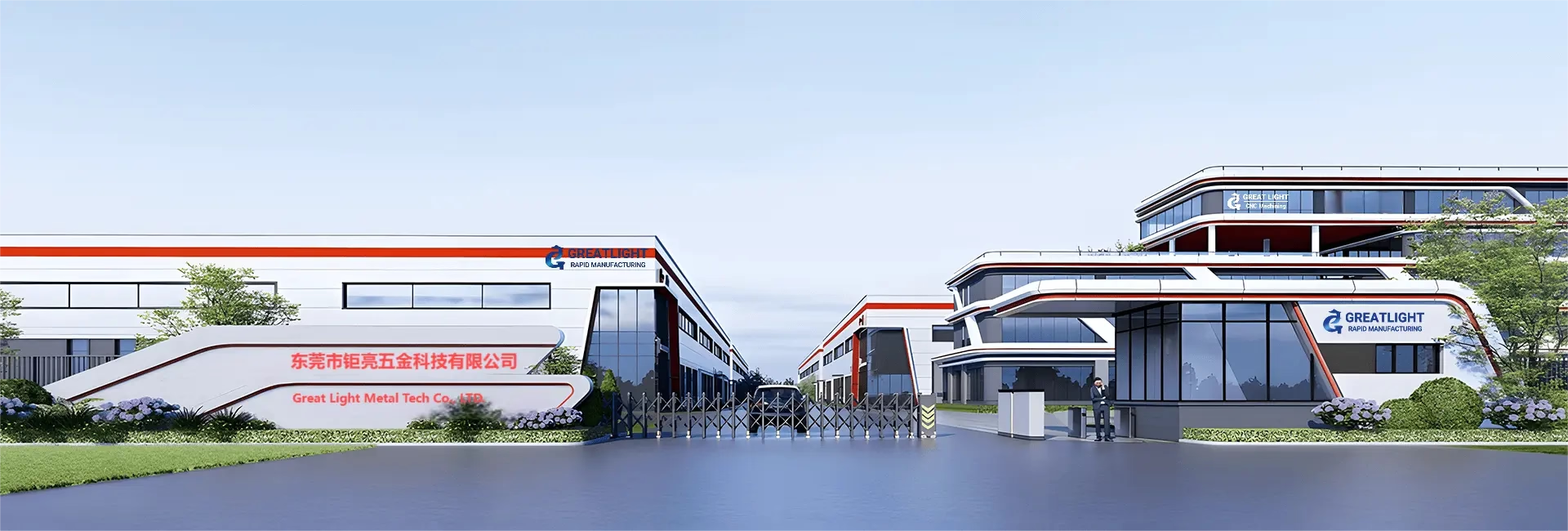
We are a factory, not a broker. Three plants, 127 machines, and a team that has cut this alloy since 2011.
Fifteen years of production work in Dongguan, plus a Singapore factory at No.3 Joo Koon Circle. Titanium is a standing process, not a special request.
Micron-level work on critical features, with CMM verification and reports on request. Not a best-case number.
Sixteen simultaneous 5-axis centers, twelve four-axis mills, twenty-seven three-axis machines, sixteen mill-turn centers.
Every part inspected before shipment. Raw material, in-process, and final checks all recorded.
Quotation and free DFM analysis within 12 hours. Production can start within 24 hours of approval.
Three wholly-owned plants and 150 technicians. No outsourced operations, no middleman markup.
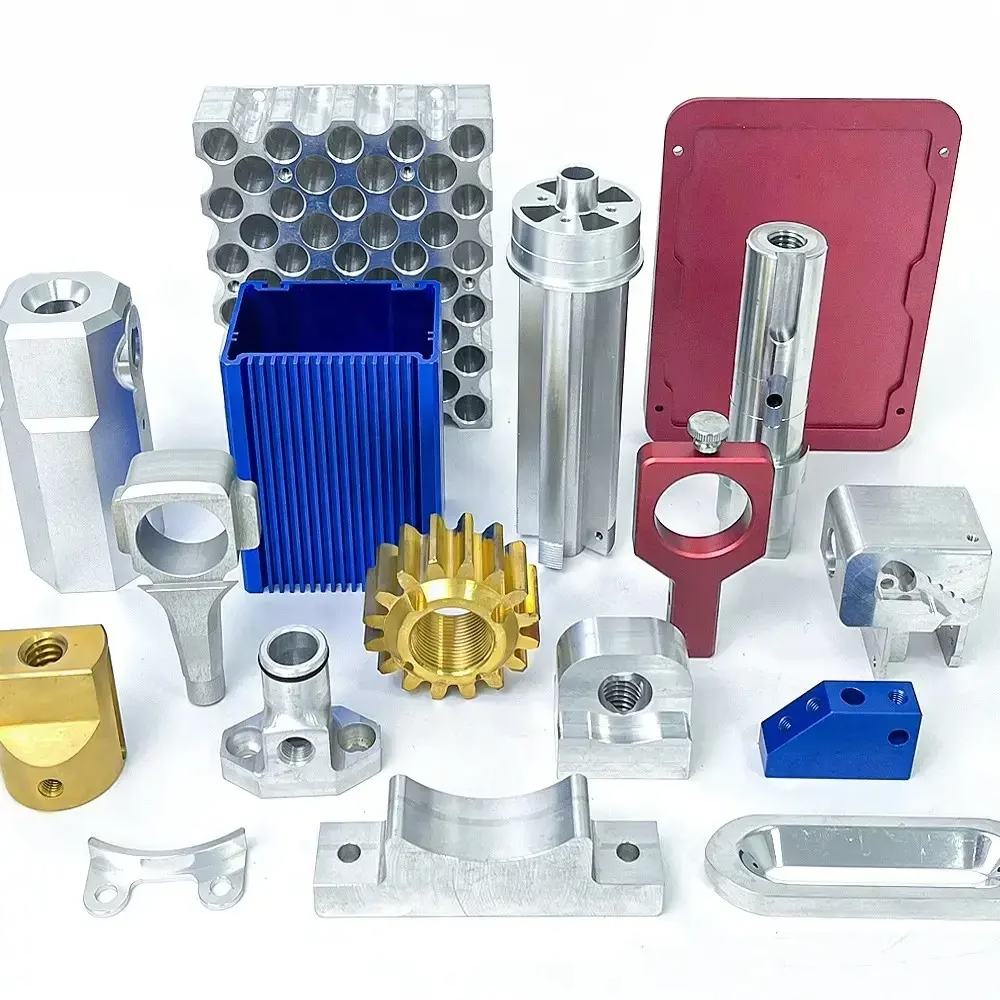
Weight and traceability drive every decision on these parts.

Clean surfaces and repeatability matter more than cycle time.
Volume runs need a stable datum and a repeatable cycle.
Long parts and deep pockets test rigidity above all else.
Yes. Grade 5, Ti-6Al-4V, and UNS R56400 describe the same alpha-beta titanium alloy. Grade 6Al 4V is the same material written a different way.
The chemistry is 6% aluminum, 4% vanadium, balance titanium. The naming comes from different standards bodies, not from different alloys.
Grade 23 (Ti-6Al-4V ELI) is the extra-low-interstitial version. Oxygen, nitrogen, and iron are held tighter.
It has slightly better fracture toughness at low temperature. For most room-temperature structural parts, Grade 5 is enough and costs less.
±0.005 mm (±0.0002 in) on critical features, verified on a CMM. That requires stable setups and temperature control, not just a good machine.
On non-critical faces we work to looser tolerances. Over-tightening the whole print adds cost for no benefit.
Sequence. Rough, relieve stress where the print allows, then finish with light even passes. Clamp lightly and support the wall from behind.
One setup on a 5-axis center avoids the re-clamping that causes most of the movement.
Ra 0.8–1.6 μm comes off the machine as standard. Ra 0.2–0.8 μm is achievable on the surfaces that need it, often with fine boring or a controlled finishing pass.
Specify the finish only on functional faces. A blanket Ra 0.4 μm callout over the whole part is where polishing time quietly doubles.
We have no minimum order quantity. One prototype and a 10,000-part run go through the same quoting process.
Quotes and free DFM analysis come back within 12 hours. Production can start within 24 hours of approval.
Every part is inspected before shipment, with raw material checks, in-process monitoring, and final inspection recorded.
Inspection reports are available on request, and mill certificates follow the material.
An NDA is available on request. Uploads are handled as confidential, and access inside the plant is limited to the team on your job.
We hold ISO 27001:2022 for information security, alongside ISO 9001:2015, IATF 16949:2016, and ISO 13485:2016.
Upload the model and print. We return a quotation with free DFM analysis, then hold ±0.005 mm through the run.
12-hour quote100% inspectionNo minimum orderNDA on request
Trusted by engineers and manufacturers worldwide










Upload your 3D model or 2D drawing and get a quotation with a free DFM analysis. Maximum processing size 4,000 mm.
CNC Metals 13 grades
CNC Plastics 10 grades
Machines & processes 12 options
Surface & post-processing 10 options
Material: not selected Machine: not selected Post-process: not selected
Fill in this short form and we'll open WhatsApp with your message ready to send. We only use these details to reply to you.
Nothing is sent until you press send inside WhatsApp.