GreatLight CNC Machining Factory logo
CNC Machining
Rapid Prototyping
Materials
Industries
News
About GL

Get Instant Quote

Titanium Alloy 6Al · Ti-6Al-7Nb · UNS R56700

Titanium Alloy 6Al: Ti-6Al-7Nb CNC Machining

An alpha-beta grade that swaps vanadium for 7% niobium. We mill and turn it to ±0.005 mm on 5-axis centers, with tool paths and feeds written specifically for titanium.

UNS R56700Ti-6Al-7Nb±0.005 mmRa 0.2–0.8 μmNo minimum order5-axis
titanium-cnc-machining
127High-precision CNC machines
16Simultaneous 5-axis centers
±0.005 mmAchievable tolerance
15 yearsTitanium machining experience
Titanium problems

Where Ti-6Al-7Nb jobs go wrong

Most failures on this grade are process decisions made before the first cut.

01

You switched from Ti-6Al-4V and the finish changed

The same program that ran clean on Ti-6Al-4V can chatter and smear on Ti-6Al-7Nb. Niobium raises the alloy's resistance to chip shear, so the tool rubs instead of cutting. The part comes off the machine with a torn surface and a work-hardened skin that the next operation cannot remove.

02

Thin walls move after the vise opens

A 0.8 mm implant shell or a 1.5 mm flange looks good in the machine. Release the clamps and it springs back 0.05 mm to 0.1 mm. Now the mating bore is out of round and the assembly will not seat. This is clamping strategy, not tool wear.

03

Tools die after 20 minutes

Titanium conducts heat poorly. Cutting heat stays in the edge instead of leaving with the chip. Run the same surface speed you use on stainless and a carbide end mill will fail in one pocket. The tool cost lands on your part price, and the second setup has to be re-datumed.

04

The bore distorts during finishing

A long boring bar on a deep implant or aerospace bore deflects under load. The entry measures on size, the middle is 0.03 mm tight, and the exit bells out. Scrap on a forged or bar-stock part is expensive, and rework on titanium is slow.

How we machine it

Process control for Ti-6Al-7Nb parts

Three things drive the result on this alloy: heat, clamping, and datum control.

CNC Lathe Technical Specifications Terminology
Cutting strategy

Speeds, feeds and coolant aimed at heat

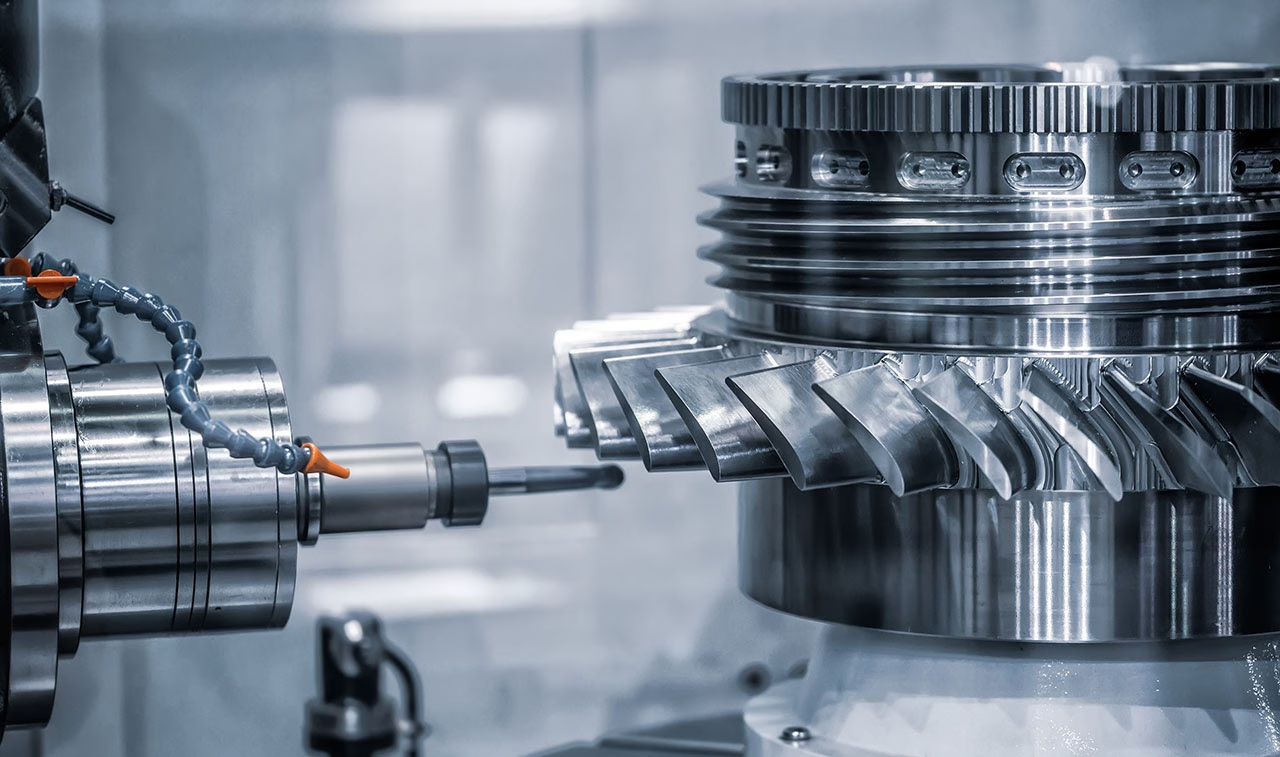
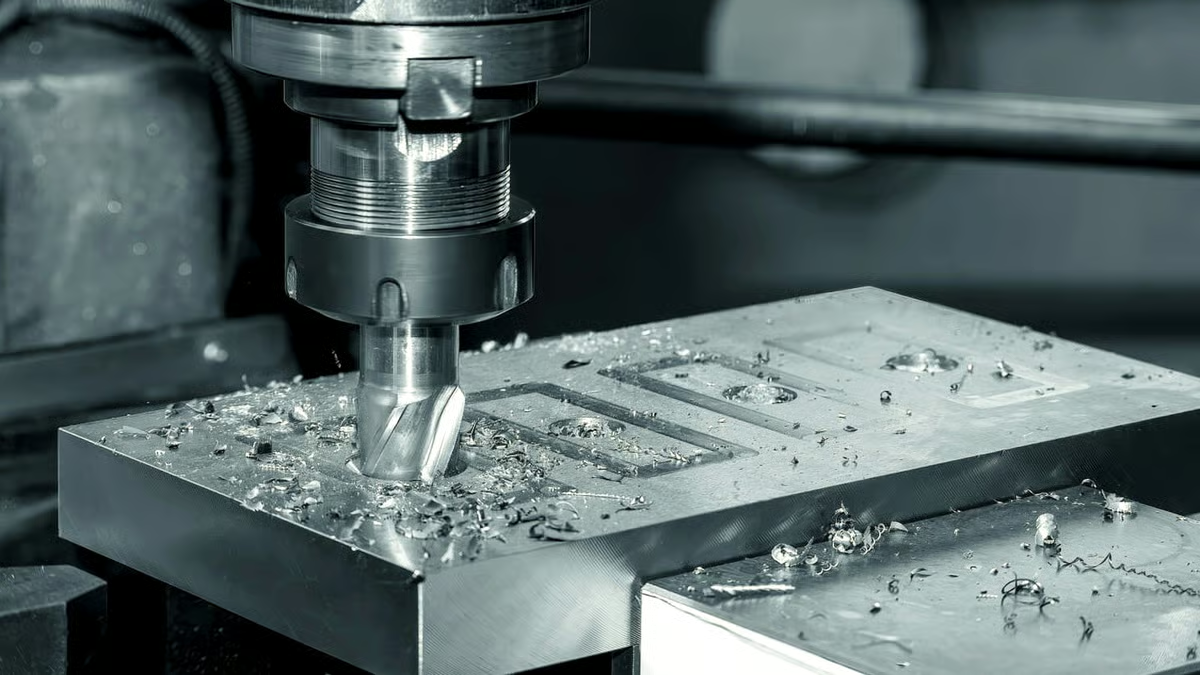
Titanium Alloy 6Al in the 7Nb form cuts at low surface speed. We run carbide at 40–60 m/min with high feed per tooth, and we flood through the spindle so the chip leaves with the heat. Climb milling keeps the chip load on the tooth instead of the edge. For deep pockets we switch to high-pressure through-tool coolant, which breaks the chip and clears the flute.

Every setup starts from a roughing pass that leaves 0.4–0.6 mm of stock, a stress-relief pause if the part is thin, and a semi-finish that removes the work-hardened layer before the finishing cut. That extra pass is what makes the final dimension repeatable instead of a one-off reading.

  • 1
    Low surface speed, high feedKeeps the cutting edge cool and the chip thick enough to carry heat away.
  • 2
    High-pressure coolantThrough-tool supply breaks chips in deep pockets and bores.
  • 3
    Separate semi-finish passCuts away the hardened skin so the finish cut works on clean metal.

Get Instant Quote

CNC Machining Services Online
Fixturing and inspection

Hold the part so it does not move on release

Thin Ti-6Al-7Nb features are usually the reason a part gets rejected, not the cutting data. We build soft jaws or a dedicated fixture that supports the wall from the outside, and we take light finishing passes with reduced radial engagement. On 5-axis centers we keep the part on one fixture and machine five sides so the number of re-clamps drops.

Inspection follows the same logic. We check the raw material certificate, monitor the critical dimensions in process, and run a final layout before shipment. Reports come on request. For bores we measure after the part has relaxed to room temperature, not straight off the machine.

  • 1
    Support fixturesSoft jaws or custom nests spread the clamp load over the wall.
  • 2
    One-fixture 5-axis workFewer re-clamps means fewer chances to shift a datum.
  • 3
    Relaxed-state measurementFinal dimensions are taken after the part reaches room temperature.

Talk to an Engineer

Grade selection

Ti-6Al-7Nb against the grades you already use

Pick by what the part has to survive, not by what is in stock.

GradeWhere it fitsWhen to pick another
Ti-6Al-7Nb (UNS R56700)Implant bodies, bone plates, chemical valve partsCost-sensitive brackets with no bio contact
Ti-6Al-4V (TC4)Aerospace structure, fasteners, high-load framesVanadium-free medical requirements
Commercially pure TA2Formed covers, low-load ductile partsAnything needing high yield strength
17-4PH stainlessShafts and housings where weight is not criticalParts that must shed weight or resist chlorides
What we run

Machining and finishing services for this grade

One shop handles the cut, the finish and the paperwork.

01

5-Axis CNC Machining

Contoured implant surfaces and complex aerospace geometry cut in one setup on 16 simultaneous 5-axis centers.

02

CNC Milling & Turning

Prismatic mill work plus Ø400 mm rotary turning for round Ti-6Al-7Nb parts with tight bore tolerances.

03

Rapid Prototyping

One-off Ti-6Al-7Nb prototypes with no minimum order, quoted and reviewed within 12 hours.

04

Surface Finishing

Bead blasting, tumbling, brushing and polishing to reach Ra 0.2–0.8 μm on sealing faces.

05

Laser Marking

UDI and lot marking on titanium with a minimum character height of 1.5 mm.

06

Assembly & Inspection

Sub-assembly, 100% inspection before shipment and dimensional reports on request.

Capability

Shop capacity for titanium work

ItemRange
Maximum part size4,000 mm
Large travel4,000 × 400 × 150 mm
Medium travel750 × 1,150 × 550 mm
Compact travel500 × 500 × 450 mm
Rotary tableØ400 mm
Tolerance±0.005 mm (±0.0002 in)
Fine finishRa 0.2–0.8 μm
Standard finishRa 0.8–1.6 μm
Why GreatLight

Why engineers send us their titanium parts

2011

Machining titanium since 2011

Fifteen years of running alpha-beta alloys, with the tool libraries and fixture designs already proven.

±0.005 mm

Tight tolerance as standard

Hold ±0.005 mm on critical features, with a documented semi-finish pass before the finishing cut.

127

127 CNC machines

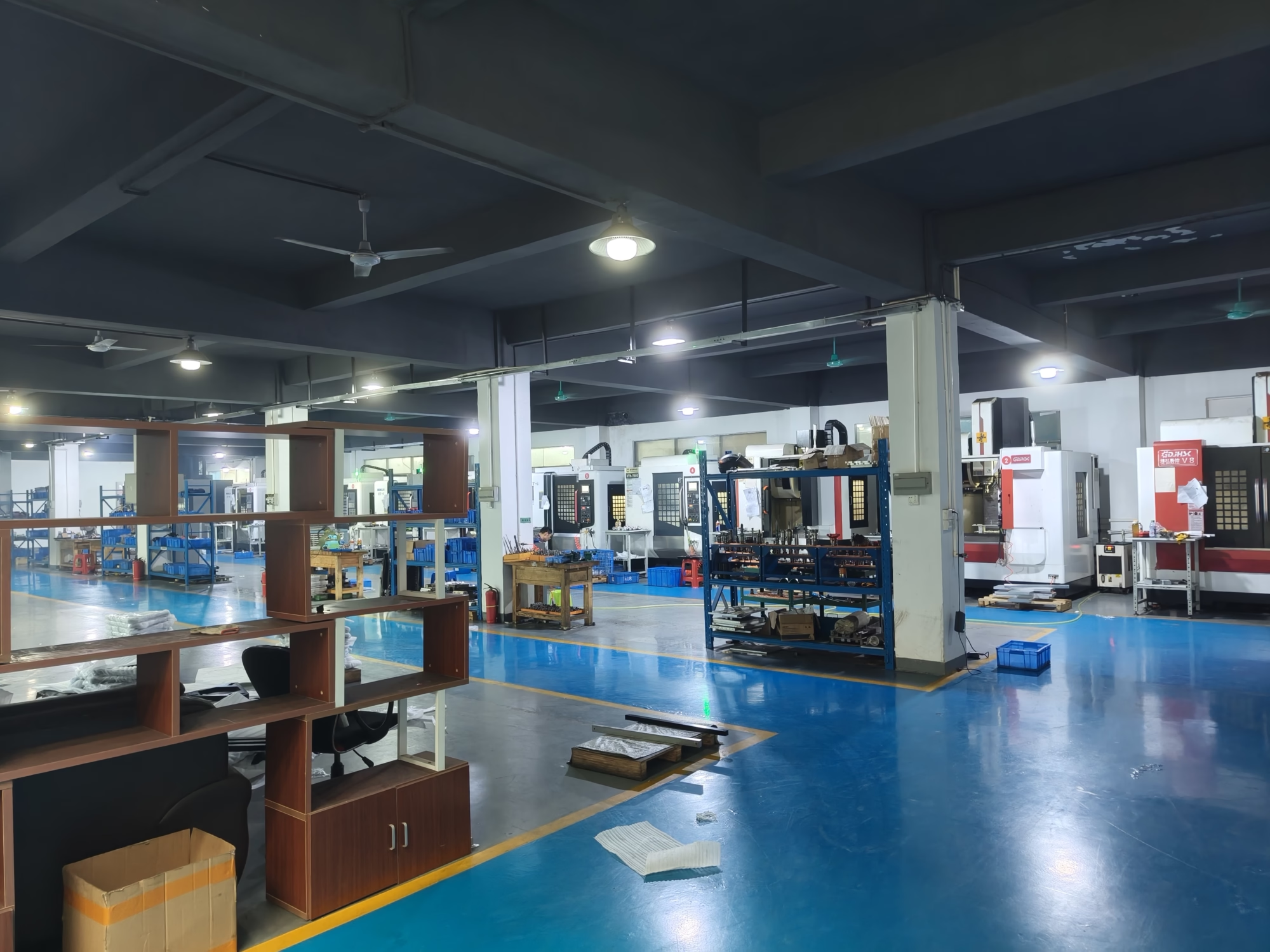
Capacity across 3 wholly-owned plants and 7,600 m², so one job does not wait for a single spindle.

150

150 technicians

Operators and programmers who read titanium by chip color and sound, not just by the screen.

12 h

Quote and DFM in 12 hours

You get a price and a manufacturability review within 12 hours of sending a drawing.

3–5 d

Parts ship in 3–5 days

Production can start within 24 hours, and historical late-delivery risk sits below 2%.

7,600 m²Manufacturing space
3Wholly-owned plants
99.99%Qualification rate
100%Inspection before shipment
Industry fit

What this grade is asked to do

oplus_262178

Medical device parts

Vanadium-free bodies and plates where the alloy must stay bio-compatible and hold a fine surface.

  • Ra 0.2–0.8 μm
  • ISO 13485:2016
  • 100% inspection
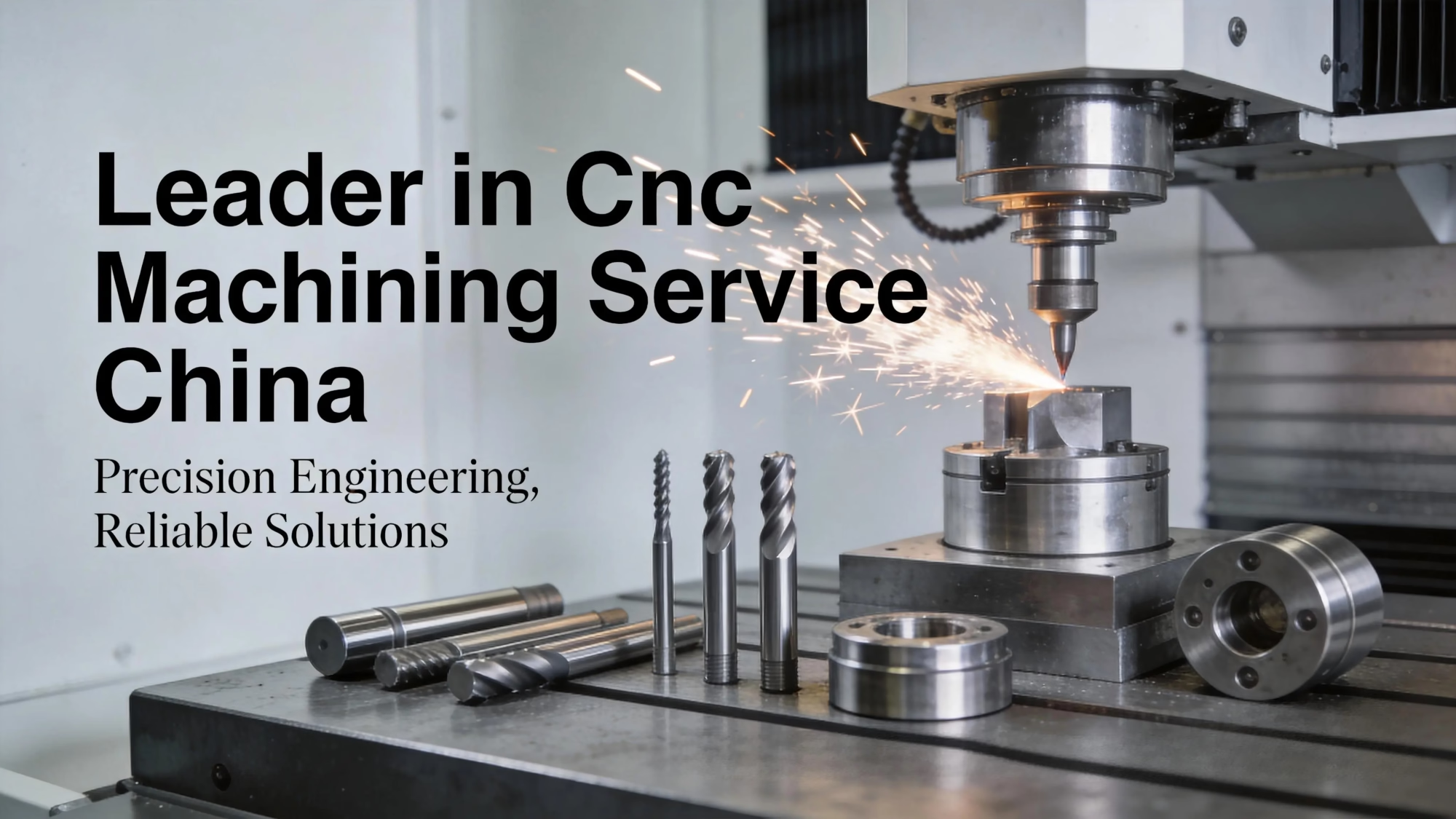
Leader in Cnc Machining Service China

Aerospace brackets

Low-weight structural parts machined on 5-axis centers, with traceable material certificates.

  • ±0.005 mm
  • MTC on request
  • 5-axis
GreatLight Metal new factory building

Chemical process hardware

Valve bodies and pump internals for chloride and acid service where corrosion resistance is the point.

  • 4,000 mm max
  • Ra 1.6–3.2 μm
  • No minimum order
FAQs

Questions engineers ask before releasing a Ti-6Al-7Nb job

Is Ti-6Al-7Nb the same as Ti-6Al-4V?

No. Both are alpha-beta titanium alloys with 6% aluminum, but the beta stabilizer differs: 7% niobium instead of 4% vanadium. Mechanical properties land close to Ti-6Al-4V, so drawings written for one usually transfer to the other.

The difference matters when the specification bans vanadium. Niobium is the accepted substitute for implant and food-contact work, and it also gives slightly better corrosion behavior in some chloride environments. Machining behavior is similar but not identical, so the program needs a re-check.

Can your standard tolerance of ±0.005 mm hold on titanium?

Yes, on features we can reach with a supported setup and a clean datum. Titanium deflects under cutting force, so the limit is usually the part geometry, not the machine. A long unsupported bore or a thin wall may need a different strategy or a wider tolerance.

We confirm what is achievable during the DFM review, before you commit to a purchase order. If a callout cannot be held repeatably, we say so and propose a workable number.

Which surface finishes can you apply to Ti-6Al-7Nb?

As-machined surfaces sit around Ra 1.6–3.2 μm. Standard fine finishing reaches Ra 0.8–1.6 μm, and polished sealing faces can reach Ra 0.2–0.8 μm. Bead blasting and tumbling even out tool marks on non-critical faces.

Anodizing, plating and laser marking are all available. Marking on titanium is legible at a minimum character height of 1.5 mm.

Do you machine one prototype, or only production runs?

Both, on the same process. There is no minimum order quantity, so a single Ti-6Al-7Nb prototype and a 10,000-part run use the same fixtures, tool paths and inspection routine.

Working this way means the prototype you approve is the part you get in volume. Nothing gets re-qualified between the two.

How fast can I get a quote and parts?

Send a drawing or STEP file and you get a quotation plus a free DFM analysis within 12 hours. Production can start within 24 hours of release, and parts typically ship in 3–5 days.

Historical late-delivery probability across our order book is below 2%. If a schedule is at risk, you hear it early, not on the ship date.

What do you need to quote a titanium part?

A 2D drawing with tolerances and finish callouts, or a 3D model plus a drawing for the critical features. Tell us the alloy condition and any specification the part must meet.

If the part has thin walls or deep bores, include that in the note. It changes the fixture plan and sometimes the price.

Is my design data kept confidential?

Uploads are secure and confidential. An NDA is available on request before you send anything, and we hold ISO 27001:2022 for information security.

Files are shared only with the programmers and machinists working on your job.

When should I not use Ti-6Al-7Nb?

Skip it when the part is a low-load bracket with no bio-contact or corrosion requirement. Aluminum 7075 or 6061 will do the job at lower cost and machine faster.

It also makes little sense for large flat covers where stiffness, not strength-to-weight, sets the design. Titanium adds cost without adding much there. We say so when we see it.

Send a Ti-6Al-7Nb drawing and get a price in 12 hours

Upload a STEP file or 2D drawing. We come back with a quotation and a DFM review, no minimum order and no obligation.

12-hour quote100% inspectionNo minimum orderNDA on request

Trusted by engineers and manufacturers worldwide

Tesla Ford Motor Company BYD Auto Denso Magna International Boeing Airbus Medtronic KUKA FANUC