GreatLight CNC Machining Factory logo
CNC Machining
Rapid Prototyping
Materials
Industries
News
About GL

Get Instant Quote

Nickel alloy machining

Inconel 750 N07750 CNC Machining

Age-hardenable nickel-chromium alloy parts machined on 5-axis centers, with tolerances held to ±0.005 mm and full inspection before shipment.

16 five-axis centers±0.005 mmRa 0.8–1.6 μmFrom one prototype12-hour quoteISO 9001:2015
inconel-cnc-machining
15 yearsMachining experience since 2011
127High-precision CNC machines
99.99%Qualification rate
3–5 daysTypical production lead time
Where X-750 goes wrong

Problems that show up after the first cut

This alloy punishes bad tooling choices and loose cutting data. These are the failures we keep finding on drawings and incoming parts.

01

Work hardening stalls the cut

X-750 hardens the moment the tool rubs instead of shears. A light pass on a worn insert raises surface hardness fast, and the next pass starts chattering. On thin walls and small bores, the part is often scrapped before anyone notices the tool was dull.

02

Chipping at the thread crest

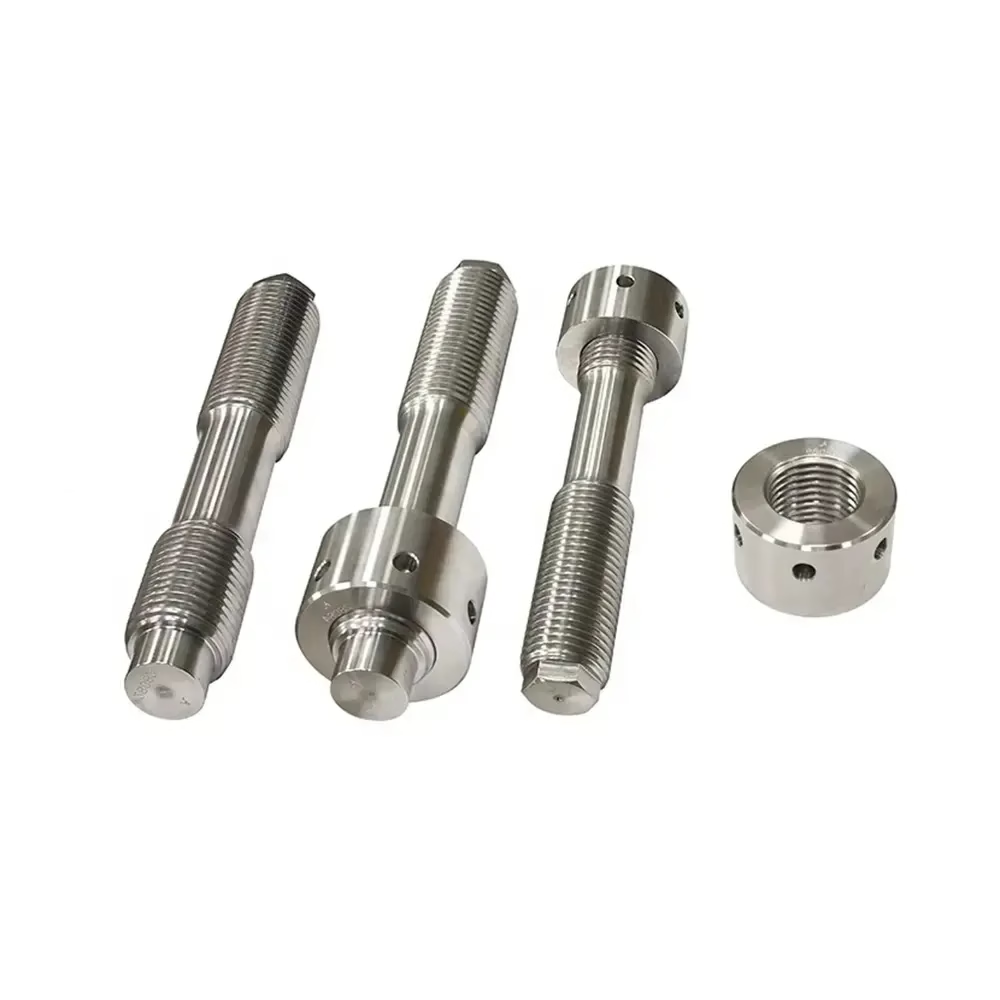
Threading bolts, studs and turbine hardware in aged condition cracks the crest and tears the flank. Threads that look fine under a bench light fail a 100% thread inspection, and a whole lot goes back to the saw.

03

Distortion after age hardening

Parts machined to final size before aging move in the furnace. A bore that measured true on the bench comes back oval, and the flatness on a sealing face drifts out. Rework is possible only if enough stock was left.

04

Tool cost that never gets quoted

Carbide consumption on nickel alloys is several times that of stainless. A shop that prices X-750 like 17-4PH either eats the cost or quietly slows the cycle, and the delivery date slips without an explanation.

How we machine it

Cutting strategy built around the alloy

Fixture, tool path and heat treat sequence are decided together before the first chip.

CNC Lathe Technical Specifications Terminology
Roughing and semi-finishing

Keep the tool shearing, never rubbing

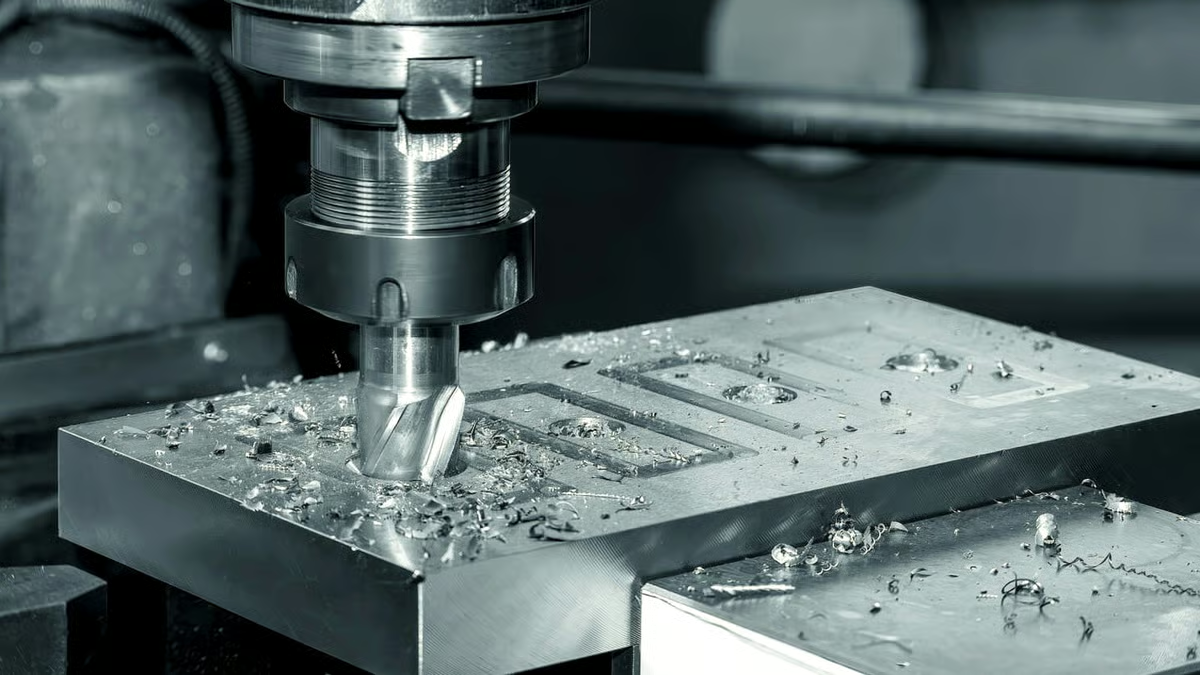
Nickel-based alloys keep their strength at red heat, which is exactly why they are hard to cut. We run sharp, positive-geometry carbide at conservative surface speeds and heavy enough feed per tooth that the edge stays under the work-hardened skin instead of skating on it. Depth of cut stays constant through the pass so the load on the insert does not spike at corners.

Every roughing program gets high-pressure coolant aimed at the insert tip, not the part. Chips clear on the first try, heat leaves with them, and the insert wears evenly instead of chipping on one flank.

  • 1
    Constant engagementTrochoidal and dynamic paths hold radial engagement steady through pockets and slots.
  • 2
    Rigid workholdingCast fixtures and low-profile clamps keep thin rings and housings from singing.
  • 3
    Insert life loggedTool change intervals are recorded per job so the next run starts from known data.

Get Instant Quote

CNC Machining Services Online
Finishing and heat treat

Leave stock, then age, then finish

Most X-750 parts are used in the aged condition, and the furnace moves them. We rough with 0.3–0.5 mm of stock on critical faces, send the lot for solution treatment and aging, then come back and finish on the same fixture datums. Bores stay round, sealing faces stay flat, and the drawing tolerance applies to the final state, not the soft one.

For features that cannot survive a second setup, we finish in one pass on a 5-axis center with the part clamped once. Positional accuracy across five faces stays inside ±0.005 mm, which removes the stacked error of four separate operations.

  • 1
    Datum carried throughThe same fixture and datum are used before and after heat treat.
  • 2
    One-setup finishingFive-axis work keeps hole patterns and faces in one coordinate system.
  • 3
    Finish to drawingRa 0.8–1.6 μm as standard; Ra 0.2–0.8 μm on request.

Get Instant Quote

Material selection

When X-750 is the right call, and when it is not

Use this to decide before you commit a drawing to a nickel alloy.

Condition or alloyWhere it fitsWatch out for
X-750, agedBolts, springs, turbine hardware up to about 700 °CMachine oversize, then age and finish
X-750, annealedForming and heavy roughing before final heat treatLow strength; not a service condition
Inconel 718Larger structural parts and welded assembliesSlower to age, different cutting data
17-4PH stainlessCorrosion resistance without high heatLoses strength well below X-750 range
WaspaloyHigher temperature turbine discs and ringsHarder to source, higher cost per kg
Machining services

What we run on this alloy

One shop for the operations your part needs, from first article to production.

01

5-axis CNC machining

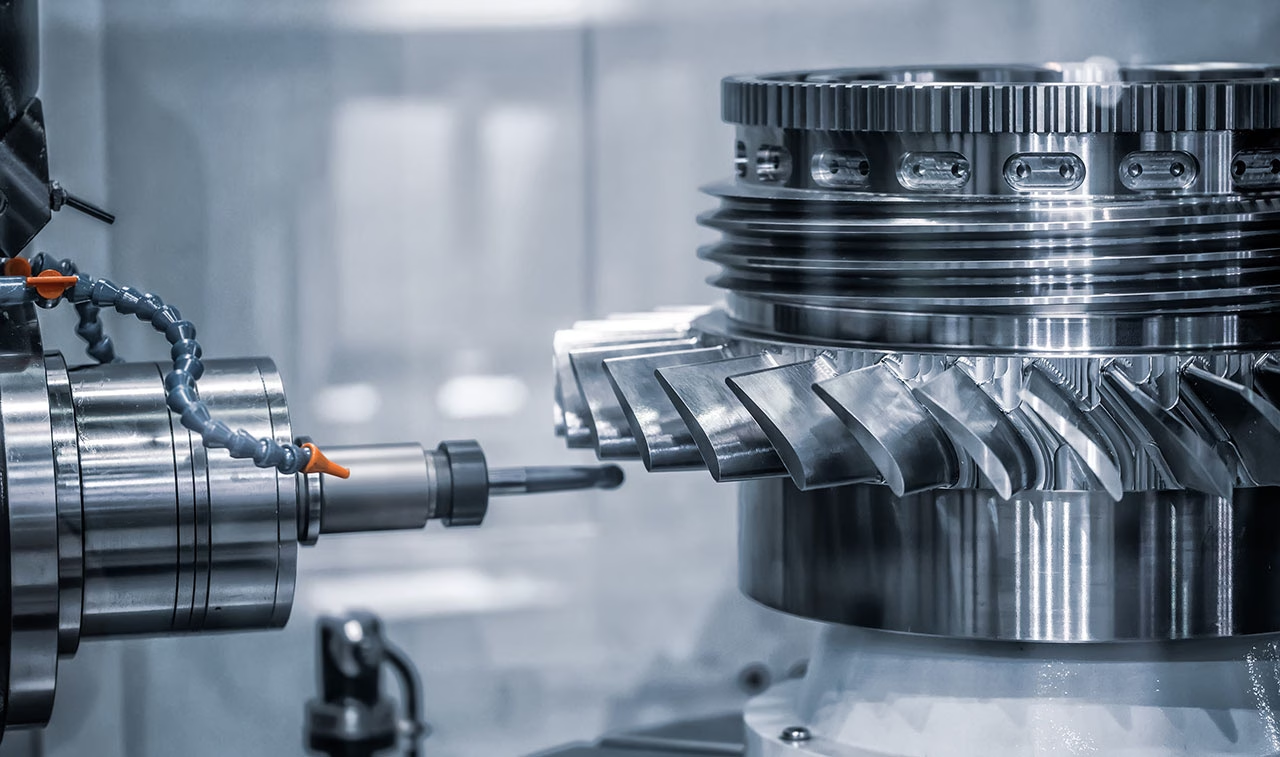
16 simultaneous 5-axis centers handle contoured blades, vanes and housings with compound angles in one setup.

02

4-axis and 3-axis milling

12 four-axis mills and 27 three-axis machines cover plates, brackets and prismatic parts where five axes add nothing.

03

CNC turning and mill-turn

16 mill-turn centers produce shafts, bushings and threaded fasteners complete, with the thread cut in the same cycle as the shank.

04

Rapid prototyping

First articles machined from bar or plate so you can test fit and function before tooling or a production order.

05

Surface finishing

Bead blasting, tumbling, brushing and polishing, plus electroless nickel and silver plating for galling resistance.

06

Inspection and reporting

First article reports, material certificates and dimensional reports issued on request with the shipment.

Capability range

What the shop floor can hold

Numbers you can plan a drawing around.

ItemRangeNotes
Maximum part size4,000 mmLarge travel 4,000 × 400 × 150 mm
Medium travels750 × 1,150 × 550 mmAlso 600 × 600 × 600 mm
Compact travels500 × 500 × 450 mmAlso 500 × 310 × 200 mm
Rotary tableØ400 mmFor 4-axis and 5-axis indexing
Tolerance±0.005 mm±0.0002 in on request
Surface finishRa 1.6–3.2 μmDown to Ra 0.2–0.8 μm
Why GreatLight

Reasons engineers keep sending nickel work here

Capacity, process control and paperwork that holds up in an audit.

15Y

Machining since 2011

Fifteen years of production work, with nickel alloys and titanium run alongside stainless and aluminum every week.

127

CNC machines on site

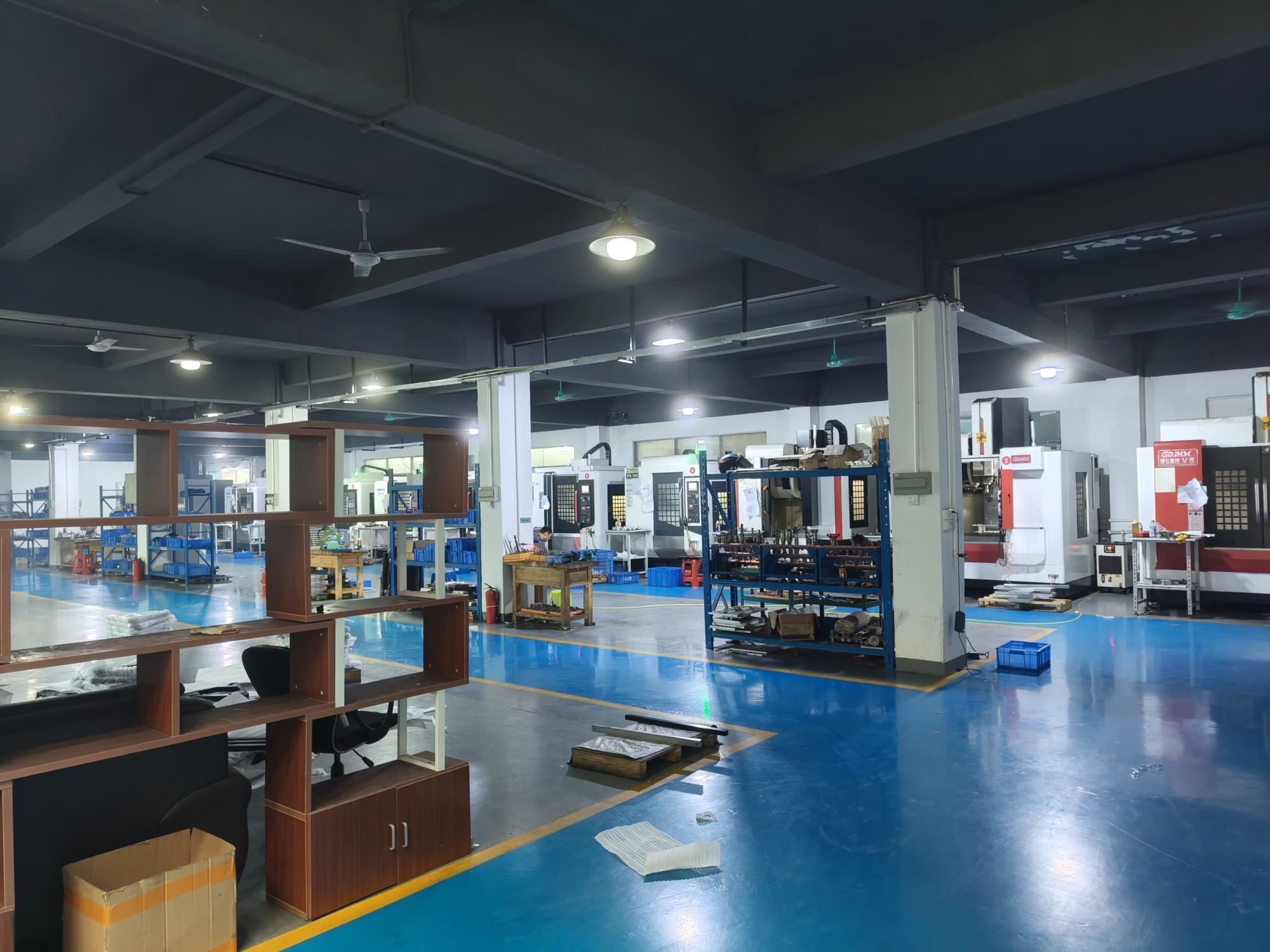
127 high-precision machines across three wholly-owned plants, so a hot job does not wait for a spindle.

±0.005 mm

Held tolerance

Dimensional tolerance maintained across five-axis work, verified on the machine and again at final inspection.

12 h

Quote and DFM

Quotation plus a free DFM analysis within 12 hours of receiving your files, with the tooling risks flagged.

100%

Inspection before shipment

Raw material check, in-process monitoring and final inspection on every lot. Reports on request.

NDA

Confidential handling

Uploads stay secure and confidential, and a non-disclosure agreement is available on request.

7,600 m²Manufacturing space
150Technicians and engineers
3Wholly-owned plants
<2%Historical late-delivery rate
Industry requirements

What these parts have to survive

Leader in Cnc Machining Service China

Turbine and engine hardware

Sealing rings, vanes and small turbine parts that must hold form at high temperature.

  • ±0.005 mm
  • Ra 0.8–1.6 μm
  • 100% inspection
GreatLight Metal new factory building

Aerospace fasteners

Bolts, studs and nuts threaded in the aged condition without crest chipping.

  • Thread in one setup
  • Material certs
  • Lot traceability
oplus_262178

Structural and bracket parts

Frames, brackets and load paths where strength-to-weight decides the alloy.

  • 5-axis one setup
  • 4,000 mm max size
  • DFM before cutting
6011

High-temperature springs and seals

Parts that stay elastic after aging and resist oxidation in service.

  • Age-then-finish
  • Ra 0.2–0.8 μm option
  • Dimensional report
FAQs

Questions we get before the first cut

Should the part be machined before or after age hardening?

For most X-750 parts, rough in the annealed or solution-treated condition, age, then finish. Aging moves the part, so a bore finished to final size before the furnace will not measure true afterward.

If the drawing calls out aged properties and tight geometry, send that requirement with the model. We will leave stock where it is needed and finish after heat treat on the same datums.

What tolerance can you actually hold on this alloy?

±0.005 mm on dimensions we control in-house, verified during the run and again at final inspection. That is not a blanket figure for every feature.

Deep bores, thin walls and long unsupported sections move more than that. When a drawing pushes past what the geometry allows, the DFM analysis will say so before we quote.

Can you machine X-750 from bar and from forgings?

Yes. Bar stock is the usual route for fasteners, bushings and small hardware. Forgings and ring blanks come in for larger parts where grain flow matters.

Send the stock form and condition with the RFQ. The cutting data and the stock allowance change with both.

How do you stop threads from chipping on aged material?

Aged X-750 is where thread crests fail. We cut threads with the correct infeed method for the alloy, keep the tool sharp, and inspect the crest instead of trusting a visual check.

If the thread is rolled rather than cut, tell us. Rolled threads need a different blank diameter and a different pre-age sequence.

Is there a minimum order quantity?

No minimum. We run from a single prototype up to 10,000+ part runs. One piece is a valid order if that is what the program needs.

Roughing strategy and fixturing do not change between a one-off and a run, so a prototype is a real test of the production process.

What inspection documentation comes with the parts?

Every lot gets a raw material check, in-process monitoring and a final inspection before shipment. Reports are issued on request rather than assumed.

First article reports, material certificates and dimensional reports can travel with the shipment. Tell us the format your quality group expects.

Which certifications cover the shop?

ISO 9001:2015, IATF 16949:2016, ISO 13485:2016 and ISO 27001:2022. The information security certification covers how we handle your files.

If your program needs something beyond these, raise it during the quote so we can say yes or no before you commit.

How fast can a first article be on my desk?

Quotation and free DFM analysis come back within 12 hours. Production can start within 24 hours of a released order, and parts typically ship in 3–5 days.

The clock depends on material availability and heat treat, which sit outside the machine shop. We tell you which step is the long pole instead of quoting a date we do not control.

Send the drawing and the alloy condition

Upload your model and the heat treat callout. You get a quote, a DFM read and a tooling plan in 12 hours.

12-hour quote100% inspectionNo minimum orderNDA on request

Trusted by engineers and manufacturers worldwide

Tesla Ford Motor Company BYD Auto Denso Magna International Boeing Airbus Medtronic KUKA FANUC