GreatLight CNC Machining Factory logo
CNC Machining
Rapid Prototyping
Materials
Industries
News
About GL

Get Instant Quote

Medical Device Parts

Medical Device Parts

SLA, vacuum casting and CNC machining under one roof. We build functional mockups, fixtures and pilot-run components, from a single unit to 10,000+ pieces, with dimensional reports on request.

ISO 13485:2016±0.005 mmNo MOQ12-hour quoteNDA on request
medical-devices-rapid-prototyping
15YMedical project experience
127High-precision CNC machines
99.99%Qualification rate
3–5 daysParts ship after release
Common failures

Where medical device parts go wrong

Most problems show up after the parts arrive, not on the drawing.

01

Does the printed part break during assembly?

Thin walls and unsupported bosses crack when a screw is torqued. A failed mockup costs a day of bench time and a new print cycle. We check boss wall thickness and thread depth in DFM before anything is built.
02

Did the housing come back warped?

A long enclosure that bows 0.3 mm will not seat on its mating half. Gasket lines leak, latches bind, and the whole assembly is scrapped. Print orientation and support layout decide this, so we fix orientation at the quoting stage.

03

Is the resin safe for the application?

Standard resin is fine for a fit check and wrong for anything touching skin or fluid paths. Choosing the wrong grade means the part cannot be used at all. Tell us the contact scenario and we match the material to it.

04

Can you repeat the same part next month?

A prototype that cannot be reproduced is a dead end. If the second batch differs from the first, your test data is worthless. We keep the print file, orientation and post-process record so run two matches run one.

How we work

From a print file to a machined part

One supplier for the mockup, the fixture and the pilot run.

SLA-3d-Printing-jpg
Step 1

SLA and vacuum casting for early geometry

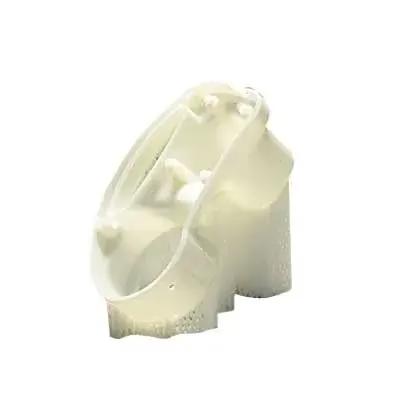
SLA gives you smooth surfaces and fine features without tooling. It suits housings, handles, fluidic manifolds and anything with internal channels that a mill cannot reach. Layer thickness is typically 0.05–0.1 mm, which holds a gasket groove and a snap fit. For parts larger than the build envelope we split and bond, then sand the joint flush.

When you need five identical units for a bench study, we take the SLA master into a silicone mold and vacuum cast in ABS-like, PC-like or transparent resin. That is cheaper than five separate prints once the geometry is fixed, and it keeps wall thickness and color consistent across the set.

  • 1
    OrientationChosen to protect the sealing face and load-bearing bosses.
  • 2
    Post-processSupport removal, sanding, and clear coat when an optical part needs it.
  • 3
    RepeatabilityFile, orientation and process record kept for the next build.

Get Instant Quote

metal-3d-printing-1801
Step 2

CNC machining when the part has to hold tolerance

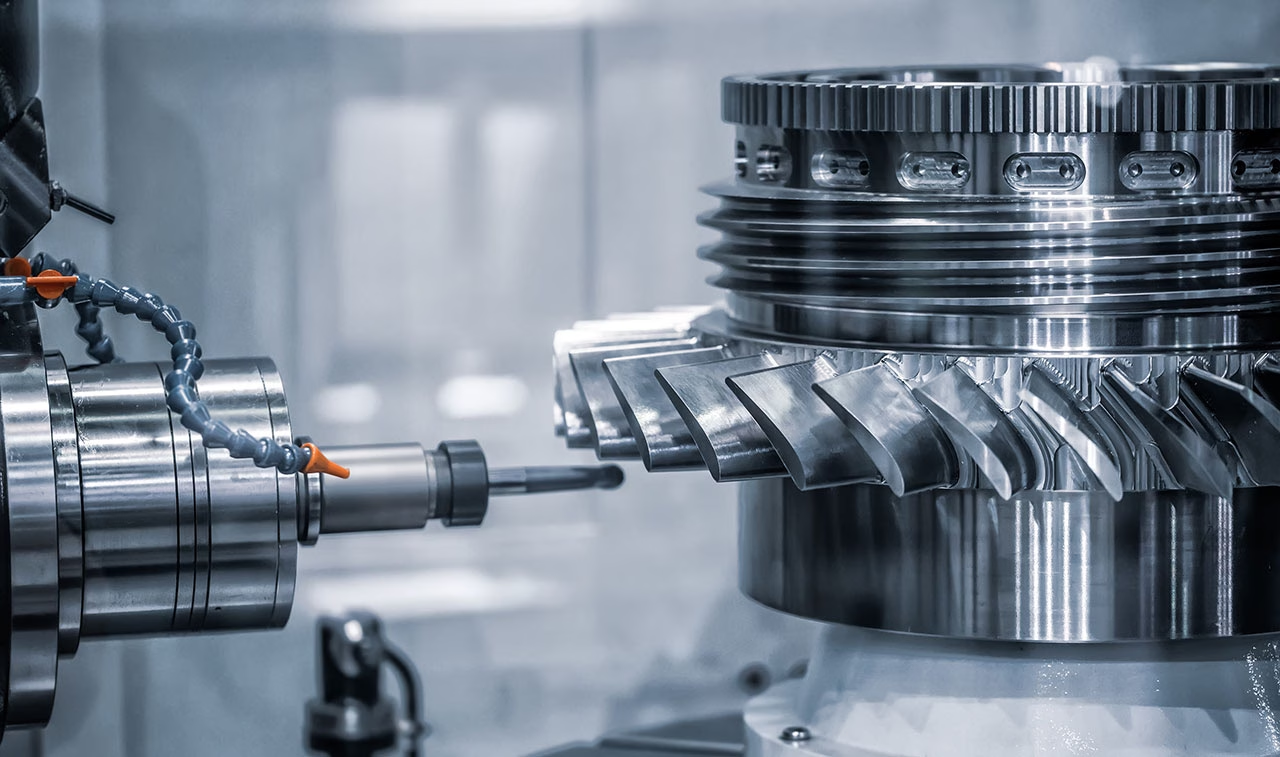
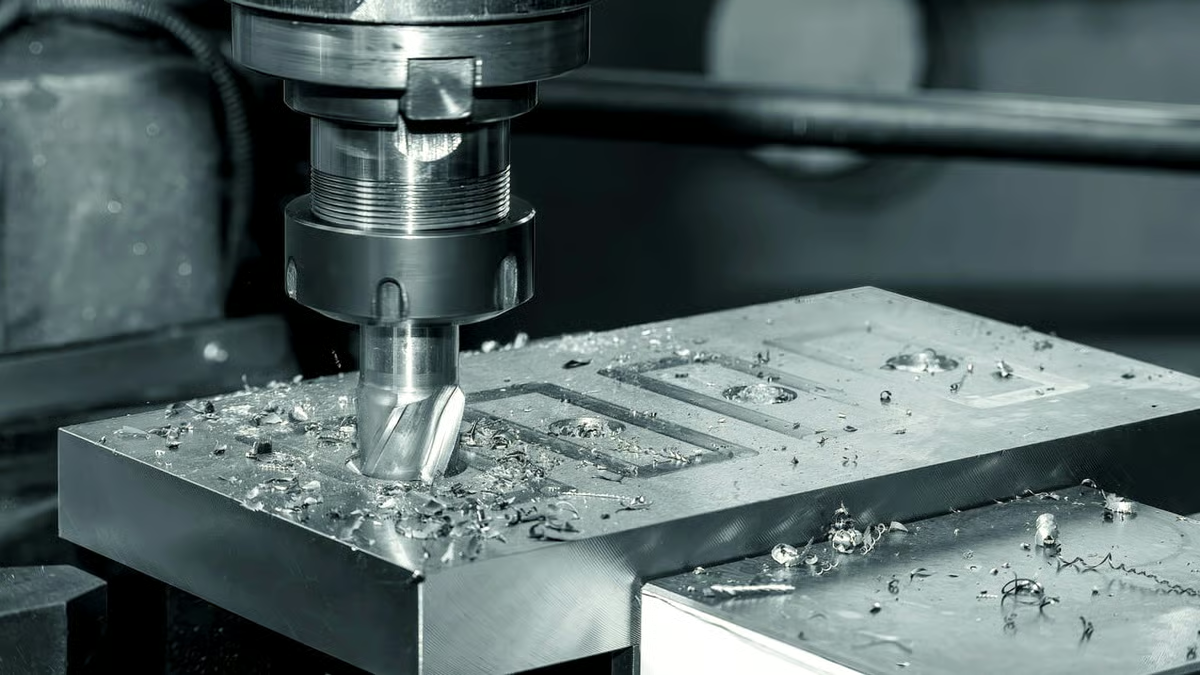
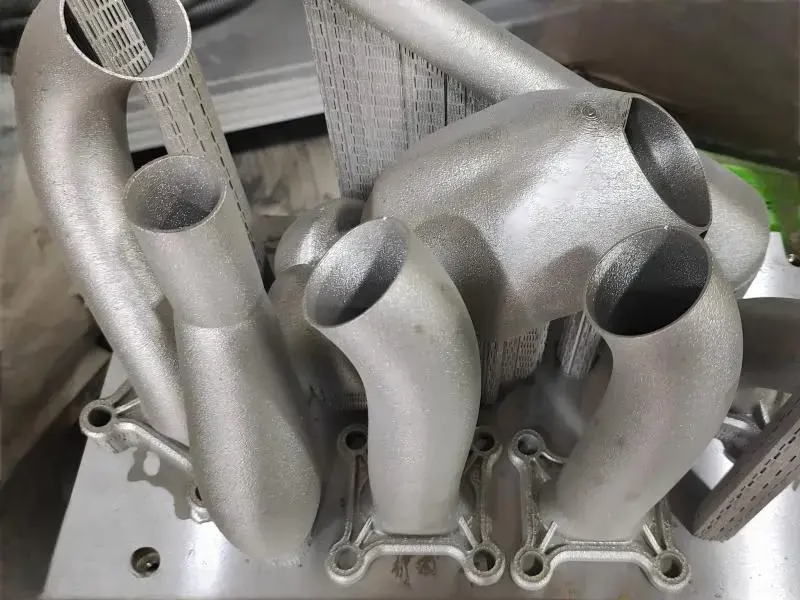
Once a design moves past fit checks, printed plastic stops being the right answer. A machined housing holds ±0.005 mm, takes a threaded insert without stripping, and survives autoclave cycles that soften resin. We machine 316L, 17-4PH, titanium and PEEK, and we run 16 simultaneous 5-axis centers for parts with angled ports or undercut features.

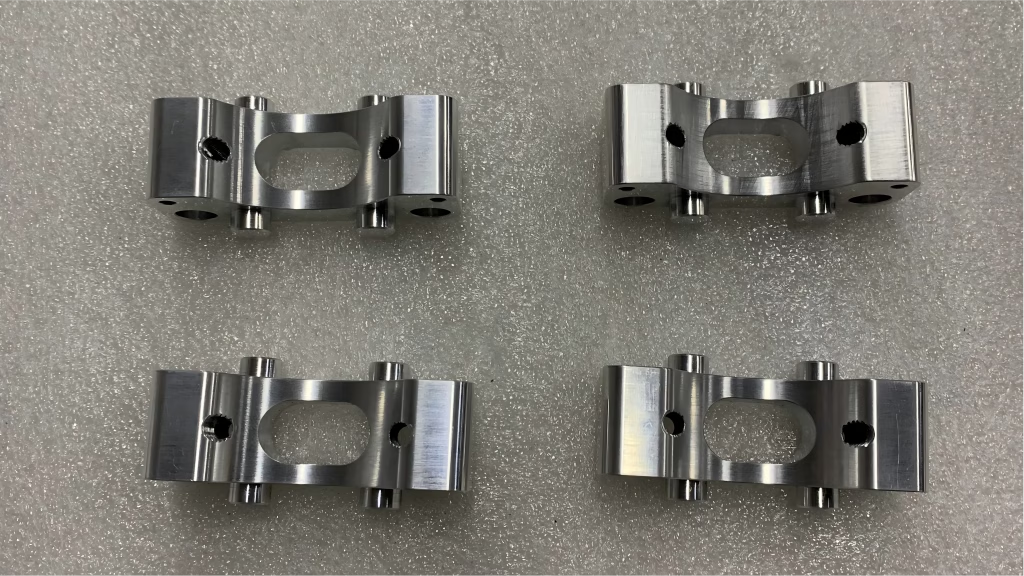
The same shop does the sheet metal brackets, the base plate and the machined manifold. That matters because a fixture is only as good as its worst interface. Cutting the frame and the mating block in one facility removes the tolerance stack you would get from two vendors.

  • 1
    Tolerance±0.005 mm on critical diameters and bore positions.
  • 2
    FinishRa 0.8–1.6 μm standard, Ra 0.2–0.8 μm on request.
  • 3
    Materials316L, 17-4PH, Ti-6Al-4V, PEEK, and engineering plastics.

Get Instant Quote

Process choice

Which process fits which part

Pick by what the part has to prove, not by what is cheapest today.

RequirementBest processWhy
Ergonomic fit checkSLA 3D printingFast geometry, smooth surface, no tooling
Five identical bench unitsVacuum castingOne master, consistent copies
Threaded joints under loadCNC machiningHolds ±0.005 mm, resists stripping
Fluid path or manifoldSLA then CNCPrint to test, machine to seal
Autoclave exposureCNC in 316L or PEEKResin softens; metal and PEEK hold
Sheet metal bracketSheet metal fabricationLow cost at flat geometry
Optical windowSLA plus polishingClear resin, polished to Ra 0.2–0.8 μm
Pilot run of 500+CNC or die castingRepeatable at volume
Capabilities

What we can build for you

Six routes, one quality system and one shipping dock.

01

Custom 3D Printing

SLA and related resin processes for housings, handles and internal channels. Layer thickness 0.05–0.1 mm, sanded and coated where the surface matters.

02

Rapid Prototyping

Print, cast or machine a first article in days so the design review has something real to hold. Quotation and DFM feedback within 12 hours.

03

5 Axis CNC Machining

16 simultaneous 5-axis centers for angled ports, undercuts and contoured sealing faces that need one setup instead of four.

04

CNC Milling & Turning

Mill-turn and Ø400 mm rotary table work for shafts, collars, threaded adapters and housings with bores on two axes.

05

Vacuum Casting

Silicone tooling from your SLA master for 5 to 50 copies in ABS-like, PC-like or transparent resin, with matched color and wall thickness.

06

Sheet Metal Fabrication

Laser cut, bent and finished brackets, base plates and enclosures that bolt onto the machined assembly without a tolerance stack.

Scope

Specs, materials and inspection

The numbers you need before releasing a drawing.

ItemRangeNotes
Maximum part size4,000 mmLarger work split and joined
Tolerance±0.005 mmCritical diameters and bores
Surface finishRa 0.2–3.2 μmSelected per feature
Metals316L, 17-4PH, Ti-6Al-4VAlso 6061, 7075, 303, 440C
PlasticsPEEK, PC, ABS, POM, PAResin grades matched to use
FinishesAnodize, passivation, bead blastLaser marking from 1.5 mm characters
Inspection100% before shipmentCMM and roughness reports on request
CertificationsISO 9001, ISO 13485Also IATF 16949, ISO 27001
Why GreatLight

What you get that a print shop cannot offer

Processing routes, quality records and a second process when the first one stops fitting.

±0.005 mm

Tolerance you can inspect

Critical bores and diameters hold ±0.005 mm, measured on CMM and reported when you ask. Printed geometry is fine for fit; machined geometry is what you release to production.

ISO 13485

Quality system in place

We hold ISO 9001:2015, IATF 16949:2016, ISO 13485:2016 and ISO 27001:2022. Process records, material certificates and inspection data travel with the parts.

No MOQ

One piece or 10,000

There is no minimum order quantity. A single fixture block and a 10,000-part run go through the same first-article and inspection steps.

12 h

Quote and DFM in half a day

Send a STEP file and you get a quotation plus DFM notes within 12 hours. Production can start within 24 hours of release.

3 plants

Capacity that absorbs a spike

Three wholly-owned plants, 7,600 m² and 150 technicians. When one process is booked, we move the job to another rather than push your date.

NDA

Designs stay confidential

Uploads are secure, and a non-disclosure agreement is available on request before you share drawings. Files are not shared outside the project team.

7,600 m²Manufacturing space
150Technicians on staff
16Simultaneous 5-axis centers
<2%Historical late-delivery rate
Applications

What the industry requires, and what we deliver

CNC Lathe Technical Specifications Terminology

Surgical instrument handles

Requirement: smooth grip, repeatable balance, cleanable surface. We turn and mill 316L or 17-4PH, then passivate and bead blast.

  • ±0.005 mm
  • Ra 0.8–1.6 μm
  • 316L
CNC Machining Services Online

Diagnostic device housings

Requirement: mating halves that close without a gap. We print for the fit check, then machine the final enclosure so the parting line holds.

  • SLA to CNC
  • ISO 13485
  • 100% inspection
Rapid-3D-Printing-Services-jpg

Fluidic manifolds and test blocks

Requirement: internal channels that seal. We print for flow trials, then machine the sealed version in PEEK or 316L.

  • PEEK
  • Internal channels
  • CMM report
CNC Machining Services Comparison 2026 Fictiv vs Xometry vs GreatLight

Bench fixtures and test rigs

Requirement: a rigid frame that does not creep. We cut the plate, machine the blocks and assemble in one shop.

  • One supplier
  • No tolerance stack
  • 3–5 day ship
FAQs

Questions engineers ask before sending a file

Can a 3D printed part be used as a finished medical device part?

For a fit check, an ergonomic study or a fixture, yes. Print it and use it the same week.

For anything under load, exposed to heat, or in contact with fluid or skin, printed resin is usually the wrong choice. The material softens, it absorbs moisture, and it cannot be cleaned the way a metal part can. In those cases we machine the part in 316L, 17-4PH, Ti-6Al-4V or PEEK instead. A common route is to print first for geometry, then machine once the design stops moving.

What tolerance can you hold on machined parts?

±0.005 mm on critical diameters, bore positions and sealing faces. That is the figure we inspect against, not a marketing number.

General features are held looser, because tightening everything raises cost without adding function. If a drawing calls ±0.05 mm on a clearance hole and ±0.005 mm on a bearing bore, we quote and inspect them differently. Tell us which dimensions actually matter and we will concentrate the process control there.

Which materials do you stock for medical work?

Stainless 303, 304, 316, 316L, 420, 430, 431, 440C and 17-4PH. Titanium TA1, TA2 and TC4 (Ti-6Al-4V). Aluminum 6061, 7075, 2024 and 5052 where weight matters and corrosion is not a concern.

On the plastic side we machine PEEK, POM, PC, ABS, PA, PP and HDPE. PEEK is the usual pick for parts that see repeated cleaning or high temperature. For printed prototypes we match the resin grade to what the part has to do next.

How do you handle confidentiality?

Uploads are secure and confidential. We can sign a non-disclosure agreement before you send any drawing.

Files stay with the project team. We do not publish client geometry, and we do not reuse your tooling or program for another customer. If you need a signed NDA first, send the request and we will return it before the file transfer.

What is the difference between SLA and vacuum casting for a small batch?

SLA is the faster route for one or two units. Each part is built directly from the file, so a design change costs nothing but a reprint.

Vacuum casting needs a silicone mold made from an SLA master, which adds a day. After that, each copy is cheaper than a separate print. It pays off around five units, and it gives you consistent color and wall thickness across the set. If the design is still moving, stay with SLA.

Can you machine and finish a part in one order?

Yes. Machining, finishing and inspection run in the same facility.

Anodizing, passivation, electroless nickel, bead blasting, polishing and laser marking can all be applied before the parts ship. Laser marking needs a minimum character height of 1.5 mm to stay legible. Keeping finishing in-house means we do not lose the tolerance we just held when the part goes out for coating.

How fast can you ship a first article?

Quotation and DFM analysis come back within 12 hours. Production can start within 24 hours of release, and parts typically ship in 3–5 days.

The variable is usually finishing, not machining. A bead-blasted aluminum bracket moves faster than a polished and anodized part with laser marking on three faces. If you have a hard date, say so in the quote request and we will tell you which options fit inside it.

Do you have a minimum order quantity?

No. One prototype and a 10,000-part run are both fine.

A single unit goes through the same first-article check and final inspection as a production lot. The difference is in the process, not in the quality gate. If a part is not worth machining one at a time, we will say so and suggest printing or casting instead.

Send a drawing, get a quote in 12 hours

Tell us the contact scenario and the critical dimensions. We will come back with a process route, a price and DFM notes.

12-hour quote100% inspectionNo minimum order quantityNDA on request

Trusted by engineers and manufacturers worldwide

Tesla Ford Motor Company BYD Auto Denso Magna International Boeing Airbus Medtronic KUKA FANUC