01
Work hardening mid-cut
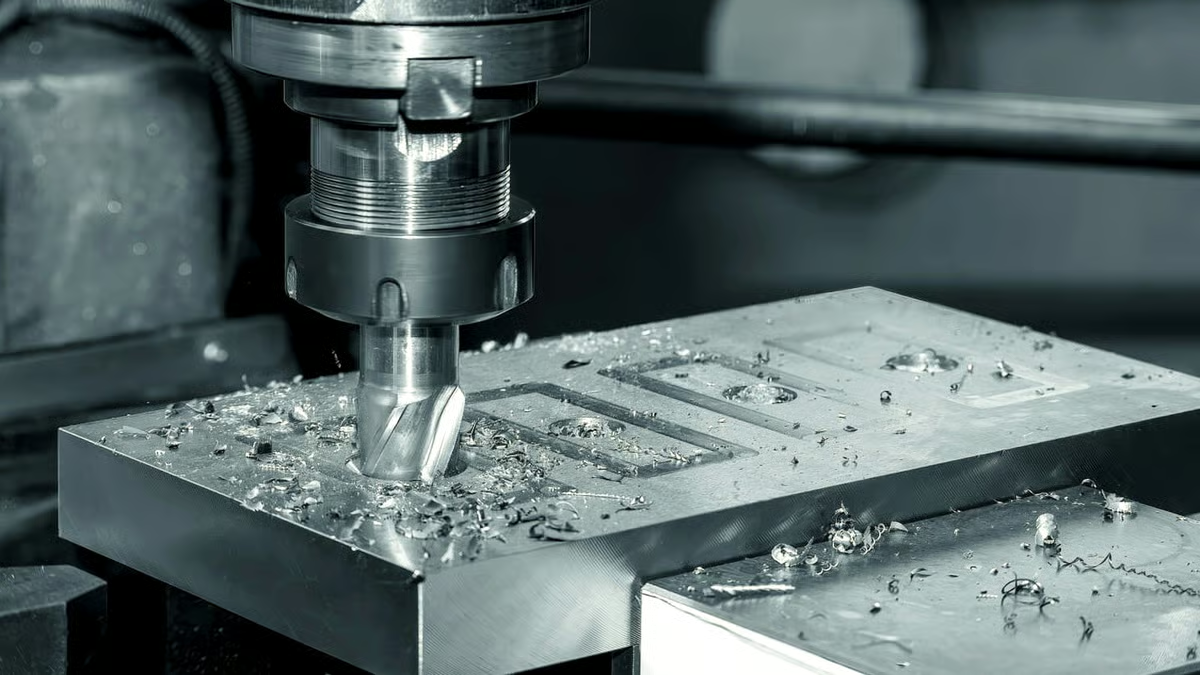
This alloy work-hardens fast. A cutter that dwells in the cut or takes a light pass rubs the surface instead of shearing it. The edge hardens, the next pass chips it, and the wall thickness drifts out of print. We control this with heavy feed per tooth, sharp uncoated carbide, and no stop-start passes.
02
Burning and discoloration
High nickel content holds heat at the cutting edge. Run the spindle too slow or the coolant off-center and you get a blue-brown oxide band on the finished surface. That band is a crack starter in service. We flood the zone, keep the tool in cut, and never let the part air-cool between passes.
03
Chips welding to the flutes
The material is gummy at low speed. Chips smear onto the rake face, then tear the surface on the next revolution. A part with torn flutes on a heater coil means uneven resistance and hot spots. We pick geometry and coating for nickel alloys and change tools on a count, not on a squeal.
04
Thin features that spring
Heater strips and coil forms run thin. Standard vise clamping bows them. After you unclamp, the part springs back and the flatness is gone. We use custom soft jaws, low-pressure fixturing, and support the underside so the release does not move the geometry.