
01
Center distance drifts after assembly
Bore spacing on the housing is off by 0.03 mm, so the mesh sits too deep on one flank. Contact moves to the tip, load concentrates, and the wheel wears in a narrow band.
A worm gear set is a screw thread driving a toothed wheel at 90°. It buys you large reduction ratios in a small envelope, and often holds position when the input stops. We machine the shafts, housings and wheels that go around them.
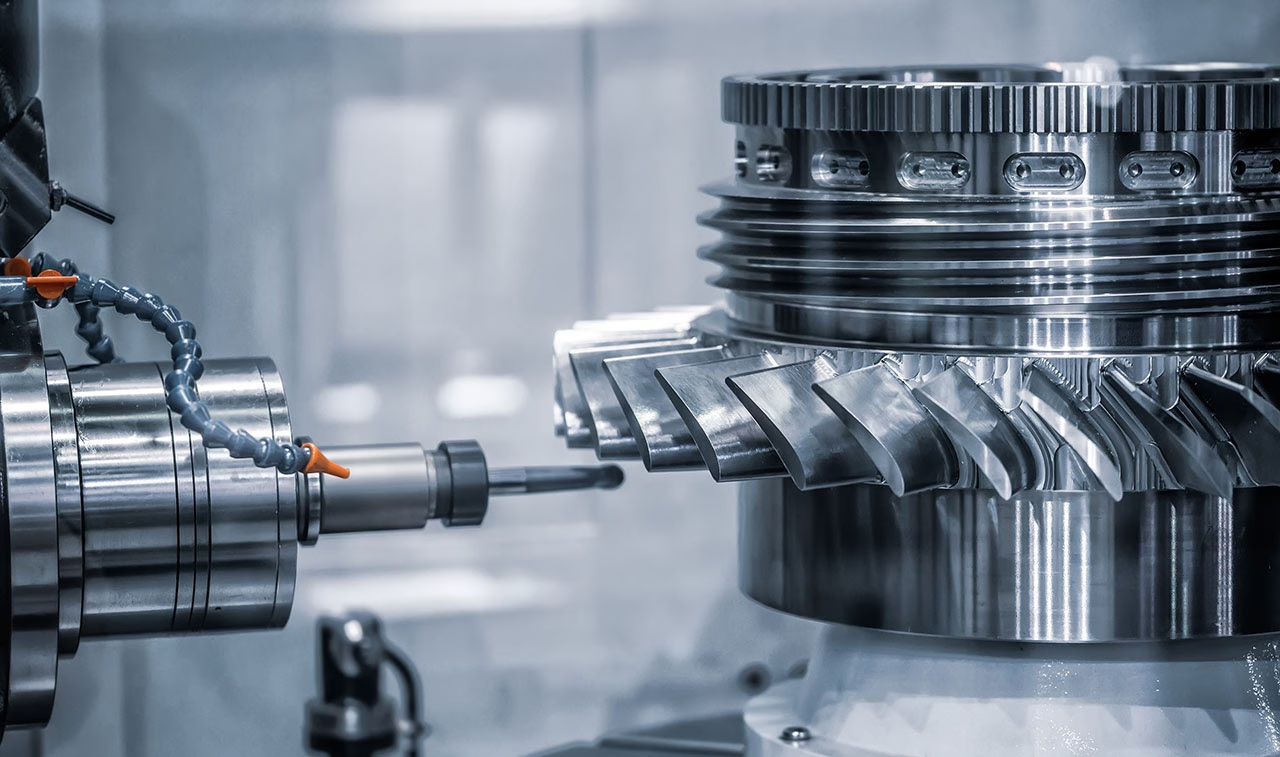
Most failures trace back to geometry, surface finish or lubrication, not to the gear teeth themselves.
Bore spacing on the housing is off by 0.03 mm, so the mesh sits too deep on one flank. Contact moves to the tip, load concentrates, and the wheel wears in a narrow band.
Turning between centers without a grinding pass leaves runout at 0.02 mm. At 1,500 rpm input you hear a whine that no lubricant change can fix.
A new wheel on a pitted shaft never seats. Sliding contact needs matched surface quality on both members, so a partial rebuild usually repeats the failure within weeks.
Below a certain lead angle the drive holds on its own; above it, back-driving is normal. Teams that size the gearbox on ratio alone find the load creeping when the brake releases.
Every bore, shoulder and bearing seat is cut against the same reference so the mesh lands where the drawing says it should.
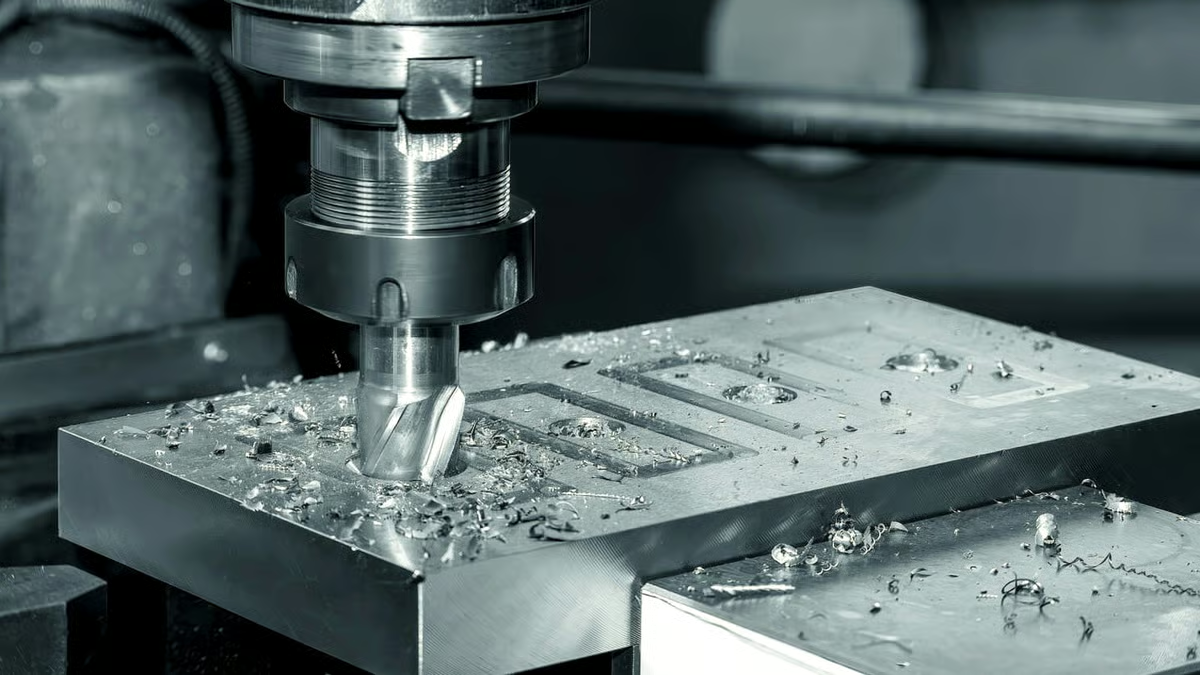
Worm shafts carry a helical thread, two bearing journals and usually a coupling feature. Any stack-up between those features tilts the mesh, so we cut the journals and the thread from one setup on a mill-turn center and keep the relationship tight.
Where a ground finish is called out, we leave grinding stock and bring the thread and journals to Ra 0.2–0.8 μm. Sliding contact lives or dies on that surface. A polished flank runs cooler and carries more load than a turned one.

A worm gearbox housing looks simple until you check center distance and axis squareness. We bore the worm axis and the wheel axis on a 5-axis center and measure the offset on the machine before the part comes off. That keeps center distance repeatable across a run instead of drifting part to part.
Worm wheels are often bought as a gear-cutting job, but the blank, the hub and the bore are ours. We turn the blank, cut the keyway or spline, and hold the bore to the pitch circle so the wheel runs true once it is pressed on.
Use this to sanity-check the concept before you commit to tooling.
| Requirement | Worm gear set | Better alternative |
|---|---|---|
| Reduction above 20:1 in one stage | Yes, up to roughly 100:1 | Planetary or two-stage helical |
| Quiet running at low speed | Yes, sliding contact is quiet | Belt drive |
| High efficiency | No, typically 40–90% | Helical or planetary |
| Holding load with power off | Often, if lead angle is low | Brake plus spur gear |
| Compact 90° layout | Yes | Bevel gearbox |
| High input speed | Limited by heat and sliding | Helical gear set |
One supplier for the rotating parts, the housing and the finish.
Housings with angled bores, mounting pads and oil passages cut in one fixturing.
Worm shafts, wheel blanks, spacers and bearing journals, with grinding stock left where needed.
Flanges, covers, end plates and brackets that locate the bearing bores.
Fit-check housings and mock-up gear sets before you commit to production tooling.
Black oxide, electroless nickel, anodizing and bead blasting for wear and corrosion.
Keyways, splines, press-fit bores and dowel holes machined to mate on your line.
Numbers you can design against.
| Parameter | Capability | Notes |
|---|---|---|
| General tolerance | ±0.005 mm | ±0.0002 in on critical features |
| Fine surface finish | Ra 0.2–0.8 μm | Ground worm threads and journals |
| As-machined finish | Ra 1.6–3.2 μm | Housing bores and covers |
| Maximum part size | 4,000 mm | Larger travel on request |
| Rotary work | Ø400 mm table | Angled and compound bores |
| Steels | 1045, 4140, 4340, 17-4PH | Case-hardening grades on request |
| Bronze and brass | C36000, C27400, C28000 | Worm wheel blanks |
| Inspection | 100% before shipment | Reports on request |
Fifteen years of cutting metal, and the equipment to keep it repeatable.
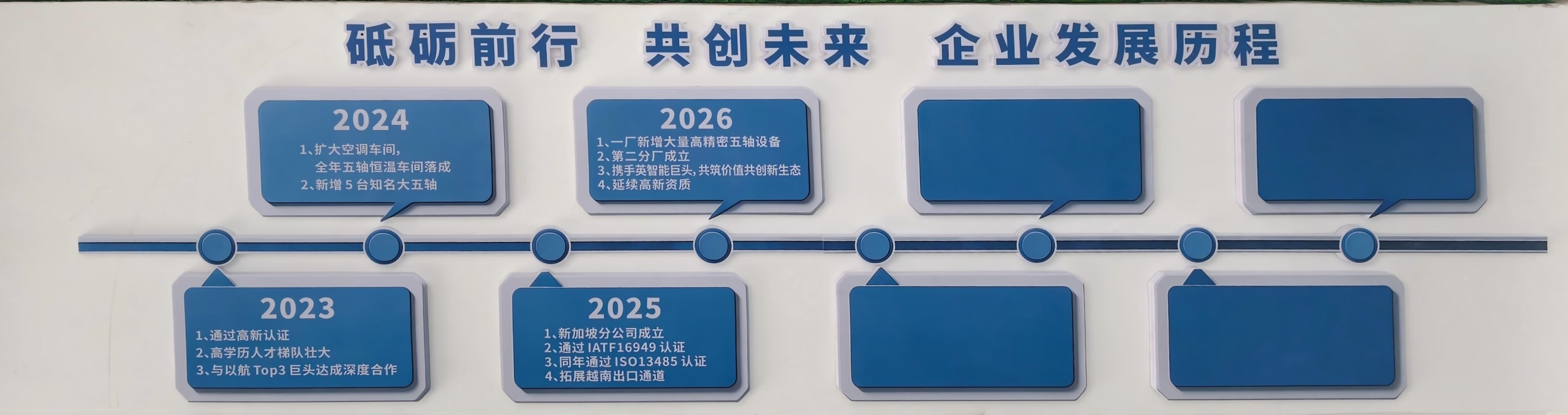
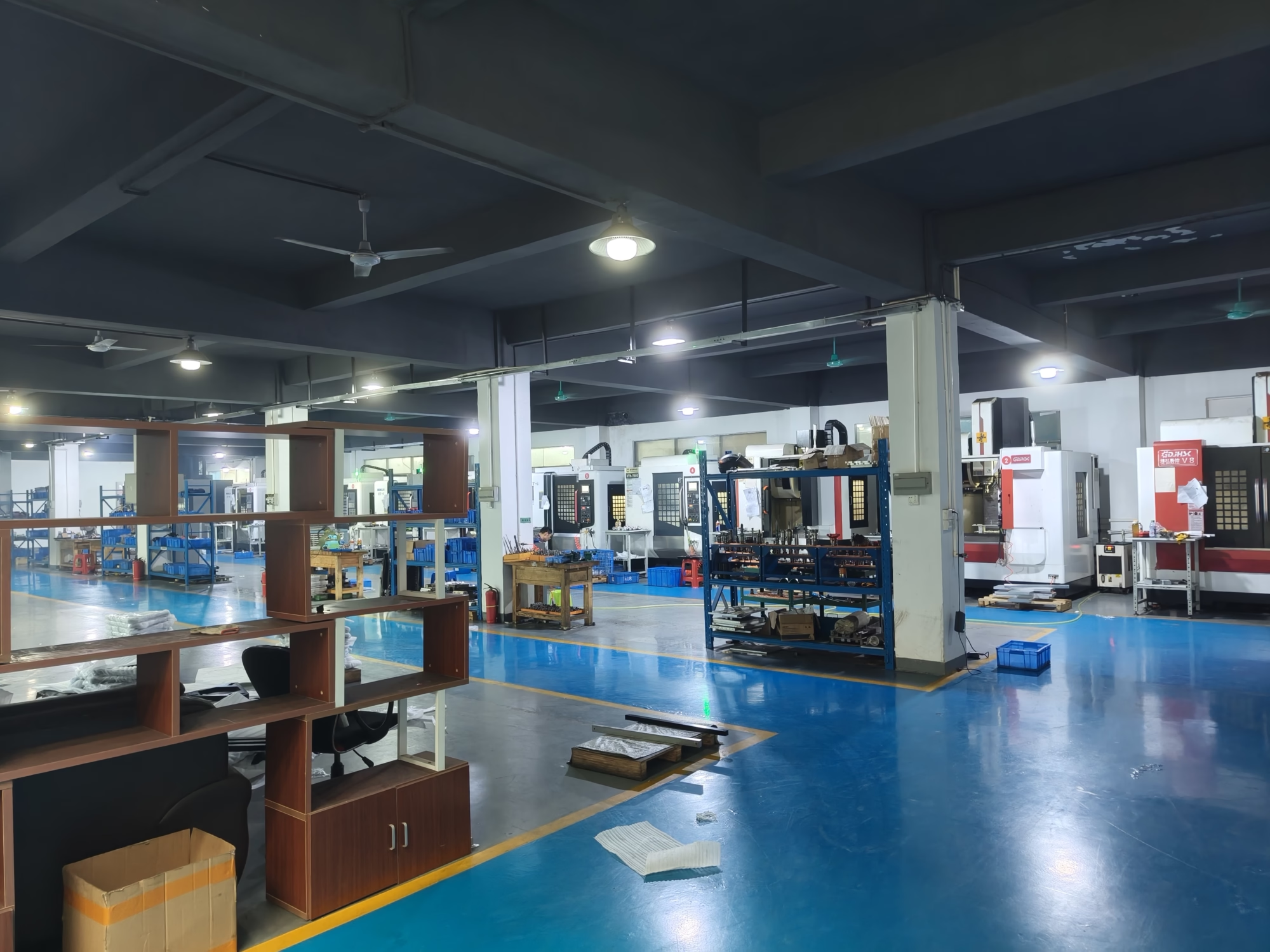
Three wholly-owned plants in Dongguan and a factory in Singapore, covering 7,600 m² with 150 technicians.
16 simultaneous 5-axis centers, 16 mill-turn centers and 12 four-axis mills cover shafts, housings and one-off fixtures.
Held on bearing bores, center distances and journal diameters, with in-process checks before the part leaves the machine.
Send a drawing or STEP file and you get a quotation plus manufacturability notes within 12 hours.
Once the drawing is released, machining can begin within 24 hours.
Parts ship in 3–5 days on typical work, and late delivery has stayed under 2%.
Actuator housings and worm shafts for seat and window drives.
Compact gearbox housings with bores held square to one another.

Small stainless worm drives for positioning mechanisms.
Replacement worm wheels and shafts for legacy gearboxes.
The worm is the screw-shaped input member, usually a hardened steel shaft with a helical thread. The worm wheel is the mating toothed disc, normally bronze or a bronze rim on a steel or cast iron hub.
They only work as a pair. The wheel's tooth form is cut to match the worm's thread, so mixing parts from different suppliers rarely produces a quiet mesh.
Yes, if you give us the lead angle, module or diametral pitch, number of starts and center distance. We cut the shaft thread and the wheel blank to those numbers.
Lead angle is the parameter that decides self-locking. Below roughly 5° the drive usually will not back-drive under load; above about 10° back-driving is expected. Confirm the value against your actual load case rather than the catalog chart alone.
Hardened steel against bronze is the standard pairing for sliding contact. We machine worm shafts in 4140, 4340 or 17-4PH, and turn wheel blanks in C36000, C27400 or C28000 brass and bronze.
Putting two hardened steels together is a mistake in most worm drives. Without a dissimilar pair the flanks gall, especially at low speed and high torque.
Both axes are bored from one datum on a 5-axis center, and the offset is probed on the machine before the part is released. Bores are typically held to ±0.005 mm.
We can also leave a small stock allowance on the wheel bore so you shim the mesh on the assembly line. Tell us which approach your build uses.
Ground threads at Ra 0.2–0.8 μm are the norm for anything running continuously. Turned threads at Ra 1.6–3.2 μm are acceptable for low-duty or intermittent drives.
Finish is not cosmetic here. A rougher flank carries a thinner oil film, runs hotter, and wears the bronze wheel faster.
We machine the blanks, bores, keyways and splines. Hobbing and thread grinding are handled as part of the same production route so the blank and the tooth form come from one drawing revision.
If you already have a gear cutter, send us the blank dimensions and we will leave the bore and faces prepared for your process.
We run parts from a few millimeters up to 4,000 mm in maximum processing size, with a Ø400 mm rotary table for angled work.
The practical limit is usually stiffness, not envelope. Long, slender worms deflect during turning, so we plan support and light passes rather than pushing the size limit.
Quotation and DFM analysis come back within 12 hours, and production can start within 24 hours of drawing release. Typical parts ship in 3–5 days.
There is no minimum order quantity. One prototype worm shaft and a 10,000-piece run go through the same inspection route.
Upload a STEP file or PDF and get a quotation with manufacturability notes within 12 hours. No minimum order quantity, and 100% inspection before shipment.
12-hour quote100% inspectionNo MOQNDA on request
Trusted by engineers and manufacturers worldwide










Upload your 3D model or 2D drawing and get a quotation with a free DFM analysis. Maximum processing size 4,000 mm.
CNC Metals 13 grades
CNC Plastics 10 grades
Machines & processes 12 options
Surface & post-processing 10 options
Material: not selected Machine: not selected Post-process: not selected
Fill in this short form and we'll open WhatsApp with your message ready to send. We only use these details to reply to you.
Nothing is sent until you press send inside WhatsApp.