GreatLight CNC Machining Factory logo
CNC Machining
Rapid Prototyping
Materials
Industries
News
About GL

Get Instant Quote

Dry Hobbing Service

Dry Hobbing Service

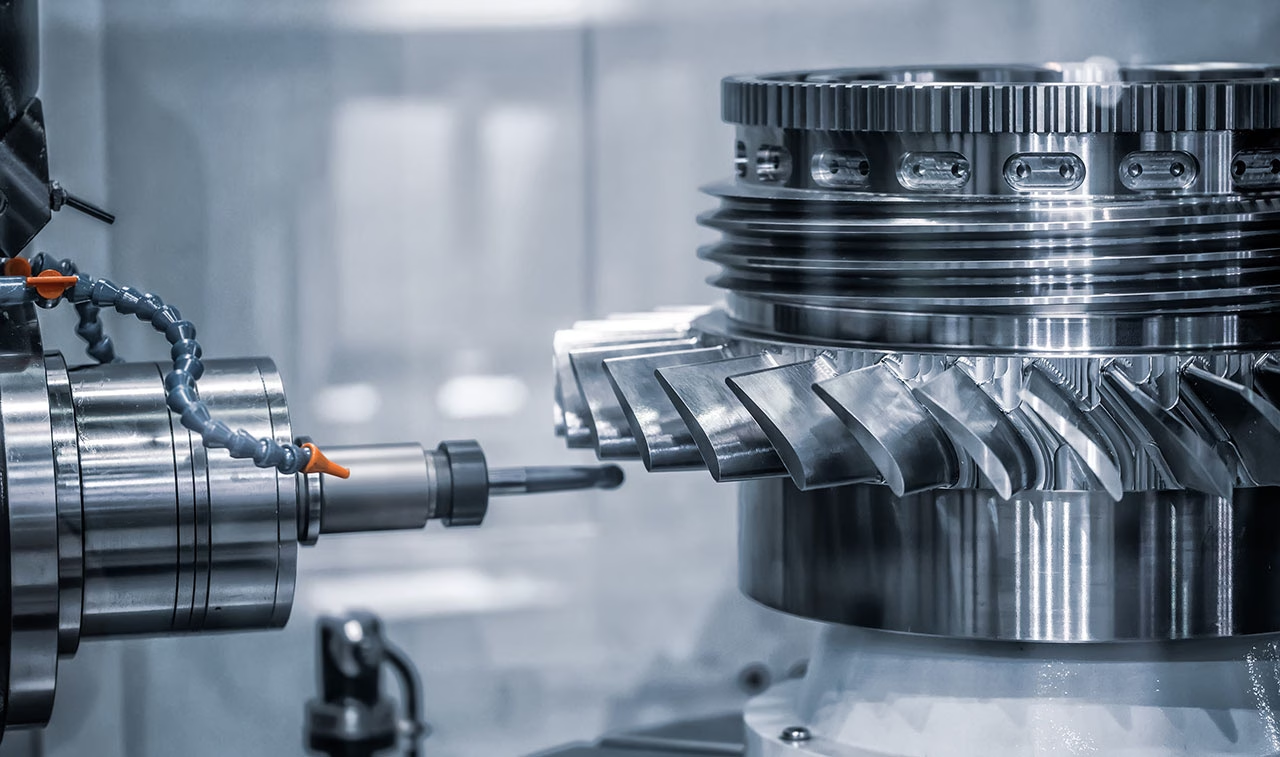
We hob spur, helical and spline gears on CNC machines without coolant. Carbide hobs, controlled chip clearing and thermal compensation hold module 1–4 gears to ±0.005 mm with Ra 0.8–1.6 μm flanks.

Carbide hobs onlyModule 1–4 gearsRa 0.8–1.6 μm flanks±0.005 mmISO 9001 / IATF 1694912-hour quote
CNC Lathe Technical Specifications Terminology
127High-precision CNC machines
±0.005 mmAchievable gear tolerance
4,000 mmMaximum processing size
99.99%Qualification rate
Where wet hobbing hurts

Do any of these coolant problems look familiar?

Coolant solves one problem and creates four more. These are the ones that reach the drawing.

01

Coolant cost that keeps climbing

Cutting fluid, filtration, skimming and disposal now eat a visible share of every gear's price. Mineral oil and synthetic fluids have to be topped up, tested and eventually treated as hazardous waste. None of that cost ends up in the tooth form.

02

A second wash operation after hobbing

Wet hobbing leaves fluid in the tooth roots, in blind bores and under shoulders. Someone has to wash and dry the part before inspection or assembly. That is an extra machine, an extra operator and an extra hour on the route.

03

Mist in the operator's breathing zone

High-speed hobbing throws fine aerosol. Even with enclosures and extraction, mist reaches the shop floor. Skin irritation, respiratory complaints and the paperwork that follows are real costs that never appear on a quote.

04

Thermal drift hiding in the flank

Coolant does not remove heat evenly. One side of the workpiece runs warmer than the other, and the profile slope drifts through the batch. You find the error at the gear tester, after the blanks are already cut.

How we run it

Hobbing without coolant, controlled at the source

Three things make it work: the right tool, chip removal designed into the cycle, and a machine that holds its size.

CNC Machining Services Online
Tooling

Carbide hobs, coating matched to the material

Without coolant you lose the lubricating film between hob and chip. That film used to hide a lot of sins. To run dry you need a hob that can take the heat and a coating that resists adhesion at the cutting edge.

We select carbide grade and coating from the workpiece, not from habit. Alloy steel and 4140 need one combination. 17-4PH and 316L need another, because they work-harden and want to grab the hob. The wrong pairing shows up as flank smearing in the first fifty parts.

  • 1
    Coating by materialDifferent coating for alloy steel, stainless and titanium.
  • 2
    Hob geometry checkedLead and profile verified before the run starts.
  • 3
    Tool life loggedWe track parts per regrind so the cycle is repeatable.

Get Instant Quote

6011
Thermal control

Steep chutes, air blast and a stable frame

A dry cycle produces hot chips, and those chips carry most of the heat away. If they sit in the work zone, the blank absorbs that heat and the tooth grows. We clear chips with steep chutes, directed air blast and a conveyor under the fixture.

Spindle speed and feed are calibrated so the chip leaves the cutting edge before the next tooth engages. The machine frame, spindle and work axis are temperature-compensated, so size holds from the first part of the shift to the last.

That combination is what lets us hold ±0.005 mm on the tooth thickness without stopping for a cool-down.

  • 1
    Air blast at the cutChips leave the work zone immediately.
  • 2
    Steep chutes and conveyorNo chip pile under the fixture.
  • 3
    Thermal compensationSize stays put across the shift.

Talk to an Engineer

Selection guide

When dry hobbing is the right call

Not every gear should run dry. Use this to check whether your part fits.

ConditionDry hobbingWet hobbing
Module range1–4, most common fitFine or coarse pitches
Workpiece hardnessUp to ~350 HB as cutHardened blanks, heavy stock
Batch sizeRepeat runs, stable demandOne-off and very short runs
Chip evacuationOpen geometry, clear pathsDeep pockets, trapped chips
Coolant handlingNot wantedAlready installed and treated
Surface targetRa 0.8–1.6 μm flanksRa 0.2–0.8 μm when required
Related work

What else we do around the gear

A gear usually arrives with a shaft, a housing or a bracket attached. We make those too.

01

5-axis CNC machining

Gear housings, covers and brackets with angled bores and blended radii, cut in one setup from 16 simultaneous 5-axis centers.

02

CNC turning

Shafts, hubs and flanges turned to ±0.005 mm, with the gear blank datum cut in the same setup as the bearing journal.

03

Rapid prototyping

One-off gears and housings for fit checks before tooling is committed. No minimum order quantity.

04

Surface finishing

Black oxide, electroless nickel, anodizing and bead blasting for corrosion and wear on gearbox parts.

05

Inspection and reports

100% inspection before shipment, with raw material check, in-process monitoring and final reports on request.

06

Assembly and kitting

Gears, shafts and housings shipped as matched sets so the build line does not have to sort them.

Scope

Dry hobbing service scope

What is included in a standard dry hobbing job.

ItemWhat we cover
Gear typesSpur, helical, spline, worm wheel blanks
Module range1 to 4
Max workpiece sizeUp to 4,000 mm processing envelope
Tolerance±0.005 mm (±0.0002 in) on tooth thickness
Flank finishRa 0.8–1.6 μm as standard; Ra 0.2–0.8 μm on request
Materials4140, 4340, 1045, 17-4PH, 316L, titanium, brass
Inspection100% before shipment; reports on request
MOQNone, from one prototype to 10,000+ part runs
Why GreatLight

Numbers we can stand behind

Fifteen years of cutting metal, three plants, and a process that is measured rather than described.

15Y

15 years in business

Founded in 2011 in Dongguan. Three wholly-owned plants and one in Singapore, so we can serve both regions from one process.

±0.005

Tolerance we hold

±0.005 mm (±0.0002 in) on tooth thickness, verified by in-process measurement and final inspection.

127

CNC machines

16 simultaneous 5-axis centers, 12 four-axis mills, 27 three-axis machines and 16 mill-turn centers.

4,000

Millimeters of travel

4,000 × 400 × 150 mm envelope, alongside a Ø400 mm rotary table for round work.

12H

Quote turnaround

Quotation and free DFM analysis within 12 hours. Production can start within 24 hours of approval.

99.99%

Qualification rate

Raw material check, in-process monitoring and final inspection on every run before it ships.

7,600 m²Manufacturing space
150Technicians on staff
3–5 daysTypical shipping window
<2%Historical late-delivery rate
What the work requires

Sectors and the demands they place on a gear

Leader in Cnc Machining Service China

Automotive and EV drivetrain

Noise and backlash are measured at the axle, so profile and lead have to stay inside the band across the whole batch.

  • IATF 16949:2016
  • ±0.005 mm
  • 100% inspection
oplus_262178

Industrial gearboxes

Continuous duty parts need consistent flank finish so the running-in period does not turn into a warranty claim.

  • Ra 0.8–1.6 μm
  • 4140 / 4340
  • Batch repeatability
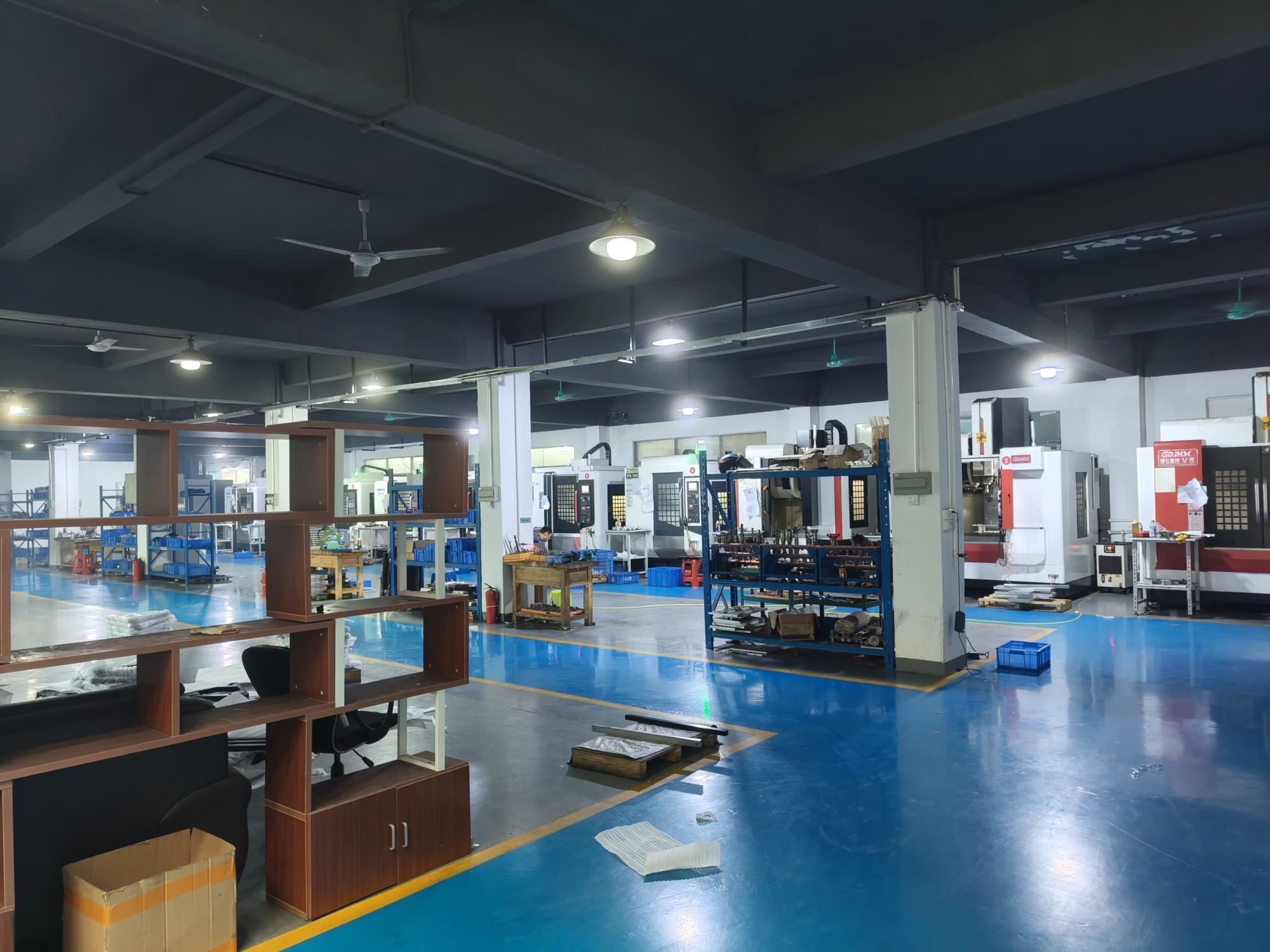
GreatLight Metal new factory building

Robotics and automation

Compact gear sets in joint and axis drives. Small modules, tight centre distances, and no room for a wash step.

  • Module 1–4
  • Clean as machined
  • No coolant residue
Forge ahead with determination and create the future together.

New energy equipment

Larger housings and ring gears where the 4,000 mm envelope and the Ø400 mm rotary table do the work.

  • 4,000 mm envelope
  • Ø400 mm table
  • ISO 9001:2015
FAQs

Questions engineers ask before they send a gear

What module range can you hob dry?

Module 1 to 4 covers most of the work we see. Below module 1 the tooth is small enough that chip clearance gets difficult and tool deflection matters more, so we usually quote those as wet. Above module 4 the stock removal per pass is high enough that the heat is hard to move without fluid.

If your gear sits outside that band, send the drawing anyway. We will tell you which route fits rather than force it onto the dry process.

How do you control heat with no coolant?

Most of the heat leaves with the chip, provided the chip leaves fast. We use steep chutes, directed air blast and a conveyor under the fixture so chips do not sit against the blank.

The rest is handled by the machine. Spindle and work axis are temperature-compensated, so the frame does not grow through the shift. That is what keeps tooth thickness repeatable from the first part to the last.

Which materials run well dry?

Alloy steels like 4140, 4340 and 1045 are the easy case. They break chips cleanly and do not work-harden much. Brass and bronze also run well. Stainless 316L and 17-4PH are harder because they want to grab the cutting edge, but they still run dry with the right coating and reduced feed per tooth.

Titanium and Inconel are possible, but they usually cost less to run wet. We will say so if that is the case for your part.

Do I still need a wash step after dry hobbing?

Usually no. There is no fluid to trap in tooth roots or blind bores, so the part comes off the machine clean enough for most inspection and assembly steps.

If your drawing calls for a specific cleanliness level, say so at quote. We can add a wash if the application needs it, but most parts do not.

What flank finish should I expect?

Ra 0.8–1.6 μm is the standard band for a dry hobbed flank. That covers most gearbox and drivetrain work.

If the drawing asks for Ra 0.2–0.8 μm, we will quote a finishing pass or a wet operation instead. You should not assume the dry cycle will reach that band on its own.

Can you hold a gear to a specific profile and lead tolerance?

Yes, if the tolerance is stated on the drawing. We check hob lead and profile before the run starts, then verify parts in process rather than only at the end.

Tooth thickness is held to ±0.005 mm. If your tolerance is tighter than that, tell us early so we can say whether it is achievable before you commit to the batch.

How many parts do I need to order?

There is no minimum. We run from a single prototype up to 10,000+ part runs, on the same process and the same inspection routine.

Prototypes are often worth doing first, because a gear that looks fine on a drawing can still need a profile tweak once it is cut.

What do you need to quote a gear?

A drawing with module, number of teeth, pressure angle, helix angle, material, and the profile or lead tolerance if it matters. A 3D model helps but the drawing is what we hold to.

Send those and you get a quotation plus a free DFM analysis within 12 hours. If the design has a feature that will be hard to hob, we will flag it before you commit.

Send the gear drawing and get a real answer

We will tell you whether it should run dry, what tolerance we can hold, and what it costs. No minimum order quantity.

12-hour quote100% inspectionNo MOQNDA on request

Trusted by engineers and manufacturers worldwide

Tesla Ford Motor Company BYD Auto Denso Magna International Boeing Airbus Medtronic KUKA FANUC