
01
Thin walls that never fill
Aluminum die casting below 1.5 mm on a long flow path gives you cold shuts and short shots. Stainless investment casting can hold 2 mm, but the pour temperature is higher and the shell cost climbs fast.
Both alloys pour, but they fail differently. We cast and machine both in house, so we can tell you which route your part should take before tooling is cut.
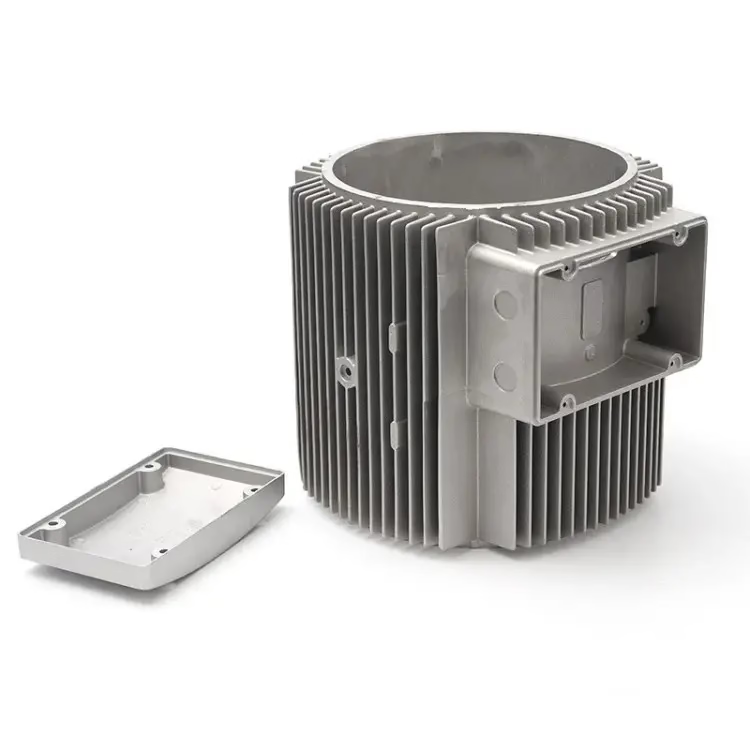
Most casting problems are decided before the first shot. Here is what we see on incoming drawings.
Aluminum die casting below 1.5 mm on a long flow path gives you cold shuts and short shots. Stainless investment casting can hold 2 mm, but the pour temperature is higher and the shell cost climbs fast.
Gas porosity stays hidden until the face is cut. A leak test on a casting that looked fine can scrap a whole lot. Pressure-tight parts need vacuum assist or a different process.
Aluminum needs anodizing or a coating to survive salt and washdown. Choosing the cheaper alloy to save cost per part often costs more once the finish line is added.
A die cut around a drawing that still moves is money gone. Casting rewards frozen geometry. If the housing might change next month, prototype first.
Five questions decide most casting calls.
Aluminum wins on weight and thermal conductivity. A die-cast ADC12 housing at 2.5 mm wall weighs roughly a third of the same part in stainless, and it pulls heat away from electronics far better. Machining is fast and tool wear is low.
Stainless wins on strength and corrosion without a coating. A 316L investment casting holds up in marine air, food lines, and medical washdown. It also takes a weld and a polished finish that aluminum cannot match.
Die casting needs volume to pay back the die. Below a few thousand parts a year, the tooling sits in the cost of every unit. Aluminum is also the harder one to weld after casting, so a design that joins two castings later should be reviewed early.
Stainless casting works at higher temperature and holds finer detail, but the shell and pour cost more per kilogram. For small brackets and one-off housings, cutting from bar or plate on a 5-axis mill is faster and cleaner than building a pattern.
Typical values for production work, not lab samples.
| Factor | Aluminum (ADC12) | Stainless (316L) |
|---|---|---|
| Minimum wall | 1.5–2.0 mm | 2.0–3.0 mm |
| Density | About 2.7 g/cm³ | About 8.0 g/cm³ |
| Corrosion, bare | Needs anodize or coating | Good without coating |
| Thermal conductivity | High | Low |
| Machining speed | Fast, low tool wear | Slower, higher tool wear |
| Typical process | Die casting, vacuum casting | Investment casting |
| Best volume | Thousands and up | Tens to thousands |
Tooling, pour, and finish do not leave the building.
Aluminum ADC12 housings and covers with vacuum assist where pressure tightness matters.
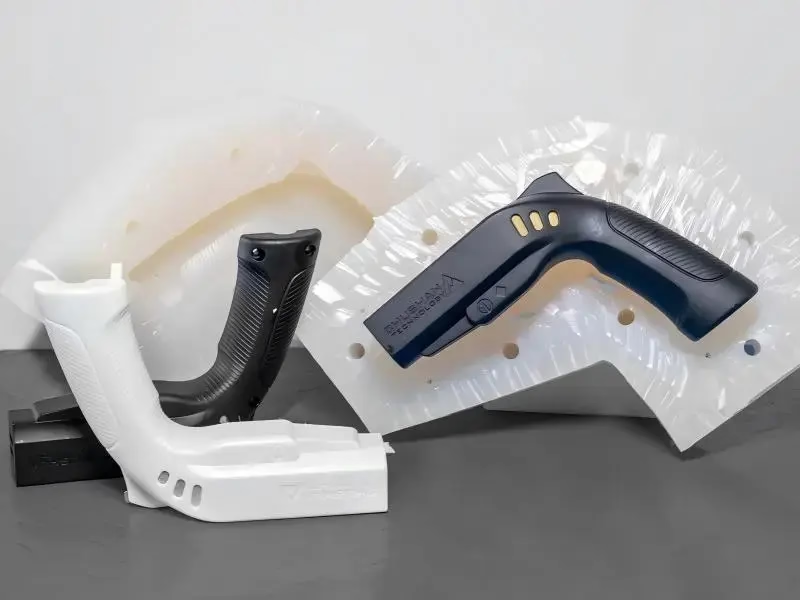
Small-batch aluminum and urethane parts for design validation before a die is cut.
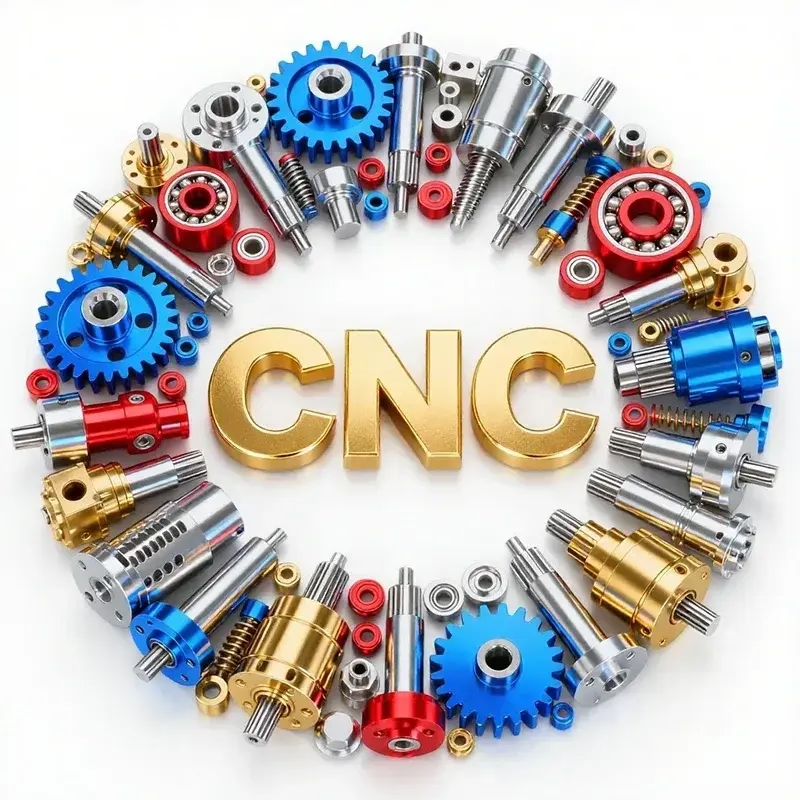
16 simultaneous 5-axis centers cut cast faces, bores, and sealing grooves in one setup.
Mill-turn centers handle stainless bodies and inserts without a second fixture.
Check fit and flow before committing to tooling. From one piece upward.
Anodizing, passivation, plating, and bead blasting to the drawing.
Numbers you can plan a program around.
| Item | Range | Notes |
|---|---|---|
| Maximum part size | 4,000 mm | Larger travel on request |
| Tolerance | ±0.005 mm | After machining, not as-cast |
| Surface finish | Ra 0.2–3.2 μm | Depends on operation |
| Stainless grades | 303, 304, 316L, 17-4PH | Plus 420, 430, 440C |
| Aluminum grades | 6061, 7075, ADC12 | Plus 2024, 5052, 6082 |
| Order size | 1 to 10,000+ | No minimum order quantity |
| Inspection | 100% before shipment | Reports on request |
Pattern, die, pour, and finish stay in our own plants. Fewer handoffs, fewer excuses.
Critical faces are machined after casting, so the tolerance on the drawing is the tolerance you measure.
16 simultaneous 5-axis centers plus 16 mill-turn centers take cast parts straight to finished geometry.
Wall thickness, draft, and parting line get checked before you commit to tooling.
ISO 9001:2015, IATF 16949:2016, ISO 13485:2016, ISO 27001:2022.
Raw material check, in-process monitoring, and final inspection on every order.
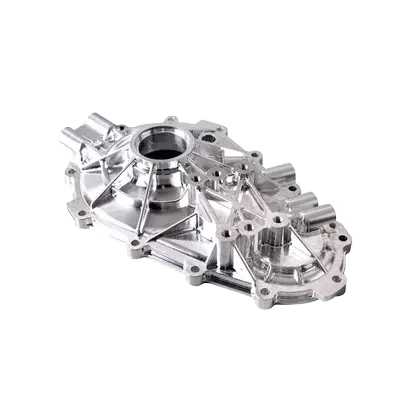
Weight and heat path drive the call. Aluminum housings, machined faces, IATF 16949 process control.
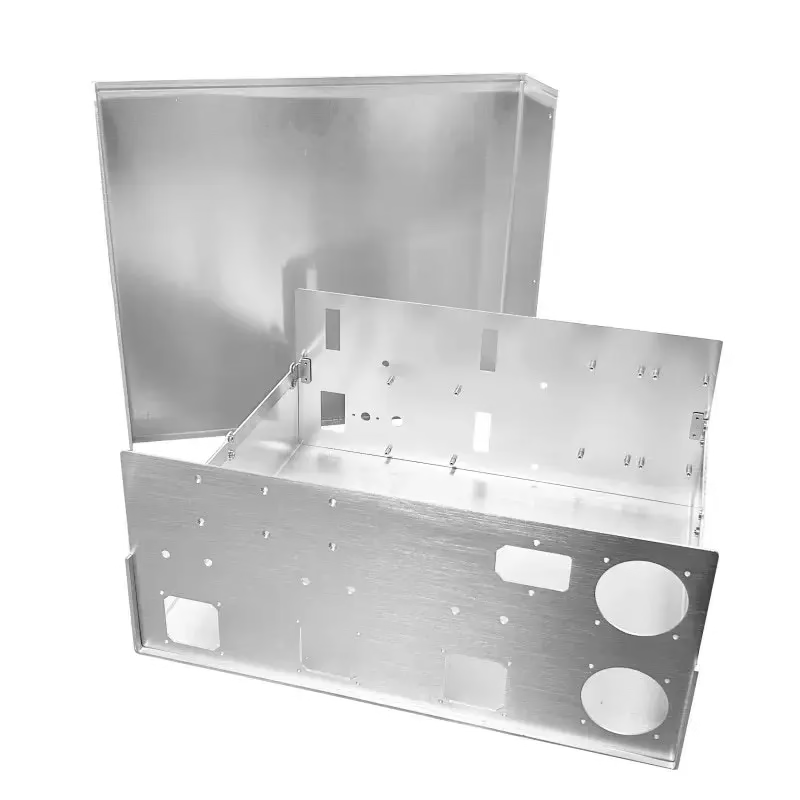
Conductivity and finish matter more than strength. Anodized aluminum, sealed faces, clearance for boards.
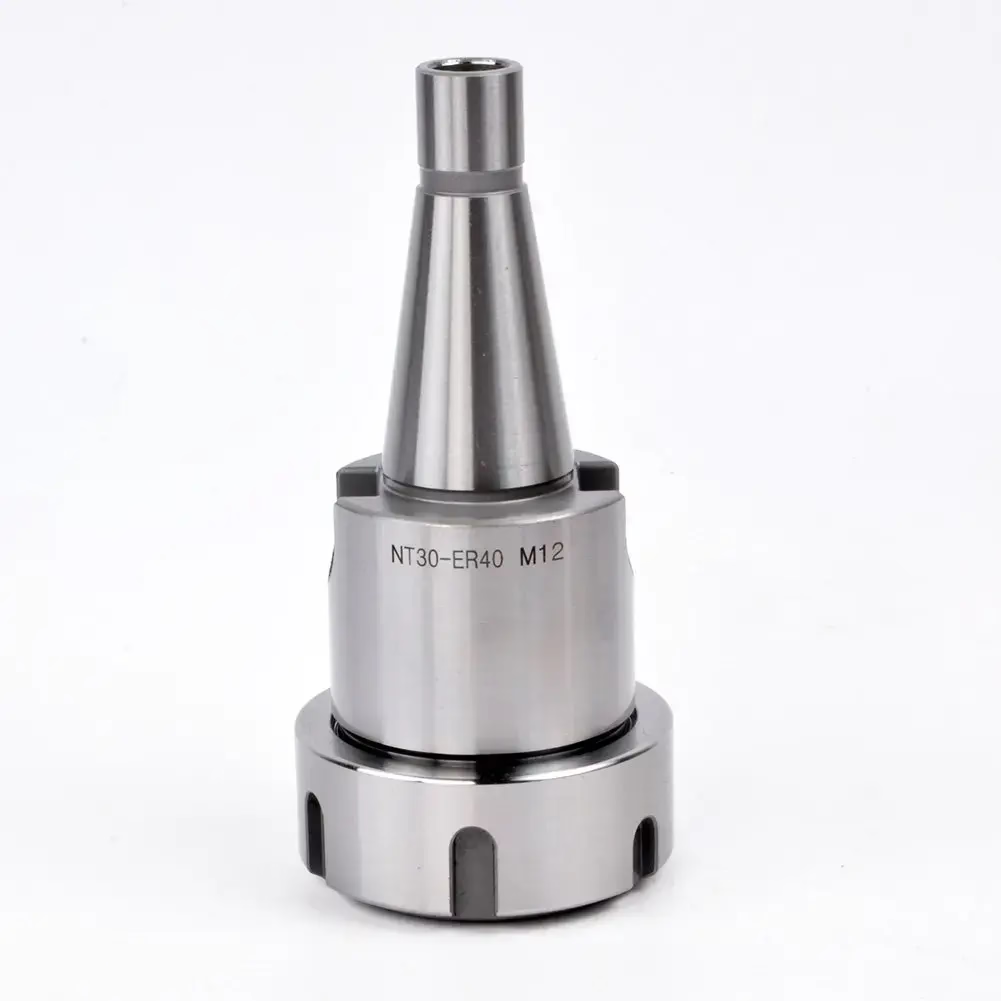
Washdown and corrosion rule out bare aluminum. 316L investment castings, passivated and deburred.
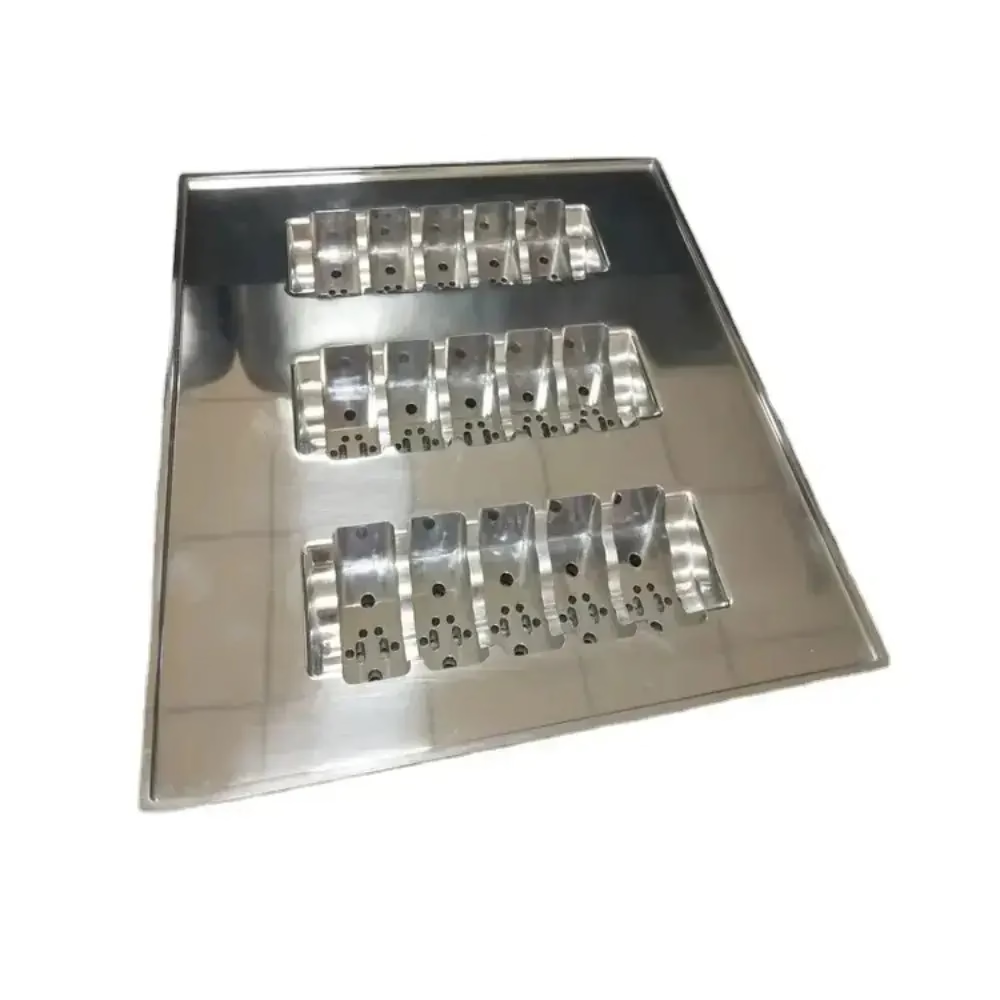
Brackets and manifolds in low volume favor machining over a die. No tooling to amortize.
It depends on volume and finish. Aluminum die casting has a higher tooling cost but a lower cost per part once you are into thousands. Stainless investment casting has a lower entry cost and stays practical at tens to hundreds of parts.
Add the finishing line before you compare. Anodizing aluminum is not free, and skipping it in the quote is how projects go over budget.
Aluminum die casting can reach 1.5 mm on short flow paths with good fill. Long paths and thin ribs short-shot, so we usually ask for 2 mm there.
Stainless investment casting holds about 2 mm reliably. Below that, we would rather machine the feature than cast it.
Yes. As-cast surfaces carry draft and parting-line steps, so we machine sealing faces, bores, and mounting pads after the pour.
Machined features hold ±0.005 mm and finishes from Ra 0.2–3.2 μm depending on the operation.
For pressure-tight aluminum parts we use vacuum assist and keep the gate and overflow layout generous. Stainless investment castings get a controlled shell and pour temperature.
If a part must be leak-tight, tell us at quote. That changes the process choice, not just the inspection plan.
When the design is still moving, when the annual volume is low, or when the geometry has undercuts, deep pockets, or thin ribs that a die cannot fill.
Cutting from bar or plate skips tooling entirely. Parts ship in 3–5 days, and a revision costs a program change, not a new die.
Yes. Casting, CNC machining, and finishing are in house across three plants in Dongguan and Singapore. That keeps the tolerance chain short when a casting becomes a finished part.
There is no minimum order quantity. We run from one prototype to 10,000+ part runs, so you can validate a design before committing to production tooling.
Quotation and a free DFM analysis come back within 12 hours. Production can start within 24 hours after the drawing and material are locked.
Uploads stay confidential, and an NDA is available on request.
We will tell you whether the part should be cast in aluminum, cast in stainless, or cut from solid, and quote it either way.
12-hour quoteFree DFM analysis100% inspectionNo minimum order quantity
Trusted by engineers and manufacturers worldwide










Upload your 3D model or 2D drawing and get a quotation with a free DFM analysis. Maximum processing size 4,000 mm.
CNC Metals 13 grades
CNC Plastics 10 grades
Machines & processes 12 options
Surface & post-processing 10 options
Material: not selected Machine: not selected Post-process: not selected
Fill in this short form and we'll open WhatsApp with your message ready to send. We only use these details to reply to you.
Nothing is sent until you press send inside WhatsApp.