GreatLight CNC Machining Factory logo
CNC Machining
Rapid Prototyping
Materials
Industries
News
About GL

Get Instant Quote

Titanium Machining

Titanium Grade UNS R50700 CNC Machining

Machined components in commercially pure Grade 4 titanium for seawater, chloride and oxidizing chemical service. We hold ±0.005 mm and inspect every part before it ships.

±0.005 mmRa 0.8–1.6 μmOne part to 10,000+ISO 9001 / IATF 16949 / ISO 13485
titanium-cnc-machining
16Simultaneous 5-axis centers
127High-precision CNC machines
4,000 mmMaximum processing size
99.99%Qualification rate
Where the material fights back

Four failures we see on titanium drawings

All four cost money. Three of them can be caught before the first chip is cut.

01

Heat stays in the cut

Commercially pure titanium conducts heat poorly, so it stays in the tool edge and the part. Tools dull fast, the surface tears, and a bore that measured on size at 9 a.m. reads undersize after it cools. We cut at low surface speed, flood the zone and let the part settle before the final pass.

02

Chatter on thin walls

The pure grades are softer than Ti-6Al-4V and deflect more under the same side load. A 2 mm wall on a 150 mm flange will ring if you take a heavy radial cut. Light passes, sharp edges and a supporting fixture hold the wall quiet.

03

Galling and smeared threads

Titanium rubs and welds to tooling under pressure. A tap run dry will seize and snap in a deep hole. Thread milling with cutting oil and a relieved tool solves most of it, and we check threads with go/no-go gauges.

04

Certificates that do not match

Two heats of R50700 can look identical on the bench and differ in oxygen content and yield strength. If the mill certificate and the part cannot be tied together, a chemical plant audit becomes a problem. We keep heat numbers on the traveler.

How we machine it

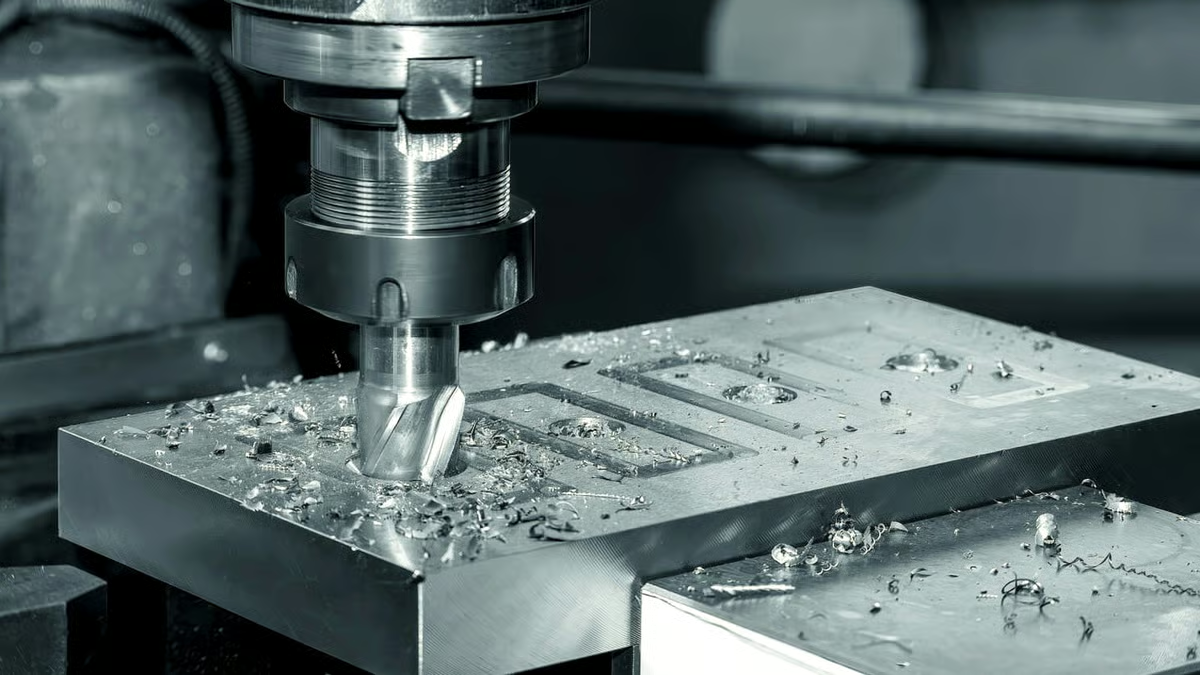
Cutting titanium Grade UNS R50700 with the heat under control

Tooling, coolant and inspection planned around one material, not a general shop schedule.

CNC Lathe Technical Specifications Terminology
Roughing and finishing

Low surface speed, generous coolant, sharp tooling

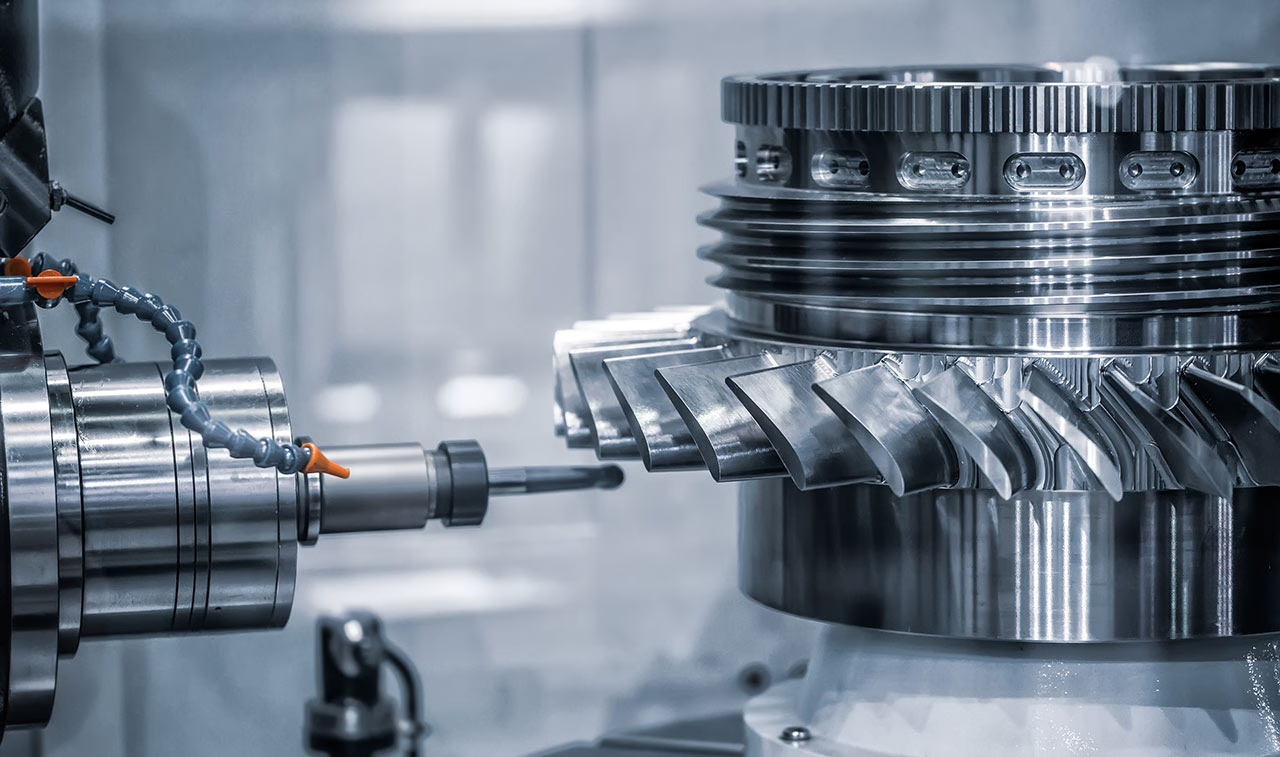
Commercially pure titanium work-hardens at the surface, so a dull edge rubs instead of cutting. We rough with uncoated carbide at reduced surface speed and keep the radial depth light, then take a separate finishing pass with a fresh tool. Chips come off as short, thick curls instead of fine dust.

The finishing pass matters most on sealing faces and O-ring grooves. Cutting fluid reaches the edge, the part stays near room temperature, and we measure critical bores after the part has cooled rather than at the spindle.

  • 1
    Rough and finish in separate operationsA fresh edge for the final pass keeps surface finish repeatable across the run.
  • 2
    Thread milling over tappingFewer broken tools in blind holes and better thread form in soft titanium.
  • 3
    Coolant through the toolEvacuates chips from deep pockets where titanium dust otherwise packs in.

CNC Machining Services Comparison 2026 Fictiv vs Xometry vs GreatLight
Geometry and setup

Five-axis work for ports, flanges and manifolds

Marine and chemical parts rarely sit still in one orientation. A pump housing with angled ports, a flange with a bolt circle on a curved face, or a manifold with several intersecting bores usually needs more than one setup on a three-axis machine. Every re-clamp adds a position error you cannot inspect away.

We cut those features in one setup on simultaneous 5-axis centers with a Ø400 mm rotary table. Datum surfaces are machined first, then used for the rest of the part. That keeps bore-to-bore relationships inside the tolerance band instead of at the edge of it.

  • 1
    One setup for compound featuresAngled ports and curved-face bolt patterns keep their true position.
  • 2
    Datums cut first, then usedEvery later operation references a surface we machined, not a raw casting.
  • 3
    Up to 4,000 mm travelLong skids and tube sheets fit on the large-travel machines.

Get Instant Quote

Material selection

Grade 4 against the alternatives

Pick the grade by service environment, not by habit.

MaterialBest forWatch out for
Titanium Grade 4 (UNS R50700)Seawater, chlorides, oxidizing acidsNot for reducing acids or high-strength fasteners
Titanium Grade 2 (UNS R50400)Same chemistry, lower strength demandLower yield strength than Grade 4
Ti-6Al-4V (Grade 5)Strength-critical brackets and shaftsHarder to form, less weldable, higher cost
316L stainlessMild chloride service, tight budgetPitting above roughly 60 °C in seawater
Duplex 2205High-chloride piping, higher strengthNot immune to crevice corrosion in hot brine
What we make

Machining services for titanium components

One shop for the turning, milling, finishing and inspection a part needs.

01

5 Axis CNC Machining

Compound-angle ports, curved flanges and one-setup work on complex housings. Sixteen simultaneous 5-axis centers available.

02

CNC Milling and Turning

Mill-turn centers for parts that need turning and cross-features without a second fixture.

03

4 Axis and 3 Axis Machining

Cost-effective routing for prismatic plates, covers and simple housings in larger runs.

04

Rapid Prototyping

One-off Grade 4 prototypes to prove a seal face or a port angle before tooling.

05

Surface Finishing

Bead blasting, tumbling, brushing and polishing to the finish your drawing calls out.

06

Inspection and Reporting

Raw material check, in-process monitoring and final inspection, with reports on request.

Capability

What we can hold on titanium parts

Numbers from our own machines and inspection process.

ItemCapability
General tolerance±0.005 mm (±0.0002 in)
Fine surface finishRa 0.2–0.8 μm
Standard machined finishRa 1.6–3.2 μm
Maximum processing size4,000 mm
Large travel4,000 × 400 × 150 mm
Rotary tableØ400 mm
Minimum orderNo MOQ, one part to 10,000+
QuotationWithin 12 hours, with DFM analysis
Why GreatLight

Fifteen years of hard-material machining

Capacity, tolerances and paperwork that hold up in an audit.

15Y

Machining since 2011

Three wholly-owned plants and 150 technicians in Dongguan, plus a factory in Singapore.

127

High-precision CNC machines

Sixteen simultaneous 5-axis centers, sixteen mill-turn centers, plus four-axis and three-axis capacity.

±0.005

Millimeter tolerance

General tolerance held at ±0.005 mm, with finer finishes available on request.

99.99%

Qualification rate

Raw material check, in-process monitoring and 100% inspection before shipment.

12H

Quote turnaround

Quotation and free DFM analysis within 12 hours, production can start in 24 hours.

4

Quality systems

ISO 9001:2015, IATF 16949:2016, ISO 13485:2016 and ISO 27001:2022.

7,600 m²Manufacturing space
150Technicians on staff
3–5 daysTypical shipping window
<2%Historical late-delivery risk
Industry fit

Where these parts end up

Leader in Cnc Machining Service China

Marine hardware

Pump housings, valve bodies and heat exchanger plates that sit in seawater for years.

  • ±0.005 mm
  • Ra 0.8–1.6 μm
  • 100% inspection
GreatLight Metal new factory building

Chemical processing

Manifolds, nozzles and flanges for oxidizing and chloride-bearing process lines.

  • Heat number traceable
  • One setup 5-axis
  • Reports on request
CNC Machining Services Online

Desalination and water treatment

Bores and seal faces that must stay round after cooling, not just at the spindle.

  • Ø400 mm rotary table
  • 4,000 mm travel
  • 3–5 day shipping
6011

Instrumentation bodies

Small Grade 4 housings and sensor bodies where finish drives the function.

  • Ra 0.2–0.8 μm
  • No MOQ
  • NDA on request
FAQs

Questions engineers ask before ordering

What is the difference between Titanium Grade 4 and UNS R50700?

They are the same material. Grade 4 is the ASTM designation and UNS R50700 is the unified numbering system identifier used on drawings and mill certificates.

When you send a drawing, put both on it. That removes any chance of the shop quoting Grade 2 by mistake.

When should we not use Grade 4 titanium?

Skip it for reducing acids such as hydrochloric or sulfuric in strength, where the oxide layer does not rebuild. Also skip it where you need high strength in a small section.

For those cases, look at Ti-6Al-4V for strength, or a nickel alloy for reducing-acid service.

Can you hold ±0.005 mm on titanium?

Yes, as a general tolerance on features we can reach with a rigid setup. Deep bores and thin walls need a separate tolerance discussion because the material moves after cutting.

We measure critical features after the part has cooled. That is the number that matters.

How do you stop titanium from galling during threading?

We thread mill rather than tap wherever the geometry allows, use cutting oil rather than water-based coolant, and keep the tool relieved.

Threads are checked with go/no-go gauges before the part leaves the machine.

What surface finish can you achieve?

As-machined surfaces land in the Ra 1.6–3.2 μm range. With a dedicated finishing pass we hold Ra 0.8–1.6 μm, and down to Ra 0.2–0.8 μm where a sealing face requires it.

Tell us the finish on the drawing. A blanket fine finish across the whole part adds cost for no benefit.

Do you provide material certificates?

Yes. We keep the heat number tied to the part traveler so the mill certificate can be matched to the delivered components.

Inspection reports are available on request, covering raw material check, in-process monitoring and final inspection.

What is the minimum order quantity?

None. We run from a single prototype to 10,000+ part runs on the same process.

Prototype parts are a useful way to prove a port angle or a seal face before you commit to a production batch.

Can we start with a prototype before committing to production?

Yes. Production can start within 24 hours of an approved order, and parts typically ship in 3–5 days.

Uploads stay confidential, and we sign an NDA on request before you send drawings.

Send your Titanium Grade 4 drawing

Quotation and free DFM analysis within 12 hours. One part or ten thousand, same process.

12-hour quote100% inspectionNo MOQNDA on request

Trusted by engineers and manufacturers worldwide

Tesla Ford Motor Company BYD Auto Denso Magna International Boeing Airbus Medtronic KUKA FANUC