GreatLight CNC Machining Factory logo
CNC Machining
Rapid Prototyping
Materials
Industries
News
About GL

Get Instant Quote

Titanium Grade 17 · UNS R58640

Ti-17 (5Al 2Sn 2Zr 4Mo 4Cr) CNC Machining

Alpha-beta titanium for compressor discs, shafts and airframe fittings. We machine 5Al 2Sn 2Zr 4Mo 4Cr to ±0.005 mm, control the heat-treat window, and ship first articles in 3–5 days.

Ti-17 / UNS R5864016 five-axis centers±0.005 mmDFM in 12 hoursNo MOQ
Leader in Cnc Machining Service China
16Simultaneous 5-axis centers
±0.005 mmAchievable tolerance
4,000 mmMaximum part length
3–5 daysTypical part shipping
Machining problems

Where Ti-17 jobs go wrong

Ti-17 (5Al 2Sn 2Zr 4Mo 4Cr) punishes loose process control. These are the failures we see most often in incoming RFQs.

01

Chatter during roughing

Ti-17 cuts at lower speeds than Ti-6Al-4V and keeps its strength hot. Too much radial engagement or a long tool overhang and the cutter starts ringing. Scrap a near-net forging at that stage and you have burned the whole material budget.

02

Heat treat window missed

Solution treat and age determines whether you get the strength or the fracture toughness you designed for. Send a part out for aging with no thermocouple record and the mechanical properties become an open question at final acceptance.

03

Thin walls that move

Sealing flanges, diaphragm webs and thin ribs distort as residual stress releases. Machine it in one pass without stress-relief steps and the part measures fine on the bench, then fails to close the gap on the assembly fixture.

04

Tool life and cost surprises

Titanium has low thermal conductivity, so heat stays in the cutting edge. A shop that quotes Ti-17 at aluminium feeds will either burn through tooling or quietly slow the job down and miss the delivery date.

How we machine it

Process control from blank to final inspection

Two capabilities decide whether a Ti-17 part comes off the machine on size: the setup strategy and the heat-treat sequence.

CNC Lathe Technical Specifications Terminology
Setup strategy

Five-axis workholding for near-net forgings

Ti-17 parts usually start as a forging or a thick bar, so the first operation removes a lot of metal. We rough on 5-axis centers with high-pressure coolant and trochoidal paths to keep radial engagement low. That limits the heat going into the edge and the heat going into the part.

For compressor discs, shafts and housings, we machine from a single setup wherever the geometry allows. Fewer re-clamps means fewer datum shifts, and datum shifts are what turn a ±0.05 mm callout into a ±0.10 mm result.

  • 1
    Low radial engagementTrochoidal roughing keeps cutter load steady in titanium.
  • 2
    Through-spindle coolantFlushes chips and pulls heat out of the cutting zone.
  • 3
    Single-setup strategyOne datum chain from roughing through finishing.
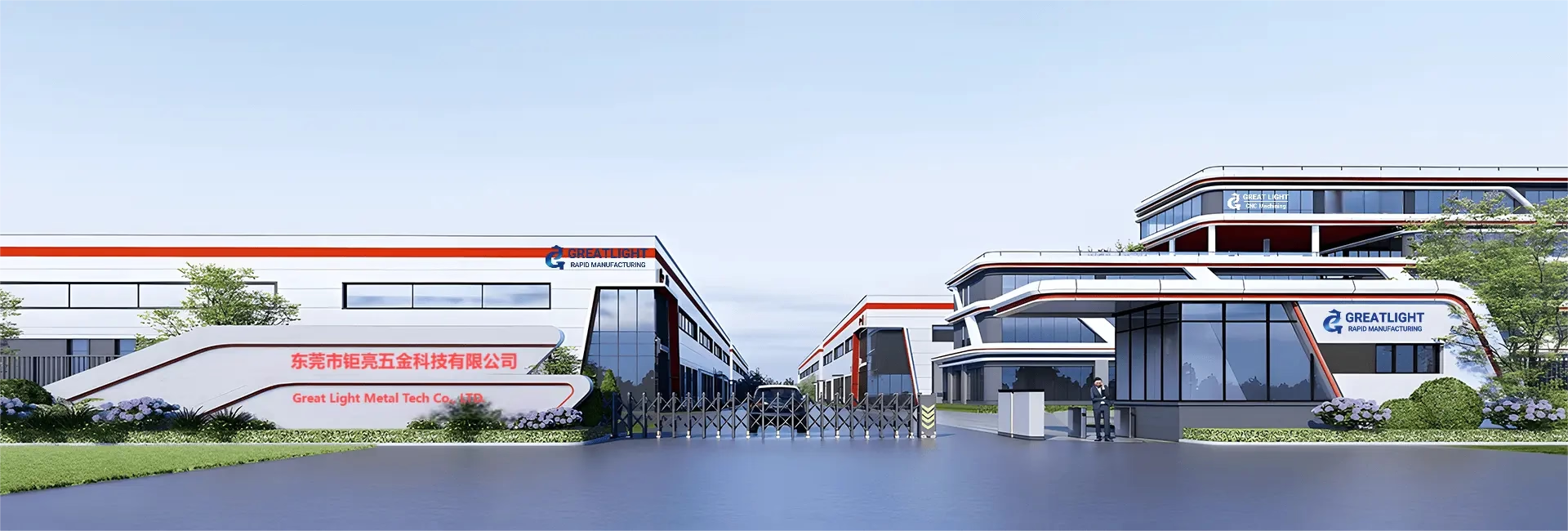
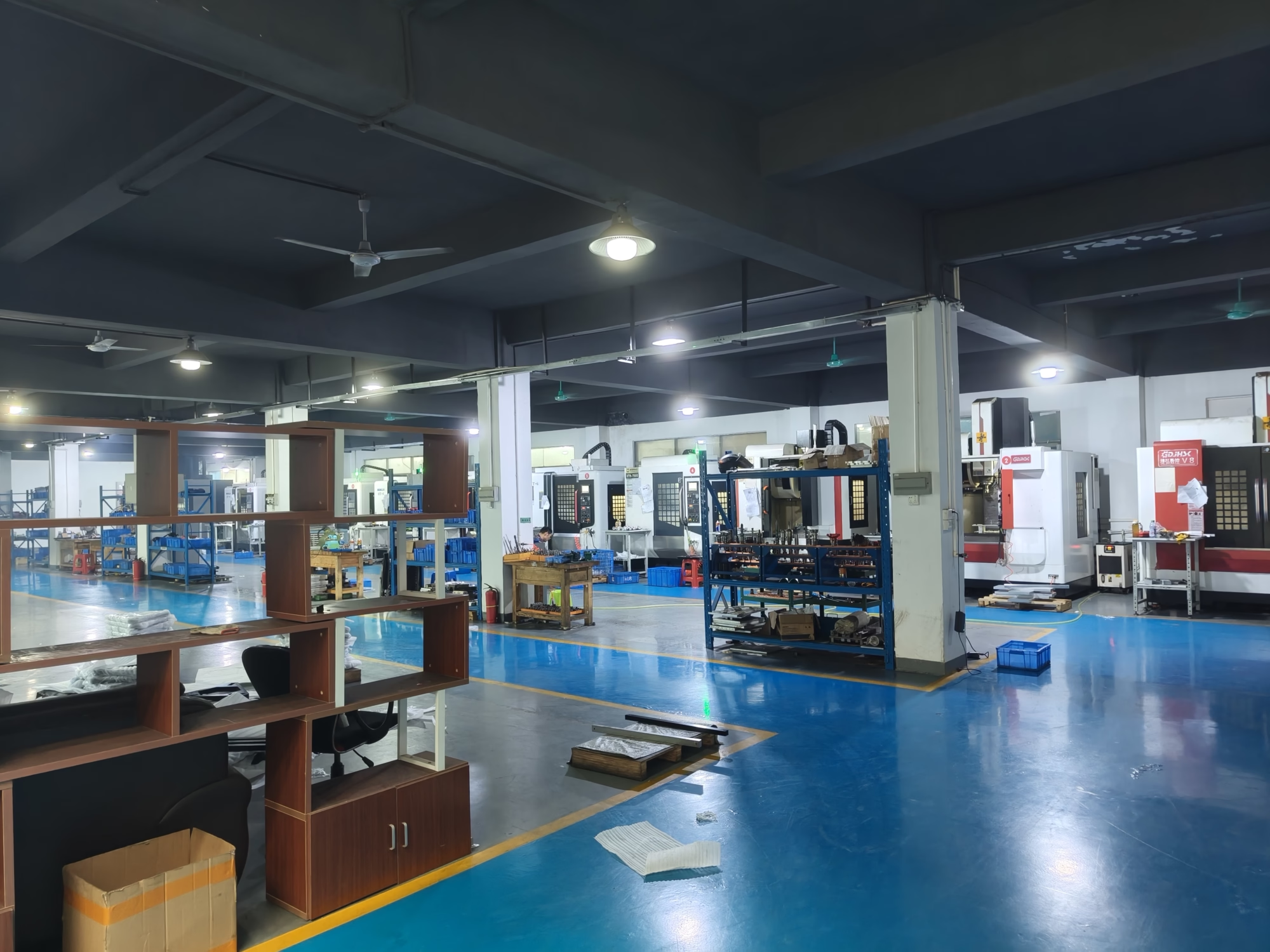
GreatLight Metal new factory building
Heat treat and finishing

Keeping the solution-treat schedule inside the drawing

Ti-17 is used because it can be solution treated and aged to a strength level higher than Ti-6Al-4V, with better toughness at the same time. That only holds if the thermal cycle is controlled. We leave machining stock for post-heat-treat finishing and record the furnace cycle on request.

After aging, the part goes back on the machine for finishing and any datums that moved. Thin webs, seal grooves and bearing bores are cut in the aged condition so the final dimensions hold at the specified tolerance.

If your drawing calls for a specific aging temperature or a hardness range, say so in the RFQ. We will quote the sequence around it rather than around a default.

  • 1
    Stock allowance plannedEnough material left for distortion after aging.
  • 2
    Finish after heat treatCritical bores and faces cut in the aged condition.
  • 3
    Cycle records on requestFurnace logs available with the inspection report.

Get Instant Quote

Material selection

Ti-17 against the titanium grades you may already use

Pick Ti-17 when you need more strength than Ti-6Al-4V without giving up toughness. Pick something else when the part is simple or the temperature is moderate.

GradeTypical useWhy choose it
Ti-17 (UNS R58640)Compressor discs, fan shafts, thick sectionsHigher strength than Ti-6Al-4V with good toughness
Ti-6Al-4V (Grade 5)Airframe brackets, medical implants, general partsWidely available, predictable machining, lower cost
Ti-6Al-2Sn-4Zr-2MoHot compressor sections near 540 °CBetter creep resistance at elevated temperature
Commercially pure Ti (Grade 2)Chemical and marine hardwareBest corrosion resistance, low strength
Ti-5Al-2.5SnCryogenic and weld-critical partsStable at low temperature, easy to weld
What we run

Machining services for Ti-17 parts

One shop for the whole part, from bar or forging to a finished, inspected component.

01

5-axis CNC machining

Simultaneous 5-axis centers for contoured discs, bladed features and parts that need four sides cut in one setup.

02

CNC milling and turning

3-axis and 4-axis milling plus mill-turn centers for shafts, sleeves and threaded titanium bodies.

03

Turning up to Ø400 mm

Rotary table capacity of Ø400 mm for flanged rings, seal housings and round parts with tight concentricity.

04

Prototyping

Single-piece runs from bar stock so you can test fit and function before committing to a forging.

05

Surface finishing

Bead blasting, tumbling, brushing and polishing; masked anodizing where the drawing calls for it.

06

Inspection reporting

Raw material check, in-process monitoring and final inspection before shipment, with reports on request.

Capability range

Machine capacity for titanium work

Numbers below come from our equipment list, not from a general industry range.

ItemRangeNotes
Maximum part size4,000 mmLong shafts and rails
Large travel4,000 × 400 × 150 mmElongated parts, one setup
Medium travel750 × 1,150 × 550 mmHousings and plates
Compact travel500 × 500 × 450 mmSmall precision work
Rotary tableØ400 mmRound and flanged parts
Tolerance±0.005 mmBest achievable, verified by inspection
Surface finishRa 0.2–0.8 μmFine finish on sealing faces
Quality rate99.99%Qualification across shipped parts
Why GreatLight

What you get on a Ti-17 job

Fifteen years in titanium and hard alloys, with the equipment and paperwork to match.

15Y

Titanium experience

Founded in 2011. Titanium and heat-resistant alloys are routine work here, not an occasional job.

127

High-precision CNC machines

Milling, turning and mill-turn capacity across three wholly-owned plants.

16

Five-axis centers

Simultaneous 5-axis machining for contoured and multi-face titanium parts.

12h

Quote and DFM feedback

Quotation and free DFM analysis within 12 hours; production can start within 24 hours.

100%

Inspection before shipment

Every part checked before it leaves. Reports issued on request.

1

No minimum order quantity

From one prototype to 10,000+ part runs, priced the same way.

7,600 m²Manufacturing space
150Technicians
3Wholly-owned plants
< 2%Historical late-delivery rate
Industry requirements

What Ti-17 buyers need, and what we deliver

6011

Aerospace rotating parts

Compressor discs and fan shafts in Ti-17 forgings, machined after solution treatment and aging so final bores hold size.

  • ±0.005 mm
  • 5-axis
CNC Machining Services Online

Airframe structural fittings

Thick lugs and attachment fittings where high strength and fracture toughness both matter. Single-setup machining keeps hole patterns true.

  • 4,000 mm
  • Single setup
oplus_262178

Industrial valve and pump bodies

Corrosion-resistant Ti-17 bodies and seal housings with fine-finished mating faces. Material traceability kept with the job.

  • Ra 0.2–0.8 μm
  • Traceable
CNC Machining Services Comparison 2026 Fictiv vs Xometry vs GreatLight

Automotive and motorsport

Titanium suspension and driveline parts produced under IATF 16949 process controls, from one-off prototypes to repeat runs.

  • IATF 16949
  • No MOQ
FAQs

Questions engineers ask about Ti-17

Is 5Al 2Sn 2Zr 4Mo 4Cr the same as Ti-17?

Yes. Ti-17 is the common name for the alpha-beta alloy with the nominal composition 5Al 2Sn 2Zr 4Mo 4Cr. UNS R58640 is the unified numbering system designation.

Some drawings list it as Titanium Grade 17. Treat all three as the same material and check the specification the drawing calls out, because heat-treat requirements can differ between aerospace and industrial programs.

Why machine Ti-17 instead of Ti-6Al-4V?

Ti-17 can be aged to a higher strength than Ti-6Al-4V while keeping better fracture toughness, which matters in thick sections where a quench-through would otherwise be difficult.

It is also more forgiving in large forgings because it deep hardens. If your part is a thin bracket at moderate temperature, Ti-6Al-4V is usually the cheaper answer.

How much material do you leave for heat treat?

It depends on the section and the aging cycle. For most parts we leave 0.3–0.8 mm on critical surfaces after solution treatment and cut the final size in the aged condition.

Tell us the specified aging temperature and any hardness range in the RFQ and we will plan the stock allowance around it rather than applying a default.

What tolerance can you hold on titanium?

Our best achievable tolerance is ±0.005 mm. On production titanium parts, ±0.01 mm on bores and fits is more typical and easier to verify repeatably.

Tighter callouts are possible on selected features, but they drive extra inspection time. Send the drawing and we will tell you which dimensions are realistic at what cost.

Do you machine from bar stock or from customer forgings?

Both. Prototype and small-batch parts usually come from bar. Larger structural parts are better run from a forging or a near-net blank to reduce cut time and material waste.

If you supply the forging, we will check the stock condition before quoting so the setup and the stock allowance are based on the real blank.

Can you work to an aerospace or automotive quality requirement?

We hold ISO 9001:2015, IATF 16949:2016, ISO 13485:2016 and ISO 27001:2022 certifications. Inspection reports and material records can be issued with the shipment.

If your program requires a specific first-article format or a full dimensional report, list it in the RFQ so it is included in the quote and the schedule.

How fast can I get parts?

Quotation and free DFM analysis come back within 12 hours, and production can start within 24 hours of approval. Most parts ship in 3–5 days.

That timeline assumes standard material availability. Ti-17 bar and forgings in unusual sizes may need to be sourced first, and we will flag that in the quote.

Can you sign an NDA before I send drawings?

Yes. Uploads are kept secure and confidential, and we can sign an NDA on request before any files change hands.

Most customers send a drawing and a step file for the DFM review. If you would rather start with a rough sketch and a target quantity, that works too.

Send us your Ti-17 part

Upload the drawing and we will come back with a quotation and a free DFM review within 12 hours. One prototype or ten thousand, no minimum order quantity.

12-hour quote100% inspectionNo MOQNDA on request

Trusted by engineers and manufacturers worldwide

Tesla Ford Motor Company BYD Auto Denso Magna International Boeing Airbus Medtronic KUKA FANUC