GreatLight CNC Machining Factory logo
CNC Machining
Rapid Prototyping
Materials
Industries
News
About GL

Get Instant Quote

Copper CNC Machining

Copper CNC Machining

We machine C101 and C102 oxygen-free copper for busbars, RF cavities and thermal hardware. Tight tolerances, burr control and surface finishes that hold up after plating.

C101 / C102±0.005 mmRa 0.2–0.8 μmNo MOQ12-hour quote
turning-copper-parts-3
16Simultaneous 5-axis centers
127High-precision CNC machines
±0.005 mmAchievable tolerance
99.99%Qualification rate
Common problems

What goes wrong when copper is machined like steel

Four failure modes we see on incoming drawings and first-article reports.

01

The part comes back out of tolerance

Copper cuts soft and gummy. A toolpath written for steel pushes the material instead of shearing it, so bores close up after clamping is released and flatness drifts past ±0.05 mm. By the time the second op is done, the whole lot needs rework or scrap.

02

Burrs weld themselves to the edge

Pure copper smears rather than breaks. A burr on a busbar or connector face survives deburring, then flakes off inside the assembly. Loose copper particles are conductive, so a single one can short a board or block a vacuum seal.

03

The surface turns brown in a week

Copper oxidizes fast. Parts machined with the wrong coolant or handled bare-handed arrive with fingerprints etched into the face. If the drawing calls for plating or a solderable finish, that oxide layer is the reason the joint fails.

04

Thin walls move during the last pass

A 1 mm copper fin on a heat sink or waveguide has almost no stiffness. Aggressive roughing stores stress in the material, and the finishing pass releases it. The part measures fine on the machine and wrong on the CMM an hour later.

How we machine it

Cutting parameters, tooling and setups built around copper

Two things drive the result: how the tool enters the material, and how the part is held.

CNC Lathe Technical Specifications Terminology
Tooling and parameters

Sharp tools, high rake, no dwell

Copper does not need brute force. It needs a tool that shears cleanly. We run polished carbide with high rake angles and generous relief, kept sharp enough that the edge cuts instead of burnishing the surface. Dull tools are the fastest way to smear a copper face.

Speeds stay high and feeds stay firm. A light, fast pass with a sharp cutter leaves a better finish on C101 than a heavy slow one, because the material does not have time to work-harden at the cut. We control coolant chemistry separately from steel jobs so the surface does not stain before inspection.

  • 1
    C101 and C102Oxygen-free grades machined with dedicated tooling and coolant.
  • 2
    Beryllium copperMachined with dust control and documented handling procedures.
  • 3
    C110 and brassC110, C27400, C28000 and C36000 run on the same cell.

Get Instant Quote

CNC Machining Services Online
Fixturing and stress

Hold it lightly, then measure after it settles

Soft material moves under clamping pressure. We fixture thin copper on vacuum plates or with soft jaws machined to the actual part profile, so the load spreads instead of pinching one edge. Roughing and finishing happen in separate setups with a rest between them.

When a wall is under 2 mm, we take material off both sides in alternating passes rather than cutting one face to depth. The part stays balanced and the finished dimensions hold. Every copper job is measured after it comes off the machine and again after it reaches room temperature.

  • 1
    Vacuum and soft jawsFor fins, waveguides and thin plates down to 0.8 mm.
  • 2
    Alternating passesKeeps stress balanced on symmetric thin-wall parts.
  • 3
    Settling checksDimensional verification on the CMM after thermal stabilization.
Grade selection

Which copper grade fits the job

Match the grade to the electrical and thermal requirement first, then to the finish.

GradeTypical useWhat to watch
C101 (OFE)RF cavities, vacuum seals, high-end busbars99.99% purity; hydrogen embrittlement risk in brazing
C102 (OF)Heat sinks, PCB contacts, general electrical parts99.97% purity; slightly wider grain structure
C110 (ETP)Connectors, terminals, cost-driven electrical partsContains oxygen; not for vacuum or reducing atmospheres
Beryllium copperSpring contacts, high-strength electrodesRequires dust control and post-machining heat treat
C36000 brassFittings, valve bodies, threaded partsExcellent chip breaking; not for high-current paths
What we run

Processes available for copper parts

One shop for the machining, the finish and the inspection report.

01

5-axis machining

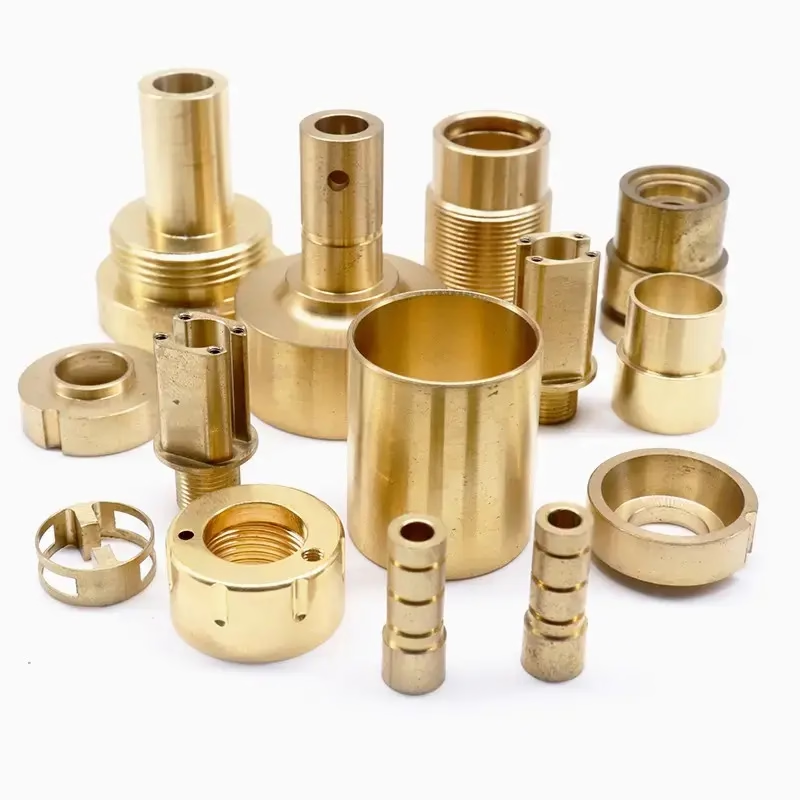
16 simultaneous 5-axis centers handle contoured copper faces, angled ports and compound features in one setup. Fewer setups means less re-clamping on soft material.

02

CNC turning

Mill-turn centers produce bushings, electrodes and threaded copper fittings from bar. Live tooling cuts cross holes and flats without a second operation.

03

3- and 4-axis milling

27 three-axis and 12 four-axis machines cover plates, housings and heat-sink bodies where the geometry is mostly prismatic.

04

Rapid prototyping

Single copper prototypes for thermal and electrical testing, machined from plate or bar with the same tolerances as production.

05

Surface finishing

Bead blasting, tumbling, brushing and polishing, plus electroless nickel, silver and gold plating for solderable or low-contact-resistance faces.

06

Inspection and reports

100% inspection before shipment with raw material check, in-process monitoring and final CMM reports on request.

Capability

Machine capacity and quality limits

The numbers we hold on copper work.

ItemRangeNotes
Maximum part size4,000 mmUp to 4,000 × 400 × 150 mm travel
Tolerance±0.005 mm±0.0002 in on critical copper features
Surface finishRa 0.2–0.8 μmFine finish for sealing and plated faces
Rotary workØ400 mmIndexed and simultaneous table options
Volume1 to 10,000+No minimum order quantity on copper parts
CertificationsISO 9001, IATF 16949, ISO 13485, ISO 27001Audited and maintained across all plants
Why GreatLight

Reasons engineers keep copper work here

Data from the shop floor, not adjectives.

15Y

Machining since 2011

15 years of production experience across three wholly-owned plants in Dongguan and Singapore, 7,600 m² of manufacturing space.

±0.005

Tolerance we hold

±0.005 mm (0.0002 in) on critical features, verified on the CMM and reported before the parts ship.

12H

Quote turnaround

Quotation and free DFM analysis within 12 hours. Production can start within 24 hours of approval.

<2%

Late-delivery risk

Historical late-delivery probability below 2%. Parts typically ship in 3–5 days.

100%

Inspection coverage

Every copper part checked before shipment: incoming material, in-process monitoring and final inspection.

NDA

Confidential by default

Uploads are secure and confidential. A non-disclosure agreement is available on request before drawings are shared.

150Technicians and engineers
127High-precision CNC machines
7,600 m²Manufacturing space
3Wholly-owned plants
Where copper parts go

Industries and the requirements we meet

6011

Electronics

Busbars and RF components where conductivity and a clean solderable face matter.

  • C101 / C102
  • Ra 0.2–0.8 μm
  • ±0.005 mm
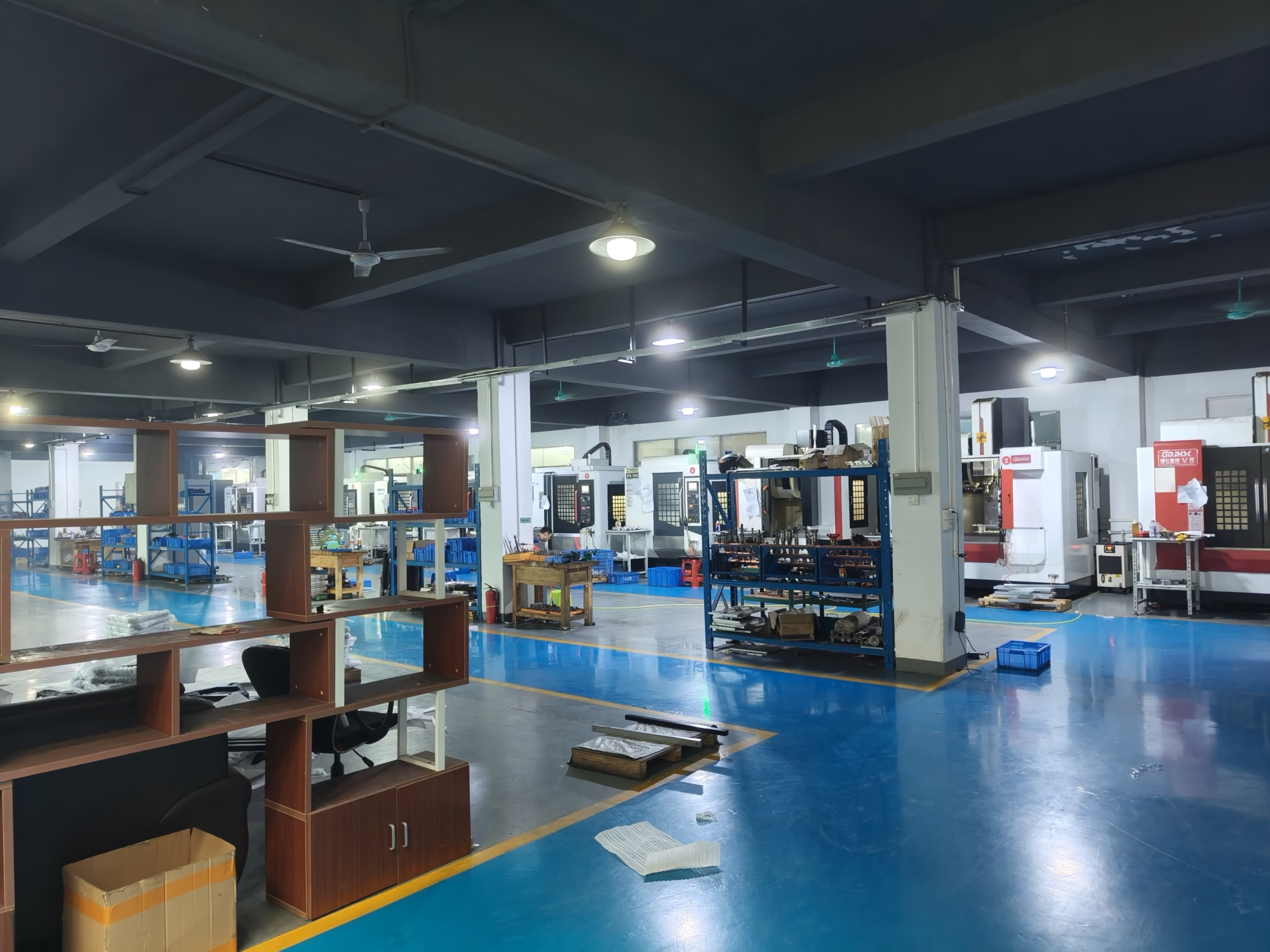
GreatLight Metal new factory building

New energy

High-current copper connections and thermal plates for battery and power systems.

  • 4,000 mm max
  • 100% inspection
  • 3–5 day ship
oplus_262178

Medical devices

Small copper electrodes and shielding parts with documented process control.

  • ISO 13485
  • CMM reports
  • NDA on request
Leader in Cnc Machining Service China

Industrial machinery

Waveguides, electrodes and wear parts where thin walls must stay flat.

  • 0.8 mm walls
  • 5-axis
  • No MOQ
FAQs

Questions engineers ask before sending copper drawings

What is the difference between C101 and C102 oxygen-free copper?

C101 is 99.99% pure with oxygen below 0.0005%. C102 is 99.97% pure with oxygen up to 0.003%. Both are oxygen-free grades, but C101 is the tighter specification.

Pick C101 when the part sees vacuum, high-frequency RF or a reducing atmosphere during brazing. C102 covers most heat sinks, PCB contacts and general electrical parts at a lower material cost.

Why does copper tend to burr and smear during machining?

Pure copper is soft and ductile. Instead of forming a clean chip, the material tends to deform ahead of the cutting edge and weld to the tool, which pushes a burr onto the exit face.

The fix is a sharp polished cutter with a high rake angle, firm feed and no dwell in the cut. Coolant chemistry matters too, because a reactive fluid leaves the surface stained.

Can you hold ±0.005 mm on thin copper walls?

Yes, with the right setup. Thin walls need light clamping, alternating passes and a rest between roughing and finishing so stored stress releases before the final cut.

We verify dimensions after the part reaches room temperature. For walls under 1 mm, we discuss the geometry with you during DFM and flag anything that will not hold repeatably.

What does copper CNC machining cost depend on?

The grade, the volume of material removed and the finish specification drive most of the cost. C101 costs more than C110, and a Ra 0.2–0.8 μm face adds a finishing pass.

Because we carry no minimum order quantity, a single prototype is priced on the same basis as a 10,000-part run. The quote shows setup, material and machining separately.

Do you machine beryllium copper?

Yes. Beryllium copper is machined with dust control and documented handling procedures because the dust is a health hazard. Chips and coolant are managed separately from other jobs.

If the drawing calls for a spring temper, we machine in the annealed state and note the required post-machining heat treatment on the traveler so it is not skipped.

How should copper parts be finished for soldering or low contact resistance?

Bare copper oxidizes within days. For solderable faces we recommend electroless nickel, silver or gold plating, applied after machining and a light surface prep.

If you need bare copper, we bag and seal parts immediately after a final clean so the oxide layer stays thin. Tell us the assembly process and we will match the finish to it.

What tolerance and size limits apply?

We hold ±0.005 mm on critical features and machine up to 4,000 mm in length, with travel of 4,000 × 400 × 150 mm on the largest machines.

Surface finish ranges from Ra 1.6–3.2 μm as-machined down to Ra 0.2–0.8 μm for sealing and plated faces. The Ø400 mm rotary table covers indexed and simultaneous work.

How do you keep copper drawings confidential?

Uploads are secure and confidential, and we can sign a non-disclosure agreement before you share files. Our quality system is certified to ISO 27001:2022 for information security.

We do not reuse customer geometry, toolpaths or fixtures on other jobs. If you need it, we can restrict a program to a named machine and operator.

Send your copper drawing for a quote

Upload a STEP file and we will return a quotation with free DFM analysis within 12 hours. No minimum order quantity, from one prototype to 10,000+ parts.

12-hour quote100% inspectionNo MOQNDA on request

Trusted by engineers and manufacturers worldwide

Tesla Ford Motor Company BYD Auto Denso Magna International Boeing Airbus Medtronic KUKA FANUC